
Chicken Cuts Explained for Beginners Understanding Key Parts and Uses

When it comes to cooking chicken, knowing the different cuts makes a big difference in how your meal turns out. I’m Emma Reed, and I’ve spent a lot of time learning about the best ways to use every part of the chicken. Understanding the main cuts, like breasts, thighs, drumsticks, and wings, will help you pick the right piece for your recipe and cooking style.
Chicken cuts vary in taste and texture because some are white meat, and others are dark meat. Each cut also has its best cooking methods, which can impact flavor and tenderness. By learning these basics, you can cook smarter and enjoy your meals more.
I’ll guide you through the common and less-known chicken cuts, explain how to choose the best one, and share tips on handling and storing chicken safely. This will make cooking chicken easier and more enjoyable for you.
Key Takeways
- Different chicken cuts work better with certain cooking styles and recipes.
- White meat and dark meat have distinct flavors and textures.
- Proper handling and selection of chicken cuts improve your meals and safety.
Overview of Chicken Cuts

Chicken can be broken down into several key parts, each with different uses in cooking. Knowing these parts helps when choosing what to buy or how to cook your meal. I’ll explain what chicken cuts are, the difference between whole chicken and pieces, and why it’s important to know this info.
What Are Chicken Cuts?
Chicken cuts are the different parts of the bird separated for sale and cooking. Common cuts include the breast, thighs, drumsticks, wings, and sometimes organ meats like liver or heart. Each cut has its own texture, flavor, and cooking needs.
For example, the breast is lean and cooks quickly, while thighs are darker meat, more flavorful, and stay moist longer when cooked. Wings have skin and fat that help them crisp up well. These differences affect how you prepare and cook each piece.
Cuts can also be divided into primal cuts (large sections like breast or leg) and sub-primal cuts (smaller pieces like tenderloins taken from the breast). Understanding these helps me pick the best part for a recipe or cooking style.
Whole Chicken vs. Parts
A whole chicken is sold with all its parts intact. Buying whole chicken can be cheaper and gives flexibility because you can cut it yourself or cook it whole. It’s often used for roasting or slow cooking.
Chicken parts, on the other hand, are sold separately. This includes breasts, thighs, drumsticks, wings, and sometimes boneless or skinless versions. Part buying lets you choose exactly what you want for a recipe.
For example:
- If I want a quick meal, I might grab boneless breasts.
- If I need juicy meat with more flavor, thighs work better.
Knowing when to buy whole or parts depends on your cooking plan, budget, and how much work you want to do in the kitchen.
Why Understanding Cuts Matters
Knowing chicken cuts helps me cook better meals. It lets me pick the right part for the cooking method and flavor I want. Some cuts dry out easily, while others stay tender. Knowing this helps avoid common mistakes.
It also helps me plan cooking times. Breasts cook fast, thighs need longer. Wings roast well to crispy perfection because of their skin and fat.
Understanding cuts also matters for nutrition and cost. White meat (like breast) is leaner, while dark meat (like thighs) has more fat and flavor. Some cuts cost more because they’re in higher demand or easier to prepare.
By learning chicken cuts, I save money, cook smarter, and get tastier results every time.
Primary Chicken Cuts

I want to explain the main parts of a chicken that people usually cook with. These parts differ in texture, flavor, and how you should prepare them. Knowing these basics helps you pick the right cut for your recipe and get the best results.
Breast
The chicken breast is the leanest and most popular cut. It is white meat and contains very little fat, which means it cooks quickly but can dry out if overcooked. I find breasts best for grilling, baking, or making dishes like chicken sandwiches and salads.
Breast meat is mild in flavor and firm in texture. Because it is so lean, it’s important to cook it gently. Using marinades or brining can help keep it juicy. You can use whole breasts or cut them into strips or cubes depending on your recipe.
Thigh
Chicken thighs come from the upper part of the leg and are dark meat. They have more fat than breasts, so they stay moist and tender during cooking. I prefer thighs for slow cooking, frying, or roasting because they hold flavor well.
Thigh meat is richer and has a stronger taste. It works well in stews, curries, and grilled dishes. The slightly higher fat content makes it forgiving if you cook it a little longer. Thighs are also generally less expensive than breasts, making them a good choice for everyday meals.
Drumstick
A drumstick is the lower part of the leg and is also dark meat. It has a bold flavor and is easy to eat by hand, making it a favorite for casual meals or barbecues. I like drumsticks when I want something crispy on the outside but juicy inside.
Drumsticks can be roasted, grilled, or fried. The meat around the bone cooks evenly and remains tender. Because of the dark meat, it is better suited for longer cooking times compared to the breast. Their shape makes them simple to portion and serve.
Wing
Chicken wings are small and made mostly of skin, bone, and a bit of meat. They are famous for being served as snacks or appetizers. I use wings when I want something crispy and flavorful, often coated in sauces or spices.
Wings are best cooked by frying, baking, or grilling to get a crunchy texture. They have less meat than other cuts but lots of flavor from the skin and fat. Because they cook quickly, it’s important to keep an eye on them to avoid drying out. Wings are popular for sharing and can be spicy, sweet, or savory.
White Meat vs. Dark Meat

Chicken has two main types of meat: white and dark. They differ in color, texture, cooking time, and flavor. These differences affect how you might want to cook or serve each type.
Differences Between White and Dark Meat
White meat comes mostly from the chicken breast and wings. It has less fat and a milder flavor. The texture is firmer but can dry out if overcooked. White meat is leaner, making it a popular choice for quick, healthy meals.
Dark meat is found in the thighs and drumsticks. It is higher in fat, which keeps it juicy during longer cooking times. The flavor is richer and the meat is more tender. Dark meat has more myoglobin, which makes it darker in color and gives it a slightly stronger taste.
Best Uses for Each Type
White meat works well in dishes where you want lean protein with mild flavor. It cooks fast and is great for grilling, stir-frying, or baking. Skinless breasts are common in recipes like chicken salads or sandwiches.
Dark meat is better for slow cooking methods like roasting, braising, or stewing. Its fat content keeps it moist and tender even after long cooking times. I often use thighs and drumsticks when I want juicy, flavorful chicken that won’t dry out quickly. They are also good for dishes with bold sauces.
Specialty and Lesser-Known Cuts
Some parts of the chicken are less common but offer unique flavors and cooking options. These cuts can add variety to meals and are worth trying if you want to explore beyond the usual breast and thighs.
Tenders
Tenders, also called tenderloins, are small strips of meat located under the chicken breast. They are very tender and lean, making them a popular choice for quick cooking methods like sautéing or grilling.
Unlike the main breast, tenders cook faster and stay juicy if not overcooked. They work well for dishes like chicken fingers or stir-fries, where you want bite-sized pieces. Because of their tenderness, they do well with simple seasoning and don’t require heavy sauces.
Back
The back includes the backbone and is often used to make stock or broth due to its rich flavor. It has less meat but contains bones and connective tissue that add depth to soups and sauces.
I use chicken backs mostly for simmering to extract maximum flavor. It’s a great way to avoid waste and get a homemade base for many dishes. The meat itself is not very tender on its own, so it’s rarely cooked as a primary cut.
Chicken Oyster
Chicken oysters are small, round pieces of dark meat located near the thigh, on the back of the bird. They’re often called the best part of the chicken by chefs because of their tenderness and flavor.
I find chicken oysters have a rich taste and are juicy, making them perfect for roasting or pan-frying. They’re hidden well in the carcass, so they require some care to remove but are worth the effort when you want a special treat.
Bone-In vs. Boneless Cuts
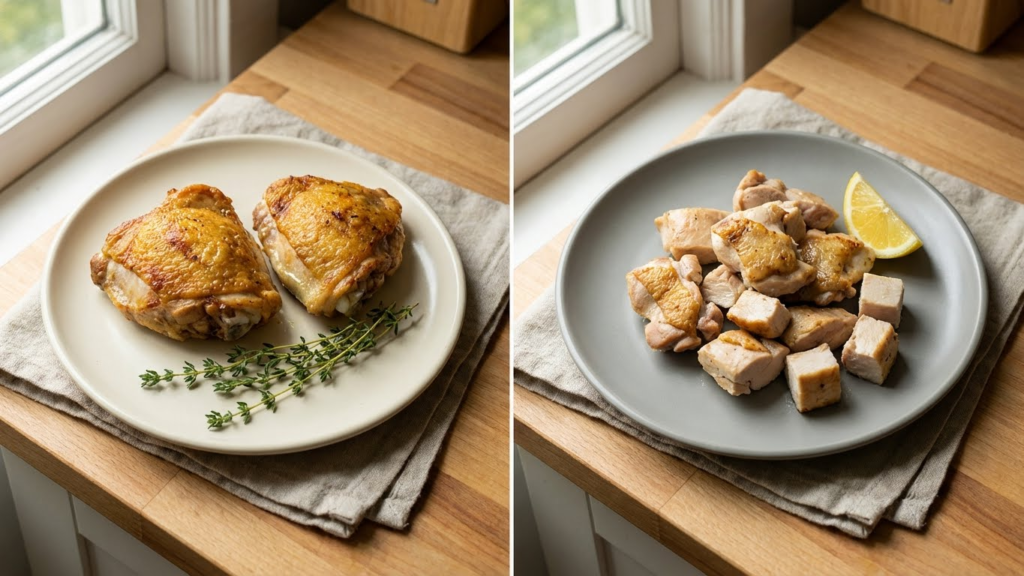
Chicken cuts with bones and those without each bring different qualities to the table. Choosing between them depends on factors like cooking time, flavor, cost, and convenience. I find it helpful to know what each option offers before deciding which one to use.
Advantages and Disadvantages
Bone-in chicken usually has more flavor because the bone helps keep the meat juicy while it cooks. It often costs less per pound, but it takes longer to cook. The bones add weight which might affect calorie count per serving.
Boneless chicken cooks faster and is easier to handle and eat. It’s great for quick meals or recipes that call for chopped or sliced chicken. However, it tends to be more expensive due to extra processing. Plus, it can dry out more quickly if overcooked.
Cooking Applications
Bone-in cuts suit slow cooking methods like roasting or braising, where cooking time allows flavors to develop and the meat stays moist. They’re ideal for dishes like stews or grilled chicken pieces.
Boneless cuts work best in recipes that require less cooking time, such as stir-frying, sautéing, or grilling chicken breasts or thighs quickly. They also fit well in salads, sandwiches, or skewers due to ease of cutting and eating. I often choose boneless for busy weeknights when time matters most.
How to Choose the Right Cut
Choosing the correct cut of chicken depends on what you want in taste and texture, as well as the dish you’re making. Different parts of the chicken behave uniquely in cooking, so knowing their qualities helps me pick the best one for a meal.
Flavor and Texture Considerations
White meat, like chicken breast, is lean and mild in flavor. It cooks quickly but can dry out if overcooked. Dark meat, found in thighs and drumsticks, has more fat, making it juicier and richer in flavor. Wings, while small, offer a balance of tender meat and skin that crisps well when cooked.
Texture matters here. If I want tender, moist meat, I lean toward thighs or drumsticks. For a firmer bite that takes less time, breasts work well. The skin also adds flavor and moisture, so cuts with skin are ideal if you want a crispy outer layer.
You can find more details about the differences between white and dark meat on the USDA’s official site on poultry cuts.
Recipe Recommendations
Matching chicken cuts to recipes is key for good results. For quick stir-fries or grilling, chicken breast is best because it cooks fast and holds up on the heat. It works well with sauces and marinades since its mild taste absorbs flavors.
For slow-cooked dishes like stews or braises, thighs and drumsticks shine. Their higher fat content stands up to long cooking times without drying out, keeping the meat tender. I often use drumsticks for barbeque or roasting because they stay juicy and flavorful.
Wings are perfect for snacks or appetizers, especially when fried or baked crispy. If you want a lean option for sandwiches or salads, thinly sliced chicken breast is a smart choice.
For more cooking ideas, check this guide to chicken recipes from the Food Network, which matches cuts to meals effectively.
Storage and Handling of Chicken Cuts
I know that keeping chicken safe and fresh means paying close attention to how I store and handle it. Proper refrigeration and avoiding cross-contamination are key, plus knowing how to keep chicken fresh longer helps me get the most out of my cooking.
Safe Storage Practices
I always store chicken cuts in the coldest part of my fridge at or below 40°F (4°C). Raw chicken should be kept separately from cooked foods to avoid spreading bacteria like Salmonella.
If I don’t plan to use chicken within 1-2 days, I freeze it. When freezing, I wrap cuts tightly in plastic wrap or put them in airtight bags to prevent freezer burn and keep flavors locked in. I label the packaging with the date to track how long it’s been frozen.
Thawed chicken must be cooked within 1-2 days and should never be refrozen unless cooked first. I clean any surfaces and utensils that touch raw chicken using hot, soapy water to avoid cross-contamination.
Tips for Freshness
To keep chicken fresh longer, I avoid leaving it out at room temperature for more than two hours. When buying, I pick packages with no tears or leaks to help prevent contamination.
I also pat chicken dry before cooking, which helps with browning and reduces bacteria on the surface. Using paper towels and throwing them away immediately keeps my workspace cleaner.
Using chicken within the recommended time and proper wrapping keeps it fresh and safe. I find that keeping chicken in its original packaging placed inside a shallow container also helps catch any leaks and keeps my fridge clean.
Buying Chicken: Labels and Sourcing
When buying chicken, it’s important to know what the labels mean and how to choose good quality meat. Paying attention to packaging details and understanding where your chicken comes from can help you get the best product for your needs.
Understanding Packaging
Chicken packaging usually shows key information like weight, price, and freshness date. But labels often include other terms like organic, free-range, air-chilled, or no antibiotics. These describe how the chicken was raised or processed.
For example, organic means the chicken was raised without synthetic pesticides or antibiotics, following strict USDA rules. Free-range indicates the chicken had some access to the outdoors. Air-chilled means the chicken was cooled with air instead of water, which can keep the meat firmer.
I always check for sell-by or use-by dates to make sure the chicken is fresh. Clear, readable labels with easy-to-understand claims help me decide if the product fits my cooking plans. For more on chicken labels, resources like the USDA Food Safety website are helpful.
Choosing Quality Chicken
Good chicken looks clean with firm, pinkish skin and no strong odors. Avoid packages with dark or slimy spots, which may indicate poor quality or spoilage. I prefer buying chicken that is fresh or properly frozen without extra solutions like saltwater or preservatives.
When selecting cuts like breasts or thighs, I look for minimal added ingredients. Packaging often states if the chicken has no added solutions or no antibiotics used. These details show the chicken is more natural.
Sourcing is also key. If I can, I buy chicken from trusted farms or local butchers. They often provide better traceability and freshness. Labels that reveal the farm’s name or region help me feel confident about the product. Learn more about choosing quality poultry from the American Veterinary Medical Association.
FAQs
I get asked a lot about chicken cuts, so I wanted to answer some common questions here.
What are the main chicken cuts?
The most common cuts are breast, thighs, drumsticks, and wings. Each has a different texture and flavor. Breasts are lean and mild, while thighs and drumsticks are darker and richer in taste.
Which cuts are best for grilling?
I usually recommend thighs and drumsticks for grilling. They stay juicy and can handle high heat well. Breasts cook faster but can dry out if you’re not careful.
Are chicken wings just for frying?
Not at all. Wings are great for frying, but you can also bake or grill them. They have a good balance of skin, fat, and meat, which makes them crispy when cooked right.
What’s the difference between white and dark meat?
White meat comes from the breast and tenderloins. It’s lean and cooks quickly. Dark meat comes from the legs and thighs, which have more fat and are more flavorful but take longer to cook.
How should I store different cuts?
Store raw chicken in the fridge for up to two days. If you don’t plan to cook it soon, freezing is best. Make sure to seal it well to avoid freezer burn.
Here is a simple table to compare common cuts:
| Cut | Meat Type | Flavor | Best Cooking Method |
|---|---|---|---|
| Breast | White | Mild, lean | Baking, grilling |
| Thigh | Dark | Rich, juicy | Grilling, braising |
| Drumstick | Dark | Flavorful, tender | Roasting, grilling |
| Wing | Dark | Crispy skin | Frying, baking |
Conclusion
Understanding chicken cuts helps me cook better meals every time. Each part, from breasts to drumsticks, has its own texture and flavor. Knowing which cut to use means I can pick the right cooking method and get the best taste.
I find it useful to remember the basic groups:
- White meat: chicken breasts and tenderloins, lean and mild.
- Dark meat: thighs, drumsticks, and wings, richer and more flavorful.
This knowledge lets me make choices that suit different dishes, whether I’m grilling, roasting, or frying. It also helps me avoid waste by using the whole chicken efficiently.
Here’s a quick look at what I keep in mind:
| Cut | Best Cooking Methods | Flavor & Texture |
|---|---|---|
| Breast | Grilling, roasting | Lean, tender |
| Thigh | Braising, frying, roasting | Juicy, flavorful |
| Drumstick | Baking, frying | Tender, rich |
| Wings | Frying, grilling | Crispy, flavorful |
By learning these basics, I’m confident in choosing the right cut for each recipe. It makes cooking clearer and more enjoyable.
