
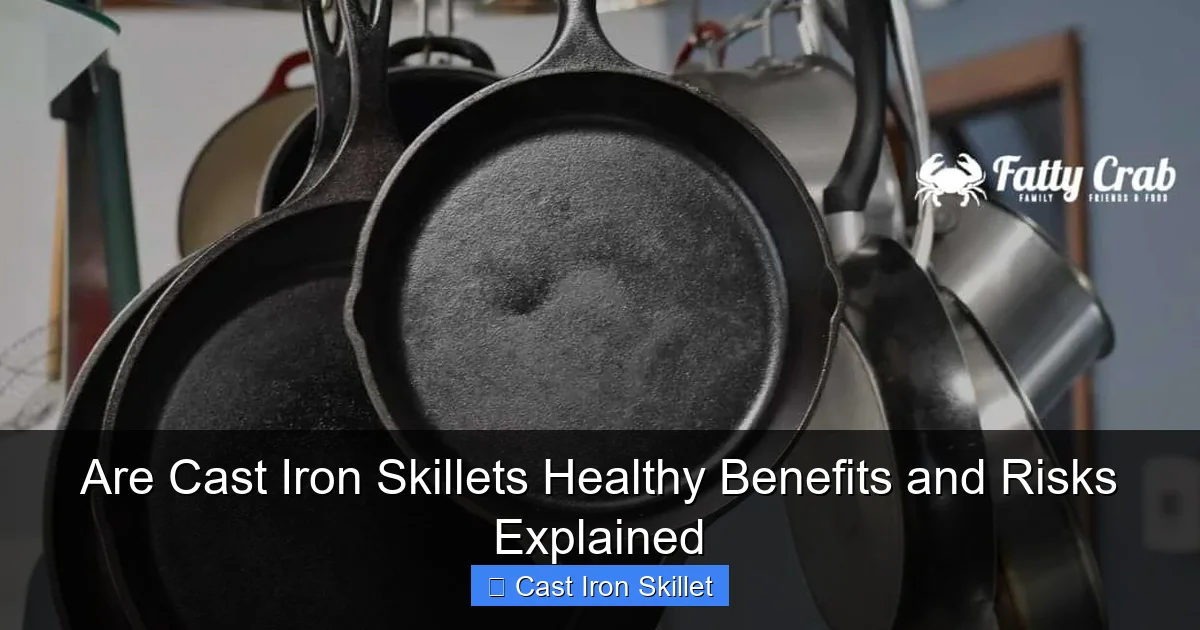
Are Cast Iron Skillets Healthy Benefits and Risks Explained
Contents
- 1 Key Takeaways
- 2 Introduction: The Truth About Cast Iron and Your Health
- 3 How Cast Iron Skillets Work: The Science Explained
- 4 Health Benefits of Using Cast Iron
- 5 Potential Health Risks and Concerns
- 6 How to Use Cast Iron Safely for Healthy Cooking
- 7 Proper Maintenance for Maximum Health Benefits
- 8 Troubleshooting Common Health-Related Issues
- 9 Comparing Cast Iron to Other Cookware
- 10 Conclusion: Making the Healthy Choice for Your Kitchen
Key Takeaways
- Iron Boost: Cast iron transfers small amounts of dietary iron into food, especially when cooking acidic dishes.
- Chemical-Free: Properly seasoned cast iron provides a natural non-stick surface without PFAS or PFOA chemicals.
- Seasoning Matters: Use high-smoke-point oils like flaxseed or vegetable oil for healthy, durable seasoning.
- Avoid Acidic Foods: Limit long cooking times with tomatoes, wine, or vinegar to prevent metallic taste and excess iron.
- Maintenance is Key: Dry thoroughly after washing to prevent rust and bacteria growth.
- Not for Everyone: People with hemochromatosis should limit cast iron use to avoid iron overload.
- Versatile Health Tool: Excellent for one-pan meals, searing, and reducing the need for excess cooking oils.
Introduction: The Truth About Cast Iron and Your Health
You’ve probably heard the buzz about cast iron skillets. Maybe your grandmother swore by hers, or you’ve seen them trending on social media. But the real question on your mind is: are cast iron skillets healthy?
This guide will cut through the noise and give you science-backed facts. You’ll learn exactly how cast iron affects your food, your body, and your cooking routine. We’ll explore the benefits, the risks, and most importantly, how to use these classic pans safely for maximum nutrition.
By the end, you’ll know whether cast iron deserves a spot in your healthy kitchen. Let’s get started.
How Cast Iron Skillets Work: The Science Explained
Before diving into health impacts, let’s understand what makes cast iron unique. This knowledge will help you make informed choices every time you cook.

Visual guide about Are Cast Iron Skillets Healthy Benefits and Risks Explained
Image source: therusticskillet.com
Iron Transfer Mechanism
When you cook in cast iron, especially with moist or acidic foods, tiny iron particles transfer from the pan to your food. This isn’t a flaw—it’s actually a benefit for many people.
The process works through a simple chemical reaction. The iron in the cookware reacts with acids in your food, releasing iron ions. These ions then bind with your food molecules. The amount transferred depends on:
- Cooking time (longer = more iron)
- Food acidity (higher acidity = more iron)
- Pan seasoning (well-seasoned = less transfer)
- Food moisture (wetter foods = more iron)
Studies show that cooking in cast iron can increase iron content by 2-3 times compared to stainless steel. For someone with iron deficiency, this is excellent news.
Seasoning and Polymerization
Seasoning is what makes cast iron truly special. It’s not just about non-stick properties—it’s about creating a healthy cooking surface.
When you heat oil on cast iron, a process called polymerization occurs. The oil molecules bond together, forming a hard, protective layer. This layer:
- Prevents rust
- Creates natural non-stick
- Reduces iron transfer
- Protects against bacteria
The best part? This seasoning is completely natural. Unlike synthetic non-stick coatings, you control exactly what goes into it. Choose healthy oils, and you create a healthy cooking surface.
Health Benefits of Using Cast Iron
Now for the good stuff. Cast iron offers several real health advantages when you use it properly.
Visual guide about Are Cast Iron Skillets Healthy Benefits and Risks Explained
Image source: beplantwell.com
Natural Iron Supplementation
Iron deficiency affects millions of people worldwide. If you’re low on iron, cooking in cast iron can help boost your intake naturally.
Here’s how it works:
- A scrambled egg in cast iron gains about 1mg of iron
- Tomato sauce can gain 5-10mg of iron per serving
- The iron is in heme form, which your body absorbs easily
This is especially helpful for:
- Pregnant women
- Menstruating individuals
- Vegetarians who need more iron
- Children growing rapidly
Unlike supplements that can cause constipation, this natural iron transfer is gentle on your system. Your body takes what it needs and eliminates the rest.
Chemical-Free Cooking Surface
Most non-stick pans contain PFAS chemicals. These are called “forever chemicals” because they never break down in your body or the environment.
Cast iron eliminates this concern entirely. Once seasoned, you get non-stick performance without:
- PFOA (perfluorooctanoic acid)
- PTFE (polytetrafluoroethylene)
- Other synthetic chemicals
This is crucial because when non-stick coatings break down at high heat, they release toxic fumes. Cast iron can handle high heat safely. No chemicals, no fumes, just pure cooking.
Retains Food Nutrients
Cast iron’s excellent heat retention means shorter cooking times. This preserves heat-sensitive vitamins in your food.
Compare this to boiling vegetables where nutrients leach into water. With cast iron:
- Vegetables keep more vitamin C
- B-vitamins remain intact
- Minerals stay in your food, not the pan
The even heating also prevents burning, which can create harmful compounds in food. You get more nutrition with every bite.
Naturally Non-Stick When Properly Seasoned
A well-seasoned cast iron pan needs less oil for cooking. This means fewer calories and less fat in your meals.
Here’s the math:
- Non-stick spray: 0 calories but contains additives
- Butter: 100 calories per tablespoon
- Cast iron with proper seasoning: minimal oil needed
You can often reduce oil by 50% or more compared to unseasoned pans. For weight-conscious cooks, this is a game-changer.
Potential Health Risks and Concerns
Cast iron isn’t perfect. Let’s address the real risks so you can avoid them easily.
Visual guide about Are Cast Iron Skillets Healthy Benefits and Risks Explained
Image source: sirler.com
Iron Overload (Hemochromatosis)
Some people have a condition called hemochromatosis. Their bodies absorb too much iron, leading to buildup in organs.
If you have this condition:
- Limit cast iron use to once or twice weekly
- Avoid cooking acidic foods in cast iron
- Choose stainless steel or ceramic instead
Most people don’t have this issue. But if you’re diagnosed with hemochromatosis, talk to your doctor about cookware choices.
Reactivity With Acidic Foods
This is the biggest practical concern. Acidic foods like tomatoes, wine, and vinegar react strongly with raw cast iron.
Problems include:
- Metallic taste in food
- Dark discoloration
- Increased iron transfer (which may not be desired)
- Damaged seasoning
Solution: Always preheat your pan well. Cook acidic foods for short periods. For long-simmered sauces, transfer to stainless steel or enameled cookware after initial browning.
Heavy Metal Concerns (Myth vs Reality)
You might have heard that cast iron contains lead or other heavy metals. Let’s clear this up.
Modern cast iron is made from pure iron or steel. It does NOT contain:
- Lead
- Cadmium
- Other toxic heavy metals
The confusion comes from old cast iron cookware that may have been made with contaminated materials decades ago. Today’s manufacturing is strictly regulated. Your new Lodge or Le Creuset pan is completely safe.
Weight and Physical Strain
Okay, this isn’t a health risk to your food, but it matters for you. Cast iron is heavy.
A 10-inch skillet weighs about 5 pounds empty. A large chicken fryer can weigh 15 pounds. This can cause:
- Wrist strain
- Shoulder pain
- Dropping risk
Tip: Start with smaller skillets. Use two hands when lifting. Keep frequently used pans within easy reach. Your body will thank you.
How to Use Cast Iron Safely for Healthy Cooking
Now let’s get practical. Follow these steps to maximize health benefits and minimize risks.
Choosing the Right Cast Iron Skillet
Not all cast iron is created equal. Here’s what to look for:
New vs. Vintage:
- New pans: Pre-seasoned, ready to use, consistent quality
- Vintage pans: May need restoration, but often better quality
Enameled vs. Traditional:
- Enameled: No seasoning needed, no iron transfer, but can chip
- Traditional: Requires seasoning, provides iron boost, more versatile
Size Matters:
- 8-inch: Perfect for 1-2 people, eggs, small meals
- 10-inch: Most versatile, feeds 3-4 people
- 12-inch: Great for families, but heavy
For health-conscious cooks, I recommend starting with a 10-inch pre-seasoned skillet. It’s the workhorse of the kitchen.
Initial Seasoning Process
Even pre-seasoned pans benefit from proper seasoning at home. This creates a stronger, healthier cooking surface.
Step 1: Clean
Wash your pan with warm water and mild soap. Scrub off any factory residue. Dry immediately with a towel.
Step 2: Oil Selection
Choose an oil with a high smoke point. This is crucial for healthy polymerization. Good options include:
- Flaxseed oil (creates very hard seasoning)
- Vegetable oil (readily available)
- Canola oil (neutral flavor)
- Coconut oil (solid at room temp)
For a detailed comparison of healthy oils, check out our Healthy Cooking Oils Compared Guide.
Step 3: Apply Thin Layer
Rub 1/2 teaspoon of oil all over the pan. Use a paper towel to wipe off excess. You want a barely-there film.
Step 4: Bake
Place pan upside down in a 450°F oven for one hour. Put foil on the lower rack to catch drips. Let cool completely in the oven.
Step 5: Repeat
Do this 3-4 times for a durable seasoning. Each layer makes the surface stronger and more non-stick.
Daily Cooking Best Practices
Follow these habits for healthy, safe cooking every day.
Preheating:
Always preheat your pan on medium for 5-7 minutes. You’ll know it’s ready when a drop of water sizzles. This prevents sticking and ensures even cooking.
Oil Usage:
Add oil after preheating, not before. This creates a barrier between food and pan. Use 1/2 the oil you normally would.
Food Selection:
Best foods for cast iron:
- Eggs (excellent iron boost)
- Steak (perfect sear)
- Bacon (renders fat naturally)
- Root vegetables
- Fried rice
Limit these foods:
- Tomato sauce (cook briefly, then transfer)
- Wine reductions
- Lemon-marinated fish
- Long-simmered stews
Temperature Control:
Cast iron holds heat well. Start on medium, not high. This prevents burning and harmful compounds.
What Foods to Avoid Cooking in Cast Iron
Some foods just don’t belong in cast iron. Protect your health by knowing these exceptions.
Highly Acidic Foods:
- Tomato-based sauces (limit to 30 minutes max)
- Lemon juice marinades
- Vinegar-based dishes
- Red wine reductions
Delicate Fish:
Fish like sole or cod can stick and fall apart. Use a non-stick pan instead.
Milk-Based Dishes:
Risotto, pudding, and custards don’t work well. They scorch easily and are hard to clean.
Olive Oil (for seasoning):
Despite what you’ve heard, olive oil has a low smoke point. It creates sticky, soft seasoning. Use it for cooking, not seasoning.
Proper Maintenance for Maximum Health Benefits
Good maintenance keeps your pan healthy and safe for years.
Cleaning Without Damaging Seasoning
Never put cast iron in the dishwasher. The soap and heat destroy seasoning.
Immediate Cleaning:
Clean while the pan is still warm. Food particles come off easily. Use hot water and a stiff brush.
For Stubborn Food:
Boil water in the pan for 5 minutes. This loosens stuck bits. Then scrub with coarse salt and a paper towel.
Soap Usage:
Modern dish soaps are safe. Use a tiny amount if needed. They won’t ruin seasoning like old lye-based soaps did.
Never Soak:
Soaking causes rust. Clean and dry immediately after use.
Drying and Storage Techniques
Moisture is cast iron’s enemy. It causes rust, which can harbor bacteria.
Drying Steps:
- Wipe with paper towel immediately after washing
- Place on stove over low heat for 2-3 minutes
- Apply a tiny drop of oil while warm
- Store in a dry place
Storage Tips:
Store with a paper towel inside to absorb moisture. Keep in a cabinet, not on display where humidity can affect it.
Re-seasoning When Needed
When your pan looks dull or food starts sticking, it’s time to re-season.
Signs Your Pan Needs Seasoning:
- Food sticks consistently
- Pan looks gray or rusty
- Water doesn’t bead up
- Metallic taste in food
Quick Re-seasoning:
Follow the same steps as initial seasoning. You may only need 1-2 layers instead of 3-4.
Deep Restoration:
For badly rusted pans, strip it first. Use steel wool or a wire brush. Then start the full seasoning process.
Troubleshooting Common Health-Related Issues
Let’s solve the most common problems that affect health and safety.
Rust Prevention and Removal
Rust is more than unsightly. It can harbor bacteria and make food unsafe.
Prevention:
- Dry thoroughly after every use
- Store with silica gel packet in cabinet
- Never leave wet food in pan
- Check weekly for early signs
Removal:
For light rust, scrub with steel wool and salt. Wash, dry, and re-season immediately. For heavy rust, use vinegar solution (50/50 water/vinegar) for 30 minutes, then scrub and season.
Sticky Residue Problems
A sticky pan is frustrating and can burn your food, creating harmful compounds.
Causes:
- Too much oil during seasoning
- Low smoke point oil used
- Incomplete polymerization
- Acidic food damage
Solution:
Strip the pan and re-season. Use less oil next time. Wipe with a paper towel until almost no oil shows.
Food Tasting Like Metal
This is the most common complaint. It’s usually easy to fix.
Why It Happens:
- Under-seasoned pan
- Cooking acidic foods too long
- Preheating too hot
- Old seasoning breaking down
How to Prevent:
Ensure proper seasoning. Preheat on medium, not high. Limit acidic foods to quick cooking methods. Re-season if taste persists.
Uneven Heating and Hot Spots
Hot spots can burn food, creating acrylamide and other harmful substances.
Solution:
Rotate pan while cooking. Use lower heat than you think. Preheat for full 7-10 minutes. Use a cast iron with thick base.
Comparing Cast Iron to Other Cookware
How does cast iron stack up against other healthy options?
Cast Iron vs Non-Stick Coatings
Traditional non-stick contains PFAS chemicals. These are linked to health problems and never break down. Cast iron is completely natural.
Advantages of Cast Iron:
- No chemical coatings
- Lasts decades
- Adds iron to food
- Handles high heat safely
Disadvantages:
- Requires maintenance
- Heavy weight
- Not ideal for acidic foods
Cast Iron vs Stainless Steel
Stainless steel is also a healthy choice. It doesn’t add iron but doesn’t leach chemicals either.
Cast Iron Advantages:
- Better non-stick when seasoned
- Adds dietary iron
- Better heat retention
Stainless Steel Advantages:
- Easier maintenance
- Lightweight
- Great for acidic foods
Many healthy kitchens use both. Cast iron for searing, stainless for sauces.
Cast Iron vs Ceramic
Ceramic cookware is non-stick and chemical-free. But it has limitations.
Cast Iron Advantages:
- Superior heat retention
- Lasts forever
- Oven and grill safe
- Adds iron
Ceramic Advantages:
- Lightweight
- Zero maintenance
- Great for delicate foods
- No seasoning needed
Conclusion: Making the Healthy Choice for Your Kitchen
So, are cast iron skillets healthy? The answer is a resounding yes—for most people, when used correctly.
Cast iron offers unique health benefits that other cookware can’t match. You get natural iron supplementation, chemical-free cooking, and nutrient retention. The key is understanding how to use and maintain your pan properly.
Remember these essentials:
- Season regularly with healthy oils
- Avoid long cooking of acidic foods
- Clean and dry immediately after use
- Choose the right size for your needs
- Listen to your body and health conditions
For busy families, cast iron is a fantastic tool. It reduces the need for excess oils and creates one-pan meals that preserve nutrients. If you’re new to healthy cooking, our Healthy Cooking Tips for Families guide can help you get started.
Start with one good cast iron skillet. Learn its quirks. Use it regularly. You’ll soon wonder how you cooked without it. Your health, your taste buds, and the environment will thank you.
🎥 Related Video: Simple rules for cast iron care
📺 MinuteFood
Fund carbon removal, offsets, climate policy & conservation–all in one subscription! Get started at …