
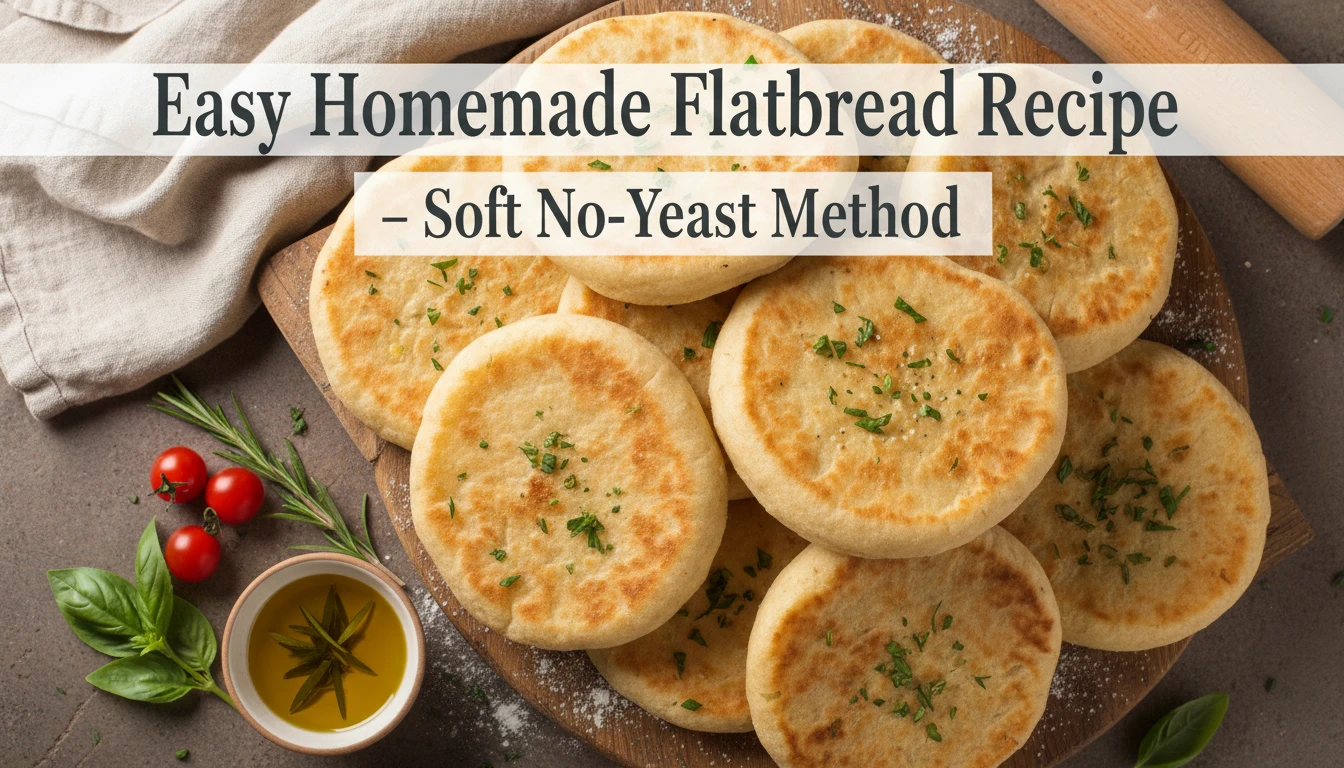
You’ll love how fast and light homemade flatbread can be. I make a simple dough with common pantry staples and show step-by-step how to get soft, pillowy flatbreads in about 30 minutes. You can make tasty flatbread without yeast, long rising times, or fancy equipment—perfect for quick wraps, dipping, or flatbread pizza.
I walk you through easy ingredient swaps, two cooking methods (skillet or oven), and small tricks that keep each piece soft and flexible. Emma Reed and I test these steps so you get reliable results the first time you try them.
Key Takeaways
- Quick, no-yeast or simple-yeast options make homemade flatbread fast and easy.
- Use basic pantry ingredients and simple cooking methods for soft, pliable bread.
- Small tips on handling, cooking, and storing ensure consistent, tasty results.
Contents
- 1 Why Make Flatbread at Home?
- 2 Essential Ingredients for Easy Flatbread
- 3 Step-by-Step Easy Homemade Flatbread Recipe
- 4 Cooking Methods for Flatbread
- 5 Tips for Perfect Flatbread Every Time
- 6 Serving Suggestions and Pairings
- 7 Storing and Freezing Homemade Flatbread
- 8 Easy Recipe Variations
- 9 Troubleshooting and Expert Advice
- 10 FAQs
- 11 Conclusion
Why Make Flatbread at Home?

I find homemade flatbread fast, flexible, and better tasting than store-bought. Making it lets me control ingredients, texture, and cost while getting fresh bread in minutes.
Benefits of Homemade Flatbread
I can change the dough to match a meal or diet. I use all-purpose flour for soft, chewy rounds or whole wheat for more fiber. Adding olive oil, herbs, or garlic gives flavor that prepackaged breads lack.
Homemade flatbread also adapts to cooking tools I have. I cook on a skillet for quick, lightly charred rounds, or bake in a hot oven for puffier loaves. That lets me match texture to a wrap, pizza base, or dip bread.
Making flatbread is simple and fast. Basic recipes need flour, water, salt, and a rising agent like yeast or baking powder. Hands-on time is short, so I can have warm bread the same day without planning ahead.
Cost Comparison
I save money by making flatbread at home. A batch using basic pantry staples costs a few cents per piece versus store-bought flatbreads that often cost several times more. Bulk flour and yeast reduce the per-loaf price further.
I also avoid hidden costs in packaged bread. Store versions can include preservatives, added sugars, or specialty packaging that raise the price. When I bake, I see exactly what goes in and pay only for ingredients I choose.
If I plan weekly meals, homemade flatbread stretches a small budget. One standard recipe yields 6–8 rounds, which cover multiple lunches or dinners. That lowers the per-meal bread cost compared to buying individually wrapped pieces.
Freshness and Quality
Freshness makes the biggest difference to me. Straight from the skillet, flatbread is warm, soft, and fragrant—traits that fade quickly in prepackaged options. Texture and aroma change after hours in plastic wrap; homemade stays superior when eaten warm.
Quality control matters for flavor and health. I pick high-grade flour, fresh yeast or baking powder, and real olive oil. That avoids the fillers and preservatives common in mass-produced breads.
I can also store or freeze homemade flatbread to keep quality. I cool pieces fully, stack with parchment, and freeze in a zip bag. Reheating on a hot pan or in a toaster restores softness far better than microwaving packaged bread.
Essential Ingredients for Easy Flatbread
I focus on a few simple, reliable ingredients that make flatbread soft, flexible, and quick to cook. Each choice—flour, leavening, liquid, fat, and optional add-ins—changes texture and flavor in clear ways.
Flour Types and Recommendations
I usually choose all-purpose flour for everyday flatbreads because it gives a tender crumb and predictable results. Bread flour adds chew and structure when I want a heartier wrap. For lighter, softer flatbreads, I sometimes use half all-purpose and half pastry flour.
If I need gluten-free options, I pick a blend labeled for baking (rice, tapioca, potato starch) and add xanthan gum for elasticity. I measure flour by weight when I can; 1 cup of all-purpose is about 120–125 grams. This keeps dough consistency steady. For whole-wheat versions, I replace up to half the white flour to avoid dense bread and add a touch more water.
Choosing the Right Leavening
I pick leavening based on time and texture goals. Baking powder gives quick lift and a soft, slightly puffed flatbread within minutes. Use about 1 to 1 1/4 teaspoons per 2 cups (250 g) flour for reliable results.
Yeast creates airier, chewier flatbread but needs rising time—usually 1 hour for a quick rise or longer for flavor. Use instant yeast if I want a faster wait. Baking soda works when an acid like yogurt or buttermilk is present. For most easy recipes I rely on baking powder or instant yeast depending on whether I want speed or chew.
Liquids and Fats
Water and milk are common liquids; milk makes a richer, softer crumb while water gives a lighter, more neutral bread. I aim for a tacky but manageable dough—add liquid gradually until the dough forms and pulls from the bowl.
Olive oil or melted butter adds tenderness and flavor. I typically use 1–2 tablespoons of oil per 2 cups of flour. For softer flatbreads, I knead in the fat until the dough feels smooth and slightly glossy. If I use yogurt or buttermilk, I reduce other liquids slightly and enjoy tang and extra tenderness.
Optional Add-Ins and Flavors
I add garlic, chopped herbs, or za’atar for quick flavor boosts. Mix 1–2 cloves minced garlic or 1–2 tablespoons chopped herbs into the dough or brush on cooked flatbreads. Seed toppings like sesame or nigella add crunch when sprinkled before cooking.
For savory fillings, grated cheese folds into the dough or melts on top. I avoid heavy fillings that make the dough soggy. When using dried spices, I start with 1 teaspoon per 2 cups flour and adjust to taste. For trusted guidance on ingredient ratios and techniques, I check resources like King Arthur Baking or Serious Eats for tested tips and troubleshooting.
Step-by-Step Easy Homemade Flatbread Recipe
I show exact measuring tips, dough handling, and simple resting and rolling steps so you get soft, pliable flatbreads every time. Follow the amounts, textures, and heat cues I give to avoid common mistakes.
Measuring Ingredients Accurately
I weigh flour when I can because grams give consistent results. For a small batch, I use 250 g (about 2 cups) all-purpose flour, 1 tsp salt, 1 tsp sugar, 1 tbsp olive oil, and 180–200 ml warm water. If you only have cups, spoon the flour into the cup and level it—do not scoop. Measure yeast by volume or use 7 g (1 packet) active dry yeast.
Use a digital scale and a liquid measure for water. Keep water temperature between 105–115°F (40–46°C) to activate yeast; too hot kills it. If you use instant yeast, mix it directly into the flour. For more on yeast handling and temperatures, see USDA guidance on food safety.
Mixing and Kneading the Dough
I combine dry ingredients first, then add oil and most of the warm water. Stir until the dough forms a shaggy ball. Add remaining water a tablespoon at a time if the dough feels dry.
Knead on a lightly floured surface for 5–8 minutes until the dough is smooth and slightly springy. I push with the heel of my hand, fold, and turn the dough. If it still feels sticky, add a little flour; avoid adding too much to keep the bread soft. For a hands-off method, 5–6 minutes in a stand mixer with a dough hook works well.
Resting and Rolling Techniques
I let the dough rest in a lightly oiled bowl, covered, for 30–60 minutes until it doubles. Rest time relaxes gluten and makes rolling easier. For quicker breads, 20–30 minutes can work if you use a warm spot.
Divide the dough into 6–8 equal pieces and shape them into balls. Flatten each ball with your palm, then roll on a lightly floured surface to about 6–8 inches wide and 1/8–1/4 inch thick. Keep a light dusting of flour under the dough to prevent sticking. Cook on a hot skillet or griddle over medium-high heat for 1–2 minutes per side until brown spots appear. For tips on stovetop cooking and heat control, check a reliable cooking resource like King Arthur Baking.
Cooking Methods for Flatbread
I describe two simple ways I cook flatbreads so they turn soft inside and lightly browned outside. One method uses a hot skillet for quick, charred rounds; the other uses the oven for larger batches and puffier loaves.
Stovetop Skillet Method
I heat a heavy skillet or cast-iron pan over medium-high heat until it is very hot but not smoking. I pat dough into 1/4–1/2-inch rounds, dust them with flour, and cook each side 1.5–3 minutes. Look for golden brown spots and small air bubbles before flipping.
I use a dry pan or a tablespoon of oil for crisp edges. For a quick steam lift, I cover the pan for 20–30 seconds after flipping. This method cooks a single flatbread in minutes, so I work in batches and keep finished breads wrapped in a clean towel.
Tips:
- Preheat the pan for 5 minutes.
- Test one piece to dial in heat.
- If breads brown too fast, lower the heat slightly.
Oven Baking Method
I preheat the oven to 475–500°F (245–260°C) and use a baking stone or hot sheet to mimic a hearth. I stretch dough thinly and place it on a peels or parchment, then transfer it to the hot surface. Baking time runs 4–8 minutes depending on thickness and oven strength.
For puffier pockets, I steam the oven briefly by placing a small pan of hot water on the lower rack. I rotate trays halfway through if my oven has hot spots. This method lets me bake many flatbreads at once and gives even color across the surface.
Helpful links:
- For oven setup and baking stones, I follow tips from the King Arthur Baking website: https://www.kingarthurbaking.com.
- For general oven steam techniques, I reference guidance from Serious Eats: https://www.seriouseats.com.
Tips for Perfect Flatbread Every Time
I focus on a few key details that make flatbread turn out soft, pliable, and evenly cooked. Pay attention to dough hydration, resting time, heat level, and rolling technique.
Avoiding Common Mistakes
I always measure flour by spooning it into the cup or using a scale; packing flour makes dough dry and tough. If the dough feels sticky, I add a tablespoon of flour at a time—too much flour makes flatbreads dense.
I let the dough rest at least 20–30 minutes after mixing. This relaxes the gluten and makes the dough easier to roll thin without springing back. Skipping this step often causes tight, chewy bread.
I preheat my pan until it’s hot but not smoking. A medium-high cast-iron or heavy skillet gives quick puffing and nice brown spots. Cooking on too-low heat makes flatbread pale and dry; too-high heat burns the outside before the inside cooks.
Texture and Thickness Control
I decide thickness based on use: thin for wraps and thick for dipping. For wraps, I roll to about 1/8 inch (3 mm); for dippable flatbreads, I aim for 1/4 inch (6 mm). Use light, even pressure when rolling to avoid thin weak spots.
I test one piece first to confirm cooking time and temperature. If the center stays doughy, I lower the heat and cook a bit longer; if it browns too fast, I raise the heat and reduce time. For consistent texture, I cover cooked flatbreads with a clean towel to keep them soft and pliable until serving.
Serving Suggestions and Pairings
I like flatbread that stays soft and slightly warm. These pairings show how to use flatbread for meals, dips, and quick snacks so you can pick options that fit time and taste.
Best Dishes to Accompany Flatbread
Pair flatbread with saucy mains like chicken shawarma, gyro meat, or slow-cooked lamb so the bread soaks up juices. I serve grilled chicken tossed in garlic-yogurt sauce or spicy BBQ pulled pork for weeknight dinners.
For vegetarian mains, roast vegetables with tahini or a hearty chickpea stew work well. I often plate flatbread alongside a bright Greek salad with cucumber, tomato, and feta for a fresh contrast.
For soup or stew, choose brothy dishes such as lentil soup or tomato bisque. Flatbread replaces crackers and makes the meal more filling. For flavor tips and recipes, I consult Serious Eats or BBC Good Food for reliable technique and seasoning ideas.
Creative Serving Ideas
Use flatbread as a quick pizza base: brush with olive oil, add tomato, mozzarella, and basil, then broil for 3–5 minutes. I also make handheld wraps—spread hummus, add sliced cucumber, pickled onions, and grilled halloumi for a fast lunch.
Turn flatbread into appetizer pieces by cutting into wedges and serving with dips. My favorite trio: roasted red pepper hummus, baba ganoush, and tzatziki. For party platters, arrange sliced flatbread with cured meats, olives, and cheeses so guests can build bites.
If you need freezer tips, stack baked flatbreads with parchment between them and freeze; thaw on the counter or warm briefly in a skillet before serving.
Storing and Freezing Homemade Flatbread
I store flatbread so it stays soft for daily use and lasts longer when frozen. I focus on airtight storage, short room-temperature times, and clear thawing steps.
Proper Storage Techniques
I let flatbread cool to room temperature on a rack before packing it. Warm bread traps steam and gets soggy fast.
For short-term use, I place cooled flatbreads in a resealable plastic bag or airtight container and keep them at room temperature for up to 2–3 days. I add a paper towel to absorb extra moisture if I plan to store them on the counter.
If I need them to last longer, I refrigerate in an airtight container for up to 5 days. I separate layers with parchment or wax paper so they don’t stick.
I avoid leaving flatbread uncovered or in thin plastic without sealing; that dries the bread or lets it pick up odors.
How to Freeze and Reheat
I freeze cooked flatbreads once fully cooled. I stack them with parchment or wax paper between each piece, then place the stack in a heavy-duty freezer bag or airtight container. This prevents sticking and saves space. I label the bag with the date; frozen flatbread keeps well for up to 3 months.
To thaw, I move the number of flatbreads I need to the fridge overnight or leave them on the counter for 30–60 minutes. For best texture, I reheat on a skillet over medium heat for 30–60 seconds per side, or wrap in foil and warm in a 300°F (150°C) oven for 5–10 minutes. I avoid microwaving for long, as it can make the bread chewy; a short zap (10–15 seconds) can work if followed by a quick skillet crisp.
Easy Recipe Variations
I show simple ways to change the basic flatbread into herbed or whole-grain versions. Each option keeps the same easy method but swaps a few ingredients or adds a quick step for more flavor and nutrition.
Herb-Infused Flatbreads
I mix fresh or dried herbs directly into the dough for the best flavor distribution. Use 1–2 tablespoons of chopped fresh herbs (like rosemary, parsley, or cilantro) or 1–2 teaspoons dried; add them with the flour before liquid so they hydrate evenly. For garlic lovers, stir in 1 clove minced garlic or 1/2 teaspoon garlic powder.
I also brush the cooked flatbreads with olive oil and sprinkle a pinch of flaky salt and extra chopped herbs right after they come off the pan. This boosts aroma and gives a glossy finish. For a stronger herb punch, make a simple herb oil: mix 2 tablespoons olive oil, 1 teaspoon lemon zest, and 1 tablespoon chopped herbs, then brush on warm bread.
Tips:
- Fresh herbs: chop fine so they don’t tear the dough.
- Dried herbs: increase quantity slightly for equal flavor.
- Swap herbs to match fillings (mint for lamb, basil for tomato).
Whole Wheat and Multigrain Options
I replace part or all of the all‑purpose flour with whole wheat or a multigrain mix to add fiber and a nutty flavor. Start with a 50/50 ratio: half whole wheat, half all‑purpose. If the dough feels dense, add 1–2 tablespoons extra water per cup of whole wheat to keep the flatbreads soft.
For multigrain, I add 1/4–1/3 cup rolled oats or millet per batch and sprinkle 1 tablespoon of flax or sesame seeds into the dough for texture and healthy fats. Let the dough rest 10–20 minutes before shaping; this lets the whole grains absorb moisture and softens the crumb.
Baking notes:
- Cook slightly longer on low heat to avoid undercooked centers.
- If you want a lighter texture, use white whole wheat flour instead of regular whole wheat.
Troubleshooting and Expert Advice
I focus on practical fixes you can use right away: how to get the dough texture right and how to tune flavor with simple ingredients and timing.
Fixing Dough Consistency Problems
If the dough feels too sticky, add flour 1 tablespoon at a time and knead until it becomes soft but not dry. I aim for a pliable ball that holds shape; it should still stick slightly to your fingers without leaving a paste.
If the dough is too dry or cracks, add cold water ½ teaspoon at a time and fold it in. Let the dough rest 10 minutes after adjusting; rest lets flour hydrate and often fixes small problems without more mixing.
For uneven texture after mixing, knead on a lightly floured surface for 3–5 minutes. Short, firm folds work better than long, vigorous kneading for this simple flatbread. If bubbles form during cooking, gently press them down with a spatula for even thickness.
Achieving the Ideal Flavor
Salt level controls basic taste. I start with ¾ teaspoon of salt per cup of flour and adjust next time if it tastes flat or too salty. Use fine salt so it dissolves evenly in the dough.
Fat adds tenderness and flavor. A tablespoon of olive oil or melted butter per cup of flour makes the flatbread softer and gives a richer mouthfeel. Don’t overdo it; too much fat makes the surface greasy and hard to brown.
If you want a hint of chew or aroma, add ¼–½ teaspoon baking powder for lift or swap 10–20% of the flour for whole wheat for nuttiness. Resting the dough 15–30 minutes before cooking improves flavor and texture by relaxing gluten and letting ingredients meld.
FAQs
Do I need yeast for this recipe?
I usually make the no-yeast version for speed. I swap yeast for 1 tsp baking powder and sometimes 1/2 cup yogurt for a softer, tangy result. Yeast gives more chew and depth if you prefer that.
How long does the dough take to rest?
If using yeast, I let it rise about 45–60 minutes for a light texture. For no-yeast dough, a short 10–20 minute rest makes it easier to roll and keeps the bread soft.
Can I cook these on a stovetop?
Yes. I cook each piece 2–5 minutes total in a hot skillet, flipping once, until golden spots form. A cast-iron or nonstick pan works best.
How do I store and reheat leftovers?
I store flatbreads in an airtight bag for up to 3 days in the fridge or freeze for up to 2 months. To reheat, I wrap them in foil and warm in the oven, or quickly toast in a skillet.
What fillings and uses work well?
I use these for wraps, dipping, or pizza bases. They hold up to grilled veggies, spreads, or sandwich fillings without falling apart.
Can I make the dough ahead?
Yes. I keep the dough in the fridge for up to 3 days. Cold dough is easy to portion and roll when I take it out.
Conclusion
I find this flatbread recipe quick and forgiving, which makes it great for weeknight meals and last-minute plans. The dough comes together fast, and you can cook the breads on a skillet or in the oven.
You can change the flour, add herbs, or make it whole wheat to suit your taste. I often double the batch and freeze extra rounds for easy use later.
Try them as wraps, dip them in olive oil, or use them under a saucy curry. They hold up well and stay soft when stored in an airtight container.
If you want a simple reference, here’s a quick tip list:
- Use all-purpose flour for soft flatbreads.
- Add a little oil to keep them pliable.
- Cook on medium-high heat for light browning.
I hope this recipe helps you make reliable, tasty flatbreads with minimal fuss.