
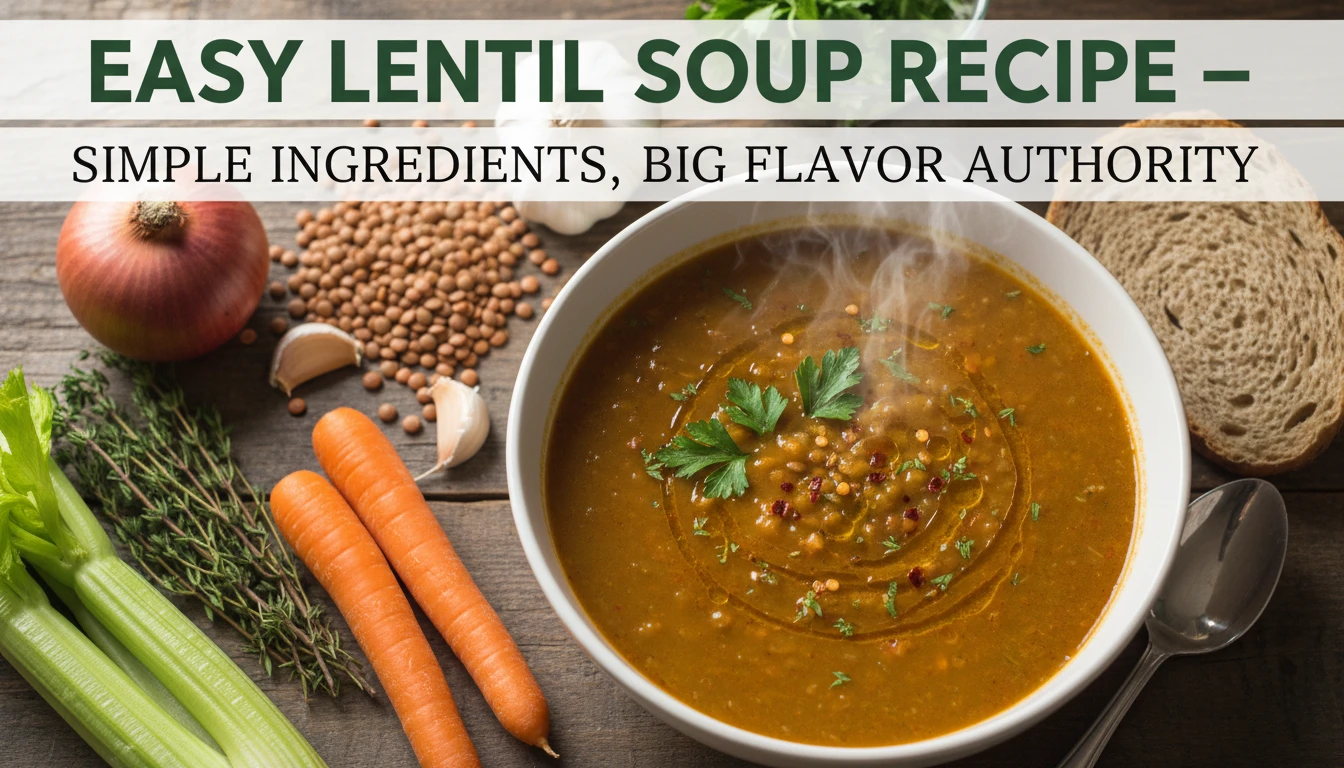
You’ll love how fast this lentil soup comes together and how few ingredients it needs. You can make a hearty, healthy pot of lentil soup in about an hour using pantry staples, simple vegetables, and a squeeze of lemon for brightness. I’ll walk you through a clear, no-fuss recipe that Emma Reed helped test so you get reliable results every time.
I keep the steps simple so you can cook this on a weeknight or make a big batch for meal prep. You’ll find tips for texture, seasoning, and quick swaps so the soup fits your pantry and taste.
Key Takeaways
- Make a tasty lentil soup fast with basic pantry ingredients.
- Follow straightforward steps to get consistent texture and flavor.
- Use simple swaps and storage tips to suit meals all week.
Contents
Why Make an Easy Lentil Soup

I find lentil soup hits three practical needs: it boosts nutrition, cooks fast, and fills you up with steady energy.
Health Benefits of Lentils
Lentils pack a strong nutrition profile that helps daily health. One cup of cooked lentils gives about 18 grams of protein and 16 grams of fiber, which supports muscle repair and steady blood sugar. They also provide iron, folate, and potassium—key nutrients for energy, pregnancy health, and blood pressure control.
Lentils are low in saturated fat and naturally gluten-free, which makes them a good option for heart-healthy or gluten-free diets. I often point readers to the USDA nutrient database for exact values and to the Harvard School of Public Health for context on legumes and heart health. These sources help verify serving sizes and nutrient claims.
Quick and Nutritious Meal
Lentil soup cooks in 20–45 minutes depending on lentil type and method, so it fits weeknights. Red lentils break down fast and thicken soup; brown or green lentils hold shape and add texture. I use basic pantry ingredients—onion, carrot, celery, broth, and spices—so the soup stays inexpensive and simple to prep.
This soup reheats well and freezes neatly in single portions. That makes batch-cooking practical: one pot can turn into several lunches or dinners. For time-saving tips and pressure-cooker options, I recommend checking Instant Pot or slow-cooker guides from reliable cooking resources.
Flavorful and Satisfying
Lentils absorb flavors from aromatics and spices, so the soup can taste rich without meat. I sauté onions and garlic first to build a savory base, then add herbs like thyme or bay leaf and a splash of acid—lemon juice or vinegar—to brighten the bowl. A finishing drizzle of olive oil or a spoonful of yogurt adds silkiness and depth.
Texture matters: I sometimes pulse half the soup with an immersion blender to get creamy body while keeping some whole lentils for bite. That mix makes the soup feel hearty, so one bowl can serve as a full meal with bread or a side salad.
Essential Ingredients for Easy Lentil Soup
I focus on a few pantry staples that give the soup body, flavor, and balance: the right lentils, fresh vegetables and aromatics, and a simple mix of herbs and seasonings. These choices shape texture and taste more than fancy ingredients.
Choosing the Right Lentils
I pick lentils based on how I want the soup to turn out. Brown and green lentils hold their shape and give a firmer, stew-like texture. Red or yellow lentils break down and make a smoother, creamy soup without blending.
I keep dried lentils on hand because they’re cheap and cook reliably. Rinse them under cold water and check for small stones. No pre-soaking is needed for most lentils; they usually cook in 15–25 minutes depending on type.
If I want a mix of texture, I combine green lentils with a handful of red lentils. For clear, separate lentils, aim for a 2:1 ratio of water to lentils for stovetop cooking. For precise cooking times and nutrition info, I often consult USDA guidelines or reputable sources like the BBC Good Food lentil guide.
Vegetables and Aromatics
I always start with a base of onion, carrot, and celery—classic mirepoix. Dice them small so they soften quickly and release natural sweetness. I sauté these in olive oil until the onion is translucent to build flavor.
Garlic adds depth; I add minced garlic near the end of the sauté so it doesn’t burn. I like adding diced tomatoes or tomato paste for acidity and color. For extra heartiness, toss in chopped potatoes or spinach toward the end of cooking.
For convenience, frozen diced vegetables work well and cut prep time. Keeping a jar of low-sodium vegetable or chicken stock gives more consistent results than water alone.
Herbs and Seasonings
I keep seasoning simple: salt, black pepper, and a bay leaf or two while simmering. Bay leaves give a subtle background note that improves over time. For warmth, I add a pinch of cumin or smoked paprika.
Fresh herbs brighten the soup at the end. I stir in chopped parsley or cilantro off the heat. Lemon juice or a splash of red wine vinegar right before serving lifts flavors and balances the lentils’ earthiness.
If I need guidance on safe herb amounts or substitutions, I check credible resources like Mayo Clinic for herb safety and common spice uses. I avoid heavy cream and rely on olive oil or an immersion blender to create creaminess when needed.
Step-by-Step Cooking Instructions
I’ll show exactly what to prep, how to build flavor, the timing for simmering, and the final steps to finish and serve the soup. Follow the steps in order for steady results and a rich, balanced soup.
Preparing the Ingredients
I start by measuring and chopping everything before I heat the pot. Dice one medium onion, two carrots, and two celery stalks into small, even pieces so they cook at the same rate. Mince two garlic cloves and rinse 1 to 1 1/2 cups of dried lentils under cold water until the rinse water runs clear.
I keep one 14-ounce can of diced tomatoes ready, or 2 cups fresh chopped tomatoes if I have them. I measure 4 cups of vegetable or chicken broth and set aside a bay leaf, 1 teaspoon ground cumin, 1/2 teaspoon smoked paprika, and salt and pepper. If I use fresh herbs, I chop 2 tablespoons of parsley at this stage.
Place everything in bowls near the stove for easy access. This “mise en place” speeds cooking and prevents overcooking the aromatics.
Sauteing and Layering Flavors
I heat 2 tablespoons of olive oil in a large pot over medium heat. Once the oil shimmers, I add the diced onion, carrots, and celery and stir every minute until the onion is translucent, about 5–7 minutes. This step builds the base flavor.
Next I add the minced garlic, cumin, and smoked paprika and cook for 30–60 seconds until fragrant. I then stir in the rinsed lentils and toast them for 1–2 minutes to deepen their flavor. If using tomato paste, I add 1 tablespoon now and cook for another minute to remove rawness.
I deglaze the pot with a splash (about 1/4 cup) of broth or water, scraping up browned bits. This captures flavor and prevents burning.
Simmering and Cooking Times
I add the remaining 3 3/4 cups broth, the canned tomatoes (with juices), and the bay leaf. I bring the pot to a boil over high heat, then immediately lower to a gentle simmer. Cover partially to prevent splatter while allowing steam to escape.
Cook 25–35 minutes for brown or green lentils, checking at 20 minutes for tenderness. Red lentils cook faster — about 15–20 minutes — and tend to break down, making a thicker soup. Stir occasionally and skim foam if it forms. Add salt halfway through to taste; lentils absorb seasoning as they cook.
If the soup thickens too much, add 1/2 cup hot broth or water at a time until you reach the desired consistency. Remove the bay leaf before serving.
Final Touches and Serving
I check seasoning last: add salt, pepper, and a squeeze of lemon juice to brighten the soup. Stir in 2 cups of chopped hearty greens like kale or spinach and cook 2–3 minutes until wilted. For creamier texture, I puree 1–2 cups of the soup with an immersion blender or in a blender, then return it to the pot.
Garnish options I use include chopped parsley, a drizzle of olive oil, or a spoonful of plain yogurt. Serve with crusty bread or a simple salad. For more tips on lentil varieties and cook times, I consult resources like the USDA lentil cooking guide and Serious Eats’ lentil primer.
Tips for the Perfect Lentil Soup
I focus on simple, practical steps that control soup texture, boost flavor, and keep lentils intact. Small changes—like when to salt, how long to simmer, and what to add at the end—make the biggest difference.
Adjusting Texture and Thickness
If you want a thicker soup, I remove 1–2 cups, blend them, and stir the puree back in. That adds body without extra ingredients. Alternatively, cook fewer liquids: start with 2 cups broth per cup of lentils for a hearty texture, or add more broth for a brothy finish.
To thin a soup that turned out too thick, I stir in hot water or reserved broth a little at a time until it reaches my target. For a creamier mouthfeel without dairy, I mash some cooked potatoes or carrots into the pot. If using canned tomatoes, I drain excess liquid first to avoid thinning the soup too much.
Control simmer time to change texture. Shorter cooks keep lentils firmer; longer cooks soften them and break them down into a thicker base. I taste every 10 minutes near the end to stop at the texture I like.
Enhancing Flavor Profiles
I build flavor in layers. Start by sautéing onions, carrots, and celery until soft and slightly browned. Next I toast dry spices (cumin, coriander) for 30 seconds to wake up their oils before adding liquids.
Salt timing matters. I add a small amount early to help season the lentils as they cook, then adjust at the end. Acid brightens the soup; I add vinegar or lemon juice in small splashes at the very end and taste after each addition.
Fresh herbs at the end—parsley, cilantro, or dill—add lift. For richness, I finish with a drizzle of olive oil, a spoonful of tahini, or a pat of butter. If I want smoky depth, I add a small pinch of smoked paprika or a splash of soy sauce for umami.
Preventing Mushy Lentils
I choose the right lentil. Brown and green hold their shape better; red and yellow break down quicker. Check the package cooking time as a guide and cut it by 10–20% if I want firmer texture.
I avoid over-stirring during the latter part of cooking. Stirring too much can break lentils apart. I also add acidic ingredients like tomatoes or vinegar only near the end, since acid slows lentil softening and can leave them undercooked if added too soon.
If lentils absorb too much liquid before they’re tender, I add hot broth or water and continue simmering gently. For even cooking, I keep a steady low simmer and cover the pot partially to control evaporation.
Variations and Customizations
I focus on simple swaps that change texture, flavor, and nutrition without adding fuss. The options below show how to add protein or grains, keep the recipe vegan or vegetarian, and shift the spice profile to match different cuisines.
Adding Protein or Grains
I often add cooked grains or proteins to turn lentil soup into a full meal. For grains, I stir in 1 cup cooked rice, farro, or small pasta like ditalini near the end so they don’t mush. Quinoa works well too and boosts protein quickly.
For animal proteins, I add shredded rotisserie chicken, diced ham, or browned Italian sausage. Add these after the lentils are tender so the meat stays tender and flavorful. For beans, canned cannellini or chickpeas add creaminess and extra fiber; rinse them first.
If you want a higher-protein vegan option, add cooked tempeh crumbles or soft tofu cubes. I sometimes blend half the soup and mix it back in to thicken the broth without adding cream.
Making It Vegan or Vegetarian
I keep the soup vegan by using vegetable broth and skipping any meat additions. For deep flavor, I sauté onion, carrot, and celery until caramelized, then deglaze the pot with a splash of red wine or vinegar. A tablespoon of soy sauce or miso adds savory umami without meat.
If I want vegetarian but not strictly vegan, I finish with grated Parmesan or a pat of butter for richness. For dairy-free creaminess, I stir in mashed potato or a tablespoon of tahini. To boost iron and B12 for plant-based eaters, I pair the soup with fortified nutritional yeast sprinkled on top. For more tips on plant-based broths and nutrition, I check resources like the Academy of Nutrition and Dietetics.
Spices from Different Cuisines
I change the spice mix to give the soup a clear regional note. For Mediterranean style, I add oregano, bay leaf, and a squeeze of lemon; finish with chopped parsley and a drizzle of olive oil. For Middle Eastern flavor, I use cumin, coriander, and a pinch of cinnamon, then top with chopped cilantro and a dollop of plain yogurt.
To make it Southwestern, I add chili powder, smoked paprika, and a chipotle in adobo; garnish with lime and cilantro. For Indian-inspired lentil soup (dal-style), I temper mustard seeds, curry leaves, turmeric, and cumin in oil and pour that over the finished soup. I consult spice guides on trusted sites like Serious Eats when I try unfamiliar blends to balance heat and aroma.
Storing and Reheating
I store leftovers to keep flavor and texture, and I follow simple rules for safety. I cool soup quickly, pick the right containers, and label with dates to avoid guesswork.
Proper Storage Methods
I let the soup cool at room temperature no longer than two hours before storing. I divide large batches into shallow, airtight containers—this helps the soup cool faster and evenly.
I use glass or BPA-free plastic containers with tight lids. I leave a small space at the top if I plan to freeze a container to allow for expansion. I label each container with the date made and contents.
I refrigerate soup at 40°F (4°C) or below and use it within 4–5 days. If the soup shows off smells, mold, or an odd texture, I discard it.
Freezing Lentil Soup
I cool soup completely before freezing to prevent ice crystals and texture changes. I portion soup into freezer-safe containers or heavy-duty freezer bags; I remove excess air from bags to limit freezer burn.
I leave about 1 inch of headspace in rigid containers so the soup can expand. I date each package and try to use frozen soup within 3 months for best flavor.
To thaw, I move packages to the refrigerator overnight or use the defrost setting on a microwave for quicker thawing. I never refreeze soup that has fully thawed unless I reheated it to a safe temperature first.
Best Reheating Practices
I reheat soup on the stovetop over medium heat, stirring occasionally until it reaches a steady simmer. This brings the soup to at least 165°F (74°C) and restores texture better than microwaving.
If I use a microwave, I heat in short intervals (30–60 seconds), stirring between intervals to avoid hot spots. I cover the bowl with a microwave-safe lid or plate to keep moisture in.
I only reheat the portion I will eat and avoid reheating multiple times. If the soup seems too thick after refrigeration, I add a splash of water or broth while reheating to loosen the texture.
Serving Suggestions
I like to serve this lentil soup with warm bread for dipping. A crusty baguette or soft no‑knead rolls soak up the broth well and add comforting texture.
For a heartier meal, I pair the soup with a grilled cheese or toasted sandwich. The melted cheese contrasts nicely with the earthy lentils and makes it more filling.
I often add a simple side salad to brighten the plate. A spinach or mixed‑greens salad with lemon vinaigrette cuts the richness and adds fresh flavor.
Garnishes let me change the soup quickly. I sprinkle chopped parsley, a drizzle of olive oil, or a squeeze of lemon juice. A dollop of plain yogurt or a swirl of pesto also lifts the taste.
If I want extra protein or variety, I serve roasted vegetables or a grain bowl alongside. Roasted carrots, sweet potatoes, or a small scoop of brown rice pair well.
Quick chart for pairings:
- Bread: baguette, no‑knead rolls, sourdough
- Sandwiches: grilled cheese, panini
- Salads: spinach, mixed greens with lemon vinaigrette
- Garnishes: parsley, olive oil, lemon, yogurt, pesto
I sometimes freeze single servings for busy nights. Reheat gently on the stove and add a splash of water if it’s too thick.
Nutritional Information
I focus on simple, balanced nutrition when I make this lentil soup. A typical serving (about 1.5 cups) provides a good mix of protein, fiber, and complex carbohydrates without many added fats.
- Protein: Lentils are a strong plant protein source. One serving usually gives about 12–18 grams of protein, which helps keep me full and supports muscles.
- Fiber: Expect 10–16 grams of fiber per serving. That helps digestion and keeps blood sugar steadier after meals.
- Calories: A standard serving tends to range from 180–300 calories, depending on added oil, broth type, and extra ingredients like potatoes or pasta.
I watch sodium levels by using low-sodium broth or rinsing canned tomatoes. Sodium can rise quickly, so I season lightly and adjust at the table.
Below is a simple nutrition snapshot per serving (approximate):
| Nutrient | Amount |
|---|---|
| Calories | 180–300 kcal |
| Protein | 12–18 g |
| Fiber | 10–16 g |
| Carbohydrate | 25–40 g |
| Fat | 1–6 g |
| Sodium | 200–600 mg (varies) |
I can adapt the recipe to meet different needs. To boost iron and B vitamins, I add leafy greens; to lower calories, I reduce oil and use more vegetables.
FAQs
Can I use canned lentils instead of dried?
Yes. I drain and rinse canned lentils and add them near the end of cooking. That cuts total time by about 15–20 minutes.
How do I make the soup thicker or thinner?
For thicker soup, I mash some lentils against the pot wall with a spoon. For thinner soup, I stir in extra broth or water until I reach the texture I want.
Is this soup suitable for meal prep and freezing?
Absolutely. I cool the soup before refrigerating up to 4 days. For freezing, I portion it into airtight containers and freeze up to 3 months.
What seasonings work best?
I use salt, pepper, garlic, and a bay leaf as a base. Cumin, smoked paprika, or thyme add nice flavor without overpowering the lentils.
How do I add protein or greens?
I stir in cooked sausage, shredded chicken, or browned tofu for more protein. Baby spinach or chopped kale work well; I add them 5 minutes before the end so they wilt but keep color.
Quick reference
Cooking time: 20–30 min (dried lentils)
Canned lentils: add near end
Storage: fridge 4 days, freezer 3 months
Conclusion
I love how this lentil soup comes together with simple ingredients and small effort. It fills the kitchen with warm aromas and makes a roomy, healthy meal in under an hour.
I often double the recipe for meal prep. Leftovers store well and taste even better the next day, so it saves time on busy nights.
I tweak seasoning at the end with lemon or vinegar to brighten the flavors. A sprinkle of fresh herbs or a drizzle of olive oil adds a fresh finish.
I find the soup works for many diets—vegetarian, vegan, and gluten-free—when I use vegetable broth. It also stretches to feed more people when I add extra vegetables or greens.
I recommend trying one small change each time you make it. That way you learn what you like best without risking a whole pot.