
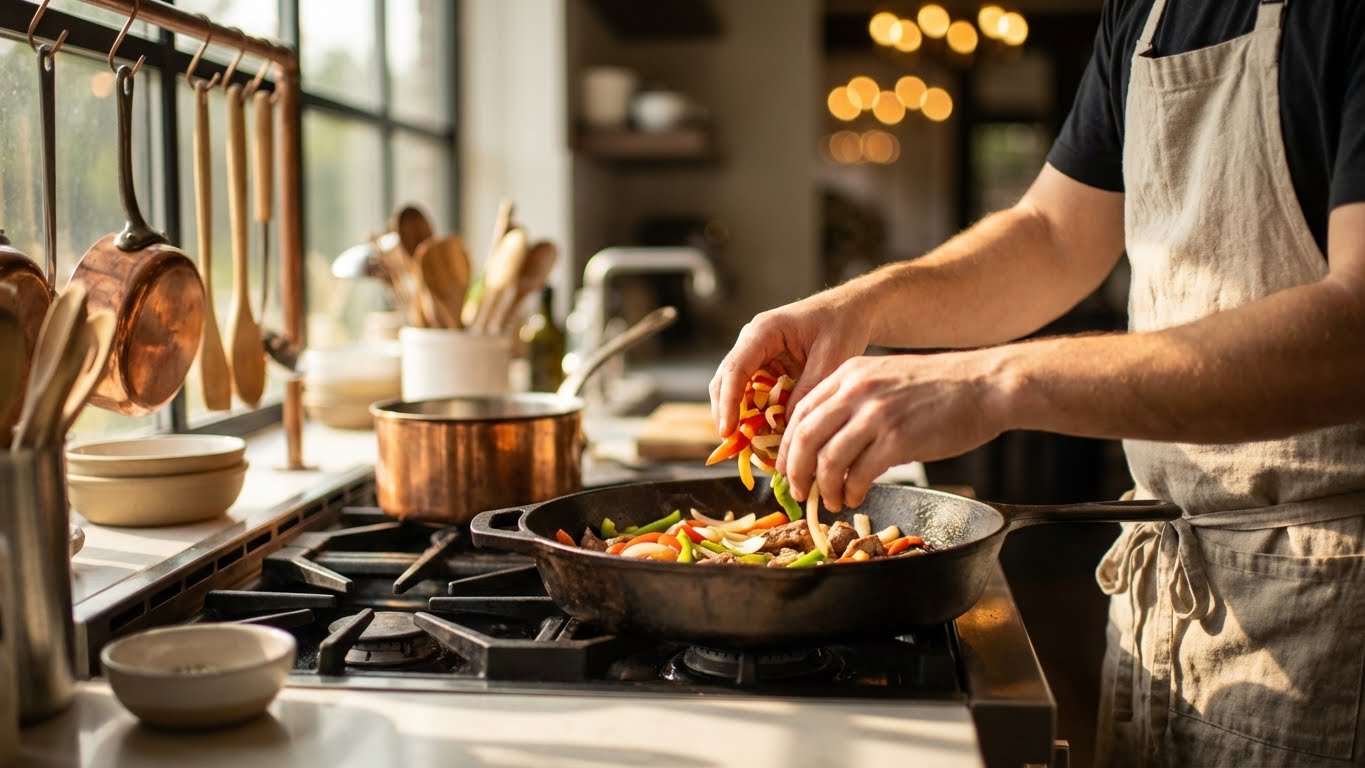
You want food that cooks evenly without stress or guesswork. I show simple, reliable techniques you can use now to fix hot spots, uneven centers, and undercooked edges. Use proper prep, match pan size and heat, and let heat move freely so ingredients finish at the same time.
I’m Emma Reed, and I’ve tested these tips in real kitchens so you don’t waste time or ingredients. I explain how small changes—like consistent cuts, room-temperature ingredients, and correct rack placement—make a big difference across ovens, stovetops, and grills.
I walk you step-by-step through easy fixes, common mistakes to avoid, and quick checks you can do while cooking to keep everything on track.
Key Takeaways
- Prep ingredients and choose cookware to help everything cook at the same rate.
- Control heat and allow airflow to prevent hot or cold spots.
- Monitor and adjust during cooking to catch issues before they ruin the dish.
Contents
- 1 Understanding Heat Distribution
- 2 Essential Techniques for Even Cooking
- 3 Choosing and Using the Right Cookware
- 4 Temperature Control Methods
- 5 Proper Preparation Before Cooking
- 6 Monitoring Progress and Making Adjustments
- 7 Simple Tools to Aid Even Cooking
- 8 Common Mistakes to Avoid
- 9 Practical Examples for Common Dishes
- 10 Adapting Techniques for Different Appliances
- 11 Conclusion
Understanding Heat Distribution

I explain how heat moves in the kitchen, why ovens and pans get uneven spots, and how to spot those hot areas so you can fix them fast.
Types of Heat Transfer
Heat moves three ways: conduction, convection, and radiation.
Conduction happens when a pan touches food. I use thicker, heavy-bottomed pans for steady conduction because they spread heat across the surface instead of letting one spot get too hot.
Convection means hot air or liquid moves. I rely on a fan in a convection oven or bubbling oil on a stovetop to move heat around. This helps cook the food more evenly but needs space so air or liquid can flow.
Radiation is direct heat from a flame or broiler. I keep food at the right distance from the source to avoid burning the outside while the inside stays raw. Each method matters for choosing tools and timing.
Common Causes of Uneven Cooking
Thin or warped cookware creates hot spots quickly. I avoid cheap pans with thin bases because they heat unevenly and cause parts of food to burn while other parts stay underdone.
Crowding the oven or pan blocks air and heat. I leave space between items so convection can work. Overloaded trays or pans also change cooking time.
Incorrect rack placement and wrong temperature settings add to the problem. I place racks mid-oven for most baking and lower for broiling. I also preheat fully and use an oven thermometer to confirm the actual temperature.
Recognizing Hot Spots
Look for uneven browning, raw centers, or burned edges. I check baked goods by rotating trays halfway and by moving pieces within the pan to see which areas cook faster.
On the stovetop, place a slice of bread on the pan for 30–60 seconds. I watch where it toasts first to map hot spots. For ovens, I set small pieces of dough across a tray to see how evenly they rise and brown.
When I find a hot spot, I move food, lower heat, or switch pans. These quick tests help me fix problems before the whole dish is ruined.
Essential Techniques for Even Cooking
I focus on a few simple actions that make food cook at the same rate: get cookware hot before adding food, move food when heat zones form, and place pieces so smaller items don’t cook faster than larger ones.
Preheating Your Cookware
I always preheat pans and ovens to the correct temperature before adding food. For pans, I set medium heat for 1–2 minutes for nonstick, and 2–4 minutes for stainless steel or cast iron. You want a steady shimmer of oil or a drop of water to skitter across the surface.
Preheating prevents food from sticking and creates an even sear. For oven roasting, I wait until the oven reaches the target temp and use the center rack for the most uniform heat. If a recipe calls for a hot tray, I preheat the tray inside the oven.
Tips I use:
- Test pan heat with a small oil film or water bead.
- Use an oven thermometer for accuracy.
- Heat heavier pans longer than thin pans.
Stirring and Turning
I stir or turn food to expose all sides to heat and to mix hotter and cooler spots. For stir-fries and sautés, I toss every 30–60 seconds so vegetables and proteins cook at similar rates. For meats, I flip once or twice to keep juices balanced.
When baking, I rotate trays halfway through the cook time to offset hot spots. Use tongs or spatulas that reach the center without crowding the pan. Avoid constant stirring for foods that need a crust; let them sit briefly to brown before turning.
Quick checklist:
- Stir small pieces often.
- Turn large pieces less often to preserve crust.
- Rotate oven trays mid-cook.
Arranging Ingredients Strategically
I arrange items by size and thickness so each piece gets the right heat. On a sheet pan, I put thicker cuts like chicken thighs toward the hotter side and small vegetables closer to the center. In a pan, I leave space between pieces so air and heat circulate.
I group similar-sized pieces together when roasting or grilling. If pieces must mix, I cut larger pieces smaller or start them earlier on the heat. For layered cooking, I place items that need more time on the bottom to get direct heat while delicate items sit on top or get added later.
Simple rules I follow:
- Crowd less; use extra pans if needed.
- Match size and thickness.
- Start thick items first or cut them down.
Choosing and Using the Right Cookware
I focus on heat control, pan contact with heat, and the right surface for each task. Pick cookware that spreads heat fast, holds temperature, and matches the food and cooking method.
Selecting Materials for Even Heating
I prefer pans with good heat conduction and stable cores. Copper and aluminum conduct heat quickly and give even results, but copper reacts with acid and aluminum can warp unless clad. Look for clad stainless steel (tri-ply or more)—stainless on the outside for durability, aluminum or copper inside for even heat.
If you use gas, I recommend thicker bases to avoid hot spots from the flame. For electric or induction, ensure the pan has flat, magnetic bases; induction needs a ferrous layer. For reference on induction compatibility and cookware construction, see this guide from the U.S. Department of Energy and the cookware basics at a trusted retailer like Williams Sonoma.
Cookware Size and Shape
Match pan size to burner size. A 10-inch pan on a small burner wastes heat; a 12-inch pan on a small ring creates cold edges. I choose pans where the flame or element reaches most of the base.
Shallow pans heat quickly and suit searing or sautéing. Deep-sided pots hold heat for stewing and braising. Choose wider pans for foods that need evaporation (like reducing sauces) and taller pots for soups to reduce splatter. When cooking multiple items, use even contact surfaces—flat bottoms, not warped—to keep contact with the heat source.
Handling Nonstick and Cast Iron
Nonstick works best for low-fat cooking and eggs. I heat nonstick pans gently and avoid high heat to preserve the coating. Use silicone or wooden tools to prevent scratches and wash by hand to extend life.
Cast iron holds high heat and smooths out hot spots once seasoned. I preheat cast iron slowly and finish sears with a short rest off the heat to even internal temperature. Keep a well-maintained seasoning layer; that reduces sticking and improves heat distribution. For care tips and seasoning methods, check the guide from the Smithsonian or a trusted cookware resource.
Temperature Control Methods
I focus on three practical ways to keep heat steady and predictable so food cooks evenly. You’ll learn how I set burners, why I use low-and-slow heat, and how I check oven accuracy.
Managing Burner Settings
I match burner size to pan size every time. A small pan on a large burner wastes heat and creates hot spots; a large pan on a small burner leaves edges undercooked. I place the pan center on the flame and use medium-low for most tasks to avoid burning the outside before the inside cooks.
I watch how oil shimmers or a drop of water dances to judge pan temperature. If I need a quick sear, I preheat on medium-high for 2–3 minutes, then lower the heat when I add the food. I also move food around the pan to even out browning when necessary.
Cooking with Low and Slow Heat
I use low-and-slow for thick cuts, stews, and custards to avoid drying or overcooking. Low heat (225–300°F / 107–149°C when using an oven) lets collagen break down and distributes heat to the center without toughening proteins. On the stovetop, I set a simmer (small steady bubbles) rather than a rolling boil.
I stir gently and give the dish time to reach temperature throughout. I check doneness with an instant-read thermometer or by feel for tenderness. Patience here pays off: the result stays moist and cooks through evenly.
Utilizing Oven Thermometers
I never trust the oven dial alone. Oven temperatures can be off by 25–50°F (14–28°C). I place a reliable oven thermometer on the center rack and check it before cooking to calibrate my settings.
I note hot spots by testing multiple rack positions with the thermometer. If one rack reads hotter, I rotate pans halfway through baking or move them to the correct rack. For recipes needing precise temps (custards, roasts), I preheat longer and adjust the oven setting until the thermometer matches the recipe temperature.
Proper Preparation Before Cooking
Good prep cuts cooking time and keeps textures even. I focus on two things that matter most: temperature of ingredients and size consistency.
Bringing Ingredients to Room Temperature
I take meat, eggs, and butter out of the fridge 20–30 minutes before cooking. For thicker cuts of meat, I leave them out 30–60 minutes so heat reaches the center more evenly. Cold meat seizes in a hot pan and browns unevenly; room-temperature meat cooks through at a steadier rate.
For dairy and eggs used in batters or sauces, I place them on the counter until they lose chill. Cold butter can break emulsions; warm butter blends smoother and warms faster. If time is short, I set items on a warm surface or use brief, gentle warming — not hot — to avoid starting the cooking process.
Cutting Food into Uniform Sizes
I cut vegetables, meat, and poultry into pieces of the same size and thickness. This simple step makes sure every piece finishes at the same time, reducing overcooked edges and undercooked centers. For example, carrots cut into 1/4-inch rounds will roast and caramelize uniformly.
I use a sharp knife and a steady guide hand to keep cuts even. If a recipe calls for cubes, I measure visually or use a ruler for consistency. When frying or sautéing, I avoid mixing very small and very large pieces in one pan; if needed, I cook the larger pieces first or separate batches.
Monitoring Progress and Making Adjustments
I watch food closely and change small things as needed to keep heat even and avoid overcooking. I rely on visual checks, timing, and quick tests to decide when to rotate, reduce heat, or finish cooking.
Rotating Food During Cooking
I rotate pans or turn items to expose cooler spots to heat. In the oven, I move sheet pans from front to back and swap rack positions halfway through a bake. For grills, I shift items from hotter zones to cooler zones every few minutes for even char and internal cooking.
I use a simple checklist when rotating:
- Time interval: rotate every 8–12 minutes for larger items; every 3–5 minutes for small pieces.
- Position change: swap front/back and left/right on the rack or grill.
- Visual cue: look for uneven browning or hot spots and rotate sooner if needed.
When using a skillet, I stir or flip to expose all sides to the pan’s hot center. I avoid over-handling delicate items; instead I nudge them gently and rotate the pan if needed.
Testing for Doneness
I use a thermometer for meat and a fork or toothpick for vegetables and baked goods. For poultry and pork, I check for 165°F (74°C); for beef and lamb I use 130–165°F depending on desired doneness. I insert the probe into the thickest part, avoiding bone and fat.
For vegetables, I test tenderness with a fork. If it slides in easily, the vegetable is done. For cakes and quick breads, I use a toothpick: it should come out with a few moist crumbs, not wet batter.
I also watch for visual and textural signs: clear juices on meat, browning level on crusts, and spring-back when pressing bread or roasts. If an item needs a little more time, I add short intervals (2–5 minutes), then recheck.
Simple Tools to Aid Even Cooking
I pick tools that spread heat well and lift food away from hot surfaces. The right pans and racks change how heat moves and reduce hot spots.
Using Baking Stones and Sheet Pans
I use a baking stone or heavy sheet pan to stabilize oven temperature. A preheated baking stone stores heat and gives a steady, even bottom heat for bread, pizza, and roasted vegetables. If I don’t have a stone, I place a heavy, rimless sheet pan on the middle rack during preheat to mimic that effect.
Choose materials with good heat retention: unglazed ceramic, cordierite, or a thick steel baking steel work best. Avoid thin aluminum pans for items that need even browning; they can warp and create hot spots. I also check oven placement — one stone or pan on the middle rack and nothing directly beneath keeps airflow balanced. For more on heat retention and materials, I refer to advice from the USDA and reputable cookware guides like Cook’s Illustrated.
Incorporating Wire Racks
I use wire racks to lift food for even air circulation and crisping. Placing meat or baked goods on a wire rack set inside a sheet pan lets hot air reach all sides, preventing soggy bottoms and uneven cooking. This matters most for roasting chicken, cooling baked goods, or crisping fries.
Pick racks with close, sturdy wires that won’t sag under weight. For roasting, I use a low-rim pan under the rack to catch drips and keep the oven clean. For baking, I rotate the rack 180 degrees halfway through the cook time to fight oven hot spots. The USDA Food Safety site offers guidance on rack placement for safe, even roasting.
Common Mistakes to Avoid
I often see cooks rush the prep step and pay for it at the stove. Skipping mise en place—measuring, chopping, and setting ingredients out—leads to uneven timing and uneven cooking. Take a few minutes to organize; it makes heat control much easier.
I also notice people overcrowd pans. Too much food cools the pan and causes steaming instead of browning. Cook in batches when needed so each piece gets direct heat and space.
I’ve burned food by using the wrong pan or weak heat. Thin pans lose heat quickly and create hot spots. Use a heavier, well-heated pan for steadier temperatures and more even cooking.
Seasoning only at the end is another trap I fell into. Salt early and in layers; it helps flavors develop and distributes taste more evenly. Taste as you go, but don’t over-salt.
I used to flip too often and learned not to. Constant turning prevents a proper crust and even cooking. Let food sear, then turn once for a more uniform finish.
Lastly, I sometimes ignored oven calibration. An oven that runs hot or cold changes cooking times and results. Check your oven temperature with an inexpensive thermometer and adjust recipes or settings accordingly.
- Quick checklist I use:
- Mise en place ready
- Don’t overcrowd the pan
- Use the right pan and heat
- Season in layers
- Limit flipping
- Verify oven temp
Practical Examples for Common Dishes
I focus on simple steps you can use right now to get even heat, consistent texture, and predictable results. Each example shows timing, temperature, and a clear technique you can repeat.
Cooking Meats Evenly
I bring meat to room temperature for 20–30 minutes before cooking. This reduces the cold center and helps the surface and interior cook at similar rates. For steaks, I pat them dry, season, and use high heat for searing (425–500°F / 220–260°C) for 1–2 minutes per side, then move to lower heat or the oven (350°F / 175°C) until the internal temp reaches target (e.g., 125°F for medium-rare). I always use a thermometer placed in the thickest part.
For larger roasts, I sear all sides first, then roast at moderate heat (325–350°F / 160–175°C). I rest meat 10–20 minutes under foil to let juices and temperature equalize. For thin cuts or chicken breasts, I slice to even thickness or pound to uniform thickness so they cook through at the same time.
Roasting Vegetables Properly
I cut vegetables into uniform pieces — same size means same cook time. I spread them in a single layer on a rimmed sheet pan so hot air and direct contact give even browning. I preheat the pan in the oven for a few minutes; a hot pan starts caramelization faster.
I toss vegetables with oil, salt, and a little acid (lemon or vinegar) for flavor balance. I roast at 400–425°F (200–220°C) for most roots and sturdier veg, turning halfway. Tender vegetables like asparagus need lower time (8–12 minutes). If pieces brown too fast, I lower the temp 25°F and extend time to avoid burnt outsides and raw centers.
Perfecting Baked Goods
I weigh ingredients when possible; the same mass yields consistent dough and batter. For cookies, I chill dough to prevent excessive spread so centers bake through without burning edges. I use even scoops and space trays to allow hot air circulation.
For cakes and quick breads, I preheat the oven and place pans in the center rack. I check doneness with a toothpick and watch for spring-back near the center. If tops brown too fast, I tent with foil and continue baking until the center reaches the right texture. I avoid overmixing batters to keep crumb even and moist.
Adapting Techniques for Different Appliances
I adjust cooking methods to match the appliance I use so food cooks evenly and tastes right. Small changes make a big difference between undercooked and perfect results.
For gas stoves I keep heat responsive and watch hotspots. I move pans often and use heavy-bottomed cookware to spread heat. If flames are uneven, I lower the heat and cook longer.
With electric coils or glass-top ranges I preheat pans a bit more and avoid sudden high heat. I lift lids briefly to check doneness because the surface holds heat. I also center pans on the element for steady contact.
Convection ovens circulate air, so I reduce temperature by 20–25°F and rotate racks once. I use low-sided pans to let air flow around food. The fan speeds up browning, so I watch closely near the end.
For toaster ovens and countertop units I pick smaller pans and check earlier than the recipe suggests. These ovens can have hot spots, so I shift trays midway. I also preheat longer when the unit is tiny.
On grills I manage direct and indirect zones and close the lid for even cooking. I trim or flatten pieces that are thick in the middle. I use a thermometer to avoid guessing.
Quick reference:
- Pan choice: heavy-bottom for stove, low-sided for convection.
- Heat tweaks: lower temp for convection, gentle for gas hotspots.
- Check often: rotate, shift, and use a thermometer when possible.
Conclusion
I showed simple, proven ways to cook food more evenly. Small changes make a big difference, from spacing pans to checking internal temps.
I urge you to use the right tools. A reliable thermometer and good pans help prevent guesswork and uneven heat.
I recommend routine habits: preheat the oven, rotate trays, and let meat rest. These steps save time and stop overcooking.
I encourage practice and patience. Try one technique at a time and note what works for you.
Key reminders:
- Defrost fully before cooking.
- Match pan size to the burner and crowd less.
- Use thermometers and timers.
I will keep these tips short and repeatable so you can use them tonight. Apply them, and your meals will cook more evenly with less stress.