Cooking Oil Basics: When to Use What — A Practical Guide to Choosing Oils for Every Cooking Method

You want to pick the right oil without wasting flavor or risking burnt food. I’ll show you which oils work best for frying, sautéing, dressings, and more so you can cook with confidence. Use high-smoke-point oils for strong, hot cooking and delicate, flavored oils for low heat or raw dishes.
I write this with years of kitchen testing and practical tips from Emma Reed, who runs this site with real-world experience. I’ll keep advice simple, name clear swaps, and bust the common myths that slow you down at the stove.
Key Takeaways
- Match oil to cooking temperature to avoid off flavors and fumes.
- Use mild, stable oils for high heat and flavorful oils for low heat or finishing.
- Store oils cool and sealed to keep taste and nutrition longer.
Understanding Types of Cooking Oils
I’ll explain the common oils I use, their main traits, and when I pick each one. Read the short notes below to see smoke point, flavor, and best uses at a glance.
Vegetable Oils
I use vegetable oils for high-heat cooking and neutral flavor. Examples include canola, sunflower, soybean, and refined corn oil. These oils usually have higher smoke points (about 400–450°F / 200–230°C), so I reach a good sear without burning the oil.
I choose refined vegetable oils for frying, stir-frying, and baking because they won’t change dish flavor. They also work well in dressings when I want the other ingredients to shine. I avoid unrefined versions for high heat since they smoke and taste stronger.
Pros I care about: neutral taste, wide availability, and price. Cons: some are highly processed and lower in flavor or nutrients compared to less-refined oils.
Animal Fats
I keep animal fats like butter, ghee, lard, and schmaltz for flavor and specific textures. Butter and ghee add rich taste; ghee has a higher smoke point (around 450°F / 230°C) because milk solids are removed. Lard gives crispness for frying and pastry, and schmaltz adds savory depth in traditional recipes.
I pick butter for low- to medium-heat sautéing and finishing sauces. I use ghee when I need butter flavor at higher heat. Lard goes into pie crusts and frying when I want flakiness or a crisp crust. Animal fats are often higher in saturated fat, so I use them in moderation.
Nut and Seed Oils
I turn to nut and seed oils for strong flavor or delicate dressing work. Olive oil (extra virgin) brings fruity, peppery notes to salads and low-heat cooking; its smoke point varies (about 350–410°F / 175–210°C) depending on refinement. Sesame oil gives toasted aroma to Asian dishes; I usually add it near the end to keep its flavor. Walnut, hazelnut, and flaxseed oils are best cold—used in vinaigrettes, drizzles, or finishing—because heat destroys their flavors and healthy fats.
I avoid heating most nut oils beyond low temperatures. I store them in the fridge when I don’t use them often to prevent rancidity. Choice tip: match oil flavor to the dish—mild oils for frying, flavorful oils for finishing.
Smoke Points and Why They Matter
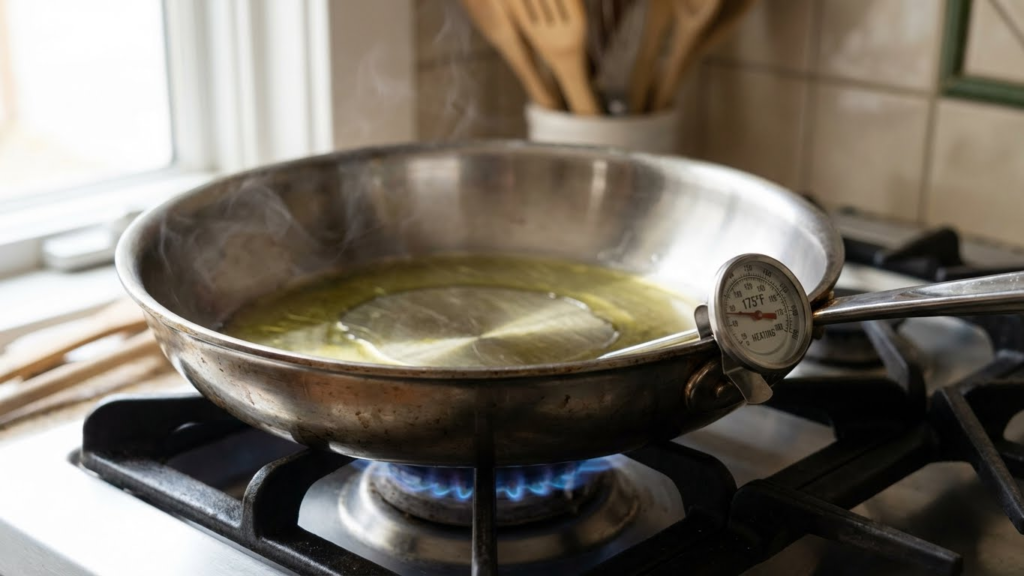
I explain how oil smoke points affect flavor, temperature limits, and health. You will see what a smoke point means, how it changes cooking methods, and the health risks of overheating oil.
What Is a Smoke Point?
A smoke point is the temperature at which an oil starts to produce visible smoke and break down. I measure it in degrees Fahrenheit or Celsius; for example, unrefined olive oil smokes around 320°F (160°C), while refined canola oil smokes near 400°F (204°C).
When oil reaches its smoke point, its fats and minor compounds break into new chemicals. This changes flavor and can make food taste bitter or burned. The smoke point also marks where the oil no longer transfers heat cleanly, so cooking becomes uneven.
Labels and refinement matter. Refined oils usually have higher smoke points because processing removes impurities. Cold-pressed or unrefined oils keep more flavor but lower smoke points. I check the oil type and the cooking temperature before I choose one.
Impact on Cooking Methods
Different methods need different smoke points. Low-heat tasks like salad dressings or finishing sauces work well with oils below 350°F (177°C), such as extra-virgin olive oil or flaxseed oil.
For sautéing, searing, or shallow frying, I use oils with smoke points around 350–450°F (177–232°C), like refined olive oil, avocado oil, or peanut oil. For high-heat deep frying or wok cooking, I pick oils that stay stable above 450°F (232°C), such as refined grapeseed or high-oleic sunflower oil.
Match oil to the pan temperature, not just the recipe name. If a recipe calls for “high heat,” I avoid delicate oils. I also watch for visual cues—if oil starts to shimmer heavily or smell acrid, I lower the heat or replace the oil.
Health Implications
When oil passes its smoke point, it forms breakdown products like acrolein and other oxidation compounds. I avoid inhaling the smoke because it irritates lungs and eyes and can produce unpleasant-tasting food.
Repeatedly heating oil, as with reused frying oil, increases harmful compounds and free radicals. That raises oxidative stress in food and may lower nutritional quality. I limit oil reuse and discard oil that smells rancid, dark, or overly viscous.
Choosing oils with appropriate smoke points helps reduce toxin formation. I prefer refined, high-heat oils for frying and reserve unrefined, flavor-rich oils for low-heat or raw uses.
Best Oils for High-Heat Cooking
I focus on oils that keep stable at high temperatures and add good flavor. Pick oils with high smoke points and neutral or complementary tastes for the cooking method you use.
Stir-Frying and Sautéing
For stir-frying and sautéing I choose oils that heat quickly and resist breaking down. Avocado oil and refined peanut oil work very well because their smoke points sit around 450–520°F, letting me cook at high heat without burning the oil. I often use light (refined) olive oil for quick sautéing; it has a milder flavor and a higher smoke point than extra-virgin olive oil.
I prefer oils with neutral flavors so the vegetables and proteins stay the star. A small amount of sesame oil added at the end gives a nutty aroma without overheating. For safety and technique, I heat the pan first, then add oil, and keep food moving to avoid long contact with extreme heat. For quick reference, the USDA and FDA sites offer reliable food-safety and handling guidance.
Deep Frying
For deep frying I pick oils with very high smoke points and stable fatty-acid profiles. Refined canola oil, refined sunflower oil, and peanut oil are strong choices because they tolerate repeated high-temperature use and have neutral flavors that won’t overpower fried foods. I aim for oils with smoke points above 400°F and low free fatty acid levels.
I monitor oil temperature with a thermometer and keep it steady between 350–375°F for most frying. I also strain and store oil properly to extend its usable life and reduce off-flavors. For information on oil handling and reuse, reputable sources like the USDA provide practical guidelines and safety tips.
Oils Suited for Medium-Heat Cooking
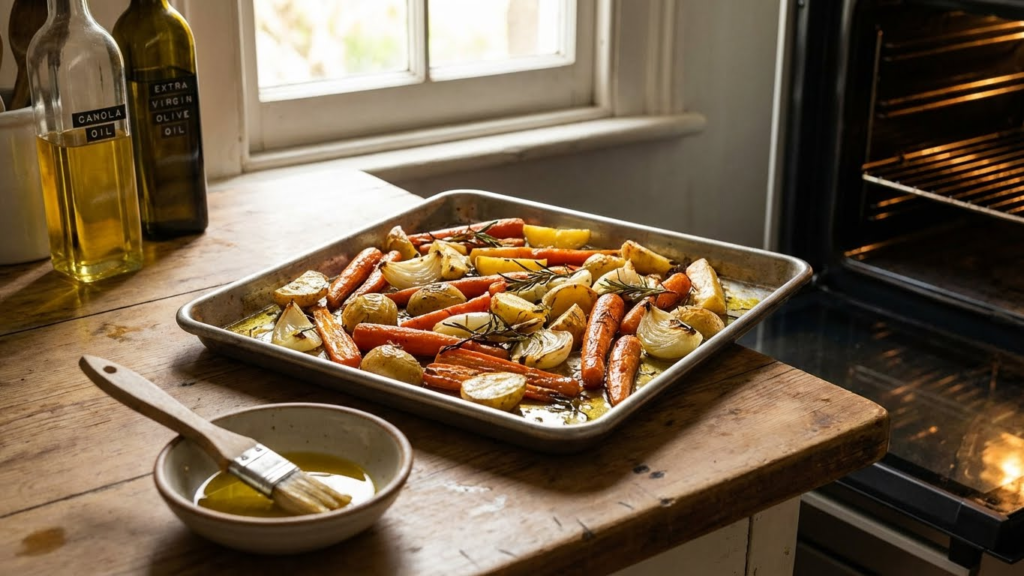
I pick oils that balance flavor, smoke point, and health. For medium heat I favor oils that won’t break down at 300–375°F and that match the dish’s taste.
Baking and Roasting
I use neutral oils like vegetable or canola for cakes, muffins, and roasted vegetables when I want moisture without changing flavor. These oils have smoke points around 400°F, so they stay stable during typical oven temperatures. I also reach for melted coconut oil in certain baked goods when I want a touch of richness and a faint coconut note. It’s solid at room temp, so I melt it before mixing to get even texture.
For recipes that benefit from olive’s taste, I choose extra virgin or virgin olive oil when roasting root vegetables at moderate temps. Olive oil adds antioxidants and a fruity flavor that pairs well with herbs. I avoid using delicate oils if the recipe requires high oven temperatures above 425°F.
Pan Frying
I select oils with medium-high smoke points for pan frying, such as canola, sunflower, or avocado oil. Avocado oil handles heat up to about 500°F, giving me more safety margin; canola and sunflower sit near 400°F and work well for most stovetop frying. These oils let me get a good sear without bitter, burnt flavors.
I rarely use extra virgin olive oil for high-sear pan frying because its lower smoke point and stronger flavor can scorch. For quick sautéing or light pan fry at medium heat, I will use a light olive oil or a blend to keep flavor while maintaining stability.
Selecting Oils for Low-Heat and Raw Applications
I focus on oils that keep flavor bright and nutrients intact while avoiding high heat. Choose oils with low smoke points and strong flavors for dressings, and reserve delicate, high-quality oils for finishing.
Dressings and Marinades
I pick extra virgin olive oil (EVOO) when I want peppery, fruity notes in vinaigrettes. EVOO holds up well in cold dressings and pairs with balsamic, lemon, and mustard. For a lighter mouthfeel, I use avocado oil or light-tasting canola; they blend smoothly and let other ingredients shine.
For marinades, I prefer oils that carry spices and help coat proteins without overpowering them. I use neutral oils like grapeseed or refined avocado for long marinating times because they won’t mask herbs or burn if briefly seared afterward. I add acid, salt, and an emulsifier such as mustard to help the oil bind to the food.
Finishing Oils
I use finishing oils to add aroma and a flavor punch after cooking. High-quality EVOO, toasted sesame oil, and walnut oil work best here. A small drizzle of cold-pressed EVOO brightens roasted vegetables and soups. Toasted sesame oil adds nutty depth to Asian dishes but should be used sparingly.
I store finishing oils in dark bottles, away from heat and light to preserve flavor. I taste before using; a rancid or flat oil ruins a dish. When plating, I pour just enough to highlight flavors — usually a teaspoon to a tablespoon depending on the dish.
Nutritional and Health Considerations
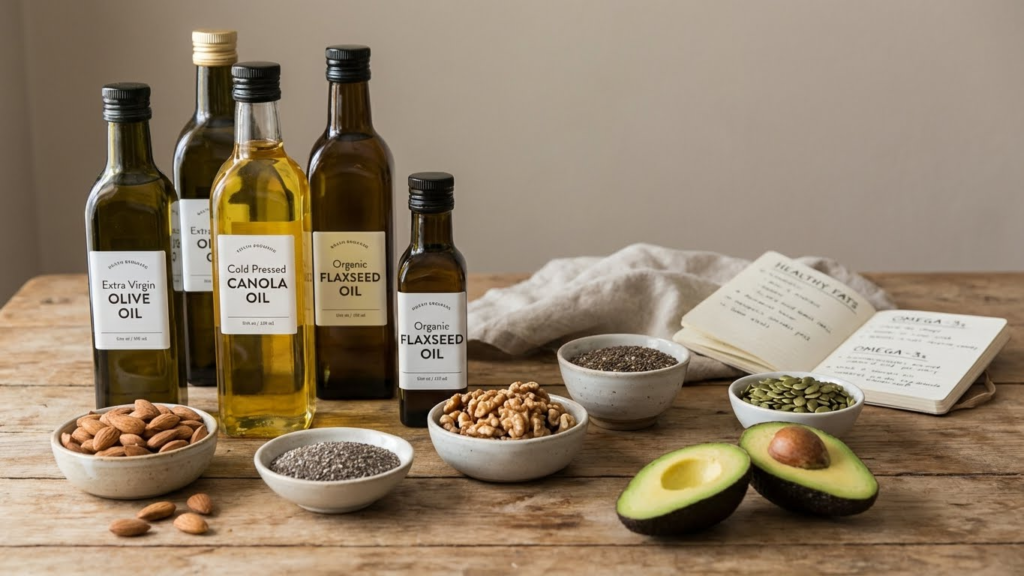
I focus on how different oils affect heart health, inflammation, and cooking needs. You’ll learn which fats to choose for frying, dressing, or baking and why balance matters.
Saturated vs. Unsaturated Fats
I prefer oils higher in unsaturated fats for daily use because they help lower LDL (“bad”) cholesterol when they replace saturated fats. Examples: olive oil and canola oil are high in monounsaturated fats; soybean and sunflower oils supply more polyunsaturated fats. Coconut oil and palm oil contain more saturated fat, which can raise LDL when eaten in large amounts.
Use oils rich in unsaturated fats for dressings and low- to medium-heat cooking. For high-heat frying, choose oils with a suitable smoke point but still favor unsaturated options when possible. For more on how fats affect heart risk, I consult resources like the American Heart Association.
Omega-3 and Omega-6 Balance
I pay attention to omega-3 and omega-6 fatty acids because too much omega-6 can promote inflammation relative to omega-3. Common vegetable oils (corn, soybean, sunflower) are high in omega-6. Flaxseed oil and walnut oil are good plant sources of omega-3s, but they have low smoke points and work best in dressings or added after cooking.
Aim to increase omega-3s (from fatty fish, flax, or walnut oil) while moderating omega-6 intake. I often combine a stable cooking oil like olive oil with a small amount of flax or walnut oil in cold dishes to improve balance. For guidance on omega ratios and heart health, I refer to trusted sites such as the Cleveland Clinic.
Flavor Profiles and Culinary Pairings
I focus on how oil flavor changes dishes and which oils best match common ingredients and techniques. Think about intensity, aroma, and how the oil behaves when heated.
Neutral-Tasting Oils
I use neutral oils when I want other flavors to stand out or when cooking at high heat. Examples include canola, vegetable, sunflower, and refined peanut oil. These oils have light flavor and high smoke points, so they work well for frying, sautéing, and baking.
When choosing a neutral oil, check the smoke point and price. For deep frying, I pick refined sunflower or peanut oil for crisp results. For vinaigrettes where I still want a subtle base, I choose light-tasting canola.
Quick reference:
- Best for high-heat frying: refined sunflower, refined peanut
- Best for baking and mild dressings: canola, vegetable
- Not for flavoring: avoid thinking these add aroma
Aromatic and Distinctive Oils
I reach for aromatic oils when I want the oil to add taste or aroma. Extra-virgin olive oil, toasted sesame oil, and unrefined walnut oil are good examples. These oils have lower smoke points, so I use them mainly for finishing, dressings, or low-heat cooking.
Match oil to cuisine and ingredients. I drizzle extra-virgin olive oil on roasted vegetables and pasta for fruity, peppery notes. I add toasted sesame oil in small amounts to stir-fries or marinades for nutty depth. Walnut oil pairs well with salads, cheese, and desserts where its rich flavor can shine.
Pairing tips:
- Olive oil: tomatoes, garlic, bread, Mediterranean herbs
- Sesame oil: soy-based sauces, green onions, stir-fry vegetables
- Walnut/avocado: salads, cheese plates, drizzles over cooked fish
Proper Storage and Shelf Life
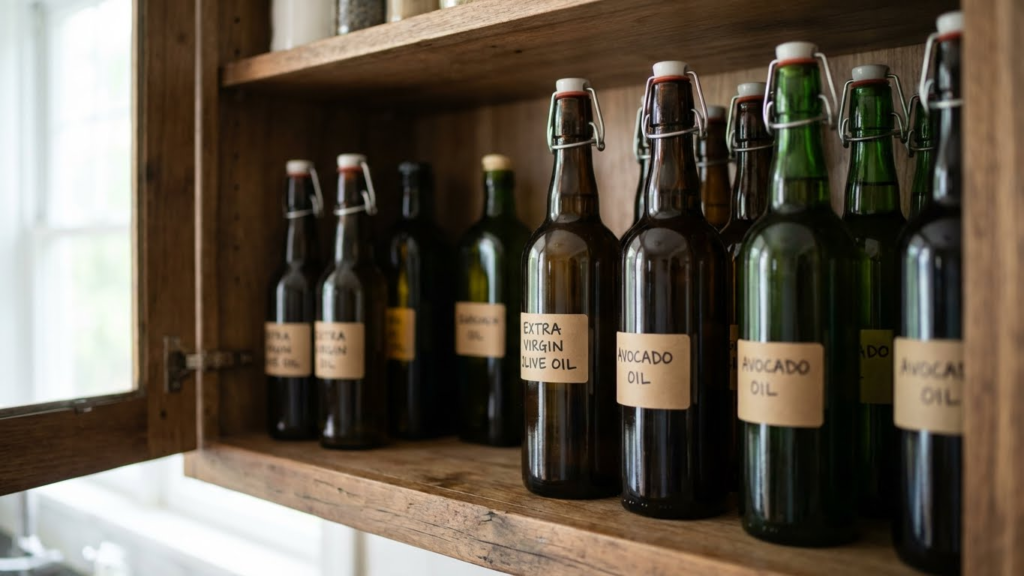
I store oils in a cool, dark place to slow down rancidity. Heat, light, and air speed up spoilage, so I keep bottles away from the stove and out of direct sunlight.
I follow general timeframes: unopened oils often last about a year, while opened oils usually stay good for 6–12 months depending on type. More stable oils like coconut and refined vegetable oil last longer; delicate oils like extra-virgin olive and walnut go bad sooner.
I always seal bottles tightly after use. A tight cap reduces oxygen contact and helps preserve flavor and aroma. When possible, I transfer large commercial bottles into smaller, airtight containers to limit air exposure.
I check oil before using it by smell and taste. Rancid oil smells sour, paint-like, or bitter. If the oil smells off or has a strange taste, I discard it.
Quick reference:
- Store: cool, dark, airtight
- Unopened shelf life: ~1 year (varies)
- Opened shelf life: 6–12 months (varies by oil)
- Signs to toss: off smell, bitter taste, cloudy or foamy appearance
I label bottles with the date I opened them. This simple habit helps me track freshness and avoid using old oil by mistake.
Sustainable and Ethical Choices
I look for oils that balance health, environment, and fair treatment of workers. Choosing well-made oils helps reduce harm from farming and supports better food systems.
I prefer oils with clear labels like organic, fair trade, or RSPO-certified for palm oil. These certifications show some standards for pesticides, land use, and worker rights. They are not perfect, but they help guide better choices.
For everyday cooking, I often choose olive, canola, or sunflower oil. Olive oil has strong health benefits and low processing when extra virgin. Canola and sunflower usually have lower land use and come from diverse sources, which can cut environmental risk.
I avoid oils tied to major deforestation unless I can verify sustainable sourcing. Palm oil is common and efficient, but it causes big habitat loss when produced irresponsibly. If I buy palm oil, I look for trusted certification.
Quick tips:
- Buy organic when possible to reduce pesticide use.
- Check certifications like Fair Trade or RSPO.
- Prefer local or regional oils to cut transport emissions.
I also watch packaging and waste. Glass or recyclable containers and larger sizes reduce plastic and packaging impact. Small, clear choices add up over time.
Common Myths About Cooking Oils
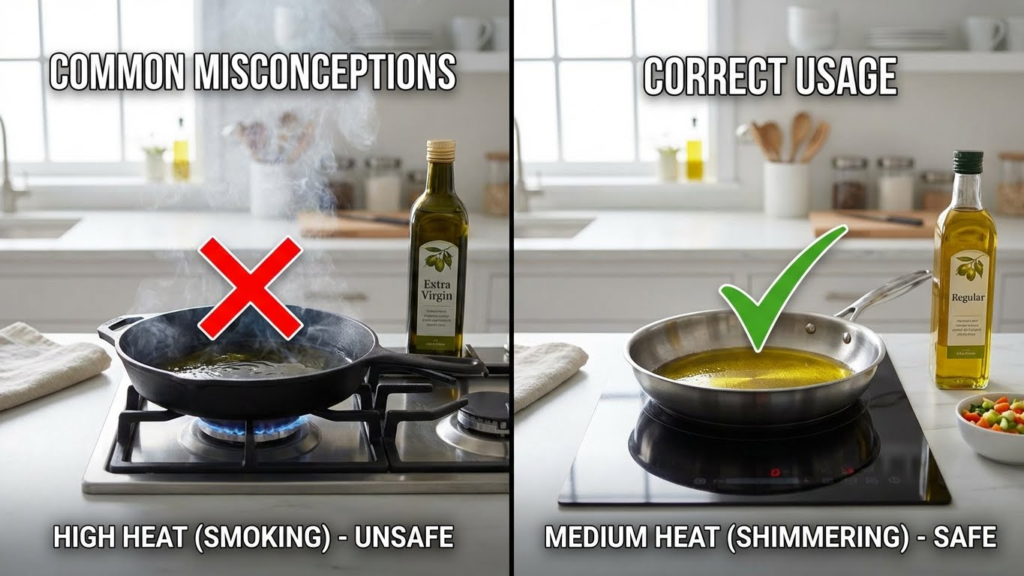
I often hear that some oils are always healthy and others are always bad. That’s not true. Health depends on how you use the oil, how much you use, and the rest of your diet.
Many people think a higher smoke point means an oil is healthier. Smoke point only tells you when oil starts to break down under heat. I choose oils by cooking method and flavor, not by a single number.
There’s also a belief that reused oil is safe if you filter it. Reusing oil can raise harmful compounds and off-flavors. If I reuse oil, I limit the number of times and keep it clean, cool, and covered between uses.
Some claim olive oil can’t be used for frying. That’s false for most home frying. Extra virgin olive oil smokes at a moderate temperature but works fine for sautéing and shallow frying. I use stronger-tasting oils for high-heat deep frying.
Bold marketing leads people to think one oil fits every need. I know no single oil does it all. I balance taste, heat tolerance, and nutrition when I pick an oil.
Common myths at a glance:
- Myth: “One oil is the healthiest.” — False.
- Myth: “Smoke point equals healthiness.” — False.
- Myth: “Olive oil can’t be used for frying.” — Mostly false.
- Myth: “Used oil is always safe if filtered.” — Risky; use caution.
FAQs
What about flavor?
I advise using neutral oils (canola, safflower) when you don’t want oil to change the dish. Use flavorful oils (sesame, extra-virgin olive) to boost taste in dressings, drizzles, or finishing touches.
How should I store oils?
I keep oils in a cool, dark place and seal them tightly. Light and heat speed up rancidity, so slower storage helps them last longer.
Are some oils healthier than others?
I focus on oils high in unsaturated fats, like olive and canola, for everyday use. Saturated-fat oils, such as coconut, I use sparingly and for specific recipes that need their texture or flavor.
How do smoke points matter?
I view smoke point as a guide for stability at heat. If oil smokes, I lower the temperature or switch to a higher smoke-point oil to avoid off flavors and harmful compounds.
Quick reference:
- Best for salads: extra-virgin olive oil
- Best for high heat: avocado, refined canola
- Neutral flavor: canola, safflower
- Strong flavor: sesame, walnut
Conclusion
I want you to pick oils with the cooking method and flavor in mind. High-heat cooking needs oils with high smoke points like canola or avocado. For dressings and finishing, I prefer extra virgin olive oil or sesame oil for their taste.
I aim for balance between health and function. I use oils higher in unsaturated fats most days, and reserve butter or coconut oil when their flavor matters. Storage matters too: I keep oils in a cool, dark place to keep them fresh.
Here are quick rules I follow:
- Use high smoke point oils for frying and searing.
- Use flavorful oils for finishing and salads.
- Rotate oils to get different nutrients and tastes.
If you want one simple choice, I often reach for a neutral, high‑smoke‑point oil for everyday cooking and olive oil for most cold uses. That approach keeps cooking easy and flexible while letting flavor shine when it counts.
