
Gas vs Electric Cooking: Which Is Better — Expert Comparison of Performance, Cost, and Safety

You want a stove that fits your cooking style and your home. I’m Emma Reed, and I walk you through the real trade-offs so you can pick with confidence. If you want fast heat and quick flame control, gas often wins; if you want even baking, easy cleaning, and simpler installation in some homes, electric may be better.
I’ll show how performance, costs, safety, and the planet factor into the choice so you can match a range to your needs and budget. We’ll compare how each option cooks, how much they cost to run, and what it’s like to live with them day to day.
Key Takeaways
- Gas gives faster response and precise flame control for stovetop cooking.
- Electric delivers steadier oven heat and easier surface cleaning.
- Choose based on cooking habits, long-term costs, and your home setup.
Core Differences Between Gas and Electric Cooking
I focus on how each fuel or power source transfers heat, how you control temperatures, and what kinds of stoves and ovens you are likely to see in a home.
Heat Source and Distribution
I explain heat by naming what burns or powers the element and how that heat reaches the cookware.
Gas uses a live flame from natural gas or propane. The flame touches the pot or pan edge and heats metal directly. This creates hot spots near the flame and cooler areas farther from it, so pan choice and stirring matter.
Electric ranges use metal coils or smooth glass-ceramic elements that heat by electricity. Heat spreads across the element and through the pan bottom, giving more even surface contact. Induction, a type of electric, uses magnets to heat the cookware itself, not the cooktop, which reduces heat loss to the air.
Each type loses heat differently: open flames waste more to the air, coil and glass tops hold heat after you turn them off, and induction is the most direct with the least wasted heat.
Temperature Control Mechanisms
I describe how you change and hold cooking temperature on each system.
Gas control is mechanical. Turning a knob alters the gas flow and flame size instantly. You get fast response for searing or lowering heat, but flame size does not equal exact degrees. You judge by eye and feel more than by numbers.
Electric cooktops change temperature by adjusting current to the element. Traditional coils and glass tops respond slower than gas. They take time to cool, so temperature overshoot is common. Induction uses precise electronic controls and quick response similar to gas, with readouts that can track power levels—useful for recipes needing steady, repeatable heat.
Ovens follow similar patterns: gas ovens heat the air with a burner and often need time to stabilize. Electric ovens use heating elements and often deliver more even, steady temperatures for baking.
Common Appliance Types
I list the main models you will find and how they differ in use and install.
Gas: freestanding ranges and slide-in ranges with burners and an oven, plus built-in gas cooktops. These need a gas line and proper ventilation. Portable gas burners and outdoor gas grills are common too.
Electric: coil-ranges, smooth-top glass-ceramic ranges, electric wall ovens, and induction cooktops. Many electric units only need a 240V outlet and simpler ventilation. Induction requires compatible magnetic cookware.
Hybrid and specialized units: dual-fuel ranges pair a gas cooktop with an electric oven for best-of-both performance. Combination units and professional-style ranges mix features for serious home cooks.
Performance Comparison: Gas vs Electric
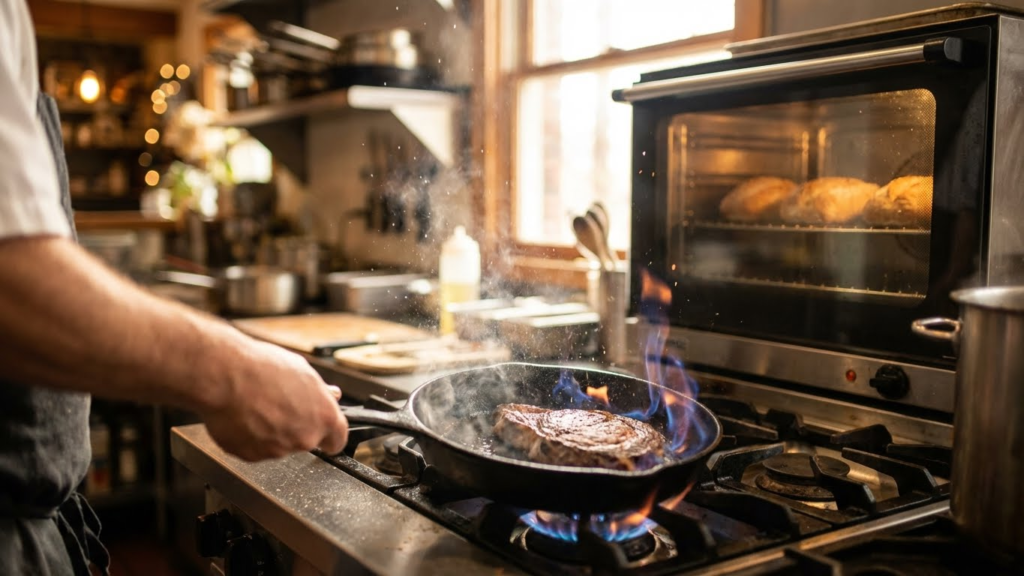
I compare how quickly each heat source responds, how steady temperatures stay, and which cooking methods each handles best. I focus on real cooking tasks like searing, simmering, baking, and slow-cooking.
Cooking Speed and Responsiveness
Gas heats a pan almost instantly because the flame transfers energy directly to the cookware. I can raise or lower heat in seconds, which helps with tasks like searing steak or bringing a pot to a boil fast. This quick response cuts active cook time when I need high heat right away.
Electric coils and smooth-top elements take longer to change temperature. They hold heat well once hot, so they keep boiling or simmering with less fluctuation. Induction (a type of electric) matches gas for speed and can even be faster, but it needs compatible cookware.
Precision and Temperature Consistency
Gas offers visual cues—the flame size shows heat level—so I adjust intuitively while cooking. However, open flames create hotspots and uneven oven heat, which can make precise baking or delicate simmering harder without practice.
Electric ovens and elements deliver steadier, more even heat. Baking and roasting come out more consistent because the element cycles maintain set temps. Induction tops provide precise, repeatable stovetop control, often with digital settings that hold exact temperatures better than gas.
Versatility Across Cooking Methods
Gas excels for high-heat techniques: charring, stir-fry, wok cooking, and quick pan-searing. I find it easier to use multiple pans at different flames at once. Gas also works well with traditional cookware and gas-specific tools like wok rings.
Electric ovens and ranges shine for methods that need steady, even heat: baking, slow roasting, and dehydrating. Induction handles a wide range too, from rapid boils to low-temperature simmering, but it limits cookware choices to magnetic-bottom pans.
Energy Efficiency and Cost Analysis
I look at how much each stove costs to run, how well each converts fuel to heat, and how real cooking habits change bills and waste. This helps you compare monthly costs, appliance efficiency ratings, and typical energy use.
Operational Costs
I compare the price per unit of energy and appliance efficiency to estimate running costs. Natural gas usually costs less per BTU than electricity per kWh in many U.S. regions, so a gas stove often shows lower monthly fuel bills for frequent cooking. Upfront prices differ too: electric ranges can be cheaper to buy, while gas ranges may need a gas line or higher installation costs.
I also account for local rates and cooking habits. If your electricity is from a low-cost supplier or you cook rarely, electric can be cheaper. I use government and utility data, like the U.S. Energy Information Administration, to check local price trends and make realistic cost comparisons.
Efficiency Ratings
I focus on how much of the fuel becomes usable heat at the pan versus lost to the air. Gas stoves deliver direct flame and high instant heat, but much escapes around the cookware. Electric coil and smooth-top burners lose less heat sideways but heat transfer to pans can be slower. Induction tops have the best conversion rates, transferring most energy directly into the pot.
I look at appliance ratings and standards, including recent DOE rules that affect efficiency. Labels and manufacturer specs help, but real tests show induction typically beats both gas and traditional electric for percent-efficiency. For impartial guidance, I consult resources like the Department of Energy for efficiency standards and test-method details.
Energy Consumption Patterns
I break down how different cooking styles change energy use. High-heat quick tasks (boiling, searing) favor gas or high-power induction for speed; long, low-heat tasks (simmering, braising) can be more efficient on electric or induction because of steady heat. Frequent start-stop cooking, like sautéing, wastes more energy on gas due to heat lost to the room.
I also consider power outages and fuel availability. Gas stoves can work during electrical outages if they ignite manually; electric and induction require electricity. Time-of-use electricity pricing matters too — cooking during off-peak hours can reduce electric costs if your utility offers lower night rates.
Safety Considerations
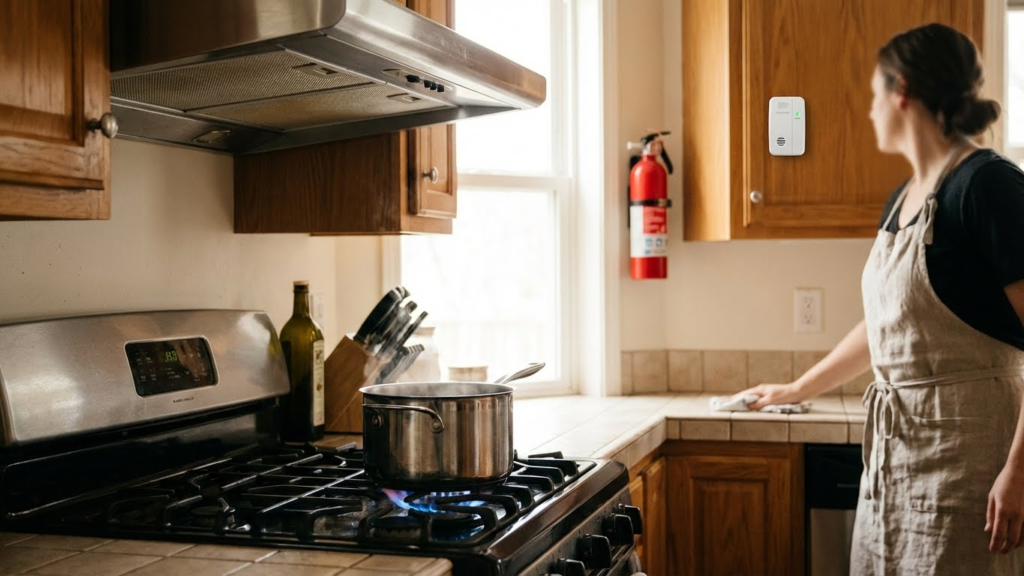
I focus on the real risks you face when cooking and the practical steps that reduce them. Read the short safety checks below and use the specific fixes I list to lower danger in your kitchen.
Fire and Burn Risks
I check how heat sources and cookware interact because most kitchen fires start from grease or unattended pans. For gas, open flames can ignite splatters quickly, so I keep flammable items—like towels, packaging, and loose clothing—well away from burners. For electric coils and smooth-top ranges, hot surfaces stay hot after you turn them off, so I use visible indicators or sticky notes until the surface cools.
I follow a few habits to cut risk: never leave oil heating unattended, set a timer when simmering, and use lids to smother small grease fires. I keep a multi-purpose fire extinguisher rated for kitchen use within reach and know how to turn off the appliance and main gas valve or breaker quickly. For kids and pets, I use back burners and turn pan handles inward.
Gas Leaks and Carbon Monoxide
I treat gas leaks and carbon monoxide (CO) as urgent hazards that need specific precautions. I install an approved natural gas or propane detector near the kitchen and a CO alarm at sleeping areas. I inspect flexible gas lines and fittings yearly and call a licensed technician if I smell rotten-egg odor or hear a hissing sound.
If I suspect a leak, I leave the house immediately, avoid flipping switches, and call the gas company from a safe location. For CO risk, I ensure proper ventilation, service gas appliances annually, and never use outdoor-only gas devices (like grills) indoors. I also keep vents and flues clear so combustion gases vent outside reliably.
Electric Shock Hazards
I treat electricity with respect because water, damaged cords, and improper installation raise shock risk. I use GFCI (ground-fault circuit interrupter) outlets for ranges and nearby counter outlets, especially where water is present. I inspect power cords and plug ends for cracks or melting and replace or repair damaged parts before use.
I avoid using extension cords for major appliances and make sure the stove’s circuit and grounding meet local codes. If the cooktop sparks, trips the breaker, or shows burning smells, I stop using it and call an electrician. I also keep the cooktop dry and handle hot pans with dry potholders to lower combined burn-and-shock risk.
Environmental Impact
I compare direct emissions, energy sources, and long-term effects so you can weigh the trade-offs between gas and electric cooking.
Greenhouse Gas Emissions
Gas stoves burn natural gas or propane, which emits carbon dioxide and some methane leaks during delivery. I note that direct combustion in the home produces CO2 immediately; upstream leaks add methane, a potent greenhouse gas. Electric ovens and cooktops do not burn fuel on site, so their operational emissions depend on how the electricity is made.
If your grid uses lots of coal or natural gas, an electric stove can cause similar or higher emissions than a gas stove. Where grids rely on renewables or low-carbon sources, electricity typically leads to lower lifecycle emissions. For up-to-date grid carbon-intensity data, I use resources like the U.S. EPA or the IEA to compare regional profiles.
Sustainability of Fuel Sources
Natural gas is a fossil fuel with finite reserves and ongoing extraction impacts, such as methane release and land disruption. I treat gas as less sustainable long-term unless paired with carbon capture or low-methane practices. Propane is similar but often delivered in cylinders, which brings transport emissions.
Electricity can come from coal, natural gas, nuclear, hydro, wind, or solar. I point out that switching to electric cooking paired with cleaner electricity—like rooftop solar or regional renewable grids—reduces lifetime environmental impact. For guidance on cleaner energy options and incentives, I reference government pages such as the U.S. Department of Energy.
Installation and Maintenance
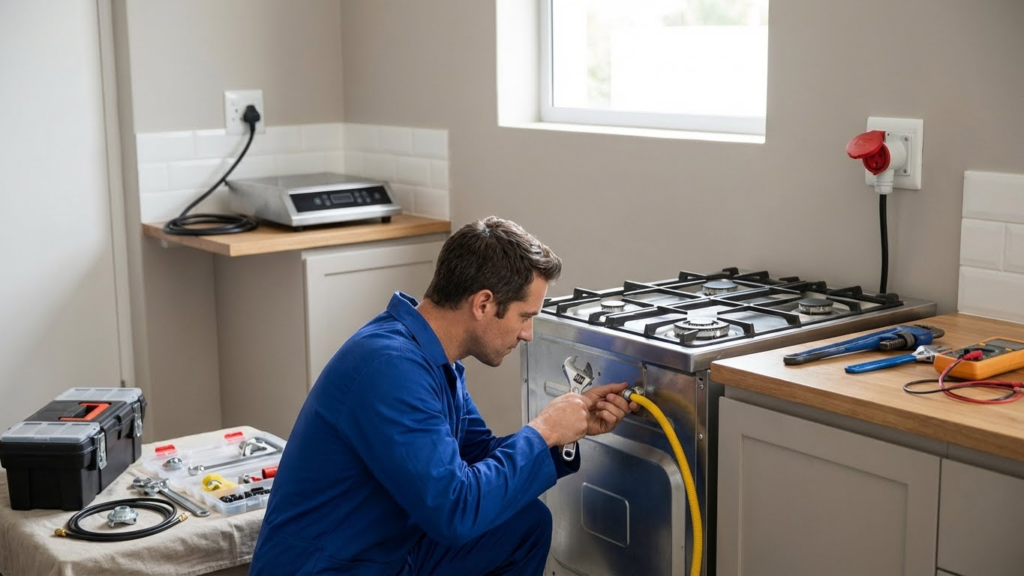
I explain what you need to install each type and what you’ll do to keep them working. I focus on real costs, safety steps, and routine tasks you can expect.
Setup Requirements
Gas stoves need a certified gas line and proper ventilation. I recommend hiring a licensed plumber or gas technician to install the supply line and a flame-failure device if your local code requires it. You may also need a range hood or vent that exhausts outdoors to reduce NO2 and particulates; check EPA guidance for indoor air quality. Installation often costs more than electric because of labor and permit fees.
Electric ranges need a compatible circuit and, for many models, a 240V outlet. I advise confirming your circuit breaker can handle the stove’s amperage and hiring an electrician if rewiring is required. Electric cooktops are simpler to set in a finished kitchen and usually avoid gas-safety permits. Both types may require leveling, anchoring, and connection to the exhaust hood or trim kit.
Long-Term Maintenance Needs
Gas stoves require periodic burner cleaning and occasional replacement of ignition parts. I clean burner caps and ports every few months to prevent uneven flames and check for gas smells. If a pilot or igniter fails, I call a technician to avoid DIY gas repairs. Regular hood filter cleaning and carbon monoxide detector testing are essential for safety; the CDC has guidance on CO detectors.
Electric stoves need care for heating elements and glass-ceramic tops. I replace worn elements and avoid sliding heavy cookware on smooth tops to prevent scratches or cracks. Coil elements and connectors can wear out and may need replacement every few years depending on use. Both stove types benefit from annual checks of seals, ventilation, and electrical/gas connections to catch leaks or loose fittings early.
User Experience and Practical Considerations
I focus on real-world factors that affect daily cooking: what you’ll hear, how long the appliance lasts, and what pans work best. These points help you pick the right stove for your kitchen and habits.
Noise Levels
I notice gas flames are mostly quiet, with only a soft whoosh when the burner is on. The main noise can come from the oven pilot or the igniter clicking; modern electronic igniters click briefly but quietly compared with older continuous pilots.
Electric cooktops can make low humming or buzzing, especially induction models that create a high-frequency sound when certain pans sit on the surface. That noise varies by pan material and the stove’s power setting. If you cook late or have noise sensitivity, test the cooktop with your cookware at different heat levels before buying.
Range hoods and fans add sound regardless of fuel type, so I factor that into overall kitchen noise. I also consider that small clicks and brief hums are normal; loud, persistent noises may signal a defect or poor installation.
Appliance Longevity
I expect gas ranges to have durable parts like cast-iron grates and simple valves that can last many years with basic maintenance. Burners and ignition modules wear out over time and are usually easy and inexpensive to replace.
Electric ovens and cooktops have heating elements that can burn out or warp, which may require professional repair and can be costlier. Induction tops are sturdy but depend on the electronic control board; when that fails, repair costs rise.
I recommend regular cleaning and occasional professional tune-ups for either type. Proper care—avoiding spills on controls, using correct cleaning products, and replacing worn parts—extends life and reduces the chance of major repairs.
Adaptation to Different Cookware
I find gas cooking works well with almost any pan: stainless steel, cast iron, copper, and nonstick all perform acceptably. Flame distributes heat under the pan, but hotspots appear with thin, cheap cookware, so heavier pans give better results.
Electric coil and smooth-top electric ranges heat best with flat-bottomed pans. Warped or rounded bottoms cause poor contact and uneven heating. Induction requires magnetic cookware—cast iron and many stainless steels work, while aluminum or copper need a magnetic base or adapter disc.
I advise testing your current cookware on the type of stove you plan to buy. That saves money and avoids surprises. If you switch to induction, plan to replace or adapt non-magnetic pans.
FAQs
What about energy cost and efficiency?
Electric resistance is simple but can lose heat; induction is the most efficient. Local fuel prices and home wiring affect long-term cost.
Can I convert my kitchen from gas to electric?
Often yes, but not always. You may need new wiring, a 240V outlet, or a different range size. I advise checking an electrician and appliance fit.
Do chefs prefer one type?
Many pros like gas for visible flame control. Home cooks may prefer induction for speed, safety, and clean surface cooking.
How does cleaning and maintenance compare?
Electric glass tops are easier to wipe, while gas grates and burners need more scrubbing. Ovens vary by model; look for self-clean and sealed-burner features.
Which should I pick for my home?
I weigh cooking style, budget, ventilation, and energy rules. If uncertain, test cooking on each or choose a hybrid (electric oven, gas cooktop) to balance benefits.
Conclusion
I weigh the trade-offs between gas and electric cooking based on heat control, cost, safety, and environmental impact. Gas gives fast, precise heat that many cooks like. Electric offers steady heat, easier cleaning, and often better safety features.
I recommend choosing what fits your cooking style and home. If you cook often and need quick temperature changes, gas may suit you. If you want low maintenance and fewer indoor emissions, electric may be a better match.
I also consider long-term costs and local energy sources. Gas can cost less to run in some areas, while electric can be greener if your grid uses renewable energy. Check local fuel prices and power mix before deciding.
I suggest testing or renting equipment when possible. A short trial can show which feel and results you prefer. If you can, mix types—use gas for stovetop and electric for ovens—to get the best of both worlds.
Key points to remember:
- Gas: fast response, fine control, possible indoor emissions.
- Electric: even heat, safer features, cleaner indoors if power is clean.
I focus on practical fit, not a single “best” answer. Choose the option that matches your cooking habits, budget, and local energy reality.
