
How to Reheat Food Without Losing Taste: Proven Methods for Moist, Flavorful Leftovers

You want leftovers that taste like the original meal, not a dry shadow of it. We explain simple tricks — the right heat, a bit of moisture, and which appliance to use — so your food stays juicy and flavorful. Use gentle, even reheating and add a little moisture or cover the dish to keep texture and taste intact.
We write from real kitchen experience with Emma Reed guiding the tips we share, so you get clear, tested steps you can use tonight. Follow a few small changes and you’ll stop wasting great meals and start enjoying leftovers again.
Key Takeaways
- Use low, even heat and add moisture when reheating to preserve flavor.
- Match reheating method to the food and container for best texture.
- Small adjustments and proper timing prevent common reheating mistakes.
Understanding Flavor Loss During Reheating
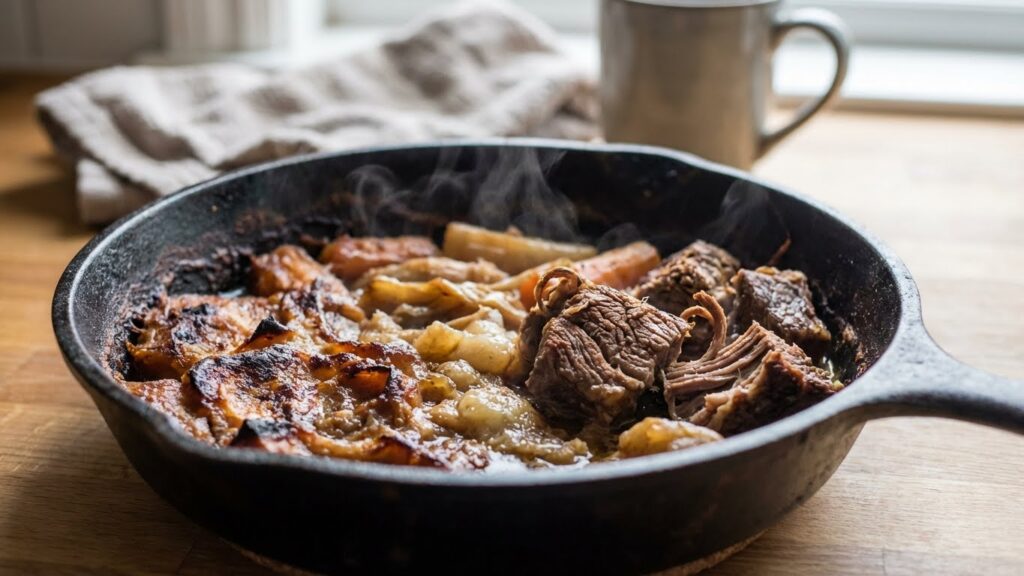
Heat, moisture, and time change the taste and texture of food. Knowing which reactions strip flavor and how to control them helps you keep meals tasting fresh.
Causes of Taste Degradation
When you reheat food, chemical changes alter flavor compounds. Volatile aromatics that give foods their smell evaporate first, so reheated dishes often smell weaker. Oxidation and breakdown of fats create off-flavors, especially in cooked meats and sauces, if they sit too long before reheating.
Texture changes also affect perceived taste. Dry or chewy proteins mute flavors and make sauces seem flat. Starches can either harden or become mushy, which changes mouthfeel and reduces pleasure while eating. Finally, reheating unevenly can produce burnt or cold spots that mask the original balance of flavors.
The Role of Moisture
Water controls texture and carries flavor molecules. When moisture leaves food, tastes concentrate unevenly and spices can seem too strong in some bites and too faint in others. Dry meat and poultry become tougher because proteins tighten and squeeze out juices.
You can protect moisture by covering dishes, adding a splash of liquid, or using a steam method. Sauces and gravies help rebuild lost juiciness. Also, store leftovers in airtight containers to slow moisture loss before reheating—this preserves both mouthfeel and aroma.
How Temperature Impacts Flavor
Temperature changes the chemistry of taste. High heat breaks down delicate aromatic compounds, making flavors dull or “cooked out.” Overheating proteins makes them dry and tough, while overheating starches can cause them to release water and become gummy.
Use moderate, controlled heat for even warming. Lower microwave power with short intervals helps avoid hot spots. For ovens or stovetops, aim for gentle reheating (about 275–325°F or low simmer) and finish with a brief higher-heat step if you need to crisp surfaces. Monitoring internal temperature prevents overcooking and keeps flavors closer to the original.
Best Practices for Reheating Food Without Losing Taste
Use the right amount of moisture, heat food evenly, store leftovers safely, and stop cooking as soon as food reaches a safe temperature. These steps keep texture, flavor, and safety intact.
Retaining Moisture in Leftovers
Keep foods from drying out by adding a little liquid before reheating. For rice or pasta, sprinkle 1–2 tablespoons of water per cup and cover the dish. For meats, drizzle broth or a light sauce to restore juiciness.
Cover food with a lid, foil, or microwave-safe wrap to trap steam. Steam softens fibers and prevents crusts from getting tough. Avoid soaking crispy items; instead, reheat uncovered after initial steaming to keep crispness.
Use low, steady heat rather than blasting with high heat. Slow reheating lets moisture redistribute without evaporating. Check and stir halfway through to spread juices and heat evenly.
Reheating at the Right Temperature
Aim to reheat most cooked foods to 165°F (74°C). That temperature kills harmful bacteria while preserving flavor. Use a food thermometer in the thickest part of meat or center of casseroles.
For ovens, set between 300–350°F (150–175°C) for casseroles, roasted vegetables, and whole pieces of meat. Place in a shallow pan, cover, and heat until the center reaches the safe temperature.
Microwave reheating needs power and time adjustments. Use medium power for denser foods and rotate or stir every 30–60 seconds. Let food rest 1–2 minutes after microwaving so heat evens out.
Proper Storage Before Reheating
Cool leftovers quickly: move food into shallow containers within two hours of cooking. Rapid cooling limits bacterial growth and keeps texture.
Label containers with date and contents. Eat refrigerated leftovers within 3–4 days, and frozen meals within 2–3 months for best flavor. Thaw frozen dishes in the fridge overnight, not at room temperature.
Store sauces and moist items separately from crisp components. Keep breads or fried foods sealed but apart so they don’t go soggy. Proper storage makes reheating simpler and preserves taste.
Avoiding Overcooking
Stop reheating as soon as food reaches the safe temperature. Overcooking strips moisture and breaks down delicate flavors. Use a thermometer to avoid guessing.
Use short bursts of heat and check often. Stir or flip items mid-cycle to prevent hot spots that cause burning. For delicate proteins like fish or chicken breast, reheat at lower heat and finish quickly.
For crispy foods, re-crisp in a hot oven or skillet for a few minutes rather than longer, gentler heat. That restores texture without drying the interior.
Reheating Techniques by Appliance

Choose the right appliance based on the food type, texture you want, and how much time you have. Match heat level, moisture control, and timing to keep food safe and tasty.
Microwave Methods
Use the microwave for fast, moist reheating of rice, soups, and sauced dishes. Break large portions into smaller, even pieces so they heat evenly. Cover with a microwave-safe lid or damp paper towel to trap steam and prevent drying.
Set power to 50–70% for dense foods like casseroles or chicken to avoid overcooking edges. Stir or rotate every 30–45 seconds and check internal temperature; aim for 165°F (74°C) to ensure safety. For bread or pizza, microwave briefly then finish on a hot skillet for a crisper crust.
Avoid microwaving whole roasted meats or fried foods that you want crisp. For guidance on safe reheating temperatures, see the USDA food safety page.
Oven Instructions
Use the oven for large cuts, baked dishes, and anything you want to keep crisp or browned. Preheat to 300–350°F (150–175°C) for even reheating without drying. Place food in a shallow, ovenproof dish and add a splash of water, stock, or sauce to restore moisture.
Cover loosely with foil to hold steam; remove foil near the end to re-crisp tops. Reheat time varies: 10–20 minutes for small casseroles, 20–40 minutes for whole chicken pieces. Use an instant-read thermometer to confirm 165°F (74°C) in the thickest part. For tips on reheating large items safely, consult the FDA guidance on leftovers.
Stovetop Approaches
The stovetop works well for stir-fries, noodles, vegetables, and pan-fried items. Use a nonstick or cast-iron skillet over medium-low heat. Add a small amount of oil, butter, or water to prevent sticking and to restore moisture.
Heat gently, stirring or flipping often to avoid hot spots. For saucy dishes, simmer covered for a few minutes to let heat penetrate. Thin items like crepes or tortillas reheat quickly on a dry skillet; thicker pieces need a lid and low heat. Always check that the center reaches 165°F (74°C) before serving.
Air Fryer Tips
Use the air fryer when you want to restore crispness to fried or baked foods. Preheat the air fryer to 350–400°F (175–200°C). Arrange food in a single layer with space between pieces for proper air flow.
Spritz with a little oil if items look dry to help browning. Short cycles work best: 3–8 minutes depending on size and thickness. Shake or turn halfway through for even crisping. Keep an eye on delicate items; reduce time or temp to avoid burning. For more on air fryer use and safety, check manufacturer guidelines or reputable cooking sites.
Choosing the Right Containers
Pick containers that heat evenly, keep moisture, and are safe for your reheating method. Choose items that match your appliance and the food’s texture to keep flavor and avoid soggy or dry results.
Glass vs. Plastic
Glass holds heat evenly and won’t warp or stain when you reheat. Use tempered glass or borosilicate for oven and microwave use; they tolerate rapid temperature changes and help food heat uniformly. Glass lets you see the food, so you can check for hot spots without opening the lid.
Plastic is lightweight and convenient, but only use microwave-safe plastics labeled BPA-free. Thin plastics can melt or warp and cause uneven heating. Don’t put cracked or very old plastic in the microwave. For oven reheating, never use plastic.
If you transfer food between fridge and oven, choose a glass or ceramic dish. For quick microwave reheats of moist foods, a high-quality plastic container works—just leave a vent and avoid overheating.
Covering for Steam Retention
Covering food traps steam, which keeps moisture and prevents drying. Use lids, microwave-safe plastic wrap, or damp paper towels depending on the container and appliance. Leave a small vent when using plastic wrap to let steam escape and avoid pressure build-up.
Glass lids or oven-safe foil work well for oven or toaster-oven reheats; they hold heat and keep a crisp surface from over-softening. In the microwave, choose vented microwave lids or loosely placed microwave-safe plates to keep texture while preventing splatters. Avoid sealing foods tightly in non-vented containers in microwaves, as steam can build pressure and lead to uneven reheating or messes.
Reheating Specific Types of Food
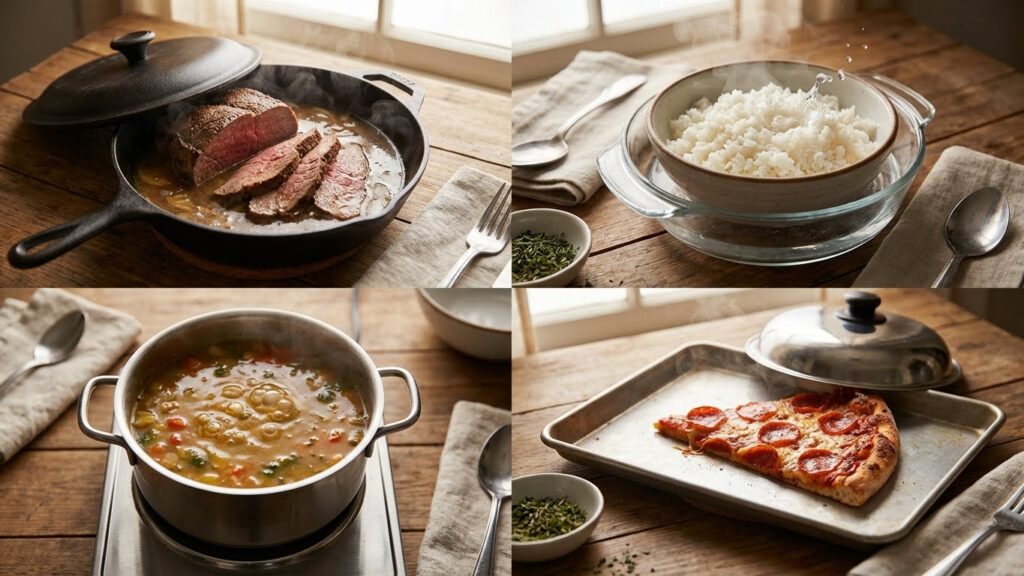
Use the right tool and temperature for each dish to keep flavor and texture. Reheat to a safe internal temperature and add moisture or fat when needed to prevent dryness.
Preserving Flavors in Meat Dishes
Slice large pieces thinly before reheating so heat reaches the center quickly. For roasts or steak, use a low oven (275–300°F / 135–150°C) on a rack inside a baking pan with a few tablespoons of beef or chicken broth added to the pan. Cover loosely with foil to trap steam and reheat until the center reaches 165°F (74°C).
For shredded or sliced chicken, warm gently on the stovetop with a splash of stock or cream over low heat, stirring often. Use an instant-read thermometer to check temperature.
Avoid microwaving whole cuts; if you must microwave, use short bursts at 50% power and rest meat for a minute between bursts. Sear briefly in a hot pan after microwaving to restore some crust on steaks and chops.
How to Reheat Rice and Grains
Break up chilled rice or grains with a fork before warming to remove clumps. Add 1–2 tablespoons of water per cup of rice, then heat covered in the microwave for 1–2 minutes on high, stirring halfway. Alternatively, steam on the stovetop in a saucepan with a splash of water and a tight lid.
For quinoa, couscous, or barley, sprinkle water and toast briefly in a skillet over medium heat, stirring until hot. Always cool cooked grains quickly after cooking and store in the fridge within two hours to reduce food-safety risk; reheat to 165°F (74°C). USDA guidance on safe reheating helps clarify time and temperature rules: https://www.usda.gov/.
Warming Up Soups and Stews
Reheat soups and stews slowly over medium-low heat on the stove. Stir frequently and bring to a gentle simmer until steam rises and the center reaches 165°F (74°C). Thicker stews may need extra liquid—add broth or water in small amounts to restore the original consistency.
For cream-based soups, warm on low and whisk often to prevent curdling. If using a microwave, heat in short intervals, stir well, and check temperature. For safety tips and reheating times, consult guidance from the FoodSafety section at the CDC: https://www.cdc.gov/foodsafety/.
Reviving Baked Goods
For items like pizza, pastries, and bread, use dry heat to recover crispness. Reheat pizza on a preheated skillet or in a 375°F (190°C) oven for 5–10 minutes on a baking sheet; cover edges with foil if topping risks burning.
For croissants and puff pastry, reheat at 300–325°F (150–165°C) for 5–8 minutes to crisp layers without drying the interior. Use a toaster oven for single slices of bread. Avoid microwaving flaky baked goods unless you re-crisp them briefly in a hot skillet or oven afterward.
Creative Ways to Enhance Taste After Reheating
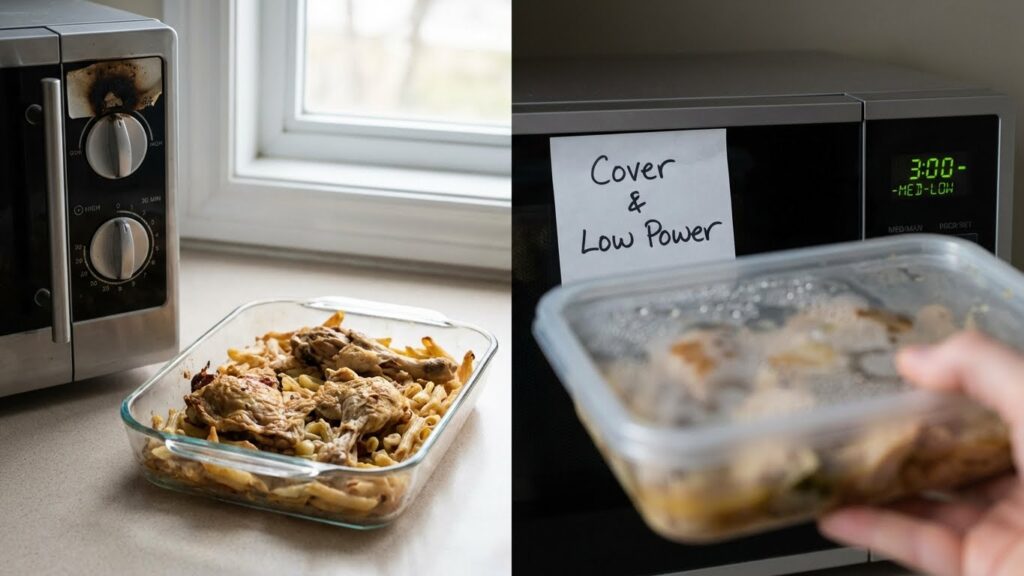
Use small additions that restore moisture, brighten flavors, and add texture. Focus on fresh herbs, quick spice boosts, and sauces that match the dish’s original profile.
Using Fresh Herbs and Spices
Fresh herbs lift reheated food quickly. Sprinkle chopped parsley, cilantro, or basil over soups, rice, and roasted vegetables right before serving. Add delicate herbs last so they don’t wilt; heartier herbs like rosemary or thyme can be warmed briefly with the food.
Revive dried spices by toasting them briefly in a dry skillet for 10–20 seconds to release oils. Crush whole spices (cumin, coriander) with a mortar or back of a spoon before adding to stews or sauces. For protein, rub a pinch of smoked paprika, garlic powder, and black pepper on the surface and heat in a skillet for a minute per side to refresh the crust and aroma.
Tips:
- Use lemon or lime zest with herbs to add brightness.
- Add a small pat of butter or a drizzle of olive oil with herbs to carry their flavor.
- Avoid over-salting; tastes concentrate when reheated.
Adding Sauces and Condiments
Choose sauces that restore moisture and match the dish. Add a splash of broth or a spoonful of tomato sauce to pasta before warming to prevent drying. For rice and grains, mix in a tablespoon of olive oil or a drizzle of soy sauce to revive texture and umami.
Use condiments to introduce acidity or fat. A squeeze of lemon, a spoon of yogurt, or a drizzle of chili oil can balance richness and sharpen flavors. For meats, top with a quick pan sauce: deglaze the skillet with wine or broth, add mustard or a bit of cream, and spoon over the sliced meat.
Quick pairing guide:
- Soups/stews: fresh herbs + splash of broth
- Pasta: tomato sauce or olive oil + grated cheese
- Chicken/fish: yogurt sauce or citrus vinaigrette
- Rice/grains: soy sauce or sesame oil + scallions
Adjust amounts to taste, adding a little at a time until the flavor feels right.
Common Mistakes to Avoid
You can overcook food by using too-high heat. High power in a microwave or a very hot oven dries out proteins and makes textures tough. Lower heat and longer time keeps moisture and flavor.
Do not reheat in original plastic or sealed packaging. Some plastics can leach chemicals and sealed containers trap steam that causes soggy spots. Transfer food to microwave-safe or oven-safe dishes instead.
Avoid crowding the pan or dish. When pieces touch or pile up, heat won’t spread evenly and cold spots can remain. Reheat in batches or spread food in a single layer for even warming.
Don’t skip stirring or rotating when using a microwave. Microwaves create hot and cold zones; pausing to stir or turn food reduces cold spots and improves texture. Use short intervals and check temperature often.
Letting cooked food sit too long at room temperature is risky. Bacteria grow quickly between 40°F and 140°F, so refrigerate within two hours. Reheat leftovers until they reach at least 165°F to ensure safety.
Avoid reheating everything the same way. Crispy items need an oven or air fryer to restore texture, while saucy dishes do well in a covered pan or microwave. Match the method to the food for best results.
FAQs
What temperature should you reheat food to for safety?
Heat leftovers until they reach 165°F (74°C) in the center. Use a food thermometer to check; this kills harmful bacteria without overcooking.
Can you reheat food more than once?
You should reheat only what you plan to eat. Reheating multiple times raises the risk of bacterial growth and dries food out.
Is the microwave okay for all foods?
The microwave works well for soups, stews, and moist dishes. For crispy or baked items, use an oven or toaster oven to keep texture.
How do you keep food from drying out?
Add a splash of water, broth, or sauce and cover the dish while reheating. This traps steam and preserves moisture.
Will reheating ruin nutrients?
Reheating causes some nutrient loss, especially with long, high-heat methods. Short, gentle reheating keeps more vitamins intact.
Any tips for reheating meat or rice?
Slice meat thinly and reheat with a little sauce to avoid toughness. Reheat rice until steaming hot; discard if left out overnight.
Conclusion
You can keep flavor and texture when reheating by using the right heat, adding small amounts of moisture, and covering the food. Gentle, even heat prevents drying and helps food taste like it did fresh.
Choose reheating methods to match the dish: stovetop for soups and sauces, oven for casseroles and roasted items, and a quick pan or oven finish for fried or crispy foods. Microwaves work well for many leftovers when you use low power, short intervals, and a lid or damp paper towel.
Reheat to a safe temperature—165°F (74°C) for most leftovers—so you avoid foodborne illness while protecting quality. Use a food thermometer if you can; visual checks alone can miss cold spots.
Make small adjustments like slicing thick pieces, stirring while heating, or adding a splash of broth or oil. These simple steps rescue moisture and boost taste without extra effort.
Keep leftovers stored properly and reheat only once when possible. That preserves both safety and flavor so your meals stay enjoyable the next time you eat them.
