
Types of Cooking Salt Explained – Choose the Right One Every Time

You use salt in almost every dish, but different salts change taste, texture, and how much you should add. We’ll show which salts work best for baking, finishing, brining, and seasoning so you stop guessing and start cooking with more control. Knowing the right salt lets you nail flavor and texture every time.
We write this with practical tips from Emma Reed and our kitchen tests so you get clear, usable advice. You’ll learn simple swaps, when to choose coarse versus fine grains, and which specialty salts deserve a spot on your counter.
Key Takeaways
- Learn which salts suit baking, cooking, and finishing.
- Use grain size and salt type to control flavor and texture.
- Store salts properly and choose alternatives when cutting sodium.
Understanding Salt in Cooking
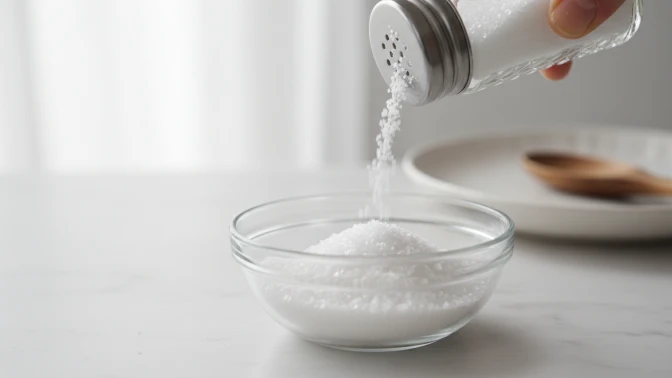
Salt seasons food, controls texture, and influences chemical reactions during cooking. It changes how other ingredients taste and how proteins, doughs, and vegetables behave.
Why Salt Is Essential in Culinary Arts
You use salt to bring out natural flavors in meats, vegetables, and sauces. A small pinch can reduce bitterness and boost sweetness, so taste your food as you go. Salt also helps proteins bind and hold moisture; for example, salting chicken before roasting improves juiciness and browning.
Salt affects texture in baking and curing. In bread, salt tightens gluten and controls yeast activity, giving a better crumb and structure. In curing (like ham or gravlax), salt draws out moisture and preserves food by slowing microbial growth.
Different salts serve different jobs. Use fine table salt when you need fast, even distribution. Choose kosher salt for easy pinching and even seasoning. Finish flaky sea salt on top for a crunchy hit and visual appeal.
How Salt Affects Flavor
Salt makes food taste like itself. When you salt a tomato, the fruit’s sweetness becomes clearer and the acidity feels less sharp. Salt doesn’t just add “salty” — it suppresses off-flavors and enhances desirable ones.
Grain size and mineral content change how salt tastes and dissolves. Fine salt dissolves quickly and seasons evenly. Coarse or flaky salts give bursts of saltiness and texture when added at the end of cooking. Minerals in some sea salts can add subtle flavor notes, but the difference is usually small in cooked dishes.
Timing matters. Salting early (like before roasting or during marination) lets salt penetrate and alter texture. Salting at the end gives a surface burst of flavor. Adjust amount and timing based on whether you need even seasoning, moisture control, or a finishing crunch.
Table Salt
Table salt is the most common cooking salt. It has small, uniform grains and often includes additives that change flavor, flow, and nutrition.
Characteristics and Production
Table salt comes from either mined rock salt or evaporated seawater. Manufacturers refine it to remove minerals and impurities, leaving mostly sodium chloride. Most table salt contains anti-caking agents to keep it free-flowing, and many brands add iodine to prevent deficiency. The grains are very fine and consistent, so they measure predictably by volume. You will notice a neutral, clean taste because the refining process strips away trace minerals that give other salts different flavors.
Best Uses in Cooking
Use table salt when you need precise, even seasoning. It works best for baking because its fine grains dissolve quickly and give consistent saltiness across batters and doughs. Use it for boiling pasta or blanching vegetables where you want the salt to dissolve fully. Avoid using table salt as a finishing salt on salads or steaks; its texture and small crystals do not provide the crunchy burst other salts do. If a recipe lists salt by weight, table salt is usually what the recipe expects.
Kosher Salt
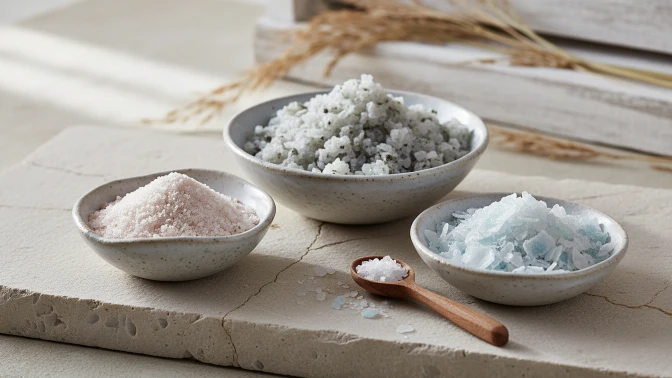
Kosher salt has coarse, flaky crystals and usually contains no additives. You will find it easier to pinch, spread, and dissolve than fine table salt.
Texture and Structure
Kosher salt crystals are larger and more irregular than table salt.
That size makes them easy to grasp and sprinkle by hand, so you can salt to taste without overdoing it. The flakes dissolve quickly when they hit warm foods but take a moment longer on cold dishes, which helps you judge seasoning as you cook.
Different brands vary in crystal shape and density. Because of this, measure kosher salt by weight when a recipe calls for precise amounts. If you need conversion guidance, the Morton and Diamond Crystal varieties differ: Diamond Crystal is lighter and flakier, so a teaspoon will contain less salt than the same measure of Morton.
Popular Culinary Applications
You will use kosher salt for most cooking tasks, from seasoning meat to salting pasta water. Chefs prefer it for rubbing onto steaks, brining, and drawing moisture from protein before cooking because the crystals cling to surfaces and distribute evenly.
Use kosher salt for everyday seasoning, sautéing vegetables, and when a recipe calls for “salt to taste.” For finishing dishes where a crunchy burst matters, choose a finer or specialty finishing salt instead. For more on kosher salt differences and how chefs use them, see this guide from Serious Eats and the FDA’s page on food-grade salts.
Sea Salt
Sea salt comes from evaporated seawater and offers a range of flake sizes, moisture levels, and mineral notes. You’ll pick a specific sea salt for its texture, taste, and how it interacts with heat or finishes a dish.
Harvesting Methods
Producers harvest sea salt by letting seawater evaporate in shallow pans or tidal ponds. In warm, dry climates, solar evaporation concentrates water until crystals form; workers then rake or scoop the crystals by hand or machine. Some artisanal operations use tidal channels that trap seawater at high tide and let it slowly concentrate, which can create delicate, layered crystals.
Mechanical harvesters speed production and give more uniform crystals. Hand-harvested, small-batch salts often retain tiny amounts of minerals and moisture, which affect texture and flavor. Look for origin labels (e.g., Maldon, Celtic) to know the method and region used.
Distinctive Flavor Profiles
Sea salts vary by mineral content and crystal shape, which change how you taste them. Salts from coastal clay beds often have a briny, slightly sweet note due to trace minerals like magnesium and calcium. Darker gray salts (Celtic-style) carry a moist texture and a fuller mouthfeel.
Flaky white salts (Maldon-style) taste clean and sharp, because they’re usually rinsed and dried. Smoked sea salts add a woody aroma from post-harvest smoking. When choosing, taste a pinch: cleaner, brighter salts suit delicate dishes; mineral-rich ones pair well with hearty or roasted foods.
Cooking and Finishing Uses
Match crystal size to the job. Use fine sea salt where it must dissolve quickly—baking, brining, or mixing into sauces. Coarser crystals work well for seasoning meats before roasting or for crusts where they slowly dissolve and give bursts of saltiness.
Use flaky sea salts as a finishing touch. Sprinkle them on grilled vegetables, chocolate desserts, or fresh tomatoes to add crunch and a clean hit of salt. Smoked sea salt can replace a small amount of regular salt in marinades to add a smoky layer without extra cooking. Store sea salt in a cool, dry jar to keep flakes crisp and prevent clumping.
Specialty Salts
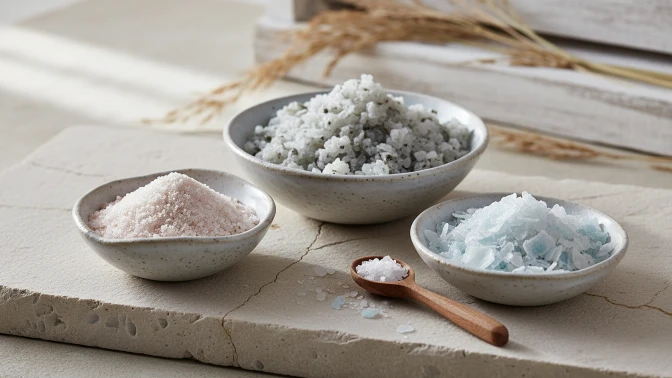
These salts add distinct texture, flavor, and finishing touches to your cooking. Each one behaves differently when you season, cook, or finish a dish, so choose based on texture and taste impact.
Himalayan Pink Salt
Himalayan pink salt comes from ancient salt beds in Pakistan and has a pale pink to deep rose color. You’ll often see it sold as large crystals, coarse grind, or blocks for cooking and serving. The crystals dissolve slower than fine table salt, so you should grind or rub them for even seasoning. Use the coarse form for grinders, brining, or a salt crust on roasted meats.
You can use fine Himalayan salt like regular salt, but check volume: a teaspoon of fine Himalayan may taste slightly milder than a teaspoon of table salt. Many cooks like the visual appeal and mild mineral notes when finishing steaks or roasted vegetables.
For sourcing and mineral info, read guidance from credible food science sources like the USDA and mineral studies. Treat Himalayan salt as a finishing or specialty cooking salt rather than a health cure.
Fleur de Sel
Fleur de sel is a delicate, flaky sea salt harvested by hand from salt ponds, mainly in France. You’ll recognize it by its light, crunchy crystals and moist texture. The flavor is clean, bright, and slightly sweet, so you should use it as a finishing salt to highlight foods without overwhelming them.
Sprinkle fleur de sel over grilled fish, ripened cheeses, or dark chocolate to add a subtle crunch and a burst of salt. Store it in a cool, dry place in a tight container to keep the flakes from clumping. Because it’s pricey and delicate, you don’t need it for cooking in a pot; use it at the end of cooking.
Learn more about traditional production and culinary uses from reputable culinary schools and producers to understand why chefs prize it.
Celtic Sea Salt
Celtic sea salt (often called sel gris) comes from Atlantic coastal salt flats, especially in Brittany, France. Its gray color comes from clay and minerals left in the salt; the crystals hold a bit of moisture and a fuller mouthfeel than dry table salt. You’ll find it as coarse or medium crystals that work well for cooking where you want a steady release of saltiness.
Use Celtic sea salt for baking breads, seasoning stews, or rubbing onto meats before roasting. Its moisture helps it stick to food surfaces, which can improve crusts on roasted vegetables and meats. If a recipe lists kosher salt, measure carefully—Celtic sea salt’s crystal size changes salt volume, so adjust to taste.
For production details and how chefs use it, consult reliable culinary resources and salt producers’ pages.
Flavored and Infused Salts
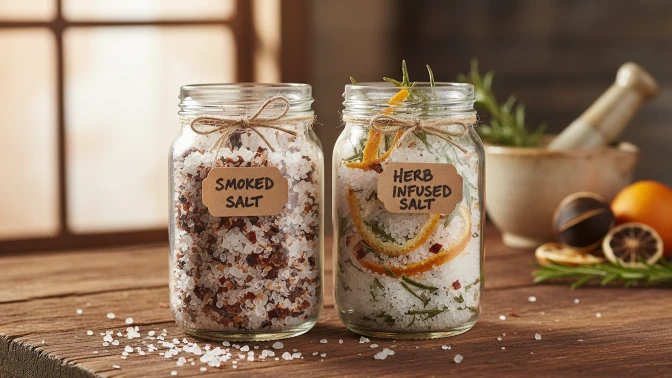
These salts add a clear flavor boost and texture contrast. They let you finish dishes with smoke, herbs, or spices without extra cooking steps.
Smoked Salts
Smoked salts are sea salt crystals that have absorbed wood smoke during a slow smoking process. Expect flavors like hickory, applewood, or mesquite depending on the wood used; hickory gives a bold, bacon-like note, while applewood is milder and sweeter.
Use smoked salt as a finishing sprinkle on roasted vegetables, grilled meats, or creamy dishes like mashed potatoes. Start with small pinches—smoke flavors concentrate quickly and can overpower delicate ingredients.
Store smoked salt in an airtight container away from strong odors. If you want to experiment, try blending a mild smoked salt with plain flaky sea salt to control intensity.
Herb and Spice Infused Salts
Herb and spice salts pair kosher or sea salt with dried herbs, citrus zest, garlic, chili flakes, or whole spices. Common blends include rosemary-salted olive oil crusts, lemon-thyme salt for fish, and chili-lime salt for fruit or tacos.
Make a simple mix by drying fresh herbs thoroughly, chopping finely, and tossing with flaky salt. Spread the mix on a tray to air-dry an hour before storing; this prevents clumping and preserves flavor.
Use these salts to season breads, salads, grilled seafood, and finishing plates. Keep them in small jars and label the date—flavor peaks within a few months.
Low Sodium and Alternative Salts
You can cut sodium without losing flavor by swapping some or all table salt for alternatives that add saltiness or other tastes. Some options replace sodium chemically, while others change how you season so you use less salt.
Potassium-Based Salts
Potassium-based salts replace some or all sodium chloride with potassium chloride. They provide a salty taste with much less sodium per serving, which can help lower your daily sodium intake. People with normal kidney function can use them safely, but you should avoid them if you take potassium-sparing medications or have kidney disease.
Expect a slightly different flavor: some people notice a bitter or metallic aftertaste. Start by substituting half the salt called for in a recipe, then adjust to taste. Check labels for the actual sodium and potassium amounts. For clinical guidance about potassium and medications, consult trusted sources like the National Kidney Foundation.
Salt Substitutes
Salt substitutes come in several forms: pure potassium chloride blends, mixed mineral salts, and herb- or spice-based blends that add flavor without sodium. Brands vary in taste and sodium content, so read nutrition facts to compare milligrams per teaspoon.
Use salt substitutes in cooking and at the table, but test them in baked goods first because texture can change. If you have high blood pressure, your doctor may recommend these alternatives; if you are on certain heart or kidney medicines, ask a clinician before switching. For reliable dietary guidance, see recommendations from the American Heart Association.
Selecting the Right Salt for Cooking
Choose the salt that fits the dish’s texture, how you season, and when you add it. Think about grain size, purity, and whether you want salt to dissolve fast or provide a crunchy finish.
Matching Salt to Recipes
Match grain size to the cooking step. Use fine table salt when you need quick, even seasoning in batters, sauces, or when dissolving during cooking. Use kosher salt for general seasoning, brining, and rubbing meats because its crystals are easy to pinch and spread. Use flaky finishing salt, like fleur de sel or Maldon, at the end for crunch and a clean burst of flavor.
Consider minerals and additives. Sea salts may add subtle flavor notes; avoid iodized table salt when you want a pure taste. For pickling and curing, use pure, additive-free salts so brines stay clear and fermentation flows correctly.
Tips for Substituting Salt Types
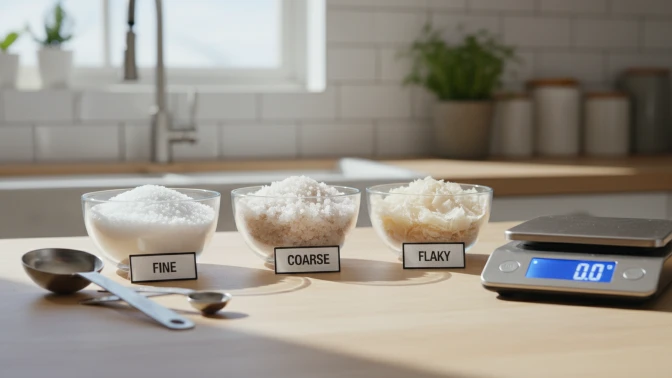
Adjust volume, not just weight, when swapping salts. Different crystals mean different saltiness by volume: 1 teaspoon of fine table salt is saltier than 1 teaspoon of kosher salt. Weigh salts when precision matters, or follow brand-specific conversion (e.g., Diamond Crystal vs. Morton).
Think about dissolution and texture. Replace finishing salt with a finer salt only if you accept less crunch. When replacing iodized table salt with kosher or sea salt, taste and add gradually—start with about 1.5 times the volume of kosher relative to table salt and adjust. For brines or baking, use a scale to keep results consistent.
Storage and Shelf Life of Different Salts
Salt keeps a very long time, but storage affects texture and flavor. Moisture, odors, and added ingredients (like herbs or anti-caking agents) change how each salt performs in cooking.
Proper Storage Methods
Store salts in airtight containers to block moisture and strong smells. Use glass jars with tight lids or food-grade plastic containers. Vacuum-sealed bags work well for bulk kosher or sea salt.
Keep salts in a cool, dry place away from heat and steam. Avoid storing near the stove, dishwasher, or sink. For flaky salts (fleur de sel, Maldon), use smaller containers you open rarely to preserve crisp texture.
If you buy iodized or fortified table salt, keep it sealed to prevent clumping from humidity. For flavored or herb salts, refrigerate only if the product label says so; otherwise, airtight jars at room temperature are fine. For long-term storage, the USDA and NPS guides on dry food storage offer practical tips.
Recognizing Spoilage
Pure salt does not grow bacteria, but blends can spoil. Check flavored salts for rancid or off-smells from added oils or herbs. If herbs look discolored or the mix smells stale, discard it.
Watch for clumping that won’t break with gentle tapping; that can signal moisture damage. Clumps alone aren’t dangerous, but they change how salt dissolves and seasons food. Also notice any foreign odors — salt can absorb smells from garlic, lemon, or cleaning products.
If you see mold, insect activity, or visible contamination, throw the jar away. For more on salt shelf life and storage specifics, see resources from the FDA and food storage experts.
FAQs
Which salt should you use for everyday cooking?
Kosher salt works well in most recipes because its flakes are easy to pinch and measure. It dissolves quickly and gives even seasoning for meats, vegetables, and soups.
Can you swap one salt for another in a recipe?
Yes, but adjust the amount. Table salt is finer and more salty by volume than kosher or flakey sea salt. Measure by weight when possible, or use less table salt if a recipe calls for kosher salt.
When should you use finishing salt?
Use finishing salts like fleur de sel or flakey sea salt right before serving. They add a bright crunch and subtle mineral notes that you won’t get from dissolved salts.
Is Himalayan pink salt healthier than table salt?
No clear evidence shows it is healthier. Both provide sodium chloride. Pink salt contains trace minerals, but they are present in very small amounts and don’t change its basic effects on health.
How should you store salt?
Keep salt dry and in a sealed container to prevent clumping. Most salts last indefinitely when stored away from moisture.
Do different salts affect baking?
Yes. Consistent salt size matters in baking where chemistry is precise. Use the type called for in the recipe or convert by weight to keep results consistent.
Conclusion
You now know common salt types and what they do in the kitchen. Pick coarse salts like kosher or sea salt for seasoning and finishing. Use fine table salt where precise measuring matters, such as in baking.
Think about texture and saltiness when you choose. Flaky finishing salts add crunch and a bright burst of flavor. Denser salts dissolve slower and can taste stronger by volume.
Keep simple storage rules. Store salt in a dry, airtight container away from heat. This helps maintain texture and prevents clumping.
Match salt to the task and your taste. Start small, taste often, and adjust as you cook. Your dishes will improve with a little practice and attention to salt type.