
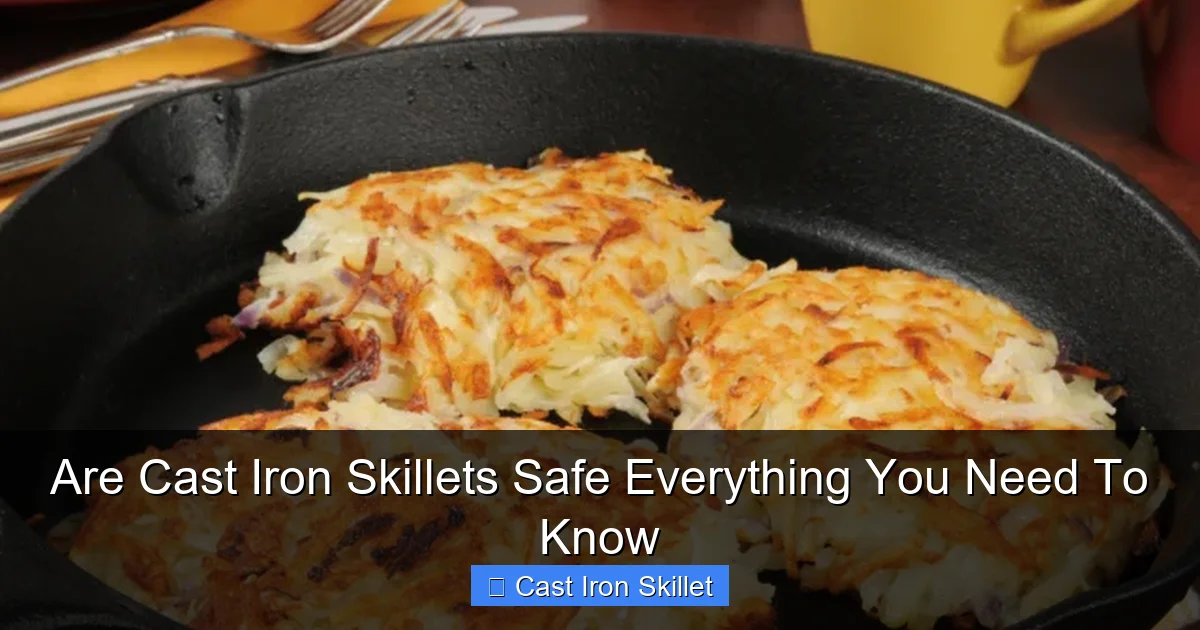
Are Cast Iron Skillets Safe Everything You Need To Know
Cast iron skillets are generally safe when properly seasoned and maintained. These durable pans can last generations but require specific care to prevent rust, iron leaching, and seasoning breakdown. This guide covers everything you need to know about using cast iron safely while preserving your health and cookware investment.
Contents
- 1 Key Takeaways
- 2 Are Cast Iron Skillets Safe? Everything You Need To Know
- 3 Understanding Cast Iron: What You’re Really Cooking With
- 4 The Seasoning Shield: Your First Line of Defense
- 5 Health Concerns: Iron Leaching and Your Wellness
- 6 Toxic Fumes and Overheating: Hidden Dangers
- 7 Safe Cooking Practices for Daily Use
- 8 Cleaning and Maintenance: The Safety Checklist
- 9 Troubleshooting Common Safety Issues
- 10 Special Considerations for Vulnerable Groups
- 11 Cast Iron vs. Modern Cookware: A Safety Comparison
- 12 Environmental and Long-Term Safety
- 13 Conclusion: Safe Cast Iron Use in Your Kitchen
Key Takeaways
- Seasoning creates safety: A well-seasoned cast iron skillet forms a natural non-stick barrier that prevents iron leaching and food contamination.
- Iron leaching is minimal: While cast iron can transfer small amounts of iron to food, this is rarely harmful and may benefit those with iron deficiency.
- Avoid high heat & acidic foods: Cooking tomatoes or citrus at high temperatures can break down seasoning and increase metal exposure.
- Never soak or use harsh detergents: Water and chemicals strip seasoning, creating rust and safety hazards.
- Regular maintenance is crucial: Proper cleaning and oiling after each use keeps your skillet safe and extends its lifespan.
- Rust means immediate action: Surface rust is removable, but deep rust requires complete re-seasoning before cooking.
- Pregnant women should be cautious: Excessive iron intake can be concerning, so moderation is key even with safe cookware.
Are Cast Iron Skillets Safe? Everything You Need To Know
You’ve seen them in your grandmother’s kitchen, at rustic diners, and all over social media. Cast iron skillets promise even heating, natural non-stick properties, and a lifetime of cooking pleasure. But with all the talk about chemicals in modern cookware, you’re right to wonder: are cast iron skillets actually safe? This complete guide will answer every safety concern you have while teaching you how to use and maintain these classic pans properly. By the end, you’ll know exactly how to make your cast iron skillet a safe, reliable workhorse in your kitchen.
Understanding Cast Iron: What You’re Really Cooking With
Before we dive into safety specifics, let’s understand what cast iron actually is. Cast iron skillets are made from iron that’s been melted down and poured into molds. This creates a dense, heavy pan that holds heat beautifully. But raw iron alone would rust quickly and react with food. That’s where seasoning comes in—a layer of polymerized oil that protects the metal and creates non-stick properties.

Visual guide about Are Cast Iron Skillets Safe Everything You Need To Know
Image source: i.pinimg.com
The Material Matters
Your cast iron skillet contains primarily iron with small amounts of carbon and other elements. Unlike aluminum or copper pans, cast iron doesn’t require a lining or coating. The iron itself is food-safe when properly protected. However, bare iron exposed to air and moisture will rust, which can create safety issues if ingested regularly.
What Is Seasoning?
Seasoning is not a spray-on coating or factory application. It’s a process you create and maintain by baking oil onto the pan’s surface. When oil heats to its smoke point, it breaks down and reforms into a hard, plastic-like layer that bonds to the iron. This layer is what makes your skillet non-stick and prevents direct food-to-metal contact. Without proper seasoning, your cast iron skillet is essentially unsafe for cooking.
The Seasoning Shield: Your First Line of Defense
A well-seasoned cast iron skillet is a safe cast iron skillet. Think of seasoning as an artificial exoskeleton that protects both the pan and your food. This black, glossy layer prevents rust, reduces iron leaching, and creates a smooth cooking surface. But seasoning requires maintenance and can be damaged by improper use.
Visual guide about Are Cast Iron Skillets Safe Everything You Need To Know
Image source: gearpatrol.com
How to Build Proper Seasoning
Start with a clean, dry skillet. Apply a thin layer of high-smoke-point oil like vegetable oil, canola oil, or flaxseed oil. Wipe away all excess—this step is crucial. Too much oil creates a sticky, gummy residue instead of a hard coating. Place the pan upside down in a 450°F oven for one hour. Let it cool completely in the oven. Repeat this process 3-5 times for a strong initial seasoning. This creates the foundation for safe cooking.
Maintaining Your Seasoning
After each use, clean your skillet properly and apply a light coat of oil while it’s still warm. This maintains the protective layer. Your seasoning will naturally improve with use, becoming darker and more non-stick over time. A well-maintained seasoned surface can last decades without needing complete re-seasoning.
Health Concerns: Iron Leaching and Your Wellness
The most common safety question about cast iron is whether it leaches iron into food. The answer is yes, but the amounts are typically small and often beneficial. Studies show that cast iron can transfer anywhere from 0.5 to 5 milligrams of iron per serving, depending on what you’re cooking and how long it’s in contact with the pan.
Visual guide about Are Cast Iron Skillets Safe Everything You Need To Know
Image source: gearpatrol.com
Who Benefits from Iron Leaching?
For the 2 billion people worldwide with iron deficiency, this small boost can be helpful. People with anemia, pregnant women, and those on plant-based diets may find cast iron cooking supports their iron intake. The iron from cast iron is heme iron, which your body absorbs more efficiently than the non-heme iron from plants.
When Iron Leaching Is a Concern
Most healthy adults don’t need to worry about iron leaching. However, people with hemochromatosis (a condition causing iron overload) should limit cast iron use. Similarly, cooking acidic foods like tomatoes or wine for extended periods can increase iron transfer. If you have iron concerns, discuss your cookware choices with your doctor.
Toxic Fumes and Overheating: Hidden Dangers
While iron itself doesn’t produce toxic fumes, the seasoning on your pan can create harmful compounds if severely overheated. When cast iron exceeds 500-600°F, the polymerized oil layer can break down and release acrolein and other irritants. This is why proper preheating is essential.
Preheating Safely
Always preheat your cast iron skillet gradually over medium heat for 5-10 minutes. You’ll know it’s ready when water droplets dance across the surface instead of evaporating immediately. This prevents overheating and protects your seasoning. Never place a cold pan directly on high heat—this causes thermal shock and can warp your skillet.
Signs of Overheating
If your pan starts smoking heavily or you smell a sharp, chemical odor, remove it from heat immediately. Let it cool down before cleaning. Overheating not only damages seasoning but can also create potentially harmful compounds. A properly preheated pan should not produce visible smoke.
Safe Cooking Practices for Daily Use
How you cook in your cast iron skillet matters just as much as how you clean it. Following these practices ensures your food stays safe and your pan lasts for generations.
Cooking Acidic Foods
Tomatoes, citrus, vinegar, and wine can react with bare iron. Always ensure your skillet has a strong seasoning layer before cooking these ingredients. Limit cooking time and avoid storing acidic foods in cast iron. For tomato-based sauces, consider using enameled cast iron instead of traditional bare iron.
Temperature Management
Cast iron holds heat exceptionally well, which means it can easily become too hot. Start with medium heat and adjust as needed. When frying or searing, use medium-high heat briefly, then reduce to medium. This prevents burning and maintains food safety.
Utensil Safety
Metal utensils are generally safe for well-seasoned cast iron. They won’t damage the pan if you avoid scraping hard. However, wooden, silicone, or plastic utensils are gentler and help preserve seasoning. Avoid using sharp knives that can cut through the seasoning layer.
Food Storage Considerations
Never store food in your cast iron skillet, especially leftovers. The prolonged contact can break down seasoning and increase iron leaching. Always transfer food to glass or ceramic containers for refrigeration. Your skillet should be cleaned, dried, and oiled before storage.
Cleaning and Maintenance: The Safety Checklist
Proper cleaning is where most cast iron safety issues begin. Harsh detergents, soaking, and dishwashers destroy seasoning and create rust hazards. Follow these steps after every use.
What NOT to Do
Never soak your cast iron skillet in water. Never put it in the dishwasher. Avoid harsh detergents and steel wool scrubbers that strip seasoning. Don’t use bleach or oven cleaner. These practices remove the protective layer, exposing bare iron that can rust and contaminate food.
Safe Cleaning Method
Clean your skillet while it’s still warm. Use hot water and a stiff brush or chainmail scrubber. For stuck-on food, add coarse salt and a little oil to create an abrasive paste. If necessary, use a tiny amount of mild soap—modern soaps are safe for cast iron in small quantities. Always scrub gently to preserve seasoning.
Drying and Oiling
After cleaning, dry your skillet immediately and thoroughly with a towel. Then place it on low heat for 2-3 minutes to evaporate any remaining moisture. While still warm, apply a thin layer of oil and wipe away excess. This step is critical—even a few drops of water can cause rust overnight.
Troubleshooting Common Safety Issues
Even careful cooks encounter problems. Here’s how to address the most common safety concerns with cast iron skillets.
Rust Prevention and Removal
Surface rust appears as orange-brown spots. This is unsightly but not dangerous if properly addressed. Remove rust with steel wool or a wire brush until you see bare metal. Wash thoroughly, then re-season completely. Deep pitting rust requires professional restoration or disposal of the pan.
Sticky Residue Buildup
A sticky, gummy surface means your seasoning has gone wrong. This happens from using too much oil or not heating enough. Strip the pan using oven cleaner or a professional degreaser, then start the seasoning process from scratch. A sticky surface can harbor bacteria and should not be used for cooking.
Food Sticking Despite Seasoning
If food sticks, your seasoning may be weak or damaged. First, ensure you’re preheating the pan properly. If sticking persists, lightly sand the surface with fine steel wool and apply a fresh seasoning layer. A properly seasoned pan should release food easily with minimal oil.
Metallic Taste in Food
A metallic taste indicates iron leaching and seasoning breakdown. This happens most often with acidic foods or when cooking at too high a temperature. Strip and re-season your pan. Avoid cooking tomatoes, wine, or citrus in it until the new seasoning matures with 10-15 uses.
White Film or Cloudiness
A white, powdery substance usually indicates mineral deposits from hard water or incomplete rinsing. Scrub with hot water and a brush, then re-season. This isn’t harmful but can affect cooking performance. Using distilled water for cleaning can prevent future deposits.
Special Considerations for Vulnerable Groups
While cast iron is safe for most people, certain groups should take extra precautions to ensure their health and safety.
Pregnant Women and Iron Intake
Pregnant women need more iron, but excessive amounts can be harmful. If you’re pregnant and using cast iron daily, monitor your iron levels with your healthcare provider. Consider alternating with other cookware types to regulate iron exposure.
Children and Elderly Users
Cast iron skillets are very heavy, which can be a safety issue for children or elderly users with limited strength. Always use oven mitts and place hot pans on stable, level surfaces. Consider smaller skillets (8-inch) for these users to prevent accidents.
People with Hemochromatosis
If you have hemochromatosis or any condition requiring iron restriction, limit cast iron use to occasional cooking. Choose stainless steel, glass, or enameled cookware for daily meals. The iron leaching from cast iron can contribute to iron overload in sensitive individuals.
Cast Iron vs. Modern Cookware: A Safety Comparison
How does cast iron stack up against non-stick, stainless steel, and other modern options? Let’s compare the safety profiles.
Traditional Non-Stick Coatings
Modern PTFE coatings can release toxic fumes when overheated above 500°F. They also degrade over time, requiring replacement every 2-3 years. Cast iron, when properly maintained, has no such fume risk and can last a lifetime. However, damaged non-stick coatings can contain PFOA residues, while cast iron has no chemical additives.
Stainless Steel
Stainless steel is inert and doesn’t leach metals, making it very safe. However, it’s prone to sticking and often contains nickel, which some people are allergic to. Cast iron provides natural non-stick when seasoned properly and contains no nickel, but requires more maintenance.
Aluminum
Bare aluminum leaches into food, especially with acidic ingredients. Most aluminum cookware is anodized or coated to prevent this. Cast iron leaches iron, which is generally beneficial, while aluminum leaching has unknown long-term health effects.
Environmental and Long-Term Safety
Cast iron skillets are among the most environmentally friendly cookware options. They’re made from natural materials, require no chemical manufacturing processes, and can be recycled indefinitely. Unlike disposable non-stick pans, a cast iron skillet used for decades has a minimal environmental footprint.
Disposal Safety
When your cast iron skillet finally reaches the end of its life (centuries from now), it can be melted down and recast. There are no toxic components to dispose of. This makes it safer for landfills and recycling centers compared to coated or composite cookware.
Second-Hand Safety
Buying vintage cast iron is eco-friendly but requires safety checks. Inspect for cracks, heavy rust, or warping. Ask about the pan’s history—was it used for chemicals or paint? If you’re unsure, strip and re-season thoroughly before cooking. Most vintage cast iron is safe once properly restored.
Conclusion: Safe Cast Iron Use in Your Kitchen
So, are cast iron skillets safe? Absolutely—when you understand and respect their needs. These pans have cooked meals safely for centuries, and with proper care, they’ll continue doing so for generations to come. The key is maintaining that seasoning barrier, avoiding extreme temperatures, and cleaning correctly after each use.
Start with one simple cast iron skillet. Learn its quirks. Master the seasoning process. Follow the safe cooking practices outlined here. Before you know it, you’ll have a reliable, safe, and versatile piece of cookware that outperforms modern alternatives without the chemical concerns. Your cast iron skillet isn’t just cookware—it’s a legacy piece that, when treated right, becomes safer and more valuable with age.
🎥 Related Video: What to do when buying a BRAND new cast iron pan! #howtocook
📺 Jose.elcook