
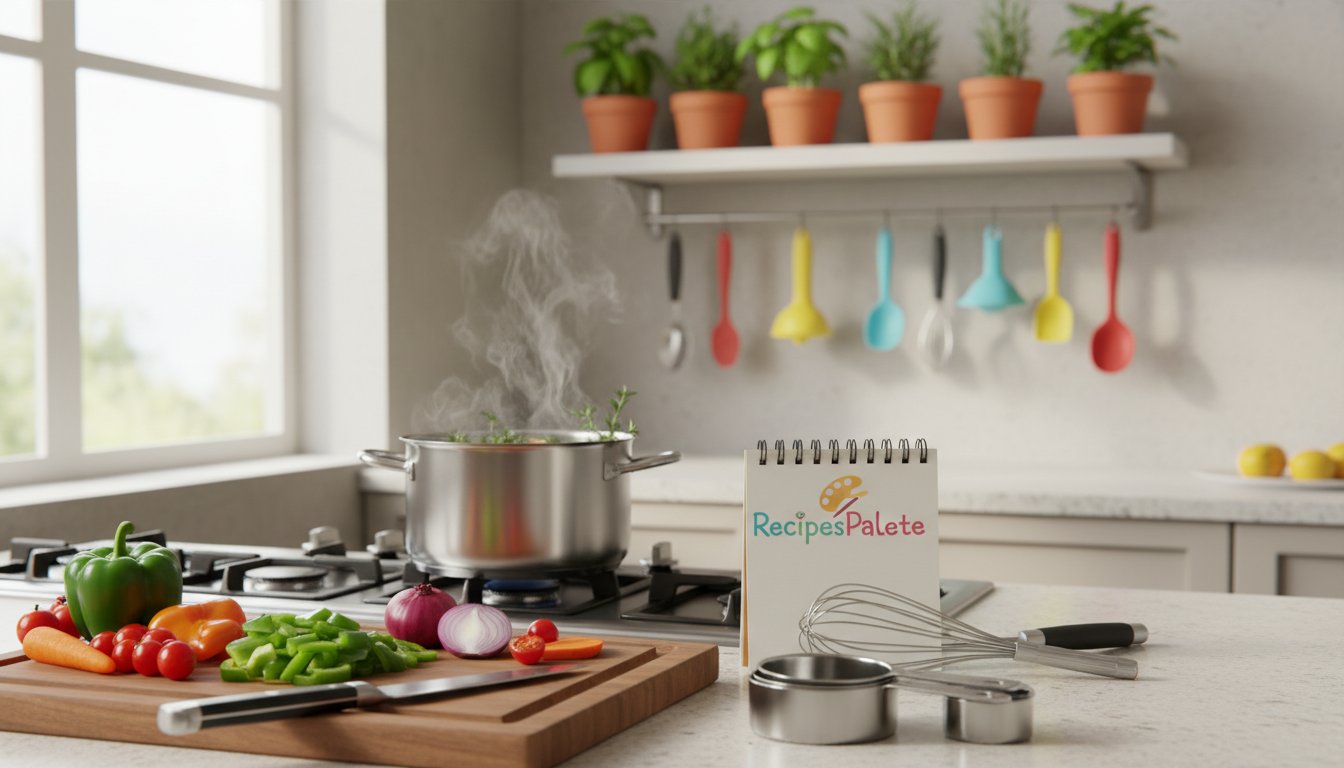
Cooking simple meals can seem scary at first, but it’s not. With the right help, anyone can feel more confident in the kitchen.
Learning easy kitchen skills is key to becoming a good home cook. By learning a few simple cooking techniques, you can make many different dishes easily.
If you want to cook your first meal or eat less takeout, this guide is for you. It will teach you the basic skills you need to start.
Key Takeaways
- Mastering simple cooking techniques to build confidence in the kitchen
- Learning easy kitchen skills to prepare a variety of dishes
- Understanding the basics of cooking to improve your overall cooking experience
- Discovering how to cook simple meals with ease
- Developing a beginner cooking guide to follow for future reference
Contents
- 1 Getting Started in the Kitchen: Overcoming the Initial Hurdles
- 2 Essential Kitchen Tools Every Beginner Needs
- 3 Understanding Basic Ingredients and Their Uses
- 4 Knife Skills: Safe and Efficient Cutting Techniques
- 5 Basic Cooking Tips for Beginners: Mastering Heat Control
- 6 The Art of Seasoning: Enhancing Flavors in Your Cooking
- 7 Mastering Simple Cooking Methods
- 8 Following Recipes Successfully: Tips and Tricks
- 9 Conclusion: Building Confidence Through Practice
- 10 FAQ
Getting Started in the Kitchen: Overcoming the Initial Hurdles
Starting to cook can feel daunting, but it’s easier than you think. The first challenges often come from not knowing how to cook, unfamiliar tools, or fear of mistakes.
Common Fears New Cooks Face
New cooks often worry about making a good meal. They fear their dishes won’t be as good as they hope. They also worry about kitchen safety, like using knives safely. Knowing these fears are common helps you face them.
Setting Realistic Expectations
When you start cooking, it’s important to have realistic goals. Not every dish will be perfect right away. Practice is essential, and being patient with yourself is key. Start with easy recipes and then try harder ones.
| Common Fears | Tips to Overcome |
|---|---|
| Fear of failure | Start with simple recipes |
| Kitchen safety concerns | Learn proper knife handling and safety techniques |
| Unfamiliarity with ingredients | Experiment with different ingredients and read labels |
The Mindset for Cooking Success
Having the right mindset is key to cooking well. It’s about being open to learning, not being too hard on yourself when things go wrong, and enjoying the process. Cooking is a skill that grows with time, and with effort, you’ll get better.
By facing common fears, setting achievable goals, and staying positive, you can beat the first hurdles of cooking. You’ll enjoy the journey to becoming a skilled home cook.
Essential Kitchen Tools Every Beginner Needs
Starting your cooking journey is more than just recipes. You need the right tools to make it smoother and more fun. Having the basic kitchen tools is key for any beginner who wants to cook at home.
Must-Have Utensils and Equipment
Every new cook should start with essential utensils and equipment. You’ll need a chef’s knife, cutting board, pots, pans, wooden spoons, and a spatula. “A good knife is the backbone of any kitchen,” many chefs say. A quality chef’s knife can greatly improve your cooking.

Budget-Friendly Alternatives
You don’t have to spend a lot to get what you need. There are many budget-friendly alternatives out there. You can find affordable kitchen utensils at thrift stores or discount home goods stores.
Organizing Your Kitchen Space for Efficiency
After getting your tools, organizing your kitchen is key. A tidy kitchen looks better and makes cooking easier. Think about your kitchen’s layout and how to make it work for you.
Storage Solutions for Small Kitchens
Small kitchens face storage challenges. Use wall-mounted shelves or pegboards to save space. Also, stackable containers are great for storing utensils and ingredients.
“A place for everything, and everything in its place.” This is very true for small kitchens. Clutter can quickly overwhelm you.
Understanding Basic Ingredients and Their Uses
Cooking starts with knowing your ingredients. It’s essential for both newbies and those looking to improve. Understanding your ingredients is key.
Pantry Staples to Always Have on Hand
Having the right pantry staples is crucial. Essentials like olive oil, onions, garlic, and spices are versatile. They can be used in many dishes.
A well-stocked pantry lets you cook quickly. Julia Child once said, “The only time to eat diet food is while you’re waiting for the steak to cook.” This shows the value of having versatile ingredients.
“The discovery of a new dish does more for human happiness than the discovery of a new star.” – Jean Anthelme Brillat-Savarin
Fresh vs. Frozen vs. Canned: Making Smart Choices
Choosing between fresh, frozen, or canned ingredients depends on the recipe, season, and preference. Here’s a comparison to guide you:
| Ingredient Type | Nutritional Value | Convenience | Cost |
|---|---|---|---|
| Fresh | High | Moderate | Variable |
| Frozen | High | High | Moderate |
| Canned | Moderate | High | Low |
Reading Food Labels Effectively
Understanding food labels is key for healthy choices. Look at the ingredient list, nutrition facts, and front-of-package claims.
Decoding Expiration Dates
Expiration dates can be confusing. But knowing them helps reduce waste and ensures safety. “Sell by,” “Use by,” and “Best if used by” are important terms.
Mastering ingredients and their uses boosts your kitchen confidence. It prepares you to make tasty meals. Remember, great cooking is about understanding ingredients, not just following recipes.
Knife Skills: Safe and Efficient Cutting Techniques
Knife skills are key for safe and efficient cooking. Learning the basics of knife handling and cutting techniques is important. It makes cooking better and lowers the risk of accidents.
Choosing the Right Knife for the Job
Choosing the right knife is crucial. Different knives are for different tasks, like chopping, slicing, or mincing. A chef’s knife is versatile, while a paring knife is best for peeling and coring.
Proper Knife Handling and Safety
Safe knife handling is essential. Hold the knife firmly but not too tightly. Use the claw grip for safety and control. Always keep your fingers curled under and out of the knife’s path.
Basic Cutting Methods: Dice, Julienne, and Chop
Knowing basic cutting techniques is vital. Dicing means cutting into small, uniform cubes. Julienne is for long, thin strips. Chopping is for cutting into smaller pieces, not necessarily uniform.
Real-Life Example: Dicing an Onion Without Tears
Dicing an onion can be tough, but you can avoid tears. Start by cutting off one end and peeling it. Make parallel cuts without cutting all the way through, then cut perpendicularly to get small cubes. Chilling the onion in the fridge before cutting can also help.
Basic Cooking Tips for Beginners: Mastering Heat Control
Learning to control heat is key for any beginner cook. It’s essential for cooking dishes just right. With practice and patience, you can master this skill.
Understanding Stovetop Settings and Oven Temperatures
Knowing how to adjust stovetop and oven settings is crucial. Stovetop heat ranges from low to high. Use low heat for simmering sauces and high for searing meat.
Oven temperatures are also important. Get to know your oven’s settings. A thermometer helps ensure you’re cooking at the right temperature.
“The discovery of a new dish does more for human happiness than the discovery of a new star.” – Jean Anthelme Brillat-Savarin
Recognizing Visual Cues for Perfect Cooking
Knowing what to look for is key to perfect cooking. For veggies, aim for a tender yet crisp texture and bright color. For proteins, check the internal temperature and texture.
Common Heating Mistakes and How to Avoid Them
Not preheating the oven or pan is a common mistake. Always preheat to ensure even cooking. Adjusting heat during cooking is also important. For example, when sautéing onions, start with high heat and lower it to prevent burning.
Real-Life Example: Sautéing Onions Without Burning
Sautéing onions without burning them is a great skill to master. Start with a hot pan, add oil, and then onions. Stir often and adjust heat as needed for perfect caramelization.
Mastering heat control boosts your cooking skills and confidence. Don’t worry about mistakes at first. Keep practicing, and you’ll get better at managing heat for various cooking techniques.
The Art of Seasoning: Enhancing Flavors in Your Cooking
Seasoning is key to making food taste great. It’s more than just salt and pepper. It’s about finding the right mix of flavors to make your meals stand out.
Salt, Pepper, and Beyond: Essential Spices for Beginners
Every kitchen needs some basic spices. Salt and pepper are a good start. But don’t forget garlic powder, onion powder, paprika, and herbs like thyme and oregano. These spices are great for beginners and can be used in many dishes.
| Spice | Common Uses |
|---|---|
| Salt | Enhances flavors, used in baking and cooking |
| Pepper | Adds depth, used in savory dishes |
| Garlic Powder | Used in sauces, marinades, and seasoning blends |
Layering Flavors Throughout the Cooking Process
Layering flavors means adding seasoning at different cooking stages. Start by seasoning your ingredients before cooking. Then, add more as you cook, tasting and adjusting as needed. This makes your dishes rich and full of flavor.
Tasting and Adjusting as You Go
It’s important to taste your food while cooking. This lets you adjust the seasoning to your liking. Feel free to add a bit more of this or that to get the flavors right.
Real-Life Example: Fixing an Over-Salted Dish
Over-salting a dish can be a problem. To fix it, try adding yogurt or sour cream, or a bit of sugar or honey. The trick is to taste and adjust as you go.
Learning to season well can make your cooking much better. Remember, seasoning is about finding the right mix of flavors. It’s not just about salt and pepper.
Mastering Simple Cooking Methods
Cooking at home gets easier when you learn basic cooking methods. These skills improve your cooking and make it more fun. We’ll look at four key methods: boiling, sautéing, roasting, and steaming.
Boiling: Perfect Pasta, Rice, and Vegetables
Boiling is simple. You just put food in boiling water until it’s done. It’s great for pasta, rice, and veggies.
Real-Life Example: Cooking Pasta to Al Dente Perfection
Learning to cook pasta al dente is a must. Start by boiling salted water, then add pasta. Cook until it’s still firm but not hard. It usually takes 7-9 minutes. Drain and serve with your favorite sauce.
Sautéing: Quick Cooking with Flavor
Sautéing cooks food fast in a pan with a bit of oil. It’s perfect for veggies, meat, and seafood. This method keeps flavors and textures intact.
Roasting: The Hands-Off Cooking Method
Roasting cooks food in the oven without much effort. It’s great for meats, veggies, and root veggies. Just season, put on a baking sheet, and roast until done.
Steaming: Preserving Nutrients and Flavor
Steaming cooks food over boiling water. It’s best for veggies, seafood, and dumplings. It keeps nutrients and flavors in.
Let’s compare cooking times and results for these methods:
| Cooking Method | Cooking Time | Nutrient Retention | Flavor Preservation |
|---|---|---|---|
| Boiling | 5-15 minutes | Medium | Low |
| Sautéing | 2-5 minutes | High | High |
| Roasting | 20-60 minutes | High | High |
| Steaming | 5-15 minutes | High | Medium |
Following Recipes Successfully: Tips and Tricks
Learning to follow recipes is key for kitchen beginners. It makes sure dishes turn out right and teaches cooking techniques. As Julia Child said, “The only time to eat diet food is while you’re waiting for the steak to cook.” This shows the value of cooking with confidence, starting with following recipes right.
Reading and Understanding a Recipe Before You Begin
Always read a recipe before cooking. It helps you know what ingredients and techniques you need. It also tells you how long it will take to make the dish. Beginners should also learn new cooking terms and techniques.
Decoding Common Cooking Terminology
Cooking terms can be tricky for beginners. Words like “julienne,” “dice,” and “sauté” are common. Knowing these terms is important for cooking the dish right. For example, “julienne” means cutting veggies into long strips, and “dice” means small cubes.
Making Smart Substitutions When Necessary
Not having all the ingredients is common. Making smart substitutions is the solution. For example, if a recipe needs buttermilk and you don’t have it, mix milk with vinegar or lemon juice. Knowing how to do this without changing the dish’s taste or texture is a skill.
Troubleshooting When Recipes Go Wrong
Even with the best planning, mistakes can happen. Maybe you didn’t understand a term or measured wrong. The important thing is not to get upset. Many mistakes can be fixed. For example, if your dish is too salty, add a bit of lemon juice. As Thomas Keller says, “Cooking is not about being perfect; it’s about being delicious.” Learning to fix mistakes is key to becoming a confident cook.
By following these tips and practicing, beginners can get better at cooking. Remember, cooking is a journey, and every mistake is a chance to learn and get better.
Conclusion: Building Confidence Through Practice
Learning to cook is just the start. As you keep practicing and trying new recipes, you’ll grow more confident. Home cooking for beginners is all about learning through trial and error. It’s important to be patient and keep going.
Using easy cooking tips and ways to add flavor will help you make tasty meals. These meals will impress your family and friends. Cooking for the first time can seem scary, but with time, you’ll get better.
Remember, the secret to becoming a great cook is to keep practicing. Don’t hesitate to try new things in the kitchen. As you cook more, you’ll find your own way of making meals that are both healthy and delicious.
FAQ
What are the most essential kitchen tools for a beginner?
Beginners need basic tools like a chef’s knife, cutting board, and pots and pans. You’ll also need utensils and a can opener. Start with quality tools that fit your budget.
How do I choose the right knife for cooking?
The right knife depends on the task. A chef’s knife is versatile for most tasks. A paring knife is best for peeling and coring fruit and veggies.
What’s the difference between fresh, frozen, and canned ingredients?
Fresh ingredients offer the best flavor and texture. Frozen ingredients are convenient and nutritious. Canned ingredients are great for long-term storage and can be as nutritious as fresh.
How do I avoid common cooking mistakes as a beginner?
Avoid mistakes by starting with simple recipes and measuring ingredients accurately. Be patient and remember, practice makes perfect. Don’t get discouraged by early mistakes.
How do I season food effectively?
Seasoning well means knowing about salt, pepper, and other spices. Layer flavors during cooking and taste as you go. This helps achieve balanced flavors.
What’s the best way to cook pasta to al dente perfection?
Cook pasta in salted water until it’s still a bit firm. Follow package instructions for cooking time. Test it often to avoid overcooking.
How do I safely handle a knife in the kitchen?
Hold the knife firmly with a secure grip. Keep your fingers curled under and cut away from your body. Always cut on a stable surface and store knives properly.
What are some simple cooking methods for beginners?
Beginners can start with boiling, sautéing, roasting, and steaming. These methods are great for cooking various dishes and can be mastered with practice.
How do I follow a recipe successfully?
To follow a recipe well, read it carefully before starting. Measure ingredients accurately and follow the instructions step-by-step. Feel free to make substitutions or adjustments as needed.
How can I improve my cooking skills with practice?
Improve your cooking by trying new recipes, techniques, and ingredients. Be patient, persistent, and open to learning from your mistakes.