
Choosing the right rice cooker size for your family can transform your meal prep from stressful to effortless. This guide breaks down exactly what capacity you need based on family size, eating habits, and cooking routines. You’ll learn how to avoid common mistakes like overcrowding or underutilizing your appliance, ensuring perfect rice every time.
Contents
- 1 Key Takeaways
- 2 Introduction: Why the Right Rice Cooker Size Matters for Your Family
- 3 Understanding Rice Cooker Capacity: It’s Not What You Think
- 4 How to Calculate Your Family’s Rice Needs in 3 Steps
- 5 Rice Cooker Size Recommendations by Family Size
- 6 Beyond Family Size: Other Critical Factors That Determine Your Perfect Rice Cooker
- 7 Practical Tips for Choosing the Right Size Without Regret
- 8 Troubleshooting Common Size-Related Problems
- 9 Conclusion: Making Your Final Decision
Key Takeaways
- Match capacity to household: 3-cup for 1-2 people, 5-cup for 3-4, 8-cup for 5-6, and 10-cup+ for 7+ family members
- Rice expands significantly: Most rice triples in volume when cooked, so a 1-cup uncooked batch yields 3 cups cooked
- Consider your eating style: Batch cooking fans and leftover lovers should size up one capacity level
- Think beyond rice: Modern rice cookers handle grains, oatmeal, and even steamed veggies, affecting size needs
- Measure your space: Counter depth and cabinet height matter more than you think when storing large appliances
- Guest planning matters: If you regularly entertain, choose a model 2-3 cups larger than your daily needs
Introduction: Why the Right Rice Cooker Size Matters for Your Family
You might think all rice cookers are basically the same. Just add rice and water, right? Wrong. The rice cooker size for family use makes or breaks your cooking experience. Pick too small a unit and you’re constantly batch cooking, waiting for multiple cycles, or dealing with overflow. Choose too large and you’re wasting energy, struggling with tiny portions, and losing precious counter space.
This guide walks you through everything you need to know about selecting the perfect rice cooker capacity. We’ll cover family size calculations, eating habits, kitchen constraints, and hidden factors that most buying guides miss. By the end, you’ll know exactly what size rice cooker your family needs for 2024 and beyond.
Let’s get started with the basics of rice cooker capacity and how to measure your family’s real needs.
Understanding Rice Cooker Capacity: It’s Not What You Think
Rice cooker capacity confuses many shoppers. Manufacturers measure in “cups,” but this isn’t a standard US cup. A rice cooker cup is typically 180ml, about 20% smaller than a regular measuring cup. More importantly, rice cooker capacity refers to uncooked rice, not cooked.
Visual guide about Best Rice Cooker Size for Family Ultimate Buying Guide 2024
Image source: ricearray.org
How Rice Expansion Affects Your Choice
Here’s the golden rule: most rice varieties expand 3-4 times when cooked. That means 1 cup of uncooked rice becomes 3-4 cups of cooked rice. A 5-cup rice cooker can handle 5 cups of uncooked rice, which transforms into 15-20 cups of cooked rice. For most families, that’s dinner plus several days of leftovers.
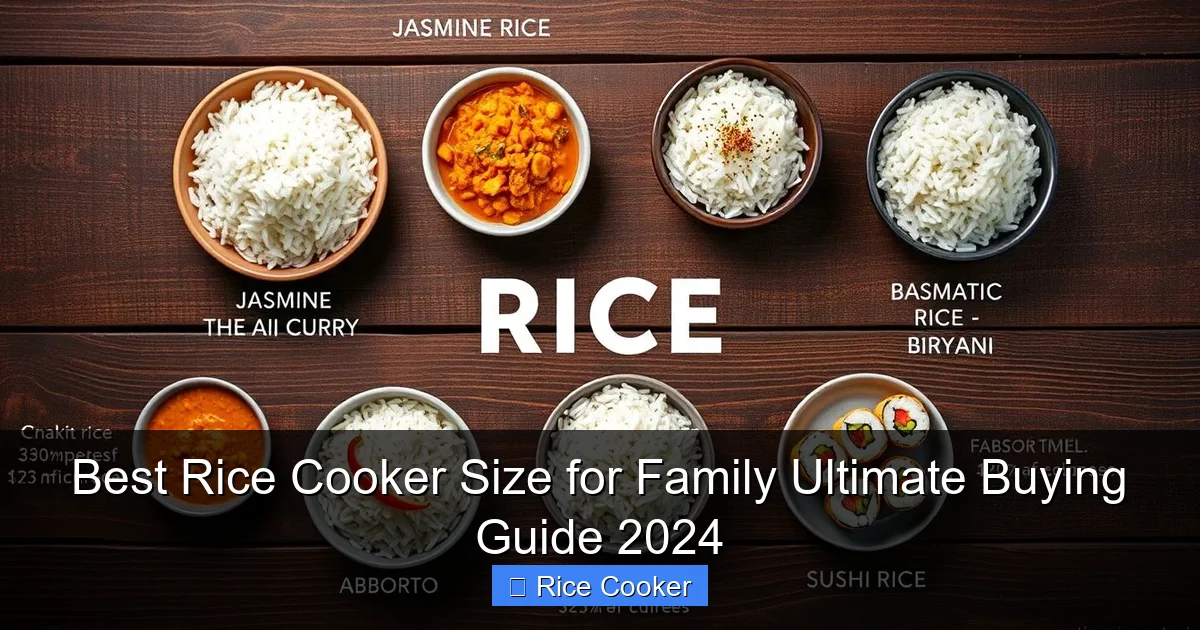
Different rice types expand differently:
- White rice: 3-3.5x expansion
- Brown rice: 3.5-4x expansion
- Basmati rice: 3-3.5x expansion
- Jasmine rice: 3-3.5x expansion
- Wild rice: 4x expansion
Check out our types of rice guide to understand how each variety affects your cooking capacity needs.
The “Minimum Fill” Problem
Every rice cooker has a minimum fill line. Most 5-cup models won’t operate properly with less than 2 cups of uncooked rice. This means a 5-cup cooker is really a 2-5 cup appliance. If your family only eats 1 cup of uncooked rice at a time, you’re better off with a 3-cup model that can handle smaller batches efficiently.
How to Calculate Your Family’s Rice Needs in 3 Steps
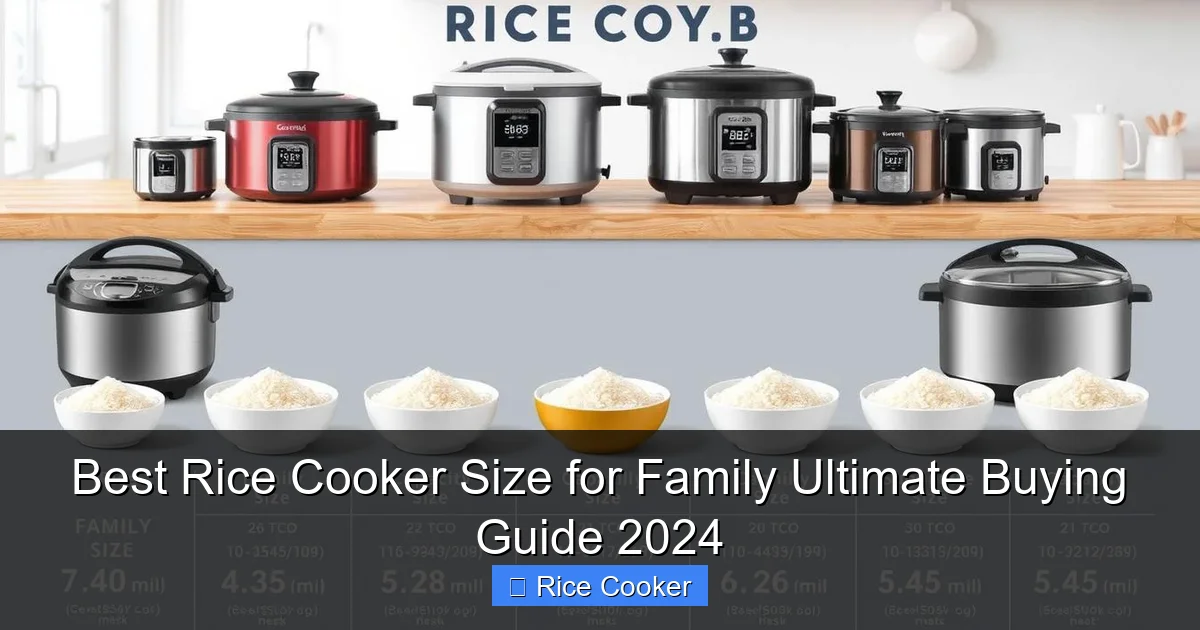
Finding the right rice cooker size for family meals starts with honest assessment. Grab a pen and paper. We’re doing some simple math that will save you headaches later.
Visual guide about Best Rice Cooker Size for Family Ultimate Buying Guide 2024
Image source: ricearray.org
Step 1: Determine Your Actual Family Size
Start with the number of people who eat rice regularly at home. Don’t count the college student who visits monthly. Count daily rice consumers. A family of 4 means 4 people eating rice 3-4 times per week.
Quick reference:
- 1 person: 0.5-1 cup uncooked rice per meal
- 2 people: 1-1.5 cups uncooked rice per meal
- 3-4 people: 1.5-2 cups uncooked rice per meal
- 5-6 people: 2-3 cups uncooked rice per meal
- 7+ people: 3-4+ cups uncooked rice per meal
Step 2: Consider Your Eating Habits
Your cooking style dramatically impacts the best rice cooker size for family life. Answer these questions:
Do you love leftovers? If you cook rice once and eat it for 3-4 days, size up. A family that eats 2 cups of uncooked rice worth per meal might want a 5-cup cooker to make larger batches.
How often do you cook rice? Daily rice cooks might prefer smaller, frequent batches. Those who cook every 3-4 days need larger capacity.
Do you batch cook for meal prep? Meal preppers need maximum capacity. A 10-cup cooker lets you prepare a week’s worth of rice in one cycle.
Do you entertain guests regularly? If you host dinner parties, consider a larger model or a secondary smaller cooker for backup.
Step 3: Think About What You Cook Besides Rice
Modern rice cookers do so much more than rice. If you plan to use yours for:
- Steaming vegetables
- Cooking quinoa or barley
- Making oatmeal for breakfast
- Preparing soups or stews
- Cooking beans or lentils
…you need extra capacity. These foods often require more liquid and different cooking volumes than plain rice.
Rice Cooker Size Recommendations by Family Size
Now for the moment you’ve been waiting for. Here are our specific recommendations for the best rice cooker size for family configurations.
Visual guide about Best Rice Cooker Size for Family Ultimate Buying Guide 2024
Image source: ricearray.org
1-2 People: The 3-Cup Rice Cooker
Perfect for singles, couples without kids, or empty nesters. A 3-cup model handles 1-2 cups of uncooked rice, yielding 3-8 cups of cooked rice. That’s enough for 2-4 meals depending on portion size.
Best for: Couples who eat rice 2-3 times per week, singles who love leftovers, small households with limited counter space.
Real-world example: Sarah and Mark, a childless couple, use their 3-cup cooker to make 1.5 cups of uncooked jasmine rice every other day. This gives them dinner rice plus tomorrow’s lunch leftovers.
Pro tip: If you’re a single person who batch cooks, a 3-cup model gives you 6-8 containers of rice for meal prep without taking over your kitchen.
Learn more about cooking efficiently for small families to maximize your small rice cooker.
3-4 People: The 5-Cup Rice Cooker
This is the sweet spot for most families. A 5-cup rice cooker handles 2-3 cups of uncooked rice, producing 6-12 cups of cooked rice. That’s dinner for 4 people plus generous leftovers.
Best for: Families with young children, couples who entertain occasionally, households with moderate rice consumption.
Real-world example: The Johnson family of four (two parents, two elementary school kids) cooks 2 cups of uncooked brown rice twice weekly in their 5-cup cooker. They eat half for dinner and use the rest for packed lunches.
Pro tip: Choose a 5-cup fuzzy logic cooker if you cook different rice types. These models adjust cooking time and temperature automatically for perfect results every time.
5-6 People: The 8-Cup Rice Cooker
Growing families need growing capacity. An 8-cup rice cooker manages 3-5 cups of uncooked rice, yielding 9-20 cups of cooked rice. This size handles dinner plus multiple days of leftovers without breaking a sweat.
Best for: Families with teenagers, multi-generational households, active meal preppers.
Real-world example: Maria’s family of six (four kids plus parents) eats rice 5 nights a week. She cooks 3 cups of uncooked basmati rice every other day in her 8-cup cooker, giving them enough for dinner and next-day lunches.
Pro tip: At this size, consider a cooker with a stainless steel inner pot. It’s more durable for frequent use and easier to clean when cooking larger batches.
7+ People: The 10-Cup+ Rice Cooker
Large families and serious meal preppers need maximum capacity. A 10-cup rice cooker (or larger) handles 5-8 cups of uncooked rice, producing 15-32 cups of cooked rice. That’s a week’s worth of meals in one cooking cycle.
Best for: Large families, extended families living together, those who entertain frequently, serious batch cooks.
Real-world example: The Williams family of eight (six kids plus parents) uses their 10-cup commercial-grade rice cooker to prepare 5 cups of uncooked rice every Sunday. This feeds them for 3-4 days of meals.
Pro tip: Large rice cookers (10+ cups) often work best on dedicated counter space. Measure your available area before purchasing to avoid disappointment.
Beyond Family Size: Other Critical Factors That Determine Your Perfect Rice Cooker
Family size is just the starting point. These additional factors can change your ideal rice cooker size for family life.
Types of Rice You Cook Regularly
Not all rice is created equal. Brown rice and wild rice take longer to cook and expand more than white rice. If you primarily cook brown rice, consider sizing up by one cup. Your 5-cup cooker might perform like a 4-cup model when cooking hearty whole grain varieties.
Do you cook specialty rices like sushi rice, arborio, or black rice? Each has unique water absorption rates. A fuzzy logic cooker with multiple settings helps, but capacity still matters. For mixed rice households, choose the largest capacity you have space for.
Our rice types guide helps you understand how different varieties affect your cooking needs.
Your Kitchen Space and Storage Reality
That beautiful 10-cup rice cooker means nothing if it doesn’t fit your kitchen. Measure three things before shopping:
Counter depth: Standard counters are 24 inches deep. A large rice cooker might stick out 6-8 inches, creating a safety hazard in busy kitchens.
Cabinet clearance: If you plan to store your cooker in a cabinet, measure height with the door open. Most 10-cup models are 10-12 inches tall and need extra space for ventilation.
Storage weight: A full-size rice cooker with its inner pot and accessories can weigh 10-15 pounds. Ensure your storage shelf can handle the weight.
Small kitchens might benefit from a multi-cooker that combines rice cooking with other functions, saving overall appliance footprint.
Cooking Functions and Features
Basic rice cookers have one job. Fuzzy logic models offer multiple programs: white rice, brown rice, mixed rice, porridge, slow cooking, and steaming. More features often mean larger external dimensions, even with the same capacity rating.
Consider these features when choosing your rice cooker size for family use:
- Delay timer: Perfect for busy families who want rice ready when they walk in the door
- Keep warm function: Essential for families that eat at different times
- Steamer basket: Cook veggies above your rice, effectively doubling your cooking capacity
- Inner pot material: Non-stick for easy cleanup, stainless steel for durability
- Removable cord: Easier storage in small spaces
Read about essential kitchen tools to see how a rice cooker fits into your overall cooking setup.
Practical Tips for Choosing the Right Size Without Regret
These field-tested strategies come from years of helping families select their perfect rice cooker.
When to Size Up: The “Better Too Big Than Too Small” Rule
It’s easier to cook a small batch in a large cooker than to force a large batch into a small one. Here’s when to choose the bigger size:
- You have growing children (their appetites double overnight)
- You regularly have family or friends over for dinner
- You love having 3-4 days of leftovers
- You cook for dietary restrictions (gluten-free, vegan) that require separate batches
- You travel frequently and want to set-and-forget larger batches
Real example: The Chen family bought a 5-cup cooker for their family of four. When their twins hit growth spurts at age 13, they needed an 8-cup model. Their teens were eating 1.5 cups of cooked rice per meal!
The “Cook Once, Eat Twice” Strategy
Choose a rice cooker size that lets you cook once and enjoy multiple meals. If your family eats 2 cups of uncooked rice per dinner, buy a cooker that holds 4-5 cups uncooked. Cook double portions, eat half for dinner, and refrigerate the rest.
This strategy works especially well for:
- Brown rice (takes 45-60 minutes to cook)
- Meal prep enthusiasts
- Busy weeknight families
- Those who hate daily cooking cleanup
Check out our healthy cooking tips for families to make the most of your batch cooking strategy.
Test Before You Commit: The Measuring Cup Trick
Here’s a smart way to test capacity before buying. Take a standard measuring cup to the store. Fill it with uncooked rice and pour it into the rice cooker’s inner pot. Most people are shocked to see how little 2 cups of uncooked rice actually looks like in the pot.
Do this test with the amount of rice your family typically cooks. If 2 cups of uncooked rice barely covers the bottom of a 5-cup cooker, you might be better with a 3-cup model for daily use.
Troubleshooting Common Size-Related Problems
Even with careful planning, size issues can arise. Here’s how to solve them.
Overcrowding: When Your Cooker Is Too Small
Symptoms: Rice takes forever to cook, water overflows during boiling, cooked rice is gummy or uneven, the cooker never switches to warm mode.
Causes: You’ve filled the inner pot beyond its maximum line, you’re cooking rice types with different expansion rates together, or your family has simply outgrown the appliance.
Solutions:
- Always follow the max fill line inside the pot
- Cook different rice types separately
- Reduce batch size by 25% if cooking brown or wild rice
- Consider a secondary smaller cooker for backup
Prevention: If you regularly hit the max line, upgrade to the next size. A 5-cup cooker becomes a 3-cup cooker when you’re cooking 4 cups of uncooked rice.
Underutilization: When Your Cooker Is Too Large
Symptoms: Rice burns on the bottom, cooking takes longer than expected, you’re constantly scraping out stuck-on rice, the cooker cycles on and off erratically.
Causes: You’re cooking below the minimum fill line, usually less than 2 cups of uncooked rice in a 5-cup+ model.
Solutions:
- Check your manual for the minimum fill line
- Use the “water cup” method: add 1 cup water per 1/2 cup uncooked rice if your model allows
- Consider a keep-warm function to save energy with small batches
- Invest in a smaller secondary cooker for tiny portions
Prevention: Measure your typical rice portions before buying. If you never cook more than 1.5 cups uncooked rice, a 3-cup model serves you better than a 5-cup.
The “Just Right” Maintenance Routine
Even the perfect size rice cooker needs proper care. Clean the inner pot after each use to prevent sticking. Wipe the heating element with a dry cloth monthly. Check the lid seal for cracks that could affect cooking performance. A well-maintained rice cooker lasts 5-10 years, making your size choice a long-term commitment.
Learn how to cook rice perfectly every time to ensure your chosen size works flawlessly.
Conclusion: Making Your Final Decision
Finding the best rice cooker size for family use doesn’t have to be overwhelming. Start with your family size: 1-2 people need 3 cups, 3-4 need 5 cups, 5-6 need 8 cups, and 7+ need 10 cups or more. Then adjust based on your eating habits, cooking frequency, and kitchen space.
Remember these final tips:
- Size up if you love leftovers or entertain guests
- Measure your counter space before buying
- Consider a fuzzy logic model for mixed rice households
- Don’t forget about minimum fill requirements
- Think long-term: your family’s needs will likely grow
The perfect rice cooker becomes an indispensable kitchen partner. It frees up your time, ensures consistent results, and makes mealtime less stressful. Take the time to choose wisely, and you’ll enjoy perfect rice for years to come.
Ready to shop? Make a list of your top three features, measure your space, and choose the size that fits your family’s real life—not just your current needs, but where you’re headed.
