
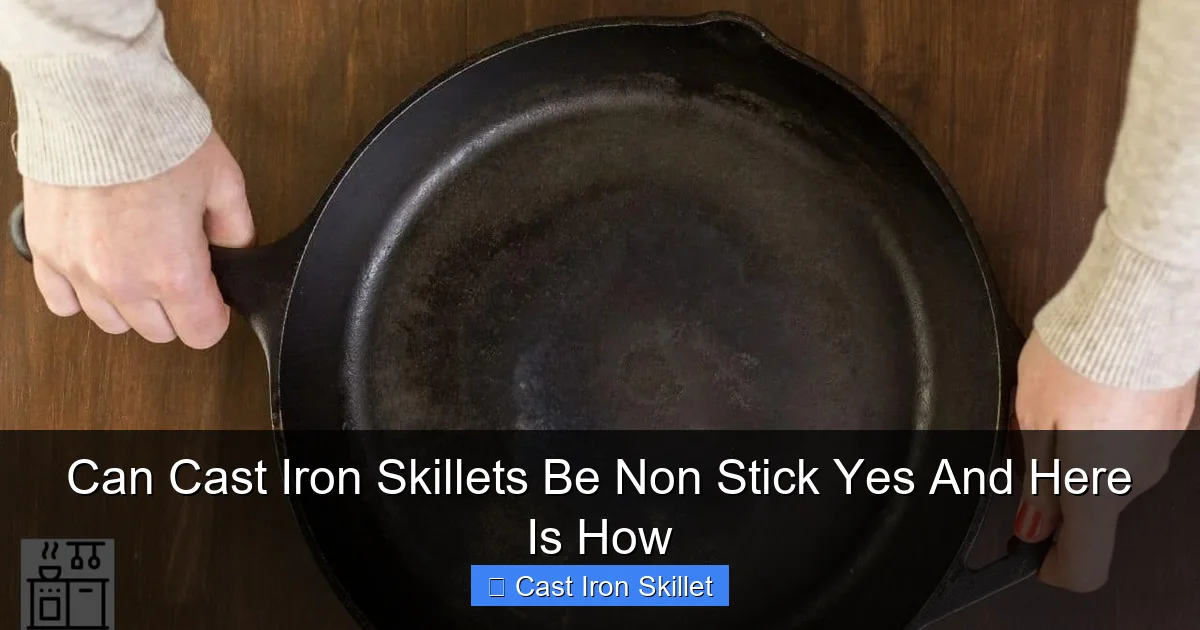
Can Cast Iron Skillets Be Non Stick Yes And Here Is How
Yes, cast iron skillets can be non-stick! This guide reveals how proper seasoning creates a natural, chemical-free non-stick surface that gets better with time. You’ll learn the simple science, step-by-step process, and daily habits to keep your cast iron performing like a premium non-stick pan without any harmful coatings.
Contents
- 1 Key Takeaways
- 2 Can Cast Iron Skillets Be Non Stick? Yes And Here Is How
- 3 Understanding How Cast Iron Becomes Non-Stick
- 4 Choosing the Right Oil for Seasoning
- 5 Step-by-Step Seasoning Process
- 6 Daily Maintenance for Long-Lasting Non-Stick
- 7 Cooking Techniques for Maximum Non-Stick Performance
- 8 Troubleshooting Common Non-Stick Problems
- 9 Advanced Tips for Cast Iron Non-Stick Mastery
- 10 Conclusion: Your Journey to Non-Stick Perfection
Key Takeaways
- Seasoning is the secret: A properly seasoned cast iron skillet develops a natural non-stick surface through polymerized oil layers.
- Not all oils are equal: Use high-smoke point oils like flaxseed, vegetable shortening, or canola for best results.
- Maintenance matters daily: Clean gently, dry thoroughly, and apply a thin oil coat after each use.
- Patience pays off: Building true non-stick performance takes 3-5 seasoning cycles and regular use.
- Heat management is crucial: Preheat properly and avoid extreme temperature changes to protect the seasoning.
- Never soak or scrub harshly: These destroy the non-stick layer you’ve worked hard to create.
- The more you cook, the better it gets: Frequent use with healthy fats naturally enhances the non-stick surface.
Can Cast Iron Skillets Be Non Stick? Yes And Here Is How
You’ve probably heard the question: “Can cast iron skillets be non-stick?” Maybe you’ve stood in your kitchen, staring at that rusty old pan, wondering if it will ever release an egg without a fight. Let me give you the short answer right now: absolutely yes! Cast iron can become naturally, beautifully non-stick without any Teflon, PFOA, or chemical coatings. The secret isn’t some fancy factory treatment—it’s a simple process called seasoning that you can do at home with minimal effort.
In this complete guide, you’ll discover exactly how to transform your cast iron skillet into a non-stick powerhouse. We’ll cover the science behind why it works, walk through a foolproof seasoning method step-by-step, and share the daily habits that keep your pan performing perfectly. Whether you’re dealing with a brand new Lodge skillet, an antique find from a flea market, or a neglected family heirloom, these techniques will give you years of stick-free cooking.
Understanding How Cast Iron Becomes Non-Stick
Before we dive into the how, let’s understand the why. Cast iron isn’t naturally non-stick. In fact, raw cast iron is quite porous and loves to grab onto food. But here’s the magic: when you apply heat and oil repeatedly, something amazing happens.

Visual guide about Can Cast Iron Skillets Be Non Stick Yes And Here Is How
Image source: ebestpicks.com
The Science of Polymerization
When you heat oil past its smoking point in the presence of oxygen, it undergoes a chemical transformation called polymerization. The oil molecules link together, forming a hard, plastic-like layer that bonds to the iron. This creates a smooth, slick surface that food simply won’t stick to. Think of it like building microscopic armor for your pan—one thin layer at a time.
This process happens naturally when you cook with fats, but you can accelerate it dramatically with a dedicated seasoning routine. The best part? This seasoning is completely natural and gets stronger with use. Unlike traditional non-stick coatings that degrade over time, cast iron seasoning improves with age.
What Makes a Good Non-Stick Surface?
A truly non-stick cast iron skillet has three key characteristics:
- Smooth micro-surface: The polymerized layers fill in the tiny pores and imperfections in the iron
- Hydrophobic barrier: The oil layers repel water and create a moisture barrier
- Carbonized patina: Over time, food particles and oils carbonize into a dark, slick patina
Your goal is to build these layers intentionally and maintain them through daily cooking habits.
Choosing the Right Oil for Seasoning
Not all oils work equally well for creating a non-stick surface. The key factor is smoke point—the temperature at which oil begins to break down and smoke. You need an oil with a high smoke point that can polymerize effectively.
Visual guide about Can Cast Iron Skillets Be Non Stick Yes And Here Is How
Image source: m.media-amazon.com
Best Oils for Seasoning
- Flaxseed oil: Creates an incredibly hard, durable non-stick layer. Many cast iron enthusiasts swear by this as the gold standard.
- Vegetable shortening: Crisco works perfectly and is budget-friendly. It’s been used for generations.
- Canola oil: High smoke point and neutral flavor. Great for beginners.
- Grapeseed oil: Light, neutral, and excellent polymerizing properties.
- Refined coconut oil: High smoke point and adds a slight sweet aroma during seasoning.
Oils to Avoid
- Extra virgin olive oil: Too low smoke point, will become sticky and rancid
- Butter: Contains water and milk solids that cause rust and uneven seasoning
- Unrefined oils: These contain impurities that prevent proper polymerization
For most home cooks, vegetable shortening or canola oil offer the best balance of effectiveness, availability, and cost. Flaxseed oil produces the hardest non-stick surface but can be pricier.
Step-by-Step Seasoning Process
Now for the main event—the actual seasoning process. This isn’t complicated, but it does require attention to detail. Follow these steps exactly, and you’ll have a non-stick surface in about 2-3 hours.
Visual guide about Can Cast Iron Skillets Be Non Stick Yes And Here Is How
Image source: ebestpicks.com
Step 1: Clean Your Skillet Thoroughly
Start with a completely clean pan. If you’re seasoning a new skillet, remove any factory protective coating. For old pans, strip away rust and old seasoning.
- Wash with warm water and mild dish soap (yes, soap is fine for this initial cleaning)
- Use a stiff brush or steel wool to remove all debris
- Rinse completely and dry immediately with a towel
- Place on the stovetop over low heat for 2-3 minutes to evaporate any remaining moisture
Important: Never let water sit on cast iron. Even a few drops can cause rust spots that ruin your seasoning.
Step 2: Apply a Thin Layer of Oil
This step is where most people fail. They use too much oil. Seriously—less is more. A thick layer will become sticky and gummy instead of hard and slick.
- Pour 1 teaspoon of oil onto the pan
- Use a paper towel to spread it over every surface—inside, outside, handle, everywhere
- Keep wiping until the pan looks almost dry
- The oil should be barely visible—a translucent sheen is perfect
Think of it like applying a coat of wax to a car. You want complete coverage with zero thickness. Any excess oil will pool and create sticky spots that attract food.
Step 3: Bake the Skillet
Preheat your oven to 375-450°F (190-230°C). The exact temperature isn’t critical, but higher temperatures within this range help the oil polymerize faster.
- Place the oiled skillet upside down on the middle oven rack
- Put a sheet of aluminum foil or a baking sheet on the lower rack to catch any drips (there shouldn’t be any if you used the right amount of oil)
- Bake for 1 hour
- Turn off the oven and let the pan cool completely inside
- Remove and inspect—your pan should look darker and slightly shiny
Cooling inside the oven prevents thermal shock that could warp your pan. This gradual cooling also helps the polymerized layer bond more tightly to the iron.
Step 4: Repeat the Process
One seasoning cycle is rarely enough for true non-stick performance. For best results, repeat steps 2-3 three to five times.
- After the first cycle, your pan will be darker but may still show some sticky spots
- Repeat until you achieve an even, dark black finish
- Between cycles, you can lightly sand any rough spots with fine steel wool
Each layer builds on the previous one, creating a composite non-stick surface that’s stronger than any single application.
Daily Maintenance for Long-Lasting Non-Stick
Seasoning isn’t a one-time event—it’s an ongoing relationship with your pan. Proper daily care keeps the non-stick surface performing perfectly.
Cleaning After Cooking
How you clean determines how long your non-stick surface lasts. Avoid the dishwasher at all costs.
- Clean while the pan is still warm (not hot)
- Use hot water and a soft brush or sponge
- Never soak—cast iron will rust in minutes
- If food is stuck, boil water in the pan for 2-3 minutes to loosen it
- Avoid harsh scrubbers that can scratch the seasoning
- For stubborn bits, use coarse salt as a gentle abrasive
After cleaning, dry immediately and completely with a towel. Then place on low heat for 1-2 minutes to ensure no moisture remains. Finish with a light coat of oil.
Re-Seasoning During Regular Use
Even with careful cleaning, the non-stick layer wears down over time. Learn to recognize when it needs a touch-up.
- Food starts sticking more than usual
- The pan looks dull or has rust spots
- Water no longer beads up on the surface
For minor touch-ups, simply heat the clean, dry pan on the stovetop, add a teaspoon of oil, and rub it around with a paper towel. Heat until the oil smokes slightly, then let cool. This adds a quick layer between full seasoning sessions.
What Not to Cook in Newly Seasoned Cast Iron
During the first few weeks of use, avoid foods that are highly acidic or very sticky:
- Tomato-based sauces (can strip seasoning)
- Fried eggs (the ultimate non-stick test)
- Delicate fish
- Sugary foods like caramel
Instead, build your non-stick confidence with burgers, steaks, pancakes, and roasted vegetables. These foods help strengthen the seasoning while being more forgiving if sticking occurs.
Cooking Techniques for Maximum Non-Stick Performance
Even a perfectly seasoned pan can fail if you don’t use proper cooking techniques. Master these habits for guaranteed non-stick results.
Preheating is Non-Negotiable
Never throw a cold pan on high heat and toss in food. This is the #1 mistake that causes sticking.
- Place your pan on the burner over medium heat
- Let it warm for 3-5 minutes
- Test with a drop of water—it should dance and sizzle, not sit and steam
- Then add your cooking fat (oil, butter, etc.)
- Wait for the fat to shimmer or smoke slightly
- Now add your food
This preheating creates a temperature gradient that causes the air just above the pan surface to rise rapidly, creating a natural barrier between food and iron.
Use Enough Fat
Even non-stick pans need some lubrication. Don’t be shy with the oil, especially when starting out.
- For eggs or delicate foods, use 1-2 teaspoons of oil or butter
- For meats, a light coating is usually sufficient
- Remember that the fat helps maintain and build seasoning
As your pan matures, you’ll need less fat. A well-seasoned cast iron can eventually cook eggs with just a tiny bit of butter.
Don’t Crowd the Pan
Adding too much food at once drops the pan temperature dramatically, which causes sticking.
- Cook in batches if needed
- Leave space between pieces for proper browning
- This maintains the heat needed for the non-stick effect
Think quality over quantity. A few perfectly cooked pieces are better than a crowded pan full of steamed, stuck-on food.
Let Food Release Naturally
Most sticking happens when you try to move food too soon. Proteins and other foods form a natural bond with the pan that releases when they’re ready.
- Don’t poke or prod at food constantly
- Let burgers and steaks form a crust before flipping
- Pancakes will release when they’re ready to flip—usually after 2-3 minutes
- Fish fillets will let go when they’re done cooking
This patience pays off with perfect food and a stronger non-stick surface.
Troubleshooting Common Non-Stick Problems
Even with perfect technique, issues can arise. Here’s how to fix the most common problems.
Problem: Food Sticking Despite Seasoning
Solution: This usually means either insufficient preheating or not enough cooking fat. Double-check your preheating routine and add an extra half-teaspoon of oil. If the problem persists, your seasoning may be too thin—repeat the seasoning process 2-3 more times.
Problem: White Film or Sticky Residue
Solution: This is caused by using too much oil during seasoning. The excess oil didn’t polymerize and left a gummy coating. Strip the pan completely (see below) and restart the seasoning process, being much more careful with oil quantity.
Problem: Rust Spots
Solution: Rust appears when the seasoning is damaged or when water sits too long. For small spots, scrub with steel wool, dry thoroughly, and apply a light oil coat. For heavy rust, you’ll need to strip the pan completely and re-season from scratch.
Problem: Uneven Seasoning (Bald Spots)
Solution: These shiny or rusty spots appear when oil didn’t cover the entire surface. Focus extra attention on these areas during your next seasoning cycle, but remember—the key is thin, even layers, not extra oil.
How to Strip a Damaged Pan
Sometimes the seasoning is beyond repair. Here’s how to start fresh:
- Use oven cleaner (the lye-based kind) in a well-ventilated area
- Spray the pan thoroughly, inside and out
- Place in a plastic bag for 24-48 hours
- Scrub with steel wool and rinse
- Alternatively, use a cast iron stripping service or electrolysis
- Once completely clean, start the seasoning process from the beginning
Stripping is a last resort but sometimes necessary to achieve that perfect non-stick surface.
Advanced Tips for Cast Iron Non-Stick Mastery
Once you’ve mastered the basics, these advanced techniques will take your non-stick performance to the next level.
The “Fifth Seasoning”
Some enthusiasts swear by a unique method: cooking down a pound of bacon fat into a solid block, then storing it in the pan. The rendered fat slowly seasons the iron from within. While unconventional, many report incredible non-stick results after this process.
Using Your Pan for Multiple Cooking Methods
A well-seasoned cast iron works on the stovetop, in the oven, and even over campfires. The key is managing temperature transitions.
- Never take a piping hot pan from the oven and place it on a cold surface
- Let the pan cool slightly before washing
- When moving between heat sources, do it gradually
This thermal shock prevention keeps your non-stick layers intact for years.
Building a “Seasoning Library”
Different foods leave different types of seasoning. Over time, your pan develops a complex patina from cooking everything from burgers to cornbread. Embrace this diversity—it creates a more robust non-stick surface than seasoning alone.
Cook fatty meats regularly to maintain the seasoning. The rendered fats soak into the iron and reinforce the polymerized layers.
Conclusion: Your Journey to Non-Stick Perfection
Making your cast iron skillet truly non-stick isn’t a weekend project—it’s a culinary journey that rewards patience with decades of perfect cooking. The beauty of this process is that it’s completely natural, utterly reliable, and gets better with every meal you prepare.
Remember these core principles: season with thin oil layers, preheat thoroughly, clean gently, and use your pan frequently. The more you cook with cast iron, the more that beautiful black patina develops, and the more non-stick it becomes.
Start with one seasoning cycle this weekend. Cook a few burgers or pancakes. Clean and oil it properly. Repeat the process. In just a few weeks, you’ll have a pan that rivals any non-stick coating on the market, without any of the chemical concerns or limited lifespan. Your future self will thank you for the effort every time an egg slides effortlessly onto the plate or a pancake flips without a hint of resistance.
Welcome to the world of truly natural non-stick cooking. Your cast iron skillet is ready to become your most reliable kitchen companion.