
You want a simple answer: use fresh garlic when you want bold, bright flavor and garlic powder when you need convenience and long shelf life. Fresh garlic gives sharper, more complex flavor and better raw-nutrient value, while garlic powder wins for fast, consistent seasoning and ease of use.
I’m Emma Reed, and I’ll walk you through what each form does best so you can choose with confidence for any recipe or schedule. We’ll cover taste, health notes, cost and swaps so you can stop guessing and start cooking smarter.
Key Takeaways
- Fresh garlic gives stronger flavor and more raw nutrients.
- Garlic powder adds convenience, longer storage, and steady seasoning.
- Use simple substitution ratios and choose based on dish and time.
Contents
- 1 Core Differences Between Fresh Garlic and Garlic Powder
- 2 Flavor Profiles and Culinary Uses
- 3 Health Benefits and Potential Drawbacks
- 4 Cost, Convenience, and Accessibility
- 5 Substitution Guidelines in Recipes
- 6 Storage Tips and Longevity
- 7 Environmental and Sourcing Considerations
- 8 Cultural and Historical Perspectives
- 9 FAQs
- 10 Conclusion
Core Differences Between Fresh Garlic and Garlic Powder
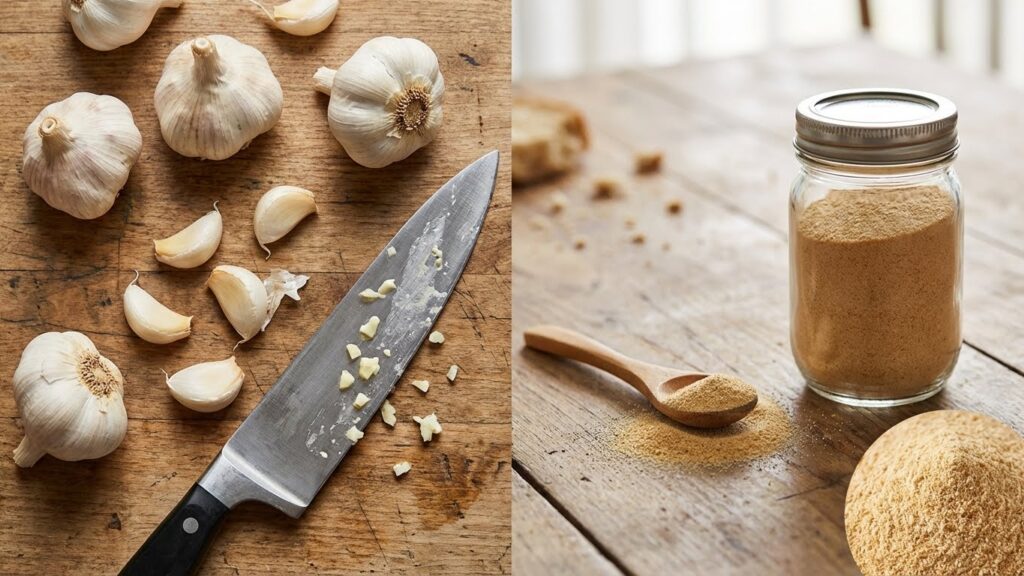
I compare how each form is made, how it looks and feels, what nutrients it provides, and how long it lasts in storage. This helps you pick the right one for flavor, nutrition, or convenience.
Source and Preparation Methods
I start with the bulb of Allium sativum for both forms, but the processing differs a lot. Fresh garlic comes from individual cloves that I peel and chop, crush, or mince. That preserves the volatile sulfur compounds that give garlic its sharp, pungent aroma and active enzymes like alliinase, which form allicin when cells are broken.
Garlic powder is made by slicing or crushing whole bulbs, drying them (often by air- or heat-drying), and then grinding to a fine powder. Drying reduces or alters heat-sensitive compounds and concentrates sugars and some flavors. Commercial powder may include anti-caking agents or be made from aged garlic, which further changes taste and chemistry.
Physical Appearance and Texture
Fresh garlic appears as white-to-pink papery bulbs with firm, moist cloves. When raw, cloves are crisp and juicy; when cooked, they soften, become creamy, and can brown or caramelize. Texture changes affect mouthfeel and how garlic integrates into sauces or sautés.
Garlic powder is a dry, fine, tan-to-beige powder. It dissolves into liquids and distributes flavor evenly without adding moisture. It won’t brown like fresh cloves and won’t give the same soft, roasted pieces. Granulated garlic (coarser) sits between fresh and powder in texture, but powdered form is best when you need even flavor and no texture.
Nutritional Content Comparison
Fresh garlic contains water, fiber, small amounts of vitamins (notably B6 and C in trace amounts), and minerals like manganese and selenium. It also has sulfur-containing compounds—allicin and related molecules—linked to some health effects. Crushing raw cloves releases these enzymes and compounds most effectively.
Garlic powder is concentrated per weight because it lacks water. That raises calories, carbs, and mineral density per teaspoon compared with an equivalent fresh-clove weight. However, the drying and heat used in production reduce or destroy some heat-sensitive vitamins and enzymes, including much of the allicin formed in raw garlic. Check labels: some powders add salt or anti-caking agents, which changes sodium and ingredient profile.
Shelf Life and Storage
Fresh garlic stores best in a cool, dark, well-ventilated place for several weeks to months depending on bulb quality. Refrigeration can extend peeled or chopped garlic only a short time and may change texture and sprout the bulb faster. I recommend whole bulbs at room temp; use peeled cloves within days.
Garlic powder lasts much longer—typically 1–3 years unopened if kept dry and sealed. Once opened, it preserves flavor best in an airtight container away from heat and light for about 6–12 months. Over time, volatile oils fade. If powder smells weak or tastes bland, replace it for stronger garlic flavor.
Flavor Profiles and Culinary Uses
I compare fresh garlic and garlic powder by taste, heat, and how they change in cooking. I note where each shines so you can pick the right form for a recipe.
Taste Variations
Fresh garlic has bright, sharp sulfur notes and a juicy, crunchy bite when raw. Roasted or sautéed, it becomes sweet, nutty, and mellow. A single clove releases multiple flavor layers as it is crushed or cooked.
Garlic powder gives concentrated umami and a steady, dried-garlic taste without the raw bite. It lacks the vegetal juices and the volatile aromatics of fresh cloves. Use powder when you want consistent garlic flavor without texture or when heat has already transformed other ingredients.
Best Cooking Applications
I use fresh garlic for dishes that benefit from texture and fast aromatics: stir-fries, bruschetta, garlic butter, and dressings. Minced fresh garlic gives bursts of flavor and browns quickly, so I add it late in high-heat cooking to avoid bitter burning.
I choose garlic powder for dry rubs, spice blends, soups, and sauces that simmer for long periods. It dissolves easily and offers even garlic presence in mixes. For marinades and dishes where moisture is limited, powdered garlic prevents clumping and keeps flavors uniform.
Pairing With Other Ingredients
Fresh garlic pairs well with acidic ingredients like lemon and tomato because its sharpness cuts through richness. I combine it with herbs like basil and parsley, and fats like olive oil or butter to carry its aroma.
Garlic powder pairs strongly with dried herbs and salt blends. It works well with smoked paprika, cumin, and brown sugar in rubs. For sauces and stews, I add powder early so it melds; for finishing, I prefer a pinch of fresh garlic or a quick raw clove for brightness.
External resources: For safe handling and storage tips, I refer to USDA guidance on spices and produce and to culinary technique notes at Serious Eats.
Health Benefits and Potential Drawbacks
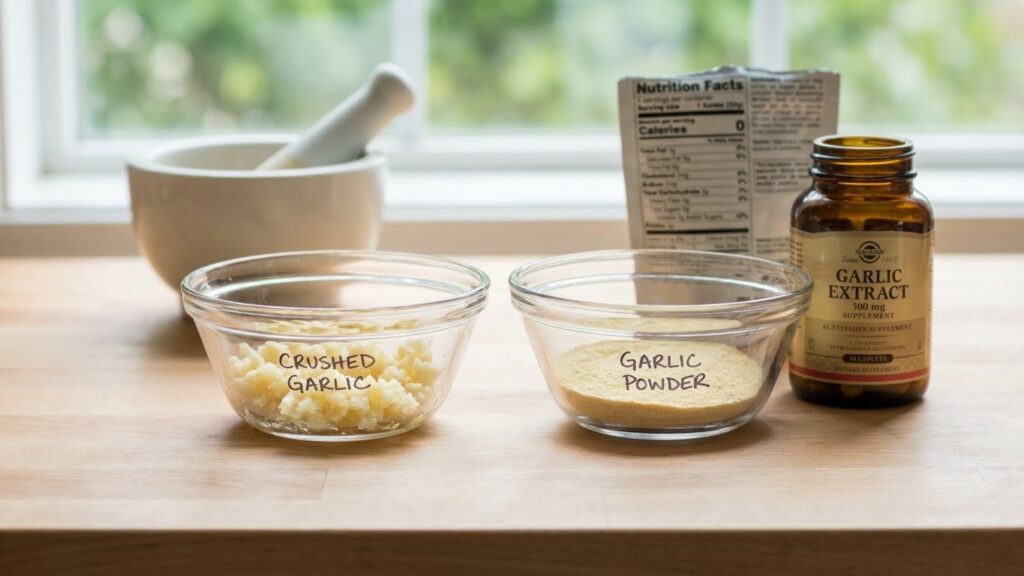
I compare how fresh garlic and garlic powder differ in key ways that matter for health: active compounds, digestion, and additives like salt. Below I explain which form keeps more of the healthful molecules, how each affects the gut, and what to watch for on labels.
Active Compounds and Potency
I focus on allicin because it drives many of garlic’s benefits. Allicin forms when fresh garlic is crushed or chopped and starts a chemical reaction. Garlic powder is dried and processed, so it often has far less allicin than a crushed clove.
Other sulfur compounds and volatile oils also decline with heat and drying. That means fresh garlic usually gives a stronger dose of antioxidants and anti-inflammatory agents per clove-equivalent. If you want medicinal effects—like modest blood-pressure or cholesterol impacts—I use several fresh cloves rather than a pinch of powder.
If you need a rough guide: one medium fresh clove typically contains more active compounds than 1/8 to 1/4 teaspoon of powder. Supplements and aged garlic extract are separate options if you need standardized doses.
Digestive Effects
I notice fresh garlic can irritate sensitive stomachs more than powder. Raw cloves contain stronger, volatile compounds that may cause heartburn, gas, or loose stools in some people.
Garlic powder, especially cooked into food, tends to be milder on digestion. But concentrated forms (large amounts of powder) can still provoke symptoms. People with acid reflux or irritable bowel syndrome should start with small amounts and track reactions.
Cooking reduces pungency and some irritants in both forms. If digestion is a concern, lightly cooking fresh garlic or using smaller amounts of powder usually minimizes discomfort.
Sodium Content and Additives
I check labels because many garlic powders contain added salt or anti-caking agents. Plain garlic powder can be low in sodium, but commercial blends often raise the salt content significantly.
Additives to watch for: salt, maltodextrin, silicon dioxide, and preservatives. These can matter if you follow a low-sodium diet or want to avoid processed ingredients. Fresh garlic has no added sodium or fillers.
If you need to control salt, I use plain, single-ingredient garlic powder or fresh cloves. Buying bulk plain powder or making your own dehydrated garlic lets you avoid additives while keeping convenience.
Cost, Convenience, and Accessibility
I weigh cost, time, and ease of finding both forms when I decide between fresh garlic and garlic powder. Price, prep time, and where I can buy them usually decide which I use.
Price Comparison
I find garlic powder often costs less per use than fresh garlic when you compare by weight and usable garlic. A 3-ounce jar of garlic powder can season dozens of meals and usually runs a few dollars. Fresh garlic bulbs cost about $1–$3 per pound depending on season and region, but much of that weight is peel and root, so the usable yield is smaller.
When I shop bulk or store brands, garlic powder’s long shelf life means less waste and lower cost per serving. For raw-eating or roasted-garlic dishes, I accept the higher per-use cost of fresh cloves for flavor payoff. For pricing reference and seasonal trends, I check sources like the USDA Market News and major grocery sites for current rates.
Preparation Time
I save time with garlic powder. A pinch mixes instantly into dry rubs, marinades, soups, and sauces without chopping or peeling. In busy cooking, that quickness matters.
Fresh garlic needs peeling and mincing, which adds several minutes per clove. I use a garlic press or pre-peeled cloves to speed things, but heat-activated flavor changes also require timing—fresh garlic can burn quickly in hot oil. For dishes where texture and strong, bright garlic flavor matter, I accept the extra prep time.
Availability in Markets
I can buy garlic powder year-round at supermarkets, grocery chains, and most online retailers with consistent sizing and labeling. It also comes in bulk for restaurants and food manufacturers, so supply remains steady.
Fresh garlic availability varies by location and season. Hardneck varieties appear in fall and winter markets, while softneck types store longer and show up year-round in many stores. Ethnic markets often carry unique garlic types and pre-peeled options. For sourcing quality garlic or specialty varieties, I check trusted suppliers like local farmers’ markets or USDA-listed producers.
Substitution Guidelines in Recipes
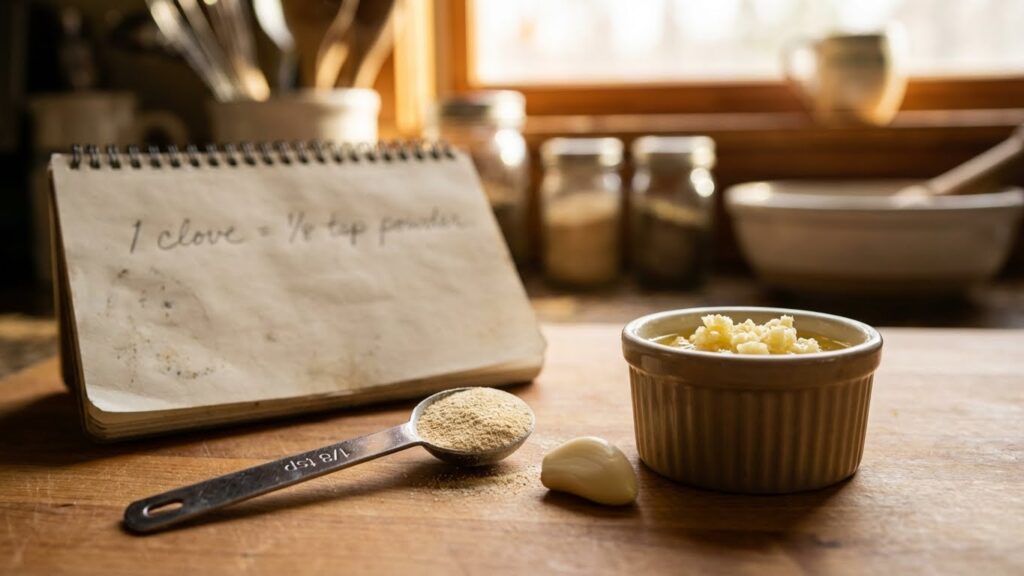
I explain exact swap amounts and what changes to expect when you trade fresh garlic for powder or vice versa. Use the right ratios and timing so dishes keep balanced flavor and texture.
Measuring Equivalents
I use a simple ratio: 1 medium fresh garlic clove = 1/8 teaspoon garlic powder. For recipes listing cloves, multiply the cloves by 0.125 to get teaspoons of powder.
Example: 4 cloves → 4 × 0.125 = 0.5 teaspoon garlic powder.
If a recipe calls for minced garlic from a jar, note that one teaspoon minced ≈ half a clove, so use about 1/16 to 1/8 teaspoon powder per teaspoon minced.
For granulated garlic, treat it like powder but expect a slightly coarser texture; use the same amounts.
When converting the other way, 1 teaspoon garlic powder ≈ 8 medium cloves. Start with less powder than the math suggests in delicate sauces, then taste and add more.
Impact on Flavor and Texture
I find fresh garlic gives a brighter, pungent bite; powder gives a milder, more even garlic note. Fresh adds juice and small bits that change mouthfeel, while powder adds no moisture and won’t soften when cooked.
Use powder in dry rubs, spice blends, and long-simmered dishes where moisture is low. Use fresh when you want sharp aroma, quick sautéed flavor, or visible garlic pieces.
Timing matters: add powdered garlic early so it hydrates and loses raw sharpness. Add fresh garlic later in cooking for fresher punch.
If a recipe depends on garlic’s texture—like bruschetta or garlic butter—don’t swap to powder. If it relies on background flavor—like stews or marinades—powder works well. Adjust salt and acidity after swapping, since perceived garlic strength can change.
Storage Tips and Longevity
I keep fresh garlic and garlic powder in very different ways because they last differently. Fresh bulbs store well in a cool, dry, well-ventilated spot. I avoid the fridge for whole bulbs; cold and moist conditions make them sprout or rot faster.
I treat peeled cloves as short-term items. I refrigerate peeled or chopped garlic in an airtight container and use it within a week. For longer storage, I freeze minced garlic in ice cube trays; each cube thaws easily for cooking.
Garlic powder lasts much longer than fresh garlic when stored properly. I store it in a cool, dark cabinet, away from heat and moisture. An airtight container with a tight lid keeps it potent for about 3–4 years, though flavor fades over time.
I check both forms before use. Fresh garlic shows soft spots, mold, or green shoots; discard if it smells off. Garlic powder that clumps from moisture or smells weak should be replaced.
Quick reference:
- Fresh whole bulb: cool, dry, ventilated place; several months.
- Peeled/chopped fresh: airtight in fridge; use within 7 days.
- Frozen minced: freezer-safe container or cubes; months.
- Garlic powder: airtight, dark, cool spot; about 3–4 years.
I label containers with dates to track freshness. This small step helps me avoid stale or spoiled garlic and keeps my cooking consistent.
Environmental and Sourcing Considerations
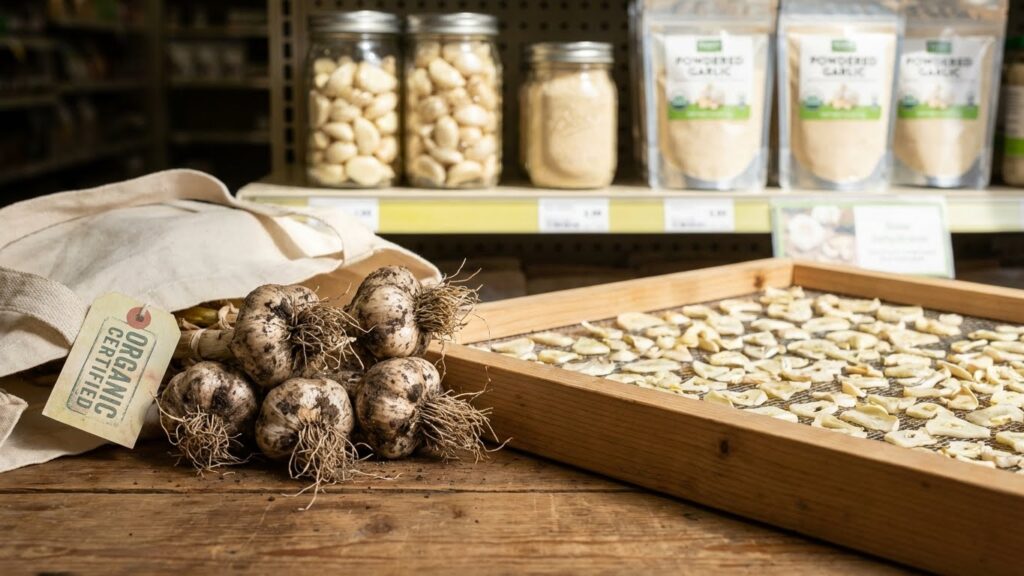
I look at how garlic production and processing affect the environment and supply chains. Fresh garlic needs more water per pound and often travels shorter distances if bought locally. Garlic powder uses dehydrated garlic, which reduces spoilage and can cut transport weight per unit of flavor.
I check farming practices when choosing garlic. Organic and regenerative methods lower pesticide use and improve soil health. Conventional large-scale farms can be more efficient but may rely on more chemicals and irrigation.
I consider processing energy and waste for garlic powder. Drying garlic at industrial scale uses energy, but it can enable longer shelf life and less food waste. Some producers use solar drying or compost leftover peels, which lowers environmental impact.
I weigh supply consistency and sourcing risks. Garlic powder offers stable flavor and long storage, useful for manufacturers. Fresh garlic quality and price can vary by season and region, affecting small buyers more.
I recommend practical steps I use when sourcing:
- Buy local fresh garlic in season to cut transport emissions.
- Choose organic or certified suppliers when possible.
- For powdered garlic, look for producers with energy-efficient drying or waste-reuse practices.
I also note traceability matters. I prefer suppliers that publish origin, production methods, and testing data to reduce risk and support better environmental choices.
Cultural and Historical Perspectives
I trace garlic’s story back thousands of years, with records showing use in ancient China, Egypt, Greece, and Rome. People valued garlic for flavor, medicine, and ritual. Its strong smell made it a symbol of protection in some cultures.
I note that fresh garlic held a special place in many cuisines because of its bold, raw bite. Chefs and home cooks used whole cloves and roasted bulbs to shape regional dishes. Garlic powder arrived later as trade and preservation methods improved.
I explain that garlic powder grew in popularity with modern food production and convenience cooking. It offered a long shelf life and easy measuring, making it common in military rations, processed foods, and spice blends. This shift changed how people cooked at home.
I want to show key differences in cultural use, so I include a short list:
- Traditional cuisines: fresh garlic preferred for texture and aroma.
- Industrial and convenience foods: garlic powder used for stability and cost.
- Folk medicine: fresh garlic often favored for perceived potency.
I also point out that both forms carry cultural meanings. Fresh garlic often links to home cooking and seasonal markets. Garlic powder ties to industrial food culture and global spice trade.
I observe that historical texts and modern studies both reflect garlic’s lasting role. Its forms adapted to technology and taste, yet garlic remains central in kitchens worldwide.
FAQs
How do I convert between fresh garlic and powder?
A common swap is 1/8 teaspoon garlic powder = 1 small fresh garlic clove. I recommend adjusting to taste because powders vary in strength.
Does garlic powder have the same health benefits as fresh garlic?
No. Fresh garlic contains more of the heat-sensitive compounds, like allicin, that link to health effects. Powder still adds flavor and some nutrients, but in lower amounts.
Can garlic powder replace fresh in raw dishes?
I avoid using powder raw when I want the bright, pungent punch of fresh garlic. Powder tastes different and can seem flat or slightly bitter uncooked.
How should I store each type?
I keep bulbs in a cool, dry place and use them within a month or two for best flavor. I store garlic powder in a sealed container away from heat and light; it keeps longer but loses potency over time.
Is one cheaper?
Garlic powder often costs less per use because it’s lightweight and shelf-stable. Fresh garlic can be more affordable when in season, especially if I buy in bulk.
Conclusion
I weigh the trade-offs between fresh garlic and garlic powder based on taste, convenience, and health. Fresh garlic gives a sharper, more complex flavor and may offer stronger health compounds. Garlic powder wins on speed, shelf life, and ease of use.
I use fresh garlic when flavor and texture matter, such as in sautés, dressings, or dishes finished on the stove. I reach for garlic powder in dry rubs, mixes, or when I need a mild, even garlic presence without extra prep. Both can work together to balance flavor and convenience.
I keep a simple rule of thumb for substitutions: 1/8 teaspoon garlic powder ≈ 1 clove of fresh garlic. Adjust to taste, since powder is milder. Store fresh garlic in a cool, dry place and keep powder tightly sealed to preserve aroma.
Bold choice matters in cooking, not a single “best” garlic form. I pick the form that fits the recipe and my time. That approach helps me get consistent, tasty results.
