
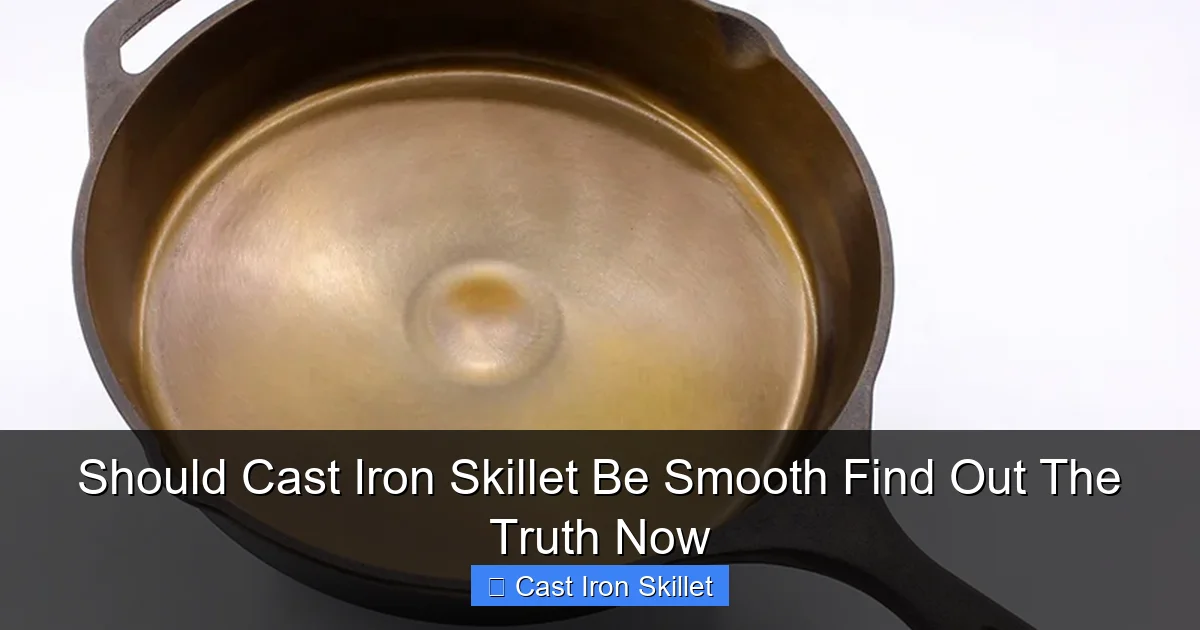
Should Cast Iron Skillet Be Smooth Find Out The Truth Now
Cast iron skillets don’t need to be perfectly smooth from the factory. The truth is, a properly seasoned cast iron skillet develops a naturally smooth, non-stick surface through polymerization. This guide reveals how to achieve and maintain that perfect cooking surface through simple seasoning techniques and daily care.
Contents
- 1 Key Takeaways
- 2 Should Cast Iron Skillet Be Smooth? Find Out The Truth Now
- 3 The Truth About Cast Iron Skillet Surfaces
- 4 Why Seasoning Creates a Smooth Surface
- 5 Step-by-Step Guide to Achieving a Smooth Cast Iron Surface
- 6 Troubleshooting Common Texture Issues
- 7 Practical Tips for Using Your Smooth Cast Iron
- 8 Conclusion: The Smooth Cast Iron Journey
Key Takeaways
- Factory smoothness doesn’t matter: Most new cast iron has a rough texture, but proper seasoning transforms it into a smooth cooking surface.
- Seasoning creates the real smoothness: Polymerized oil layers build up over time to create a naturally non-stick, smooth finish.
- You can fix rough spots: Sandpaper or steel wool can smooth rough patches before seasoning.
- Maintenance is crucial: Regular cleaning and oiling preserve the smooth surface you’ve built.
- Cooking habits affect texture: Acidic foods and improper cleaning can damage your smooth seasoning.
- Patience pays off: Building a truly smooth surface takes multiple seasoning layers over weeks or months.
Should Cast Iron Skillet Be Smooth? Find Out The Truth Now
You’ve probably heard conflicting advice about cast iron skillets. Some say they should be as smooth as non-stick pans. Others claim rough is better. So what’s the real story? The truth might surprise you.
Let’s cut through the confusion. This guide will show you exactly what you need to know about cast iron skillet smoothness. You’ll learn why most new pans aren’t smooth, how to create a smooth cooking surface yourself, and why this actually improves your cooking. We’ll cover everything from initial seasoning to daily maintenance.
By the end, you’ll know exactly how to get that perfect, naturally non-stick surface that makes cast iron so special. No more sticking food. No more frustration. Just perfect cooking every time.
The Truth About Cast Iron Skillet Surfaces
Myth vs Reality
Many beginners expect a new cast iron skillet to feel like a non-stick pan. They’re shocked when they feel the rough, pebbly texture. This texture comes from the casting process. Molten iron is poured into sand molds, leaving a slightly rough surface.

Visual guide about Should Cast Iron Skillet Be Smooth Find Out The Truth Now
Image source: feroallcookware.com
Here’s the myth: People think rough cast iron won’t become non-stick. They believe smooth factory pans are superior. This couldn’t be further from the truth.
The reality: Roughness doesn’t prevent a great non-stick surface. In fact, some texture helps seasoning adhere better. The key is transforming that texture through seasoning. A rough pan can become smoother than a factory-smooth pan with proper care.
What “Smooth” Really Means for Cast Iron
When we talk about a “smooth” cast iron skillet, we don’t mean mirror-polished. We mean a surface where food releases easily. A surface that wipes clean with minimal effort. A surface that looks dark, glossy, and uniform.
This smoothness comes from polymerized oil. When you heat oil on cast iron, it bonds to the metal. It forms a hard, slick layer. Build up enough layers, and you get that perfect cooking surface.
True smoothness is functional, not cosmetic. It’s about performance in the kitchen. A well-seasoned rough pan outperforms a poorly seasoned smooth pan every time. That’s the magic of cast iron.
Why Seasoning Creates a Smooth Surface
The Science of Seasoning
Seasoning is the process that makes cast iron non-stick. It involves baking oil onto the metal at high heat. The oil breaks down and reforms into a plastic-like coating. This coating fills in microscopic gaps in the iron.
Visual guide about Should Cast Iron Skillet Be Smooth Find Out The Truth Now
Image source: sarchicookware.com
Each seasoning layer bonds to the previous one. Over time, you build up a composite surface. This surface becomes smoother with every layer. It’s like building up paint on a wall. Each coat fills in imperfections.
The process also creates a carbon layer. This layer is what gives well-seasoned cast iron its black color. It’s incredibly durable and slick. This is what you want for perfect eggs and delicate fish.
How Polymerization Works
Polymerization is a chemical reaction. When oil heats, its molecules link together. They form long chains that harden as they cool. These chains bond to the iron’s surface.
Different oils polymerize differently. Flaxseed oil creates a very hard, smooth finish. It’s popular for seasoning. Vegetable oils work well too. They’re more accessible and affordable.
The key is heating the oil to its smoke point. This triggers the reaction. The oil must be thin and even. Too thick, and you get sticky, gummy residue. Too thin, and you don’t build enough material. Finding the right balance is crucial.
Step-by-Step Guide to Achieving a Smooth Cast Iron Surface
Step 1: Starting with a New Skillet
Unbox your skillet. Most new pans have a factory coating to prevent rust. This coating is usually wax or oil. You must remove it before seasoning.
Visual guide about Should Cast Iron Skillet Be Smooth Find Out The Truth Now
Image source: prudentreviews.com
Wash the pan with warm, soapy water. Use a stiff brush or sponge. Scrub away all the factory residue. Don’t worry about soap damaging cast iron. Modern soap is fine. Just rinse thoroughly.
Dry the pan immediately and completely. Any water left can cause rust. Place it on a stovetop over low heat for a few minutes. Or dry it in a warm oven. Make sure it’s totally dry.
Now inspect the surface. Feel for any rough spots or burrs. Most new pans have a “pebbly” texture. This is normal. But if you feel sharp edges, address them now.
For minor roughness, use fine steel wool (0000 grade). Gently rub the surface. You’re not trying to make it mirror smooth. Just knock down any sharp peaks. Wipe away all metal dust with a damp cloth. Dry again.
Step 2: Initial Seasoning Process
Preheat your oven to 375°F (190°C). Place a baking sheet or aluminum foil on the bottom rack. This catches any oil drips.
Apply a thin layer of oil. Use a paper towel to spread it. You want a film you can barely see. Too much oil causes sticky buildup. Not enough won’t protect the pan.
Flaxseed oil is ideal for smoothness. But vegetable, canola, or shortening works too. Avoid olive oil. It has too much impurities and can go rancid.
Wipe off excess oil. This is critical. Buff the surface until it looks almost dry. Hold the pan up to light. You shouldn’t see shiny streaks. If you do, wipe more.
Place the pan upside down on the middle oven rack. This prevents oil pooling. Bake for one hour. Turn off the oven. Let the pan cool completely inside. Don’t rush this. Rapid cooling can warp the metal.
Repeat this process 3-5 times for a new pan. Each layer builds on the last. After the final layer, your pan should look dark and feel slick.
Step 3: Building Layers Over Time
Seasoning isn’t a one-time event. It’s ongoing maintenance. Every time you cook, you add a micro-layer of seasoning. Some foods help more than others.
Cook fatty foods to build seasoning. Bacon, burgers, and fried foods leave behind oil. This oil polymerizes during cooking. It reinforces your seasoning layers.
Avoid acidic foods initially. Tomatoes, wine, and citrus can strip seasoning. Wait until your pan is well-established. Then you can cook these foods occasionally.
After each use, clean gently. Use hot water and a soft brush. Avoid harsh scrubbing. Don’t use soap if you can help it. But a little is fine if needed.
Dry the pan immediately. Heat it on the stove for a minute. This opens the pores and drives out moisture. Apply a tiny drop of oil. Wipe it around with a paper towel. This thin coat protects the surface.
Repeat this light oiling after every wash. Your pan will get darker and smoother. The non-stick properties will improve. This is how you maintain that perfect cooking surface.
Step 4: Daily Maintenance for Smoothness
Clean while the pan is still warm. Don’t let food dry and stick. Fill the pan with hot water. Let it soak for a few minutes. This loosens stuck-on bits.
Use a nylon brush or chainmail scrubber. Avoid steel wool unless you have heavy buildup. Steel wool can scratch the seasoning you’ve built.
For stubborn bits, use coarse salt. Add a little water to make a paste. Scrub with a paper towel. Salt is abrasive but gentle on seasoning.
Never put cast iron in the dishwasher. Dishwasher detergent strips seasoning. The high heat dries out the metal. It’s a sure way to ruin your smooth surface.
After cleaning, always dry completely. Place the pan back on the burner. Heat on medium for 2-3 minutes. Watch for any water droplets to evaporate. You’ll see them dance and disappear.
Apply that final thin oil coat. Use a paper towel to spread it. Buff until the surface looks dry. Store the pan in a dry place. If stacking, place a paper towel between pans. This prevents moisture buildup.
Troubleshooting Common Texture Issues
Rough Spots and How to Fix Them
Sometimes you’ll feel rough patches. These can develop from improper cleaning. Or they might be leftover casting marks. Either way, you can fix them.
First, identify the rough area. Run your finger across the surface. Feel for bumps or ridges. Mark them with a piece of tape if needed.
For minor roughness, use fine steel wool. Gently rub the spot. Don’t press hard. You’re just leveling the surface. Wipe away all metal dust.
For major roughness, you might need sandpaper. Start with 220-grit. Work up to 600-grit for a smoother finish. Sand in circular motions. Keep the surface even.
After sanding, wash the pan thoroughly. Remove all metal particles. Dry completely. Then apply a fresh seasoning layer. You might need 3-5 layers to build up the seasoning again.
Prevent future rough spots. Avoid metal utensils that can scratch. Use wood, silicone, or plastic instead. Also, don’t cook acidic foods in a newly seasoned pan.
Sticky Seasoning Problems
Sticky seasoning is common. It happens when you use too much oil. Or when you don’t heat the oil enough. The oil doesn’t fully polymerize. It stays gummy and attracts debris.
To fix sticky seasoning, you must strip it. Use oven cleaner or lye. Spray the pan thoroughly. Place it in a plastic bag. Let it sit for several hours.
Scrub off the old seasoning. Use steel wool or a wire brush. Rinse well. Dry completely. The pan will look bare and gray. This is normal.
Start the seasoning process fresh. Apply thin oil layers. Heat properly. Make sure each layer cures fully before adding the next.
Prevent stickiness. Always use thin oil coats. Wipe off excess. Heat until the oil smokes slightly. Then let it cure. Don’t rush this process.
Flaking and Pitting Issues
Flaking happens when seasoning doesn’t bond well. It can peel off in sheets. This is usually from improper initial cleaning. Or from cooking acidic foods too soon.
Pitting is different. It’s actual damage to the metal. Small holes form in the surface. This can happen from rust or from harsh cleaning.
To fix flaking, scrub off loose seasoning. Use steel wool. Get down to bare metal in the flaky areas. Season those spots specifically. Apply extra layers.
For pitting, you need to polish the surface. Use fine sandpaper. Smooth out the pits as much as possible. This is difficult. Severe pitting might require professional help.
Prevent both issues. Clean properly after each use. Avoid abrasive cleaners. Store in a dry place. Check your pan regularly for rust spots.
Practical Tips for Using Your Smooth Cast Iron
Cooking Techniques for Best Results
Preheat your skillet properly. Place it on medium heat for 5-10 minutes. Test with a drop of water. It should dance and evaporate quickly. This means the pan is ready.
Use the right amount of oil. For eggs, a teaspoon is enough. The pan should shimmer but not smoke. Too much oil makes food greasy. Too little causes sticking.
Don’t move food too soon. Let it release naturally. For eggs, wait until they set. For fish, wait until it flakes easily. This prevents tearing and sticking.
For perfect smoothness, learn basic cooking skills. Essential cooking skills everyone should know include temperature control and timing. These are crucial for cast iron success.
Clean as you go. Wipe out excess food between batches. This prevents burning and sticking. It keeps your pan in top condition.
What Foods to Cook for Seasoning Buildup
Fatty meats are best for building seasoning. Bacon is perfect. It leaves behind rendered fat. This fat polymerizes and adds layers. Cook bacon regularly in a new pan.
Fried foods work well too. French fries, chicken, and fish all leave oil. Just make sure to clean properly afterward. Don’t let breading stick and burn.
Avoid delicate foods initially. Eggs and fish are tricky in a new pan. Wait until you have 10-15 good cooking sessions. Then try these foods.
Some foods actually harm seasoning. Acidic tomatoes can strip layers. Sugary foods can burn and create sticky messes. Cook these sparingly in a well-seasoned pan.
For beginners, start with burgers and steaks. These are forgiving. They add seasoning without much risk. As your skills improve, expand your menu. Basic cooking skills every beginner should know will help you master these techniques.
Conclusion: The Smooth Cast Iron Journey
So should a cast iron skillet be smooth? The answer is yes, but not from the factory. True smoothness comes from you. It comes from proper seasoning and regular use.
Don’t worry about the rough texture of a new pan. Embrace it. That texture gives seasoning something to grip. It helps you build a better surface over time.
Remember these key points. Start with a clean pan. Apply thin oil layers. Heat properly. Cool slowly. Repeat often. Maintain with gentle cleaning and light oiling.
Your cast iron skillet will become smoother with every use. It will develop a patina that’s uniquely yours. This patina makes the pan better over time. It’s not a pan you use. It’s a pan you build.
Be patient. Building a truly smooth surface takes weeks or months. But the results are worth it. You’ll have a naturally non-stick pan that lasts generations. That’s the beauty of cast iron.
Now you know the truth. Smoothness isn’t bought. It’s earned. Get seasoning and enjoy the journey.
🎥 Related Video: I Kind of Ruined My Cast Iron Skillet…
📺 Buttered Side Up
If you ever “ruin” your cast iron skillet, try this! First, scrub your pan down really well and dry it. Then rub your cool, clean cast iron …