
Struggling with the small vs large rice cooker decision? This guide breaks down everything you need to consider—from household size and kitchen space to budget and features. Learn how to choose the perfect rice cooker that fits your lifestyle and cooking needs without wasting counter space or money.
Contents
- 1 Key Takeaways
- 2 Small vs Large Rice Cooker Buying Guide: Your Complete Decision Framework
- 3 Understanding Rice Cooker Sizes: What “Small” and “Large” Really Mean
- 4 Step 1: Assess Your Household Size and Cooking Frequency
- 5 Step 2: Evaluate Your Kitchen Space and Storage Reality
- 6 Step 3: Determine Your Budget and Feature Requirements
- 7 Step 4: Consider Cooking Versatility and Meal Prep Style
- 8 Step 5: Analyze Energy Efficiency and Performance Differences
- 9 Practical Tips for Making Your Final Decision
- 10 Troubleshooting Common Rice Cooker Issues by Size
- 11 Conclusion: Your Perfect Rice Cooker Awaits
Key Takeaways
- Household size is your #1 factor: Match your rice cooker capacity to how many people you typically serve.
- Counter space is precious: Small rice cookers save space while large models offer more versatility.
- Budget varies by features: Basic models start under $30, while premium large cookers can exceed $200.
- Energy efficiency matters: Smaller cookers use less power for everyday meals.
- Versatility adds value: Large rice cookers often include steaming, slow cooking, and keep-warm functions.
- Future-proof your purchase: Consider entertaining needs and family growth when choosing size.
- Perfect rice every time: The right size ensures better cooking results and prevents waste.
Small vs Large Rice Cooker Buying Guide: Your Complete Decision Framework
You’re standing in the kitchen aisle, staring at rows of rice cookers, wondering: should I go small or large? This small vs large rice cooker dilemma trips up thousands of shoppers every year. The truth is, there’s no one-size-fits-all answer. Your perfect rice cooker depends entirely on your unique situation.
This comprehensive guide walks you through every factor you need to consider. By the end, you’ll know exactly which size serves your needs best. We cover household size, kitchen space, budget, features, and even troubleshooting. No more guesswork. No more wasted money. Just the perfect rice cooker for your lifestyle.
Understanding Rice Cooker Sizes: What “Small” and “Large” Really Mean
Before diving into your decision, let’s clarify what these terms actually mean in the rice cooker world.
Visual guide about Small vs Large Rice Cooker Buying Guide Ultimate Comparison
Image source: ph-test-11.slatic.net
The Small Rice Cooker Category
Small rice cookers typically range from 1 to 3 cups of uncooked rice capacity. These compact units stand under 10 inches tall and rarely exceed 8 inches wide. They’re designed for individuals, couples, or very small families. Most weigh less than 5 pounds, making them easy to store or move.
These models usually feature simple operation—often just a single cook button. Don’t let their size fool you though. Many modern small rice cookers include fuzzy logic technology and multiple settings. They’re perfect for mastering how to cook rice perfectly every time in smaller portions.
The Large Rice Cooker Category
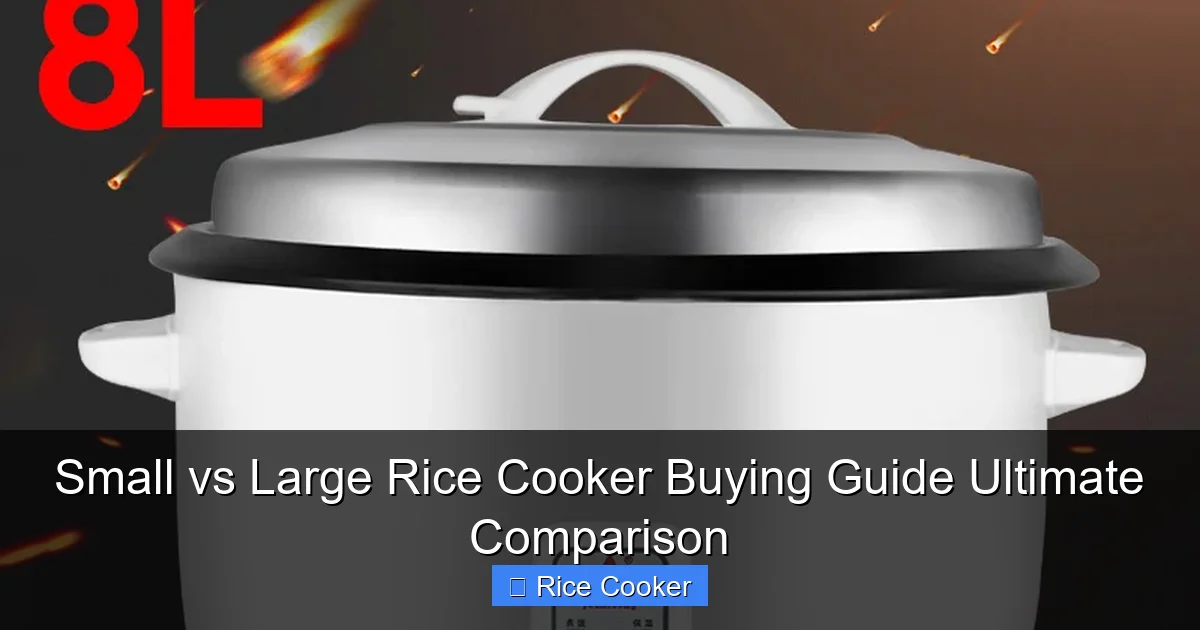
Large rice cookers start at 5 cups of uncooked rice and can go up to 10 cups or more. These are substantial appliances, often 12-15 inches tall and wide. They weigh 10-20 pounds, so think of them as permanent countertop residents.
Large models almost always include advanced features: multiple cooking programs, delayed start timers, keep-warm functions that last for hours, and steaming baskets. They’re built for families, meal preppers, and frequent entertainers.
The Overlooked Middle Ground
Many shoppers skip the 3-4 cup range, but this sweet spot serves couples who occasionally host or small families who meal prep. These units balance compact size with flexible capacity. They offer many advanced features without dominating your kitchen.
Step 1: Assess Your Household Size and Cooking Frequency
This first step is the most important in your small vs large rice cooker decision. Your household size directly determines how much rice you actually need to cook regularly.
Visual guide about Small vs Large Rice Cooker Buying Guide Ultimate Comparison
Image source: harveynorman.com.au
Single Person or Occasional Rice Eater
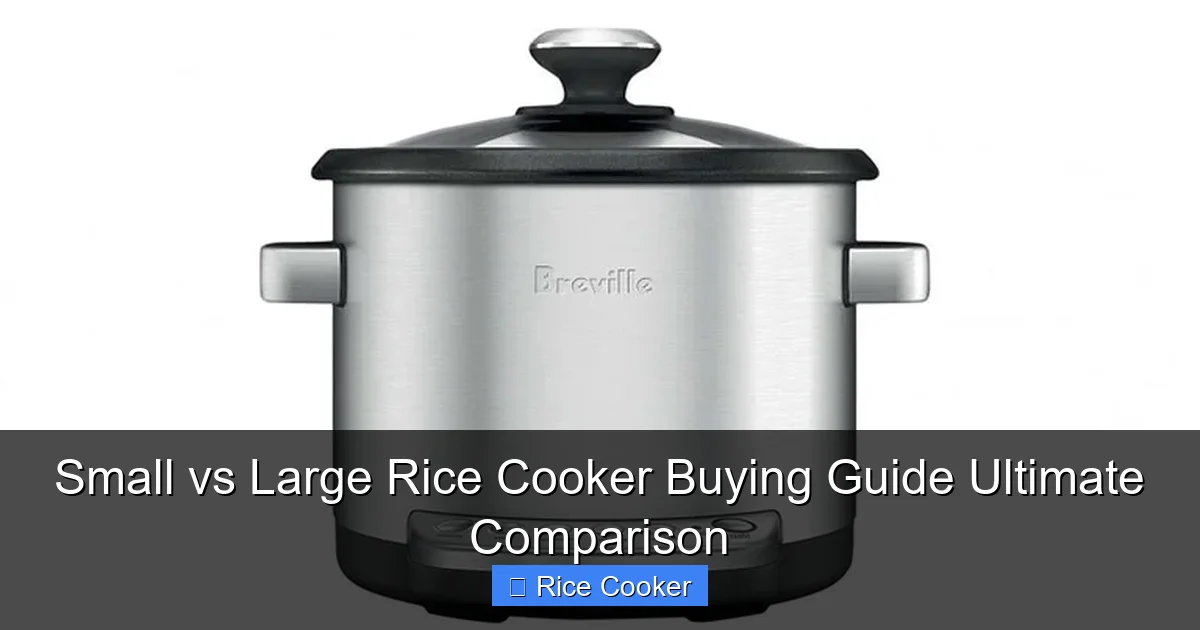
If you’re cooking for one and rice appears on your menu 2-3 times per week, a 1-2 cup rice cooker is ideal. These make perfect single servings without leftovers. You’ll save money on electricity and avoid food waste.
Example: Sarah, a college graduate living alone, uses her 1.5-cup rice cooker three times weekly. She loves that it fits in her tiny apartment kitchen and makes just enough for dinner with leftovers for lunch.
Couple or Small Family of 3
For two people eating rice regularly, or a family of three with moderate rice consumption, aim for a 3-cup model. This size gives you flexibility—enough for dinner with leftovers, or a fresh batch for meal prep.
Consider this: A typical serving of cooked rice is about 1 cup. Two adults might want 1.5 cups each, plus seconds. A 3-cup uncooked rice cooker yields 6-7 cups cooked—perfect for this scenario.
Many couples find that a small rice cooker actually helps them cook more efficiently for a small family by batching meals properly.
Family of 4-6 or Frequent Entertainers
If you regularly cook for four or more, or you host dinner parties often, a 5-8 cup rice cooker is essential. This size handles family dinners plus unexpected guests without stress.
Think about holiday meals. When Aunt Maria brings her famous curry and your in-laws decide to stay for dinner, you’ll need capacity. A large rice cooker shines here.
Large Families or Meal Prep Enthusiasts
For families of six or more, or dedicated meal preppers cooking once for the whole week, go 8-10 cups or larger. These models let you cook massive batches of rice, beans, or grains in one go.
Pro tip: Even if you’re a small family but love batch cooking, consider sizing up. Cooking a large batch once saves energy versus multiple small batches.
Step 2: Evaluate Your Kitchen Space and Storage Reality
Your kitchen dimensions might override your household size needs. A beautiful large rice cooker is useless if it doesn’t fit anywhere.
Visual guide about Small vs Large Rice Cooker Buying Guide Ultimate Comparison
Image source: cdn.thewirecutter.com
Counter Space: The Most Valuable Real Estate
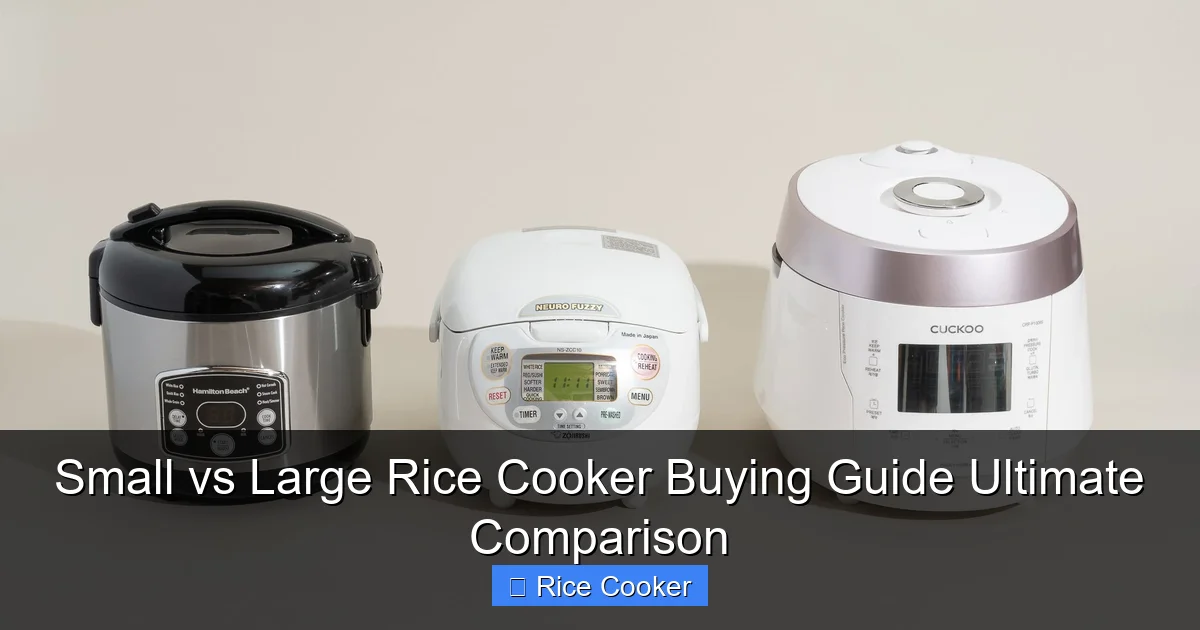
Measure your available counter space. Leave at least 6 inches of clearance on all sides for ventilation. Small rice cookers fit nicely between other appliances. Large models often need a dedicated corner.
Renters or apartment dwellers: If you move frequently, a small rice cooker packs easily. Large units become permanent fixtures you’ll dread transporting.
Cabinet Storage: The Hideaway Option
Do you have cabinet space? Small rice cookers store effortlessly in most kitchens. You can tuck them away and pull them out only when needed. Large models? They need dedicated storage real estate.
Consider this scenario: You have a tiny kitchen with no pantry. A large rice cooker would dominate your only counter. A small model gives you flexibility to cook and store.
The Multi-Functional Compromise
Some large rice cookers justify their footprint with multiple functions. If yours doubles as a slow cooker, steamer, and yogurt maker, it might replace three other appliances. This makes the space investment worthwhile.
But be honest: Will you actually use all those features? Many buyers get seduced by functions they never use. Stick to what you need.
Step 3: Determine Your Budget and Feature Requirements
Your budget often decides the small vs large rice cooker debate before you even start shopping. Let’s break down what you get at each price point.
Small Rice Cooker Price Range: $20-$80
Entry-level small rice cookers start under $30. These basic models have one function: cook rice. They work fine but offer little control.
Mid-range small models ($40-$60) add fuzzy logic, multiple settings for brown rice, sushi rice, and steaming functions. These are excellent values for singles and couples.
Premium small rice cookers ($70-$80) include advanced features like induction heating, LCD screens, and 24-hour delay timers. They rival large models in capability while staying compact.
Large Rice Cooker Price Range: $60-$300+
Basic large rice cookers start around $60. These serve families well with simple operation and reliable results.
Mid-range large models ($80-$150) offer the best value for families. You get multiple programs, good build quality, and useful accessories like steaming trays.
High-end large rice cookers ($150-$300+) feature induction heating, precise temperature control, and specialized settings for quinoa, oatmeal, and even cake. Brands like Zojirushi and Tiger dominate this space.
Essential Features vs. Premium Upgrades
Must-have features for any rice cooker:
- Automatic keep-warm function
- Non-stick inner pot
- Simple, intuitive controls
Nice-to-have upgrades:
- Delay timer (great for meal planning)
- Multiple grain settings
- Steamer basket
- Induction heating (premium even cooking)
When comparing small vs large rice cooker options, prioritize features you’ll actually use over impressive spec sheets.
Step 4: Consider Cooking Versatility and Meal Prep Style
How you cook beyond rice significantly impacts your decision. A rice cooker can do so much more than just rice.
Basic Rice Cooking: Keep It Simple
If you only cook white rice 2-3 times per week, a basic small rice cooker serves you perfectly. You don’t need to overcomplicate this.
But if you experiment with different rice varieties, consider that some types need specific settings. Brown rice requires longer cooking times than white rice. A guide to types of rice and best uses can help you understand which features matter most for your favorite grains.
Multi-Function Features: One Appliance, Many Jobs
Large rice cookers often include:
- Steaming: Perfect for vegetables, dumplings, fish
- Slow cooking: Some models double as slow cookers
- Sous vide: High-end models offer precision temperature control
- Bread making: Yes, some can bake bread!
These features make large rice cookers valuable for meal preppers and busy families who need to consolidate appliances.
Batch Cooking and Weekly Meal Prep
Love cooking once for the whole week? A large rice cooker lets you prepare 8 cups of rice, quinoa, or barley in one batch. This saves time and energy.
Small rice cookers require multiple batches, which can be frustrating and less energy-efficient. If meal prep is your style, lean toward larger capacity even for a small household.
Try this: Use your large rice cooker to make a easy rice and beans recipe for the entire week. One cooking session, multiple meals ready.
Step 5: Analyze Energy Efficiency and Performance Differences
Many shoppers don’t consider electricity costs, but they add up over time. The small vs large rice cooker debate includes real energy implications.
Power Consumption: Watts Matter
Small rice cookers use 300-500 watts. Large models consume 700-1000 watts. For perspective, running a large rice cooker for one hour uses about the same energy as a small one running for two hours.
If you cook rice daily, a small model could save $10-20 per year in electricity. Over five years, that’s real money.
Cooking Time and Heat Distribution
Small rice cookers heat up faster and cook rice more quickly due to their size. Large models take longer to reach temperature but maintain heat better for large batches.
Performance tip: Large rice cookers often deliver more consistent results with big batches. Small models can struggle if you push them beyond capacity.
Heat Distribution and Final Results
Premium large rice cookers use induction heating or multi-layer pots for even cooking. Budget small models sometimes have hot spots that lead to uneven rice.
However, a well-made small rice cooker will outperform a cheap large one. Brand quality matters as much as size.
Practical Tips for Making Your Final Decision
Now that you’ve evaluated all factors, here’s how to synthesize your research into one clear choice.
When Small is Perfect: The Definitive Checklist
Choose a small rice cooker if:
- You live alone or with one other person
- Your kitchen counter space is extremely limited
- You cook rice 3-4 times per week or less
- You have easy storage access
- Your budget is under $60
- You rarely entertain guests
When Large is Better: The Definitive Checklist
Choose a large rice cooker if:
- You regularly cook for 4+ people
- You love hosting dinner parties
- You meal prep for the entire week
- You have dedicated counter or storage space
- You want multiple cooking functions
- You experiment with different grains and recipes
The Smart Compromise: The 3-4 Cup Middle Ground
Still torn? The 3-4 cup rice cooker solves many dilemmas. It’s small enough for daily storage but large enough for occasional guests. It offers advanced features without the massive footprint.
For couples who sometimes host parents, or small families who meal prep, this size is often the sweet spot. You get 80% of large cooker benefits in a 50% smaller package.
Troubleshooting Common Rice Cooker Issues by Size
Every rice cooker can have problems. Some issues relate directly to size selection.
Overcooking or Undercooking
Problem: Rice is mushy or hard.
Small cooker fix: You likely overfilled it. Small cookers work best at 50-75% capacity. Never fill beyond the max line.
Large cooker fix: You may have underfilled it. Large cookers need minimum amounts to work properly. Check your manual for minimum rice and water levels.
Always use the measuring cup that comes with your cooker. It’s calibrated for that specific model.
Sticking and Burning at the Bottom
Problem: Rice sticks to the bottom and burns.
Small cooker cause: Overfilling or insufficient water. Small batches need precise water ratios.
Large cooker cause: Old non-stick coating or incorrect setting for grain type.
Solution: Learn how to cook rice perfectly every time by measuring water precisely and using the correct setting for your rice variety.
Uneven Cooking Throughout
Problem: Rice is perfect on top but hard underneath.
Small cooker issue: Poor heat distribution in budget models. Upgrade to a fuzzy logic model with better sensors.
Large cooker issue: Stirring rice before cooking can cause uneven results. Never stir rice once water is added.
Pro tip: Let rice sit for 10-15 minutes after cooking. This allows moisture to redistribute evenly throughout the pot.
Conclusion: Your Perfect Rice Cooker Awaits
The small vs large rice cooker decision isn’t about finding the “best” rice cooker—it’s about finding the best rice cooker for YOU.
Remember: A small rice cooker perfectly sized to your needs will outperform a large one that collects dust. Your kitchen space, household size, cooking habits, and budget all matter more than marketing claims.
Take your time with this decision. Measure your space. Count your family members. Think about your entertaining style. Consider your meal prep routine. Then choose the rice cooker that fits seamlessly into your life, not the one with the most features or biggest capacity.
Perfect rice is just the beginning. With the right size rice cooker, you’ll save time, energy, and money while enjoying flawless grains every single time.
