
You’ll learn what ghee is, how it differs from butter, and simple ways to use it in everyday cooking. Ghee is clarified butter that’s simmered to remove water and milk solids, leaving a nutty, high‑heat cooking fat you can sauté, bake, or spread.
I explain how ghee is made, which foods it suits best, and what to watch for when buying or storing it. Emma Reed and I tested uses and tips so you can swap ghee into recipes with confidence.
I keep the guide practical and short so you can start cooking with ghee today and decide if it fits your kitchen and diet.
Key Takeways
- Ghee is a clarified, shelf‑stable cooking fat with a nutty flavor.
- Use ghee for high‑heat cooking, baking, and finishing dishes.
- Check quality and storage to keep ghee fresh and flavorful.
Contents
What Is Ghee?
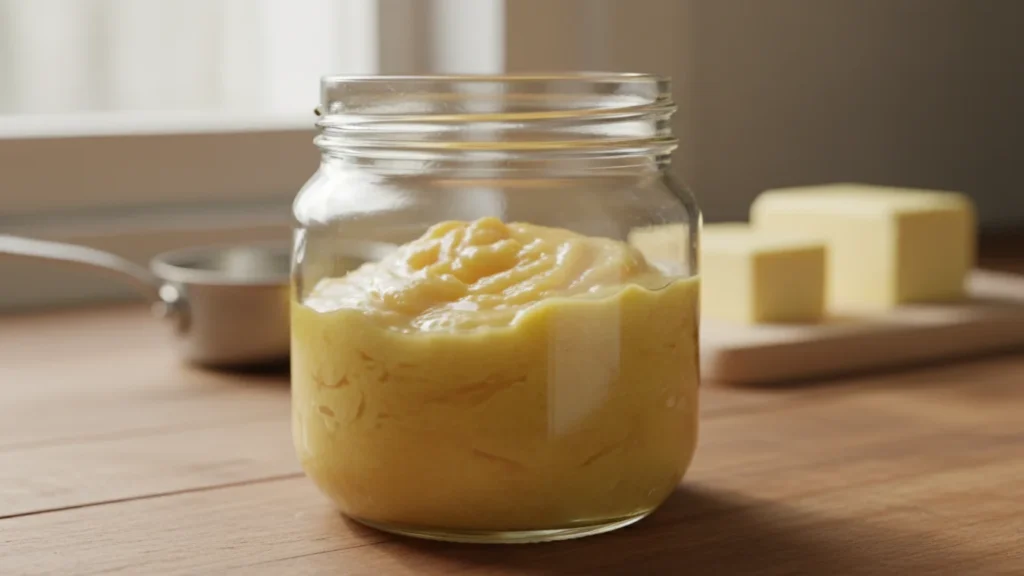
I explain what ghee is, where it comes from, the main types you’ll find, and how it differs from butter and clarified butter. You’ll learn the key traits that affect flavor, cooking use, and storage.
Definition and Origins
I define ghee as a form of clarified butter made by simmering butter until water evaporates and milk solids separate. The liquid fat left after straining is ghee. It has a golden color and a nutty aroma from lightly browned milk solids.
Ghee has deep roots in South Asian cooking and Hindu ritual life. People in India, Pakistan, Nepal, and Sri Lanka have used it for thousands of years. Traditional ghee often used cow, buffalo, or goat milk, depending on local herds.
I note that making ghee involves low, steady heat and careful skimming. Longer simmering produces a richer, browned flavor. This difference in cooking time and technique shapes both taste and shelf stability.
Types of Ghee
I break ghee into a few common types: homemade, commercial, cultured, and spiced.
- Homemade ghee: Made from unsalted butter, simmered until milk solids brown, then strained. It often has a strong, nutty flavor.
- Commercial ghee: Factory-made, filtered, and often more neutral in taste. It may include additives for consistency.
- Cultured ghee: Made from cultured butter (butter made from fermented cream). It tends to taste tangier and more complex.
- Spiced or infused ghee: Prepared with additions like cumin, turmeric, or garlic for extra flavor. Used directly in cooking or as a finishing fat.
Texture and smoke point vary by type. Cultured and browned homemade ghee often feel richer. Commercial ghee can be clearer and have a longer, predictable shelf life.
Comparison With Butter and Clarified Butter
I compare ghee, butter, and clarified butter on composition, flavor, and cooking use.
- Composition: Butter contains butterfat, water, and milk solids. Clarified butter removes most water and solids but stops before browning. Ghee removes water and browns the solids, so more flavor compounds remain in the fat.
- Flavor: Butter is creamy and milky. Clarified butter is cleaner-tasting. Ghee has a nutty, caramel-like note from browned solids.
- Cooking use: Ghee and clarified butter have higher smoke points than butter, making them better for sautéing and frying. Ghee’s browned solids give it a stronger aroma, so people use it for finishing dishes and in recipes needing deeper flavor.
- Shelf life: Ghee stores longer at room temperature than butter because it lacks water and milk solids. Clarified butter and ghee both last longer than regular butter, but browned ghee often has the best stability and flavor.
How Ghee Is Made
I explain how ghee starts as butter, then becomes a clear, golden fat by removing water and milk solids through heat and time. The methods vary from slow stovetop simmering to controlled industrial processes, and quality shows up in color, aroma, and clarity.
Traditional Preparation Methods
I begin with cultured or unsalted butter in a heavy pot. I simmer the butter gently over low heat so the water evaporates and the milk solids separate. Foam rises, then the solids sink and turn light brown; that browning gives ghee its nutty aroma. I skim off surface foam as needed and keep the heat low to avoid burning.
After the solids brown, I strain the clear fat through a fine cloth or muslin into a clean jar. Traditional recipes often call for simmering past the first clear stage to deepen flavor, a step common in Indian homes and Ayurvedic practices. For more context on traditional uses, I refer to sources like the USDA and authoritative culinary sites for safe handling and historic background.
Modern Production Techniques
In commercial production, makers use larger vats with precise temperature control and mechanical skimmers. I monitor heat to keep it between roughly 110–120°C briefly for moisture removal, but many producers stop well below that to protect flavor compounds. Centrifuges sometimes replace settling; they speed separation and reduce the risk of burnt solids.
Standardization helps shelf life and consistency: producers filter multiple times, vacuum-pack, or nitrogen-flush jars to limit oxygen exposure. Some factories add quality controls like moisture and free fatty acid testing. For technical references on food safety and processing, I link to resources such as the Food and Agriculture Organization (FAO).
Quality Indicators
I check color first: good ghee ranges from pale gold to deep amber depending on how long the solids browned. Clarity matters; well-made ghee pours clear and free of cloudiness at room temperature. Aroma gives clues: a clean, nutty smell indicates proper browning of milk solids without burning.
Texture should be smooth and melt easily on warm toast. Taste should be rich, slightly sweet, and nutty rather than bitter. I also look at shelf-stability: low moisture and airtight packaging reduce spoilage. Labels that list only butter or cream as ingredients usually signal purer ghee.
Nutritional Profile of Ghee
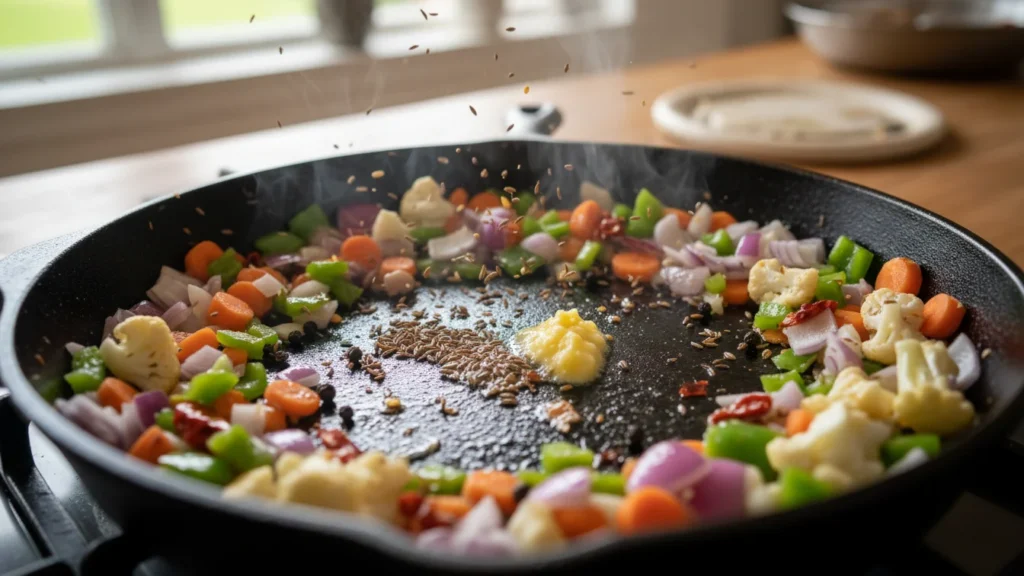
I focus on what ghee delivers most: concentrated fat, some fat-soluble vitamins, and very low amounts of milk solids. This makes it calorie-dense and stable for high-heat cooking, while also causing it to behave differently from butter or plant oils in your diet.
Macronutrients and Calories
I track ghee as almost pure fat. One tablespoon (about 14 grams) contains roughly 120–130 calories and about 14 grams of fat. That fat is mostly saturated and monounsaturated; saturated fat often makes up around 60–65% of the total, while monounsaturated fat is about 30%.
I note that ghee has virtually no protein or carbohydrates. That means it won’t affect blood sugar directly, but it adds calories quickly if you use several tablespoons. For people watching saturated fat intake, portion control matters because daily servings add up fast.
Vitamins and Minerals
I find ghee provides small but meaningful amounts of fat‑soluble vitamins. It typically contains vitamins A, E, and K2 because these dissolve into the butterfat during clarification. Vitamin A is the most notable, useful for vision and immune support in small dietary doses.
I don’t count on ghee for minerals or water‑soluble vitamins; those are minimal or absent. The exact vitamin content depends on the source of the milk (grass‑fed versus grain‑fed), so grass‑fed ghee can have higher vitamin A and K2 levels than conventional ghee.
Presence of Lactose and Casein
I check for lactose and casein because many people are sensitive to dairy. Properly clarified ghee removes most milk solids, so lactose and casein are usually present only in trace amounts or not detectable. This often makes ghee tolerable for people with lactose intolerance.
I warn that some commercial products may not be fully clarified or could contain additives. If you have a milk protein allergy or severe sensitivity, test a small amount or choose certified dairy‑free alternatives.
Culinary Uses of Ghee
I use ghee for high-heat cooking, to add nutty richness to Indian dishes, and as a butter substitute in baking. Its high smoke point and concentrated flavor make it easy to control texture and taste in many recipes.
Cooking and Frying
Ghee tolerates higher heat than butter, so I fry spices, onions, and proteins without burning the fat. For shallow frying or sautéing, I heat ghee until it shimmers; this gives a crisp exterior on potatoes, paneer, or chicken while keeping the inside moist.
I also use ghee for deep frying because it resists breakdown at high temperatures. Small batches of samosas or fritters brown evenly and stay crisp longer than when fried in vegetable oil.
When tempering spices, I add mustard seeds or cumin to hot ghee; they bloom quickly and release more aroma than in cold oil. For more on smoke points and cooking fats, I refer to trusted sources like the USDA for safe temperature ranges.
Flavoring Indian Cuisine
Ghee is central to many Indian dishes. I finish dal, biryani, and khichdi with a spoonful to add a glossy sheen and nutty depth. In tadka (tempering), ghee carries aromatics—garlic, curry leaves, and dried chilies—so their flavors infuse the whole dish.
For sweets, I melt ghee into halwa and ladoo recipes; it binds dry ingredients and gives a rich mouthfeel. I also use ghee to roast spices before grinding masalas; the fat extracts oil-soluble flavors that water cannot.
If you want traditional techniques and recipes, the Indian Ministry of Food or established cookbooks provide reliable methods for using ghee in classic preparations.
Baking Applications
I replace butter with ghee in many baked goods to boost flavor and texture. In cookies and shortbreads, ghee creates a tender crumb and a slightly caramel note because the milk solids are removed. Cakes and muffins benefit from ghee’s moisture retention, though I adjust quantities slightly since ghee is pure fat.
Ghee works well in laminated dough and pie crusts when chilled and handled like butter. For recipes that call for softened butter, I blend ghee with a small amount of liquid to match the original fat’s behavior.
I store ghee at room temperature or in the fridge; this stability makes it handy for baking on short notice without melting like butter.
Ghee in Global Cuisines
I explain how cooks use ghee in South Asia, the Middle East and North Africa, and in Western kitchens. Each region uses ghee for frying, flavor, or as a finishing fat, but the dishes and techniques differ.
South Asian Dishes
I see ghee used every day in India, Pakistan, Bangladesh, Nepal, and Sri Lanka. Chefs and home cooks melt ghee to temper spices (tadka) for dals and curries, which releases the aroma of cumin, mustard seeds, and curry leaves. I also add a spoonful to rice dishes like biryani and jeera rice to give them a glossy texture and richer taste.
Sweets rely on ghee too. I use it in laddoos, halwa, and barfi where it binds ingredients and adds a nutty flavor. In regional breads such as parathas and rotis, ghee is brushed on top for softness and shine.
Middle Eastern and North African Recipes
I find ghee or clarified butter in many Middle Eastern and North African kitchens, often under names like samna or samneh. I use it for sautéing onions and garlic in tagines and stews because it tolerates higher heat and adds depth.
I also use ghee to enrich rice pilafs, stuffed vegetables, and pastries. In sweets like maamoul and basbousa, ghee adds a tender crumb and longer shelf life. Street-food vendors and home cooks both favor it for frying and as a finishing fat on flatbreads.
Western Adaptations
I notice ghee gaining popularity in Western cooking, especially among people seeking a high-smoke-point alternative to butter. I use it for pan-searing meat, roasting vegetables, and making sauces where butter would burn.
Bakers sometimes swap ghee for butter in cookies and pie crusts to get a flaky texture and nutty flavor. Vegans and those avoiding lactose may choose plant-based ghee alternatives, but I point out that traditional ghee has most milk solids removed, which lowers lactose content compared with butter.
Health Benefits and Considerations
I focus on which benefits of ghee are backed by evidence and which drawbacks matter most for daily use. I describe nutrients, cooking advantages, and who should avoid or limit ghee.
Potential Health Benefits
Ghee provides concentrated fat, fat-soluble vitamins, and some short-chain fatty acids. I note it contains vitamins A, D, E, and K, which help vision, bone health, and antioxidant function when eaten in reasonable amounts.
Its high smoke point (around 450°F / 230°C) makes it stable for sautéing and frying, reducing the risk of harmful breakdown compared with some other oils. Ghee also contains butyrate, a short-chain fatty acid shown in studies to support gut lining cells and reduce intestinal inflammation in some people.
Because most milk solids are removed, ghee is low in lactose and casein. I find that many people with mild lactose intolerance tolerate ghee, though sensitivity varies. I recommend using ghee in moderation as part of a balanced diet because it is calorie-dense and high in saturated fat.
Allergy and Dietary Considerations
If you have a milk allergy to casein or a severe dairy protein sensitivity, I advise avoiding ghee unless a clinician says otherwise. Ghee usually has minimal casein, but trace amounts can remain depending on how it’s made.
For people managing heart disease risk, I suggest limiting ghee and tracking saturated fat from all sources. Replacing some ghee with unsaturated oils (olive or canola) can lower saturated fat intake while keeping flavor.
Vegan and strict dairy-free diets exclude ghee. I recommend checking labels for clarifications like “pure” or “anhydrous” and choosing certified dairy-free butter substitutes when needed.
Storage and Shelf Life

I store ghee to keep its flavor and to prevent oxidation or moisture contamination. Proper container choice and location matter most for longevity and safety.
Proper Storage Methods
I keep ghee in a clean, dry, airtight container to block air and moisture. Glass jars with tight lids work best because they don’t absorb flavors. Store opened ghee in a cool, dark place like a pantry away from direct heat. If my kitchen gets warm, I move ghee to the refrigerator to slow oxidation; refrigerated ghee will firm but stays safe.
For long-term storage, I label jars with the date I opened them. Commercial, unopened ghee often lasts many months at room temperature; homemade ghee lasts less and needs stricter cleanliness. Always use a dry spoon to scoop ghee to avoid introducing water. For more details on safe food storage, I check USDA guidance and reliable food-safety resources.
How to Identify Spoilage
I inspect ghee before using it. Good ghee is clear-golden when melted and has a mild, nutty aroma. If I notice off smells like sour or rancid butter, I throw it out. Visible mold, dark streaks, or excessive cloudiness are clear spoilage signs.
Texture changes can also indicate trouble. If ghee develops an unusually gritty or foamy surface after sitting, or if it tastes bitter, I discard it. Slight color darkening from browning during clarification is normal, but any strong odor or slimy feel is not. When in doubt, I err on the side of safety and replace the jar.
Selecting and Purchasing Ghee
I focus on a few clear signs when I buy ghee: color, aroma, ingredient list, and how it was processed. I also check packaging and price to match my cooking needs and budget.
Choosing High-Quality Ghee
I look for a rich golden color and a clean, nutty aroma as quick quality checks. Pale or off-colored ghee can mean poor milk source or over-processing. Texture matters too: at room temperature it should be semi-solid and smooth, not watery or grainy.
I read the ingredient list closely. Pure ghee has only clarified butter — no added oils, preservatives, or flavorings. If the label lists “butter oil” or vegetable oils, I avoid it.
Packaging affects freshness. I prefer ghee in glass jars or metal tins with a tight lid to limit light and air exposure. Smaller jars work best if I use ghee occasionally; larger tins suit frequent cooks.
Organic and Grass-Fed Options
I choose organic when I want milk produced without synthetic pesticides or antibiotics. Organic ghee often comes from cows raised on certified farms, which I find reassuring for food safety.
Grass-fed ghee can have a deeper flavor and slightly different nutrient profile, such as more omega-3s and vitamin K2. I look for labels that state “grass-fed” and, when possible, third-party verification like USDA Organic or other regional certifications.
Price and source matter to me. Artisanal or small-batch ghee may cost more but often shows clearer sourcing and traditional methods on the label. If provenance is unclear, I contact the brand or choose a product with transparent sourcing.
Substitutes and Alternatives
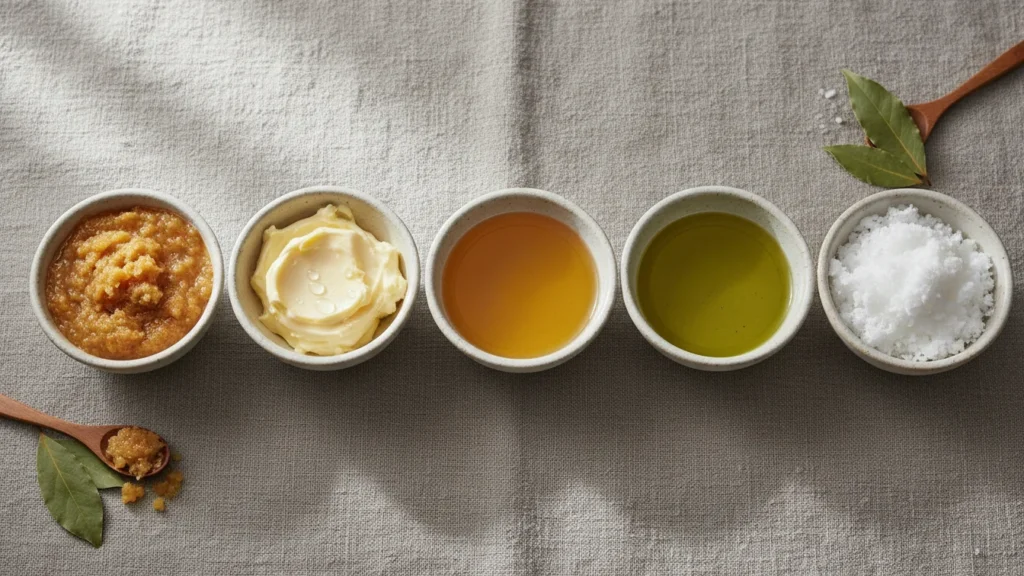
I focus on swaps that match ghee’s cooking role: fats with a high smoke point, buttery flavor, or dairy-free options. Choose based on taste, heat level, and whether you need a solid fat for baking.
Butter and Clarified Butter
I often reach for unsalted butter when I want ghee’s flavor but don’t need the high smoke point. Use a 1:1 swap in baking and low-to-medium heat cooking. Butter adds moisture and a rich dairy taste that ghee provides.
If you need ghee’s higher smoke point, I make clarified butter by melting butter slowly and skimming off milk solids. Clarified butter behaves like ghee for sautéing and frying and lasts longer in the fridge. It keeps that buttery taste without burning as quickly.
For a closer texture in recipes calling for solid fat, chill clarified butter until semi-solid before cutting into doughs. Keep labeled jars in the fridge for several weeks or freeze for months.
Plant-Based Ghee Alternatives
I use neutral high-heat oils like avocado or refined coconut oil when I need a dairy-free option for frying or roasting. Avocado oil handles high heat and won’t add strong flavors. Refined coconut oil gives richness but less coconut taste than the virgin version.
For buttery flavor in vegan baking, I choose vegan butter or coconut-based spreads. These mimic ghee’s richness and work well in pastries and sauces. When you need the nutty, browned note of ghee, I toast a small amount of plant butter in a pan to develop flavor before adding it to the recipe.
If you want a homemade substitute, I blend neutral oil with a touch of nutritional yeast and a little salt to add savory, buttery notes. Store commercial vegan butters according to the label to keep texture and flavor consistent.
FAQs
Is ghee safe for people with lactose intolerance?
Ghee has very little lactose and casein after clarifying, so many lactose-intolerant people can tolerate it. I still advise caution for those with severe dairy allergies.
How should I store ghee and how long does it last?
I store unopened ghee in a cool, dark pantry; it can last many months. Once opened, keeping it airtight and using a clean spoon helps it stay fresh; refrigeration extends shelf life further.
Can I substitute ghee for butter or oil?
Yes. I swap ghee for butter in most recipes and for oils when I need higher heat stability or richer flavor. Use roughly the same amount, but taste and adjust as needed.
Is ghee healthier than butter?
Ghee is richer in certain fats and has a higher smoke point, but it is still a saturated fat. I recommend using it in moderation as part of a balanced diet.
Conclusion
I find ghee a simple, useful ingredient that fits many kitchens and diets. It has a rich, nutty taste and a high smoke point that makes it good for frying, roasting, and finishing dishes.
I like that ghee stores well and can last without refrigeration if kept dry and clean. That makes it handy for occasional cooks and people who prefer to buy in small batches.
I also use ghee when I need a dairy-derived fat with less milk solids than butter. It works in savory cooking, baking, and as a spread or flavor booster.
If you try making ghee at home, watch the foam and the browning milk solids. Small steps give consistent results: simmer, skim, strain, and store.
Quick practical notes:
- Use neutral or cultured butter based on flavor you want.
- Keep ghee in a sealed container.
- Reheat gently to avoid burning.
I recommend testing ghee in a few recipes to see how its flavor and texture change your dishes.
