
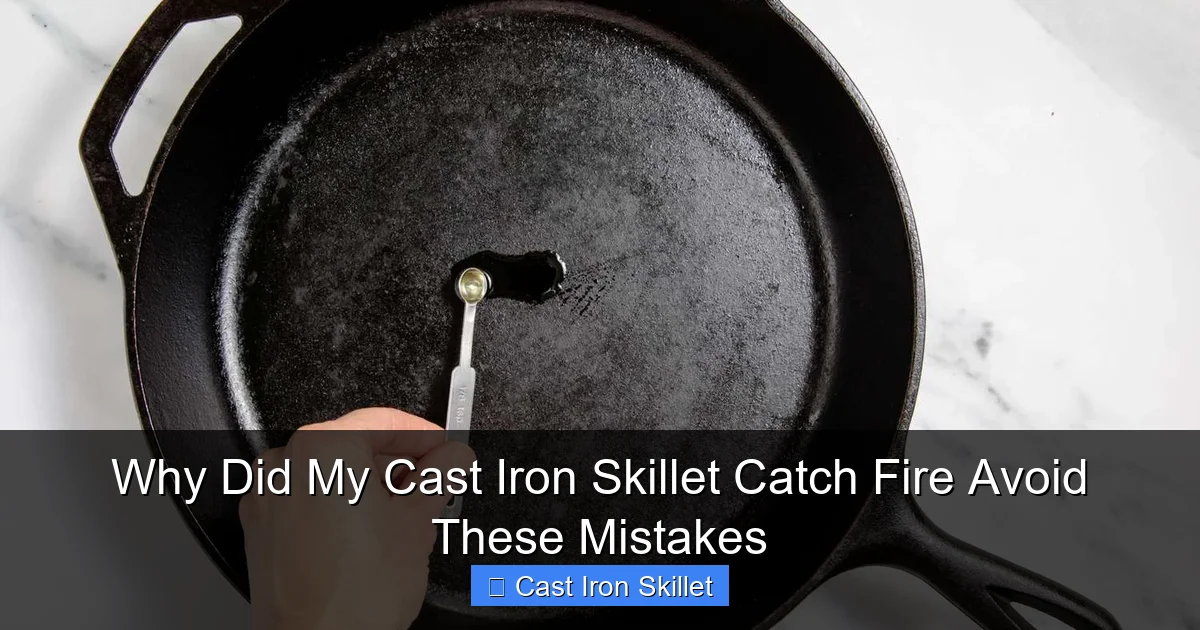
Why Did My Cast Iron Skillet Catch Fire Avoid These Mistakes
Cast iron skillets don’t catch fire themselves, but the oil and grease on them can ignite at high temperatures. This guide reveals the six most common mistakes that lead to dangerous kitchen fires. You’ll learn exactly how to prevent overheating, handle oil safely, and what to do if flames appear. Keep your kitchen safe while enjoying your favorite cast iron cooking.
Contents
- 1 Key Takeaways
- 2 Why Did My Cast Iron Skillet Catch Fire? The Complete Safety Guide
- 3 Understanding Cast Iron Skillet Fire Risks
- 4 Mistake #1: Overheating Your Skillet
- 5 Mistake #2: Leaving Your Skillet Unattended
- 6 Mistake #3: Using Too Much Oil or Grease
- 7 Mistake #4: Improper Cleaning and Storage
- 8 Mistake #5: Using Your Skillet as a Deep Fryer
- 9 Mistake #6: Ignoring Handle Materials
- 10 What to Do If Your Cast Iron Skillet Catches Fire
- 11 Troubleshooting Common Issues
- 12 Conclusion: Enjoy Cast Iron Safely
Key Takeaways
- Cast iron itself won’t burn: The metal is fireproof, but cooking oils and grease can ignite at temperatures above 500°F.
- Never leave your skillet unattended: Walking away from a hot cast iron skillet is the #1 cause of kitchen fires.
- Use oil sparingly: Too much oil creates fire hazards; stick to thin, even coating for safe cooking.
- Heat gradually: Always start on low heat and increase slowly to prevent sudden temperature spikes.
- Keep flammables away: Maintain a 12-inch clearance between your skillet and paper towels, utensils, or wooden handles.
- Know how to respond: If flames appear, turn off the heat, cover the pan, and never use water to extinguish a grease fire.
Why Did My Cast Iron Skillet Catch Fire? The Complete Safety Guide
You love your cast iron skillet. It’s durable, versatile, and makes food taste amazing. But when you saw flames shooting from your prized pan, panic set in. You’re not alone. Many cast iron enthusiasts experience this scary moment at least once.
This guide will explain exactly why cast iron skillets catch fire and, more importantly, how to prevent it from happening to you. You’ll learn the science behind these fires, identify the six deadly mistakes, and master the proper response if flames appear. Let’s keep your kitchen safe and your cooking enjoyable.
Understanding Cast Iron Skillet Fire Risks
First, let’s clear up a common misconception. Cast iron itself doesn’t catch fire. The metal is completely fireproof and can withstand temperatures over 2,000°F before melting. The real culprits are the substances that touch your skillet during cooking.

Visual guide about Why Did My Cast Iron Skillet Catch Fire Avoid These Mistakes
Image source: housedigest.com
The Science Behind Kitchen Fires
Fire needs three things to exist: heat, fuel, and oxygen. Your cast iron skillet provides the heat. Cooking oils, grease, and food particles become the fuel. The oxygen in your kitchen completes the dangerous triangle.
Most cooking oils ignite at temperatures between 500°F and 600°F. When you leave your cast iron on high heat, it quickly surpasses this threshold. The oil begins to smoke, then shimmer, and finally bursts into flames.
Common Misconceptions
Many home cooks believe that “seasoned” cast iron is more flammable. This isn’t true. Seasoning creates a polymerized layer that’s actually quite stable. The fire risk comes from fresh oil that hasn’t bonded to the metal yet.
Another myth suggests that older cast iron is more dangerous. In reality, well-maintained older skillets are often safer because they have fewer loose food particles and built-up carbon that could ignite.
Mistake #1: Overheating Your Skillet
This is the most common cause of cast iron fires. People crank the heat to get that perfect sear, not realizing they’re creating a disaster.
Visual guide about Why Did My Cast Iron Skillet Catch Fire Avoid These Mistakes
Image source: i.pinimg.com
Why High Heat Causes Problems
Cast iron retains heat exceptionally well. Once it gets hot, it stays hot. This means temperature changes aren’t immediate. You might not see the danger until it’s too late.
When oil reaches its smoke point, it breaks down chemically. This creates free radicals and compounds that ignite easily. The flash point comes quickly after smoking begins.
How to Tell When Your Skillet is Too Hot
Learn the water drop test. Sprinkle a few drops of water near the pan’s surface. If they skitter around rapidly and evaporate within 1-2 seconds, your skillet is dangerously hot.
Another warning sign is continuous smoking. If you see steady wisps of smoke coming from your pan, immediately reduce the heat. Don’t wait for flames to appear.
Safe Heating Practices
Always start on low heat. Let your cast iron warm up gradually for 3-5 minutes before increasing the temperature. This gives you time to monitor the process.
Use medium heat for most cooking tasks. Cast iron on medium is often hotter than other pans on high because of its superior heat retention.
Preheat your oven if you need high heat for recipes like cornbread. This distributes heat more evenly and reduces stovetop risks.
Mistake #2: Leaving Your Skillet Unattended
You stepped away for “just a minute” to answer the phone or check on a child. That’s all it takes for a fire to start.
Visual guide about Why Did My Cast Iron Skillet Catch Fire Avoid These Mistakes
Image source: i.stack.imgur.com
The Dangers of Walking Away
Kitchen fires escalate in seconds. A small flare-up can engulf a stovetop in under 30 seconds. By the time you return, you could be facing a major blaze.
Cast iron’s heat retention works against you here. Even if you turn down the burner, the pan stays hot enough to ignite oil for several minutes.
Real-Life Scenarios
Picture this: you’re searing a steak and the timer goes off for something in the oven. You turn your back for 60 seconds. Meanwhile, fat drips onto the burner, creating flames that catch your wooden utensils. Disaster strikes.
Another scenario involves toasting spices. They can go from fragrant to flaming in moments. Never leave dry ingredients cooking in cast iron without watching them.
Best Practices for Monitoring
Stay in the kitchen at all times when your cast iron is on the stove. If you must leave, turn off the heat completely and remove the pan from the burner.
Use timers as reminders, not as excuses to walk away. Set them for the minimum cooking time, then check immediately when they go off.
Keep children and pets out of the kitchen when cooking with cast iron. Distractions are the enemy of kitchen safety.
Mistake #3: Using Too Much Oil or Grease
You want your food to slide around the pan effortlessly. So you pour in extra oil. This simple act can create a fire hazard.
The Grease Fire Connection
Excess oil pools in the bottom of your skillet. As temperatures rise, this oil heats unevenly. Hot spots develop, causing the oil to ignite spontaneously.
When food hits the pan, it can displace the oil, causing splatters. These splatters land on the burner or stovetop, creating ignition points that can flash back to the main pan.
Proper Oil Usage Guidelines
Use just enough oil to create a thin, even coating. Swirl the oil around to cover the bottom completely, then pour out any excess.
For most recipes, 1-2 teaspoons of oil is sufficient for a 10-inch skillet. You might need slightly more for larger pans or high-heat searing.
Consider using high-smoke-point oils like avocado oil (520°F) or refined safflower oil (510°F). These are safer choices for cast iron cooking.
How to Handle Oil Spills
If you spill oil on your stovetop while cooking, wipe it up immediately with a damp paper towel. Don’t wait until after your meal.
Keep a box of baking soda near your stove. If you see small flames starting, baking soda can smother them quickly. Never use flour or other powders that can burn.
Mistake #4: Improper Cleaning and Storage
Your cleaning routine might be creating hidden fire dangers. Lint, food particles, and moisture can all contribute to future problems.
Lint and Debris Hazards
When you dry your cast iron with a towel, lint can stick to the oily surface. This lint dries and becomes highly flammable. The next time you heat your pan, it can ignite.
Food particles left in your skillet can carbonize and create hot spots. These particles can ignite even at moderate temperatures.
Safe Cleaning Techniques
Clean your cast iron immediately after use while it’s still warm. Use hot water and a stiff brush. Avoid soap when possible, but use a small amount if needed.
Never put your cast iron in the dishwasher. The moisture and heat can create rust, and food particles can get trapped in hard-to-reach places.
Dry your skillet thoroughly with a lint-free cloth. Then place it back on the stove for 1-2 minutes on low heat to evaporate any remaining moisture.
Proper Drying and Storage
Store your cast iron in a dry place. A cabinet with good airflow is ideal. Don’t stack pans tightly together without protective layers.
Place a paper towel between stacked pans. This absorbs moisture and prevents scratching. But remember to remove this towel before heating the pan.
Consider seasoning your skillet after each use. A proper seasoning creates a natural non-stick surface that reduces the need for excess oil.
Mistake #5: Using Your Skillet as a Deep Fryer
Cast iron is great for shallow frying. But using it to deep fry creates significant risks that many home cooks overlook.
The Risks of Deep Frying in Cast Iron
Deep frying requires submerging food in 2-3 inches of oil. This creates a large volume of oil that can overheat quickly. The more oil you have, the more fuel for a fire.
When food hits hot oil, it causes splattering. With deep frying, these splatters can overflow the pan’s edges and land directly on the burner.
Cast iron’s sides aren’t designed for deep frying. They’re shorter than dedicated fryers, making it easier for oil to slosh over the edges.
Safe Alternatives
Use a dedicated deep fryer or a heavy-bottomed pot with high sides for deep frying. These vessels are specifically designed to contain oil splatters.
If you must use cast iron for frying, limit the oil depth to no more than 1 inch. This is shallow frying territory, not deep frying.
Always use a thermometer to monitor oil temperature. Keep it between 350°F and 375°F for most fried foods. This prevents overheating.
If You Must Deep Fry
Place your cast iron on the back burner, turned slightly sideways. This prevents accidental tipping and keeps splatters away from other burners.
Keep a metal lid nearby. If flames appear, you can slide it over the pan to smother the fire. Never use glass lids, as they can shatter from the heat.
Never fill your skillet more than halfway with oil. This leaves room for bubbling and prevents dangerous overflows.
Mistake #6: Ignoring Handle Materials
Your skillet’s handle can become a fire starter if you’re not careful. Different handle materials present different risks.
Wooden vs. Metal Handles
Wooden handles can char, crack, and eventually ignite if exposed to direct flame. They also absorb oils that can smoke and burn.
Metal handles get extremely hot but won’t burn. The danger comes from touching them accidentally and dropping the pan, which can spill hot oil onto the burner.
Enamel-coated handles can crack under extreme heat, exposing the metal underneath. This creates weak points that might fail during a fire.
Handle Safety Tips
Always use a handle cover or pot holder when handling your cast iron. Even if the handle looks cool, it could be dangerously hot.
Position your skillet so the handle points toward the back of the stove and inward. This prevents accidental bumps from children or pets.
Keep wooden utensils away from the burner. The ends can catch fire if they get too close to the flame. Consider using metal or silicone utensils instead.
Regularly inspect your handle for cracks or damage. A compromised handle can break during a fire emergency, making it impossible to move the pan safely.
What to Do If Your Cast Iron Skillet Catches Fire
Despite your best efforts, a fire might still happen. Knowing the correct response can prevent a small incident from becoming a disaster.
Immediate Action Steps
First, stay calm. Panic leads to mistakes. Turn off the heat source immediately. This removes the energy feeding the fire.
Do not attempt to move the pan. Moving a flaming skillet can spread burning oil to your counter, cabinets, or yourself.
Slide a metal lid or baking sheet over the pan to smother the flames. Slide it on gently from the side to avoid splashing oil.
What NOT to Do
Never use water on a grease fire. Water causes the oil to explode and spread flames dramatically. This is the most dangerous mistake you can make.
Don’t use a fire extinguisher unless the fire is large and spreading. The chemical powder can ruin your cast iron and create a huge mess.
Avoid using fabric to smother the fire. Towels, oven mitts, or curtains can catch fire themselves and make the situation worse.
After the Fire
Leave the lid on for at least 30 minutes. This allows the oil to cool completely and prevents re-ignition.
Once cool, check your skillet for damage. Look for warping, cracks, or handle damage. If you see any issues, retire the pan from cooking use.
Clean your stovetop thoroughly to remove any oil residue that could ignite during future cooking sessions.
Troubleshooting Common Issues
Sometimes you see smoke or small flames and wonder if it’s a real emergency. Let’s address these warning signs.
Smoke but No Flame
If you see smoke but no actual flames, act quickly. This is your early warning system. Immediately reduce the heat and add your food to cool the oil.
Remove the pan from the burner if the smoking continues. Place it in your oven at 200°F to cool down gradually.
Check your oil temperature with an infrared thermometer. If it’s above 500°F, you’re dangerously close to ignition.
Small Flame Ignition
If you see small flames licking up the sides of your pan, cover it immediately with a metal lid. Don’t wait to see if it gets worse.
Keep the lid on for several minutes. Don’t peek. The fire might appear to be out, but the oil could still be hot enough to reignite.
After covering, move the pan to a cool part of your stovetop. This prevents the fire from spreading to other burners.
Preventing Future Incidents
Keep a fire extinguisher rated for Class B fires in your kitchen. Know where it is and how to use it before an emergency happens.
Install a smoke detector near your kitchen. Test it monthly. A working detector gives you those critical extra seconds to respond.
Practice your fire response plan. Know where your lids are, where your extinguisher is, and what number to call for emergency help.
Consider taking a basic fire safety course. Many local fire departments offer free kitchen fire safety training.
Conclusion: Enjoy Cast Iron Safely
Your cast iron skillet is a kitchen treasure that can last generations. It doesn’t have to be dangerous. By understanding these six common mistakes, you can prevent 99% of potential fire situations.
Remember to heat gradually, never leave your pan unattended, use oil sparingly, clean properly, avoid deep frying, and respect handle safety. These simple habits will keep your kitchen safe.
If a fire does start, stay calm, turn off the heat, and smother it with a metal lid. Never use water. Keep your family and home protected while enjoying the incredible cooking performance that only cast iron can provide.
Now you know exactly why your cast iron skillet caught fire and how to avoid it happening again. Share this knowledge with fellow cast iron enthusiasts and make safety a priority in every cooking session.