Out of the Frying Pan into the Fire

“Out of the frying pan into the fire” is a vivid phrase describing situations that go from bad to worse. This article explores its origins, meanings, and practical uses, helping you recognize and avoid worsening problems both in life and the kitchen.
Key Takeaways
- Meaning: The phrase means escaping one difficult situation only to land in an even worse one.
- Origin: It dates back to ancient fables and has evolved through centuries of storytelling.
- Usage: Commonly used in everyday language to describe worsening scenarios.
- Kitchen relevance: Related to cooking challenges, especially with frying pans and heat management.
- Practical advice: Learn to recognize warning signs to avoid jumping from one problem to a bigger one.
- Figurative vs. literal: The phrase works both literally in cooking and figuratively in life.
- Tips: Strategies to handle “frying pan” moments wisely and avoid falling “into the fire.”
📑 Table of Contents
- Introduction
- The Origin and History of “Out of the Frying Pan into the Fire”
- Meaning and Usage of the Phrase
- Out of the Frying Pan into the Fire in Cooking
- Recognizing and Avoiding “Out of the Frying Pan into the Fire” Situations
- Examples in Popular Culture and Literature
- Applying the Phrase in Daily Life and Cooking
- Conclusion
Introduction
Have you ever found yourself trying to fix a problem, only to realize you’ve made things worse? That feeling is perfectly captured by the phrase “out of the frying pan into the fire.” It’s a colorful way to describe situations where attempts to escape trouble lead to even bigger difficulties. Whether in everyday life or in the kitchen, this saying reminds us to be cautious when making decisions.
In this article, we’ll dive into the fascinating story behind this phrase, explore its meanings, and see how it relates not only to language but also to practical cooking experiences. By understanding it better, you’ll be better equipped to spot and avoid those tricky moments where one problem leads to another.
The Origin and History of “Out of the Frying Pan into the Fire”
Ancient Roots in Fables and Proverbs
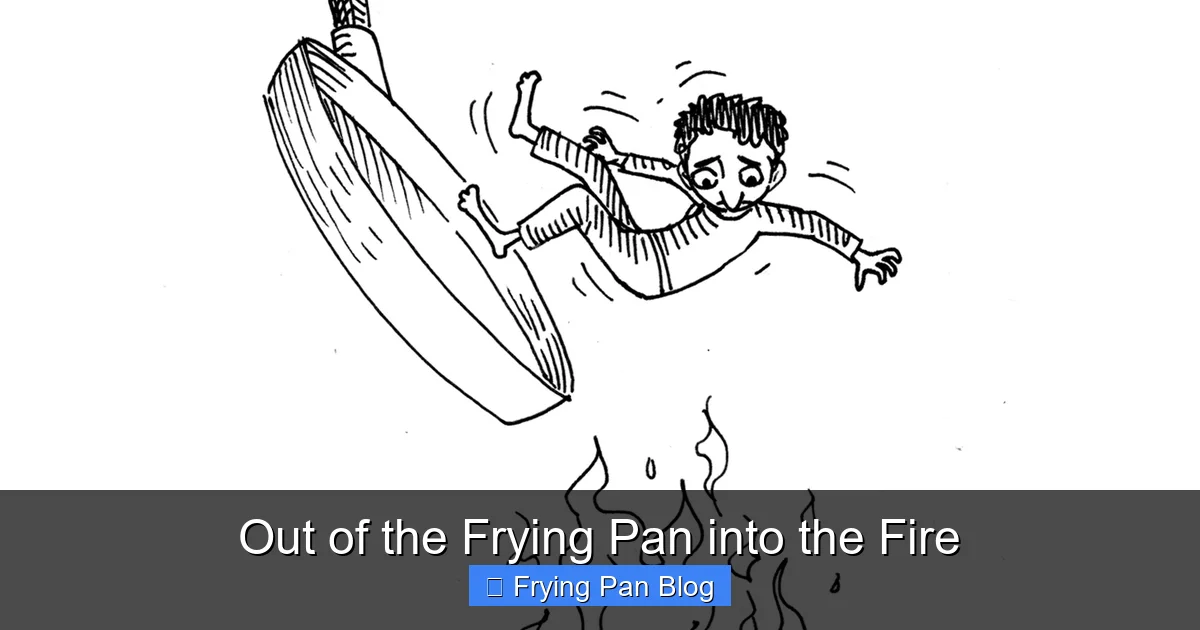
The phrase “out of the frying pan into the fire” has deep historical roots. It is believed to stem from ancient fables, such as those told by Aesop, where animals or characters try to escape a dangerous situation only to land in an even worse one. In these stories, the frying pan and fire represent escalating threats.
Visual guide about Out of the Frying Pan into the Fire
Image source: grammar.zone
Evolution Through Centuries
Over time, the phrase evolved in various languages. Early English versions appeared in literature around the 16th century. The metaphorical use of the frying pan and fire made it easy for people to visualize worsening problems, which helped the phrase stick around and become a common idiom.
Meaning and Usage of the Phrase
Literal vs. Figurative Meaning
Literally, the phrase describes the dangerous act of jumping from a frying pan—perhaps hot but manageable—into an open fire, which is far more harmful. Figuratively, it means escaping one hardship only to face an even tougher one. This duality makes the phrase relatable in many contexts.
Everyday Language and Examples
People use this phrase frequently when talking about life challenges. For example, if someone leaves a stressful job only to find the new one even more demanding, they might say they jumped “out of the frying pan into the fire.” It’s a handy way to express frustration and caution.
Out of the Frying Pan into the Fire in Cooking
Common Kitchen Mishaps
Ironically, the phrase also fits perfectly in cooking scenarios. Imagine you’re frying something and the pan gets too hot. You try to reduce the heat but accidentally knock the pan onto the stove’s open flame or spill hot oil. This is literally jumping out of the frying pan into the fire!
Managing Heat and Safety Tips
To avoid literal frying pan disasters, it’s important to manage heat properly:
- Keep an eye on the stove temperature.
- Use pans with heat-resistant handles.
- Never leave hot oil unattended.
- Have safety tools like oven mitts and lids ready.
By doing so, you can prevent small kitchen problems from turning into dangerous situations.
Recognizing and Avoiding “Out of the Frying Pan into the Fire” Situations
Spotting Warning Signs
In life, the phrase warns against rash decisions. Before you jump from one “frying pan” to another “fire,” pause and assess the situation. Ask yourself:
- Is the alternative really better?
- What risks am I taking?
- Can I handle the new challenge?
Practical Tips for Decision Making
Here are some tips to avoid falling into worse problems:
- Research options carefully: Don’t rush into changes without knowing the consequences.
- Seek advice: Talk to friends or experts who can offer perspective.
- Plan ahead: Prepare for possible challenges that come with a new choice.
- Stay calm: Sometimes patience helps avoid impulsive mistakes.
Examples in Popular Culture and Literature
Fables and Stories
Classic fables often use the frying pan and fire metaphor to teach lessons about caution and thinking ahead. For example, a fox escaping hunters may jump into a river only to be caught by another predator, illustrating the phrase’s meaning.
Modern Usage
In movies, TV shows, and books, characters often face dilemmas where their attempts to escape one problem land them in worse trouble. Writers use this phrase or its imagery to connect with audiences who understand that feeling all too well.
Applying the Phrase in Daily Life and Cooking
Handling Personal Challenges
When you face tough decisions—whether about jobs, relationships, or finances—remember the “out of the frying pan into the fire” warning. It encourages careful thought before making changes that could backfire.
Smart Cooking Practices
In the kitchen, the phrase reminds us to be mindful. Avoid rushing or multitasking too much when frying. Use the right tools and maintain focus to prevent minor problems from escalating.
Conclusion
“Out of the frying pan into the fire” is more than just a catchy phrase. It’s a timeless reminder that escaping one problem without care can lead to worse situations. Whether you’re navigating life’s challenges or cooking your favorite meal, understanding this saying helps you approach problems thoughtfully and avoid unnecessary risks.
Next time you find yourself in a tough spot, pause and consider: Are you jumping from the frying pan into the fire? With awareness and smart choices, you can steer clear of worsening your troubles and find better solutions instead.
Frequently Asked Questions
What does “out of the frying pan into the fire” mean?
It means escaping one bad situation only to end up in a worse one. The phrase highlights how attempts to avoid trouble can sometimes backfire.
Where did the phrase originate?
The phrase originates from ancient fables and has been used for centuries in various languages to describe escalating problems, with early English use dating back to the 16th century.
Can the phrase be used literally?
Yes, literally it refers to jumping from a frying pan into an open fire, which is far more dangerous. It also applies figuratively to life situations.
How can I avoid “out of the frying pan into the fire” scenarios?
Take time to assess your options carefully, seek advice, and plan ahead before making decisions that could lead to bigger problems.
Is this phrase common in cooking discussions?
While mainly figurative, it sometimes appears in cooking contexts to describe mishaps involving frying pans and heat management.
Why is this phrase still relevant today?
Because life often presents situations where quick decisions can worsen problems. The phrase remains a useful warning to think before acting.
