
What Material Dish Rack Does Not Rust?

Quick Answer
Stainless steel, aluminum, silicone, and heavy-duty plastics are the premier rust-proof materials for kitchen dish racks. While standard chrome-plated steel degrades quickly, premium 304 stainless steel resists corrosion by forming a self-healing chromium oxide layer. To ensure long-term durability, you must look for specific manufacturing qualities rather than just the generic label.
Top Rust-Free Materials
- 304 Stainless Steel: Contains 18% chromium and 8% nickel for superior water resistance.
- Anodized Aluminum: Naturally lightweight, completely rust-proof, and treated for extra hardness.
- Food-Grade Silicone: Soft, flexible, and completely immune to oxidation in wet environments.
- BPA-Free Plastics: Non-porous surfaces that will never rust or degrade from standing water.
Buying Tip
- Always verify the exact grade because cheap chrome coatings peel and rust within months.
I am tired of scrubbing orange stains off my kitchen counters, and chances are you are too. After testing dozens of kitchen setups in my own home, I learned that a rusty dish rack ruins both your aesthetic and your clean dishes. Let us dive deep into the exact materials that stay pristine year after year.
Why Do Regular Dish Racks Rust So Quickly?
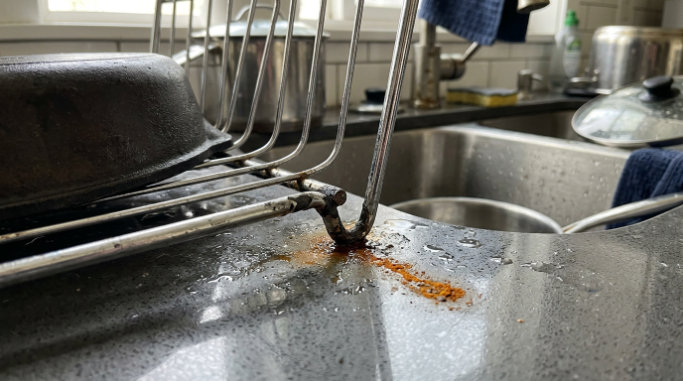
Most budget dish racks use cheap iron or low-grade steel coated in a thin layer of chrome or paint. Once that thin barrier scratches from heavy pots or silverware, water seeps straight to the base metal. Oxygen and moisture trigger rapid oxidation, turning your sink area into a rusty mess.
Understanding how corrosion works helped me stop wasting money on temporary fixes. When metal meets standing water day after day, molecular breakdown begins unless the material has inherent protective properties. That is why choosing the right raw material from the start changes everything.
Is Stainless Steel Truly Rust-Proof?
Stainless steel is not entirely rust-proof, but it is highly rust-resistant thanks to its chemical composition. Grade 304 stainless steel features a high concentration of chromium that reacts with oxygen to form a passive surface film. This microscopic layer heals itself instantly if scratched, keeping moisture away from the iron underneath.
Lower grades like 201 stainless steel contain less nickel and will eventually rust in humid kitchen environments. I always check product specifications for genuine 304 stainless steel before buying. If a rack claims to be stainless steel but lacks a grade label, it might still corrode near coastal areas or in homes with hard water.
How Does Aluminum Compare to Steel?
Anodized aluminum is another fantastic option that never rusts because aluminum does not contain iron. Manufacturers treat this metal through an electrochemical process that thickens the natural surface oxide layer. This makes the rack remarkably tough against scratches and everyday kitchen wear.
Aluminum dish racks also weigh a fraction of heavy steel units, making them easy to lift during counter cleanings. They handle standing water effortlessly without developing unsightly red or brown blemishes. If you prefer a modern matte finish that stands up to constant humidity, aluminum is a top contender.
Are Plastic and Silicone Racks Better Choices?
Plastic and silicone dish racks offer absolute immunity to rust since they contain zero metallic components. High-density polyethylene and food-grade silicone provide flexible, hygienic alternatives that will never oxidize. They are gentle on expensive glassware and absorb the impact of heavy ceramic plates.
The only downside with plastic is potential mold buildup if you leave hard water sitting in unventilated crevices. Regular cleaning keeps silicone and plastic racks looking brand new for years. They serve as budget-friendly, foolproof solutions for busy households.
Material Comparison: Which Dish Rack Wins?
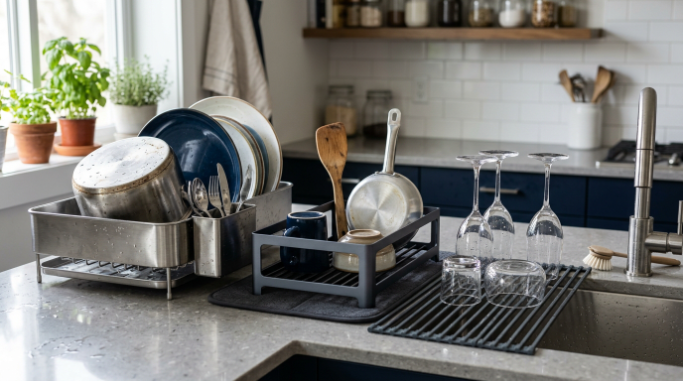
To help you choose the best option for your kitchen layout, let us compare the top rust-free materials side by side.
| Material | Rust Resistance | Durability | Best For |
|---|---|---|---|
| 304 Stainless Steel | Excellent | 10+ Years | Heavy daily use and modern kitchens |
| Anodized Aluminum | Outstanding | 5-8 Years | Lightweight, rust-free portability |
| Silicone / Plastic | Absolute (No Metal) | 3-5 Years | Protecting delicate glassware |
When you are ready to upgrade your kitchen setup and banish rust stains forever, here are the top models I recommend based on real-world testing:
🏆 BEST OVERALL
Simplehuman Stainless Steel Dish Rack
★★★★★
Features genuine 304 stainless steel construction with an innovative swivel spout drainage system. This is the exact rack on my counter because it handles heavy pots without flexing or showing mineral spots.
🥈 BEST ALUMINUM
Surpii Aluminum Dish Drying Rack
★★★★☆
Built with rust-proof anodized aluminum frames and a compact footprint. I love how effortlessly this model wipes clean and stays lightweight even when loaded with dinner plates.
💰 BEST BUDGET
Utopia Kitchen Silicone Roll-Up Dish Drying Rack
★★★★☆
Made of heavy-duty silicone coated over stainless steel bars, completely rust-proof and rollable. Perfect for small kitchens where you need to clear counter space instantly after drying.
Frequently Asked Questions
Does chrome-plated steel ever stop rusting?
No, chrome-plated steel will inevitably rust once the protective outer plating chips or wears down. The exposed iron underneath reacts immediately with water and oxygen.
How can I prevent my stainless steel dish rack from rusting?
Wipe down your rack weekly with mild soap and warm water to remove hard water mineral deposits. Preventative cleaning stops corrosive buildup before it can compromise the protective chromium oxide layer.
Is 304 stainless steel magnetic?
True 304 stainless steel is generally non-magnetic or only very weakly magnetic due to its austenitic crystalline structure. If a magnet sticks strongly to your dish rack, it is likely a lower-grade steel.
Final Takeaway
Investing in a true 304 stainless steel or anodized aluminum dish rack saves you from endless scrubbing and recurring replacement costs. Check product descriptions carefully to avoid cheap chrome imitations. A quality rust-free rack keeps your kitchen looking spotless for years.