
Push Down Chopper for Soft Vegetables: How to Get Clean Cuts Without Mush

Quick Answer
A push-down vegetable chopper works best with firm vegetables, while soft vegetables such as ripe tomatoes, tender zucchini, and mushrooms can become crushed or watery under a rigid blade grid. For better results, choose produce that still holds its shape, remove excess surface moisture, and use a sharp knife or suitable slicing attachment for delicate ingredients. If you want to improve your overall preparation routine, these practical kitchen preparation tips can help you choose the right method for each ingredient.
Best ways to handle soft vegetables
- Choose firm produce: Select tomatoes and zucchini that feel firm rather than overripe or spongy.
- Prepare small pieces: Cut vegetables to fit the chopper opening without forcing the lid.
- Reduce moisture: Pat washed produce dry before chopping to limit excess water in the container.
- Use gentle handling: Avoid repeated, forceful presses that can squeeze delicate flesh.
- Pick the right blade: Use a suitable slicing attachment or sharp knife when clean slices matter more than uniform cubes.
- Know when to stop: Switch tools if the vegetable splits, leaks juice, or sticks in the grid.
A simple rule to remember
- Firm vegetables: A push-down chopper is usually a practical choice.
- Delicate vegetables: A knife or appropriate slicer usually gives you more control.
Soft vegetables can be frustrating to prepare when you want neat, even pieces rather than a wet pile of crushed produce. A push-down chopper can save time on many kitchen tasks, but its rigid grid doesn’t suit every texture.
In this guide, I’ll explain which soft vegetables are worth trying, how to prepare them, and when another tool makes more sense. I’ll also cover common mistakes, cleaning, and the features I’d look for when choosing a vegetable chopper in 2026.
What Is a Push-Down Vegetable Chopper?
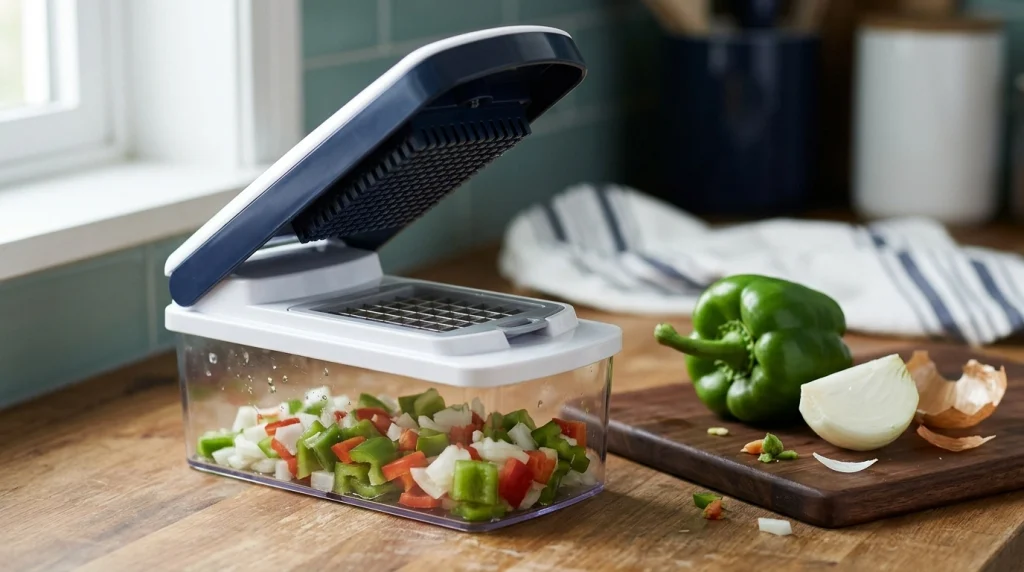
A push-down vegetable chopper is a manual kitchen tool that uses a hinged lid or pressing plate to force food through a grid of crossed blades. The cut pieces usually fall into a collection container underneath.
The tool is designed primarily for dicing vegetables that can withstand downward pressure. Its performance depends on the blade grid, blade sharpness, vegetable firmness, and how well the food fits the cutting surface.
- Blade grid: Creates relatively uniform cubes or pieces.
- Pressing lid: Transfers downward force to the vegetable.
- Collection container: Catches the chopped ingredients and helps keep the work surface tidy.
- Cleaning tool: Some models include a comb or scraper for removing food trapped between blades.
The important distinction is that a push-down grid chopper doesn’t work like a knife. A knife slices through food along a moving edge, while the grid pushes a piece through several stationary cutting edges at once.
That difference explains why firm onions and bell peppers often dice more cleanly than ripe tomatoes or delicate mushrooms.
Which Soft Vegetables Can You Put in a Push-Down Chopper?
Some vegetables fall between firm and delicate, so their suitability depends on freshness, ripeness, and the chopper’s design. Start with the firmer examples and assess the results before attempting softer produce.
| Vegetable | Suitability | Best approach |
|---|---|---|
| Bell pepper | Good when firm | Remove seeds and cut to fit the grid. |
| Zucchini | Variable | Use a firm specimen and a suitable coarse grid. |
| Cucumber | Variable | Choose a crisp cucumber and drain excess juice if needed. |
| Ripe tomato | Often difficult | Use a sharp knife for clean, controlled cuts. |
| Mushroom | Variable to poor | Slice with a knife or use a suitable food processor attachment. |
| Spinach and tender greens | Poor for dicing | Stack or gather leaves and slice with a knife. |
| Overripe tomato or zucchini | Poor | Avoid the grid if the flesh collapses under light pressure. |
This table is a practical guide, not a universal compatibility chart. Manufacturers use different blade shapes, grid sizes, and pressing mechanisms, so always check the instructions for your particular model.
Can You Chop Tomatoes Without Crushing Them?
Firm tomatoes are easier to handle than fully ripe, soft tomatoes, but a push-down grid can still squeeze their flesh and release juice. If presentation matters, a sharp knife is generally the more reliable choice.
For salsa or cooked sauces, some loss of shape may be acceptable. For a salad or garnish, however, cleaner cuts usually produce a more attractive result.
- Choose a tomato that feels firm without being underripe.
- Remove the stem and inspect the flesh for soft spots.
- Use a sharp knife and a stable cutting board for controlled wedges or cubes.
- Keep cut tomatoes in a separate bowl if you want to prevent their juice from soaking other ingredients.
What About Mushrooms, Zucchini, and Cucumbers?
Zucchini and cucumber may work in a push-down chopper when they’re fresh and firm. Mushrooms can compress under pressure, especially when they’re large, soft, or damp.
For zucchini, remove the ends and cut the vegetable into sections that fit the grid. For cucumber, choose a crisp specimen and avoid forcing thick sections through a small opening.
For mushrooms, a knife often offers better control over slice thickness. If you need finely chopped mushrooms for a filling, use short, controlled cuts instead of pressing them through a rigid grid.
How Do You Use a Push-Down Chopper for Soft Vegetables?
The best approach is to prepare the vegetable before it reaches the blades. Even a well-made chopper can produce poor results when the ingredient is too ripe, too wet, or too large for the opening.
- Wash the produce. Rinse vegetables under running water before cutting, and dry the surface with a clean towel.
- Check the texture. Set aside produce with mushy spots or flesh that collapses when handled gently.
- Trim and size the pieces. Remove stems, seeds, or tough ends as appropriate, then cut the vegetable to fit the grid.
- Secure the chopper. Place the container on a flat, stable surface and make sure the blade insert and lid sit correctly.
- Position the vegetable. Center a suitable piece over the grid, keeping your fingers away from the blades.
- Press according to the manual. Use the intended pressing motion without twisting the lid or forcing a jammed piece.
- Inspect the result. Stop if the food is squeezing out, sticking, or turning into a wet pulp.
For general produce preparation, FoodSafety.gov’s food-safety guidance recommends washing fruits and vegetables under running water and cleaning food-contact surfaces and utensils appropriately.
Should You Chill Soft Vegetables Before Chopping?
Chilling can make some produce feel firmer, but it won’t turn a delicate vegetable into a reliable candidate for a rigid dicing grid. Freshness and the vegetable’s natural structure matter more than temperature alone.
If a cucumber or zucchini has become limp, refrigeration may not restore its original crispness. For a ripe tomato, switching to a knife remains the better solution when you need neat pieces.
Why Does a Push-Down Chopper Turn Vegetables Into Mush?
Soft vegetables usually become mushy because the pressing mechanism compresses their flesh faster than the blade grid can separate it. Excess moisture, dull blades, unsuitable grid sizes, and overripe produce can make the problem worse.
Use the following troubleshooting guide to identify the likely cause before replacing your chopper.
| Problem | Likely reason | What to do |
|---|---|---|
| Vegetable becomes pulp | Produce is too soft for the grid. | Switch to a knife or suitable slicing tool. |
| Pieces stick between blades | Wet flesh or fibers cling to the grid. | Stop and clean the insert using the supplied tool. |
| Uneven pieces | The vegetable sits off-center or varies in firmness. | Prepare evenly sized sections and center them. |
| Lid will not close | The piece is too large or the grid is obstructed. | Open the tool safely and remove the obstruction. |
| Excess liquid in the container | The vegetable releases juice during compression. | Choose firmer produce or change cutting methods. |
Does a Bigger Grid Work Better for Soft Vegetables?
A coarser grid may reduce the number of cuts a vegetable experiences, but it doesn’t guarantee clean results. The shape, sharpness, and spacing of the blades still affect how the vegetable passes through.
When choosing between two compatible inserts, a larger opening may suit firm zucchini or cucumber better than a fine-dicing grid. For ripe tomatoes and tender greens, changing tools is often more effective than changing grid size.
Push-Down Chopper vs. Knife vs. Food Processor
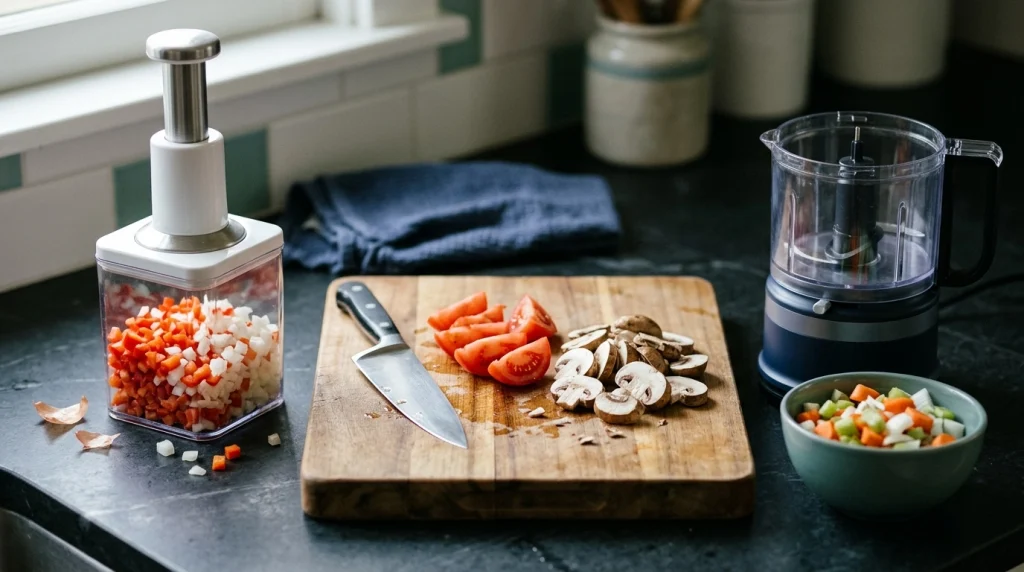
The best tool depends on the texture you want and the amount of food you’re preparing. A push-down chopper excels at repetitive dicing, a knife provides control, and a food processor offers flexible chopping and slicing when fitted with the right attachment.
| Feature | Push-down chopper | Sharp knife | Food processor |
|---|---|---|---|
| Best use | Uniform cubes | Controlled cuts | Batch preparation |
| Soft tomatoes | Often unsuitable | Good with a sharp blade | Depends on attachment and speed |
| Firm peppers | Good | Good | Good with suitable settings |
| Cut-size control | Limited by grid | High | Depends on attachment |
| Cleanup | Grid and container | Knife and board | Bowl, lid, blade or disc |
| Electrical power | Not required | Not required | Usually required |
For further guidance on choosing a preparation method, the manufacturer’s instructions matter more than a tool’s marketing claims. KitchenAid’s official product-help resources provide appliance-specific guidance on food processors and choppers.
What Should You Look for in a Vegetable Chopper?
If soft vegetables are a regular part of your cooking, don’t judge a chopper by the number of accessories alone. Choose one that matches the ingredients you prepare most often and the texture you expect.
- Blade quality: Look for sturdy, food-contact-safe blades and clear care instructions.
- Grid options: Interchangeable grids can help with different sizes of firm vegetables.
- Stable base: A container that sits securely on the counter is easier to use.
- Comfortable pressing lid: The handle should allow a controlled, straight pressing motion.
- Easy cleaning: Removable parts and a supplied grid-cleaning tool can simplify maintenance.
- Replacement parts: Check whether the manufacturer offers compatible blades or other replacement components.
- Clear safety instructions: The manual should explain assembly, safe handling, and cleaning.
In my view, the most useful chopper is the one that handles your usual vegetables without creating extra work. If you frequently prepare firm onions and peppers, a grid model may be worthwhile; if your recipes rely on ripe tomatoes and delicate mushrooms, a good knife deserves priority.
How Do You Clean a Push-Down Chopper After Soft Vegetables?
Soft vegetables can leave seeds, pulp, and slippery residue between the blades. Cleaning the tool promptly makes removal easier and helps prevent residue from drying onto the cutting grid.
- Stop using the tool. Make sure the lid is open and the parts are stable before cleaning.
- Remove the insert safely. Follow the manufacturer’s instructions and keep your fingers away from the cutting edges.
- Clear the grid. Use the supplied cleaning comb or another manufacturer-approved tool rather than your fingers.
- Wash removable parts. Use warm water and dish soap unless the instructions specify another method.
- Inspect and dry. Check for trapped food, damaged blades, or loose components before storage.
Don’t assume every removable part is dishwasher-safe. Check the manual first, and never immerse an electrical motor base if your appliance has one.
For safe food preparation, wash your cutting board, utensils, and work surface after handling produce, especially when the same equipment will later contact raw meat or other ingredients. The FoodSafety.gov food-safety resources explain safe handling practices for different food types.
Common Mistakes to Avoid When Chopping Soft Vegetables
Most poor results come from choosing the wrong technique for the ingredient. These mistakes are easy to prevent once you understand the limits of a push-down grid.
- Forcing the lid: Stop if the vegetable won’t pass through the grid with the intended motion.
- Using overripe produce: Mushy vegetables often collapse regardless of the tool.
- Expecting every vegetable to produce cubes: Texture and structure affect the final cut.
- Ignoring blade maintenance: Damaged or dull blades can produce poor results and require attention according to the manual.
- Cleaning with bare fingers: Food trapped between sharp blades creates a cut hazard.
- Overlooking the recipe: A rough chop may work for soup, while a salad garnish may need a more controlled cut.
For more ideas on preparing ingredients efficiently, see this guide to everyday meal-preparation techniques. Matching the tool to the task is often more useful than trying to make one gadget handle everything.
Recommended Tools for Chopping Soft Vegetables
If you’re deciding what to buy, I’d prioritize the cutting mechanism over the accessory count. The following established products represent different approaches to vegetable preparation, but their ratings below are editorial assessments of suitability for these tasks, not verified customer-review averages or hands-on test scores.
🏆 Best for Uniform Dicing
Mueller Pro-Series 10-in-1 Vegetable Chopper
★★★★☆
A manual multi-attachment chopper designed for tasks such as dicing and slicing. I’d consider it for onions, peppers, and firm zucchini, rather than relying on its grid for ripe tomatoes or delicate mushrooms.
🔪 Best for Delicate Cuts
OXO Good Grips Chef’s Knife
★★★★★
A chef’s knife offers direct control over slice thickness and cutting pressure. I’d favor this type of tool for tomatoes, mushrooms, and other soft vegetables where preserving shape matters more than automated dicing.
⚙️ Best for Batch Prep
Cuisinart Mini-Prep Plus DLC-2A
★★★★☆
This compact electric food processor uses a motor-driven blade for chopping and processing small batches. I’d consider it for rough chopping or minced ingredients, using short pulses and checking frequently to avoid turning soft vegetables into puree.
Before purchasing, verify the current model, included attachments, care instructions, and availability on the retailer’s listing. No single tool is ideal for every vegetable, so choose according to the cuts you make most often.
Frequently Asked Questions
Can you use a push-down chopper for soft vegetables?
Yes, some relatively firm vegetables, including fresh zucchini and crisp cucumber, may work in a suitable push-down chopper. Very ripe tomatoes, soft mushrooms, and tender greens are more likely to compress or stick, so a knife or suitable slicing attachment usually gives better control.
Why does my vegetable chopper crush tomatoes?
Tomatoes contain delicate flesh and plenty of moisture, which makes them vulnerable to compression from a rigid blade grid. Choose firm tomatoes if you want to try the chopper, but use a sharp knife for clean pieces when appearance and texture matter.
Should I use a fine or coarse grid for zucchini?
A coarser grid may be more forgiving with firm zucchini because it requires fewer individual cuts than a fine grid. However, the result still depends on blade sharpness, vegetable firmness, and the chopper’s design, so check the manufacturer’s recommendations.
Can I chop soft vegetables in an electric food processor?
Yes, but use the attachment and speed recommended for the ingredient. For a processor with a chopping blade, short pulses give you more control than continuous operation, which can quickly turn soft vegetables into a coarse paste or puree.
How do I stop vegetables from sticking between chopper blades?
Choose produce with enough firmness to pass through the grid, remove excess surface water, and avoid forcing oversized pieces. If food sticks, stop using the chopper and clear the obstruction with the supplied cleaning tool while keeping your fingers away from the blades.
Final Takeaway
A push-down vegetable chopper is useful for fast, uniform dicing, but it isn’t the right tool for every soft vegetable. Firm produce, suitable grid sizes, careful preparation, and correct assembly all help you get better results.
For ripe tomatoes, delicate mushrooms, and tender greens, a sharp knife often gives you more control with less crushing. My recommendation is simple: choose the tool that preserves the texture your recipe needs, rather than forcing every ingredient through the same chopper.
As with any kitchen tool, follow the manufacturer’s safety and cleaning instructions, and inspect the blades and attachments before use.
Affiliate disclosure: This article contains affiliate links. As an Amazon Associate, the publisher may earn from qualifying purchases at no additional cost to you.