
Difference Between Milk, Cream, and Yogurt: Clear Guide to Uses, Nutrition, and Texture

You often reach for milk, cream, or yogurt without thinking about how they differ — but those differences matter for taste, cooking, and nutrition. I’ll show you what sets each one apart, how they’re made, and when to use each in the kitchen. Milk is the thin, versatile base; cream is the fattier, richer part skimmed from milk; yogurt is fermented milk with tang and live cultures.
I write this with Emma Reed to bring you clear, practical guidance so you pick the right ingredient every time. We’ll cover texture, flavor, nutrition, and simple swaps that save dishes and boost health.
Key Takeaways
- Milk serves as a light, multipurpose liquid for drinking and recipes.
- Cream adds richness and body thanks to its higher fat content.
- Yogurt brings tang, thickness, and probiotic benefits for cooking and snacking.
Defining Milk, Cream, And Yogurt
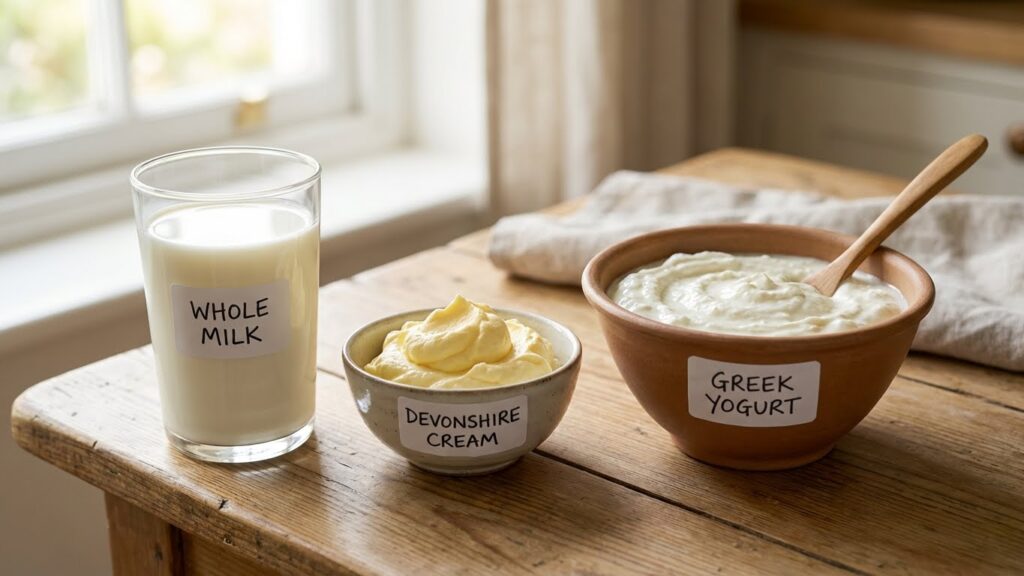
I describe the key traits, textures, and typical uses of each product so you can tell them apart and pick the right one for cooking, baking, or eating. I focus on what they are, how they’re made, and the main differences that matter in the kitchen and for nutrition.
What Is Milk?
Milk is the liquid that mammals produce to feed their young; for human use, cow’s milk is most common.
I look at milk by its basic makeup: water, lactose (milk sugar), proteins (casein and whey), fat, vitamins, and minerals like calcium. Fat level varies by type: whole milk (~3.25% fat), reduced-fat (1–2%), and skim (near 0%). Pasteurization (heat treatment) and homogenization (breaking fat into small droplets) are routine steps to make milk safe and uniform.
I note uses: drinking, pouring on cereal, making cheese, butter, and yogurt. Nutritionally, milk supplies protein, calcium, vitamin D (when fortified), and energy from fat and carbs. Some people avoid milk due to lactose intolerance or milk protein allergy.
What Is Cream?
Cream is the higher-fat layer skimmed from milk or separated by a centrifuge.
I describe common grades by fat content: half-and-half (~10–18%), light cream (~18–30%), and heavy cream or heavy whipping cream (~36–40%). The higher the fat, the richer the texture and the better it whips and stabilizes sauces.
I point out uses: whipping for toppings, enriching soups and sauces, and adding body to desserts. Cream has few carbs and more calories per ounce than milk because of its fat. Many recipes swap cream for milk to add richness, but that increases calories and saturated fat.
What Is Yogurt?
Yogurt forms when milk is fermented by live bacterial cultures, usually Lactobacillus and Streptococcus species.
I explain the process: bacteria consume lactose and produce lactic acid, which thickens the milk and gives yogurt its tang. Yogurt textures vary: drinkable, set, or strained (Greek yogurt), which concentrates protein and reduces lactose and water.
I list common benefits and uses: a protein-rich snack, a base for dressings and dips, and a substitute for sour cream. Plain, unsweetened yogurt retains live cultures that may help digestion for some people. Fat levels and protein content vary by the milk used and whether the yogurt is strained.
Production Processes
I describe how milk moves from farm to bottle, how cream is separated and treated, and how yogurt is made by controlled fermentation. Each step affects fat content, texture, flavor, and safety.
How Milk Is Produced
I start with milking cows using machines that collect milk into cooled bulk tanks at about 4 °C. Farms test milk for antibiotics and bacteria before shipping.
At the dairy plant, I filter and standardize milk to set fat and solids levels. Standardization uses measured blends of skim milk and cream to meet product targets like whole or skim milk.
Next I pasteurize milk—commonly at 72 °C for 15 seconds (HTST)—to kill pathogens while keeping nutrients intact.
Some milk is homogenized to break fat globules and create a uniform texture. Finally I package milk in sterile bottles or cartons and store it refrigerated until distribution.
Cream Separation Methods
I separate cream from milk by centrifugal separation. A cream separator spins milk so lighter fat rises and heavier skim milk moves outward, allowing continuous collection.
Fat content depends on cut points: light cream (~18–30% fat), heavy cream (~36–40% fat). I can adjust fat levels by blending separated cream with skim milk.
Some producers pasteurize cream separately at slightly higher temperatures because cream is richer and more sensitive to spoilage.
For specialty creams, I may also perform microfiltration to reduce bacteria before packaging. Labels reflect processing: pasteurized, ultra-pasteurized (UP), or ultrapasteurized and homogenized.
Yogurt Fermentation Process
I make yogurt by heating milk to about 85–95 °C to denature whey proteins, which helps thicken the final product. After cooling to around 42–45 °C, I add starter cultures—typically Lactobacillus bulgaricus and Streptococcus thermophilus.
I incubate the inoculated milk at that warm temperature for 4–8 hours, monitoring pH until it drops to about 4.5, which gives yogurt its tang and firm texture.
Post-fermentation options include stirring to make set or stirred yogurt, adding fruit or sweeteners, and chilling to stop fermentation.
I may also use stabilizers or nonfat dry milk to adjust body and mouthfeel, and I always package yogurt refrigerated or use heat treatments for shelf-stable varieties.
Nutritional Profiles

I compare milk, cream, and yogurt by their protein, fat, sugar, vitamins, and calories so you can pick the best choice for meals or recipes. The next parts break down macronutrients, key vitamins and minerals, and calorie differences.
Macronutrient Differences
Milk usually provides a balanced mix: about 8 grams of protein, 8 grams of carbs (mostly lactose), and 2–8 grams of fat per 1-cup serving depending on skim, 1%, or whole. Yogurt—especially Greek—often has more protein per cup (10–20 g) because whey is strained out. Yogurt’s carbs vary with added sugars; plain yogurt keeps lactose levels similar to milk.
Cream is the outlier: heavy cream supplies very little protein and almost no carbs, but roughly 5–6 grams of fat per tablespoon (about 50–55% to 36–40% fat by weight for heavy vs light cream). I note that fat type matters: dairy fat includes saturated fat and small amounts of short-chain fatty acids. Choose plain yogurt for protein, milk for balanced macros, and cream when you need richness but not protein.
Vitamins And Minerals Comparison
Milk and yogurt both supply calcium, phosphorus, and B vitamins. A cup of milk or plain yogurt typically gives about 25–30% of the daily calcium need. Yogurt may also deliver live cultures and slightly more bioavailable calcium for some people. Milk is often fortified with vitamin D in the U.S., which helps calcium absorption; check labels. For authoritative guidance on vitamin D and calcium, see the NIH fact pages on calcium and vitamin D.
Cream contains more fat-soluble vitamins like vitamin A but far less calcium per serving compared with milk or yogurt. If you rely on dairy for bone nutrients, I recommend milk or yogurt over cream. Yogurt can also supply potassium and some B12, useful if you reduce meat or seafood.
Caloric Content Overview
Calories track closely with fat content. One cup of whole milk has about 150–160 kcal, 2% milk around 120 kcal, and skim closer to 80–90 kcal. Plain yogurt calories vary: nonfat Greek yogurt can be 90–120 kcal per cup, while full-fat yogurt ranges 150–220 kcal.
Cream is calorie-dense: one tablespoon of heavy cream is ~50 kcal; a 1/4 cup (4 tbsp) adds about 200 kcal. I use these numbers when planning recipes or portion sizes. For accurate product values, consult the USDA FoodData Central database.
Flavor And Texture Differences
I compare milk, cream, and yogurt by how they taste and feel in the mouth. I focus on acidity, fat-driven richness, and thickness because these traits change how you use each dairy.
Taste Profiles Explained
Milk tastes mild and slightly sweet because of lactose. Whole milk has a faint creaminess from 3–4% fat, while skim milk tastes cleaner and less rich.
Cream tastes much richer and sweeter to me because of its high fat (usually 30–40% for heavy cream). That fat carries flavors and gives a lingering mouth-coating sensation. I notice creams can taste buttery or slightly nutty depending on how fresh they are.
Yogurt tastes tangy and acidic. The lactic acid formed by fermentation gives a bright sourness that ranges from gentle (Greek-style) to sharp (plain cultured yogurt). Sweetened or flavored yogurts change that profile, but plain yogurt’s tang is what sets it apart.
Texture Contrasts
Milk is fluid and smooth. It flows easily, mixes into coffee, and hydrates. I don’t expect any body or thickness from milk unless it’s homogenized whole milk, which feels a bit creamier.
Cream is thick and viscous. Whipping cream becomes airy and light; heavy cream coats a spoon and adds silkiness to sauces. Its high fat content creates a rich mouthfeel that clings to foods.
Yogurt ranges from spoonable to gel-like. Set yogurts form a firm custard; stirred or Greek yogurts feel dense and creamy because of straining. I notice yogurt often has a slight graininess from protein structure, which gives it body without fat.
Uses In Cooking And Baking

I focus on how each dairy item changes texture, flavor, and technique in recipes. You’ll see when I choose milk for lightness, cream for richness, or yogurt for tang and moisture.
Milk In Recipes
I use milk when a recipe needs thin liquid, mild dairy flavor, or moisture without extra fat.
In baking, milk hydrates flour, helps form gluten, and adds browning from lactose on the crust. I pick whole milk for richer cakes and 2% or skim for lighter batters and quick breads.
For sauces and soups, milk creates a thinner, pourable base; I thicken it with a roux or slurry if needed.
In custards, milk must heat gently to avoid curdling; I strain it into the egg mixture for smooth results.
For beverages and cereals, milk provides a clean dairy note and mixes easily without overpowering other flavors.
Cream Culinary Applications
I reach for cream when I need thickness, body, or a silky mouthfeel.
Heavy cream (whipping cream) stabilizes whipped toppings and adds loft to mousses and ganaches.
In sauces like Alfredo or béchamel, cream gives a glossy, clingy finish without separating. I simmer gently and reduce to concentrate flavor.
For desserts such as custards, ice cream, and panna cotta, cream delivers a smooth, rich texture and slows ice crystal formation.
I also use cream in coffee and soups when I want a pronounced richness; small amounts change texture more than milk does.
Yogurt Uses In Dishes
I use yogurt for tang, acidity, and moisture while cutting fat.
Greek yogurt adds body to dips, marinades, and baked goods; it holds up well under heat but can curdle if boiled hard.
For baking, I substitute yogurt for part of the fat or liquid to keep crumb moist and add a mild tang; I often use full-fat yogurt for richness.
In sauces and curries, I temper yogurt by warming it slightly and stirring before adding to hot pans to prevent splitting.
I also use plain yogurt in dressings, cold soups, and as a topping where its acidity brightens flavors and helps tenderize meats as a marinade.
Health Impacts
I focus on how milk, cream, and yogurt affect digestion and allergic risk, since those issues matter most when choosing between them. The section below looks at lactose and fermentation effects, and at common milk-related allergens and how products differ.
Digestibility And Lactose Content
I note that yogurt is often easier to digest than milk for people with lactose intolerance. Live cultures in plain yogurt break down lactose during fermentation, lowering the sugar content and producing lactase-like enzymes. This makes many low-lactose or lactose-tolerant consumers feel better after yogurt than after a glass of milk.
Cream contains less lactose by volume because it is the milk fat layer, but it also has fewer of the live bacteria that help digestion. Skim and whole milk retain full lactose amounts unless labeled “lactose-free.” For guidance on lactose intolerance and dairy choices, I use resources like the NIH Lactose Intolerance page and the Cleveland Clinic site to confirm tolerance ranges and testing options.
Potential Allergens
I point out that a milk allergy is an immune reaction to milk proteins, not lactose. Casein and whey proteins cause most allergic responses, and these proteins remain in milk, cream, and yogurt. Fermentation does not remove allergenic proteins, so yogurt can still trigger an allergy even if it is easier on digestion.
Label reading helps avoid reactions: I look for “milk” or specific proteins on ingredient lists. Highly processed cheeses and clarified butter (ghee) may reduce protein content, but they are not safe for everyone with severe milk allergy. For clinical guidance and emergency steps, I rely on authoritative sources such as the Mayo Clinic and the American Academy of Allergy, Asthma & Immunology.
Storage And Shelf Life
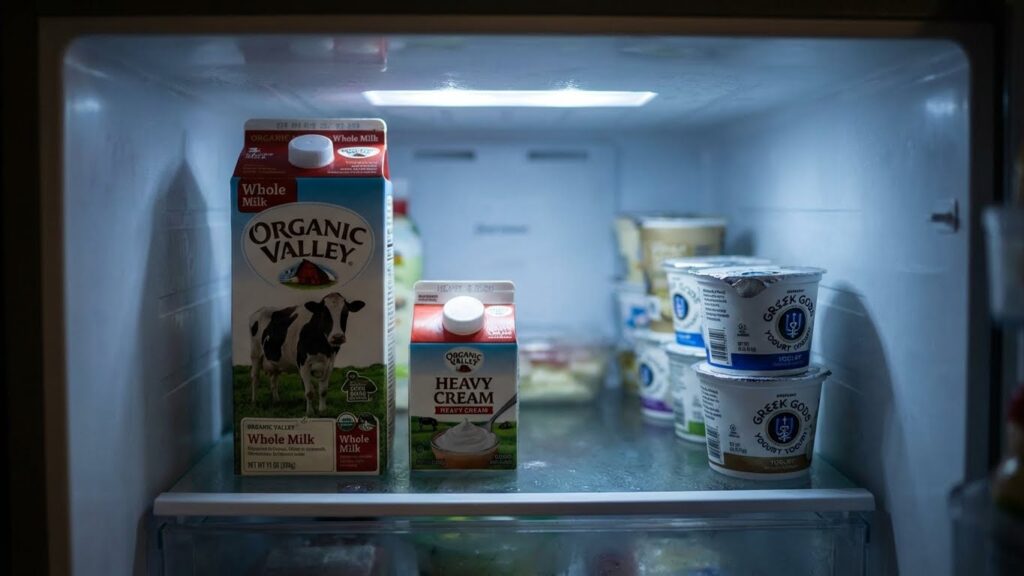
I keep milk, cream, and yogurt cold and sealed to slow bacterial growth. Proper temperature, airtight containers, and knowing how long each lasts help prevent spoilage and waste.
Proper Storage Methods
I store milk at 34–40°F (1–4°C) near the back of the fridge, not in the door. I keep the original container closed and return milk to cold within two hours of use.
I keep cream (heavy, light, and half-and-half) refrigerated at the same temperature range. I close the carton or transfer to a clean, airtight container to avoid absorbing fridge odors.
I store yogurt in its original sealed cup or a tight container. For opened yogurt, I press plastic wrap directly onto the surface or reseal the lid to limit air exposure.
I freeze milk and cream only when necessary. I use freezer-safe containers and leave headspace because liquids expand when frozen. Frozen milk or cream keeps about 1–2 months; thaw in the fridge and shake before using.
Signs Of Spoilage
I check milk for a sour smell and lumps. If milk smells acidic or has curdled texture, I discard it. Visible mold means throw it out immediately.
I watch cream for off smells, a sour taste, or separation that doesn’t mix back when shaken. Small surface mold on cream requires discarding the whole container.
I inspect yogurt for a tangier-than-normal smell, discoloration, or slimy texture. Surface mold on yogurt means I throw away the entire container; do not scoop off mold and eat the rest.
When in doubt, I taste a tiny amount only if smell and appearance seem normal. If it tastes off, I stop and discard.
Global Consumption And Cultural Differences
I focus on how milk, cream, and yogurt fit into daily diets and special dishes across regions. I show which products dominate households, how traditions shape use, and how modern trends shift choices.
Traditional Uses Around The World
I note that northern Europe uses milk, cheese, and yogurt as daily staples. In countries like Sweden and the Netherlands, people drink milk with meals and eat a lot of cheese and yogurt for breakfast or snacks. Butter and cream appear in cooking and baking, but fresh milk and fermented dairy stay central.
In South Asia, I point out that yogurt (dahi) and ghee (clarified butter) are key. Yogurt serves as a side, a cooling ingredient in spicy meals, and a base for sauces. Cream is used in desserts and rich curries, while plain milk is often boiled and sweetened for tea.
In the Middle East and North Africa, strained yogurt and labneh are common. I see cream used sparingly; instead, fermented products appear in breads, dips, and stews. Across Africa and Latin America, local dairy habits vary by climate and pastoral traditions.
Regional Preferences
I describe clear regional differences in volume and form. Europeans consume over 300 kg of milk-equivalents per person each year; that includes fluid milk, cheese, and yogurt. Northern Europe favors fresh milk and cheeses, while southern Europe leans more on cheese and cultured dairy like Greek-style yogurt.
In North America, I observe a split between traditional dairy (milk, cheese, butter) and new products: lactose-free milk, high-protein yogurts, and plant-based alternatives. Americans eat a lot of cheese and use cream in desserts and coffee.
In parts of Asia and the Pacific, lactose intolerance rates affect preference. Fermented dairy like yogurt and paneer gain traction because fermentation reduces lactose. I also note urban consumers worldwide increasingly choose specialty yogurts and creams for flavor and health claims.
FAQs
Can yogurt help digestion?
Some yogurts contain live cultures that can aid gut bacteria. I recommend checking the label for “live and active cultures” if that’s your goal.
Is lactose a problem across these products?
Lactose levels vary. Yogurt often has less lactose because bacteria break some down, so some lactose-intolerant people tolerate it better. Cream and full-fat milk still contain lactose.
How should I choose between them for cooking?
I pick cream for sauces and richness, milk for thinning and baking, and yogurt for tangy dressings or marinades. Each changes texture and flavor in different ways.
Are plant-based versions the same?
Plant milks and yogurts differ in protein, calcium, and vitamins. I check nutrition labels and fortification when I choose a plant-based option.
What about shelf life?
Milk and cream spoil faster than yogurt once opened. I follow use-by dates and smell or taste cautiously if unsure.
Conclusion
I looked at milk, cream, and yogurt to show what makes each one different. Milk is a lighter, versatile option with lower fat and a good balance of protein and calcium. Cream is much higher in fat and works best when I need richness in cooking or baking.
Yogurt gives me protein, probiotics, and a thicker texture from fermentation. Plain yogurt can replace sour cream or add nutrients to meals, while flavored types may add sugars. I can use yogurt for snacks, sauces, or breakfasts when I want both texture and gut-friendly bacteria.
I consider purpose, nutrition, and taste when choosing. For drinking and general cooking, I pick milk. For sauces, desserts, or recipes that need silkiness, I choose cream. For tangy flavor, added protein, or probiotics, I reach for yogurt.
Quick reference:
- Milk: low fat, versatile, good for drinking and baking.
- Cream: high fat, rich, best for texture and flavor.
- Yogurt: fermented, protein-rich, contains probiotics.
I recommend checking labels and servings to match these foods to your needs. Small changes—like swapping cream for milk or plain yogurt for sour cream—can change calories and nutrients without altering the dish too much.