Healthy Cooking Oils Guide – Expert Comparison

You want simple facts that help you pick the best oil for cooking and health. I explain which oils work best for different heat levels, which support heart health, and which to use sparingly. Olive and avocado oil rank highly for everyday use because they combine good fats with heat stability and wide culinary use.
I’m Emma Reed, and I’ll walk you through clear, practical comparisons so you can choose oils that match your meals and health goals. We’ll cover flavor, cooking method, and basic storage tips so you waste less and cook better.
Key Takeways
- Choose oils that match the cooking temperature and flavor you need.
- Favor oils high in monounsaturated fats for general heart health.
- Store oils cool and dark and discard them when they smell off.
Healthy Cooking Oils Guide – Expert Comparison
Understanding Cooking Oils
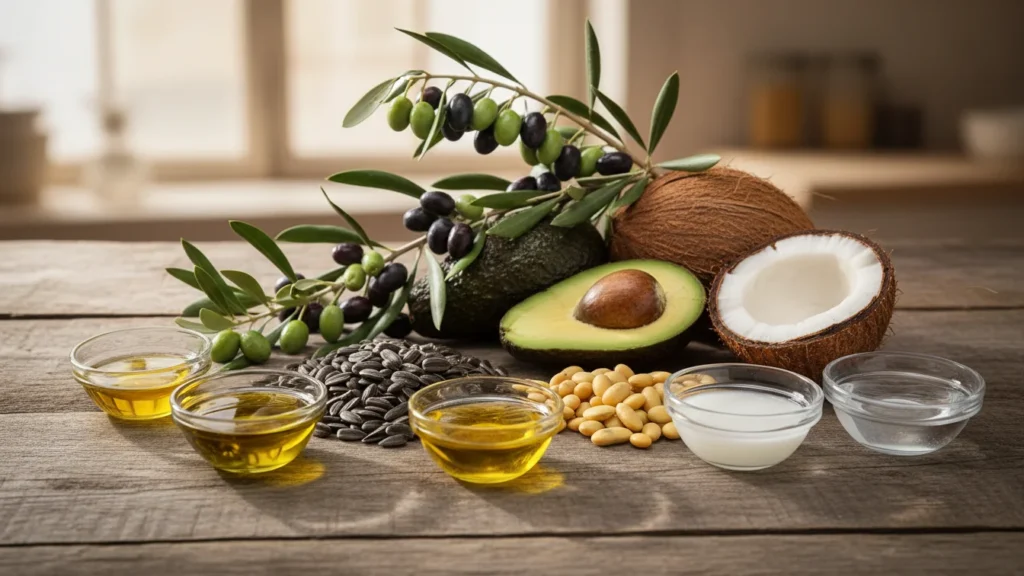
I explain how oils differ by their fats, processing, and cooking limits so you can pick the right oil for health and technique.
What Are Cooking Oils?
Cooking oils are fats extracted from plants or seeds. Common examples include olive, avocado, canola, and coconut oil. I pay attention to their main fat types: monounsaturated, polyunsaturated, and saturated fats. Monounsaturated fats (like in olive and avocado oil) help heart health when they replace saturated fats. Polyunsaturated fats include omega-3 and omega-6, found in flaxseed and soybean oils. Saturated fats are higher in coconut and palm oil and should be used less often.
Oils also carry fat-soluble vitamins and flavor compounds. I consider flavor when choosing an oil for dressings versus frying. For reliable health guidance, I check sources like the American Heart Association for recommendations on fat types and limits.
Refined vs. Unrefined Oils
Refined oils undergo heat, chemicals, or bleaching to remove impurities, odor, and color. That makes them more neutral in taste and often gives them a higher smoke point. I use refined oils for high-heat cooking and when I don’t want oil flavor to change the dish.
Unrefined (or cold-pressed) oils keep more flavor, aroma, and some nutrients. Extra-virgin olive oil is a common unrefined oil valued for flavor and antioxidants. I choose unrefined oils for dressings, drizzling, and low-heat cooking. Note: unrefined oils can spoil faster and may have lower smoke points, so I store them in a cool, dark place and use them sooner.
Smoke Point Explained
Smoke point means the temperature at which an oil starts to smoke and break down. When oil smokes, it creates off-flavors and may form harmful compounds. I pick oils with higher smoke points (like refined avocado or refined peanut oil) for frying and searing.
Lower smoke point oils (extra-virgin olive oil, flaxseed oil) work best for vinaigrettes, low-heat sautéing, or finishing dishes. A quick reference: refined oils often smoke above 400°F (204°C), while many unrefined oils smoke below 375°F (190°C). For detailed smoke point ranges, I consult resources such as the Cleveland Clinic dietetics guides to match oil choice to cooking method.
Key Health Considerations
I focus on how fat types, cooking effects, and essential fats affect heart health and inflammation. These points help you pick oils that keep cholesterol, cooking stability, and nutrient balance in check.
Saturated and Unsaturated Fats
I watch the saturated fat content because it raises LDL cholesterol more than other fats. Oils like coconut and palm are high in saturated fats, so I use them sparingly. Olive, avocado, and canola oils have mostly monounsaturated fats, which help lower LDL and support heart health.
Polyunsaturated fats (PUFAs) include omega-6 and omega-3 types. Vegetable oils such as soybean and sunflower are high in omega-6 PUFAs. I prefer oils with more monounsaturated fats for everyday cooking and save high-PUFA oils for dressings or low-heat uses.
I also check labels for total fat and typical servings. Small switches—like using extra-virgin olive oil for salads and avocado oil for roasting—give a better fat profile without dramatic diet changes.
Trans Fats and Health Risks
I avoid trans fats because they raise LDL and lower HDL cholesterol, increasing heart disease risk. Naturally occurring trans fats in small amounts appear in dairy and meat, but industrial trans fats come from partially hydrogenated oils and are the major concern.
Food labels can still hide small amounts under “0 g” if the serving is tiny, so I scan ingredient lists for “partially hydrogenated” to be safe. Restaurant fried foods and some packaged baked goods are common sources.
If a product claims “trans-fat free,” I still read ingredients and choose whole-food options when possible. Removing industrial trans fats from a diet gives a strong, measurable drop in cardiovascular risk.
Omega-3 and Omega-6 Balance
I pay attention to omega-3 and omega-6 ratios because imbalance can affect inflammation. Most people eat far more omega-6 (from corn, soybean, and sunflower oils) than omega-3, which can tilt the body toward inflammation.
Good sources of omega-3 include flaxseed oil, walnut oil, and fish oil supplements. I use these oils cold or as a supplement because they break down with heat. For cooking, I favor oils that don’t add excess omega-6, like olive or avocado oil.
I aim to increase omega-3 intake and reduce excessive omega-6 by choosing oils and foods with higher omega-3 content or by adding a fish or plant-based omega-3 supplement when my diet needs it.
Top Healthy Cooking Oils Compared
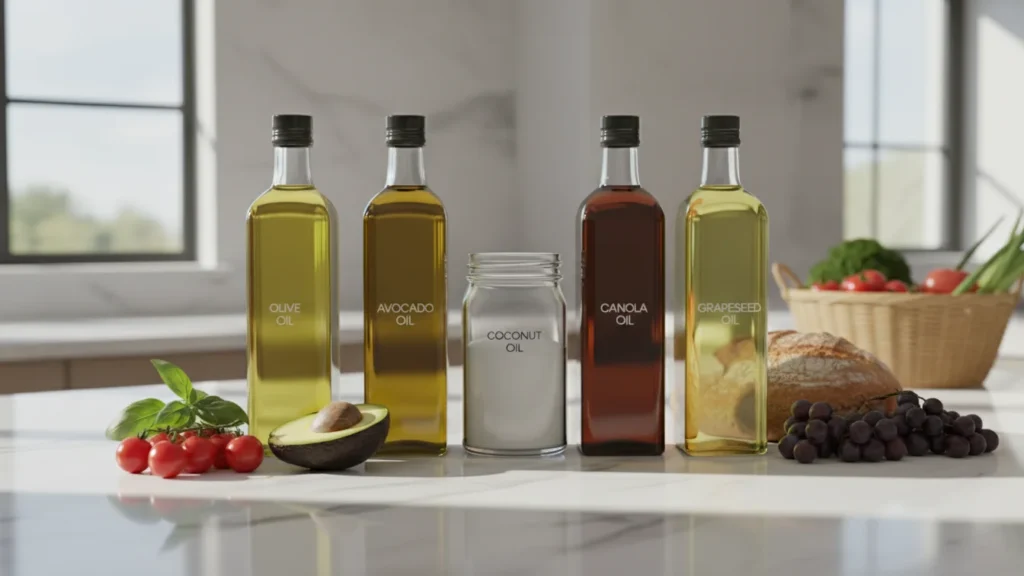
I focus on oils that give good fats, steady cooking performance, and easy pantry use. Each oil below has clear strengths for flavor, heat tolerance, and health.
Extra Virgin Olive Oil
I use extra virgin olive oil for dressings, low-heat sautéing, and finishing dishes. It contains mostly monounsaturated fats and antioxidants like polyphenols that support heart health. A stable smoke point around 375°F (190°C) makes it best for medium heat, not deep frying.
Flavor ranges from mild and buttery to peppery and grassy. For best results, I buy cold-pressed, dark-bottle olive oil and store it away from heat and light. Trusted sources like the American Heart Association discuss its heart benefits and use in a Mediterranean-style diet. I recommend checking the label for harvest date and “extra virgin” certification to avoid blends.
Avocado Oil
I reach for avocado oil when I need a neutral taste plus a high smoke point. Refined avocado oil often smokes around 500°F (260°C), which suits stir-frying, searing, and roasting. It also has a high level of monounsaturated fats and vitamin E.
Unrefined avocado oil keeps more flavor and nutrients but has a lower smoke point. I choose refined for high-heat cooking and cold-pressed for salads. If you want reliable nutrition guidance, the USDA FoodData Central offers detailed nutrient profiles for different oils. Store avocado oil in a cool, dark place and use within its best-by date to avoid rancidity.
Coconut Oil
I use coconut oil for baking and for recipes that benefit from a light coconut flavor. It is high in saturated fat, so I limit its use rather than rely on it daily. Virgin coconut oil has a distinct aroma and flavor, while refined (or RBD) coconut oil has a milder taste and higher smoke point near 400°F (204°C).
Coconut oil can work well in certain baked goods and some high-heat applications, but I balance it with oils higher in unsaturated fats. When choosing coconut oil, I check whether it is virgin or refined based on flavor needs and look for minimal processing to retain nutrients.
Nutrient Profiles of Popular Oils
I focus on the fats, key vitamins, and smoke-point behavior that matter when you cook or choose oils for health. That means looking at saturated vs. unsaturated fat, omega-3/omega-6 balance, vitamin content, and typical uses for each oil.
Canola Oil
I choose canola for its low saturated fat and useful omega-3 content. Per tablespoon it has about 2 g saturated fat, 7 g monounsaturated fat, and 1 g omega-3 (alpha-linolenic acid). That omega-3 amount is higher than most common cooking oils, which helps improve the omega-6 to omega-3 ratio in meals.
Canola is often refined and has a neutral flavor, so I use it for frying, baking, and salad dressings when I want mild taste and a medium-high smoke point (around 400°F / 204°C for refined). It contains little vitamin E compared with some oils, so it’s not a major vitamin source.
I avoid overheating unrefined canola because heat can break down delicate fatty acids. For high-heat deep frying, I prefer refined versions labeled with a smoke-point value.
Grapeseed Oil
I pick grapeseed for its light flavor and high polyunsaturated fat content. A tablespoon typically has about 10 g polyunsaturated fat, mostly omega-6 (linoleic acid), with very little omega-3. That makes it useful for texture and mouthfeel but can increase omega-6 intake if used excessively.
Grapeseed has a relatively high smoke point (about 420°F / 216°C when refined), so I use it for sautéing, searing, and some frying. It also works well in vinaigrettes because it doesn’t overpower other flavors.
Grapeseed contains modest amounts of vitamin E as an antioxidant. I limit its use when I cook many omega-6–rich foods in the same meal to keep a better balance of essential fats.
Sunflower Oil
I choose sunflower oil mainly for its vitamin E and for specific fatty acid varieties. Common types include high-linoleic (high in omega-6) and high-oleic (high in monounsaturated fat). High-oleic sunflower oil has about 9–10 g monounsaturated fat per tablespoon and much lower polyunsaturated fat, which makes it more stable at high heat.
Refined sunflower oil often has a high smoke point (about 440°F / 227°C for high-oleic), so I use it for deep frying and roasting. It provides a significant amount of vitamin E, roughly 5–7 mg per tablespoon, which helps protect oils from oxidation and adds dietary antioxidant value.
I avoid using high-linoleic sunflower oil as the only oil in my diet because it raises omega-6 intake. Instead, I rotate it with high-oleic or monounsaturated-rich oils to keep a healthier fat balance.
Best Oils for Different Cooking Methods
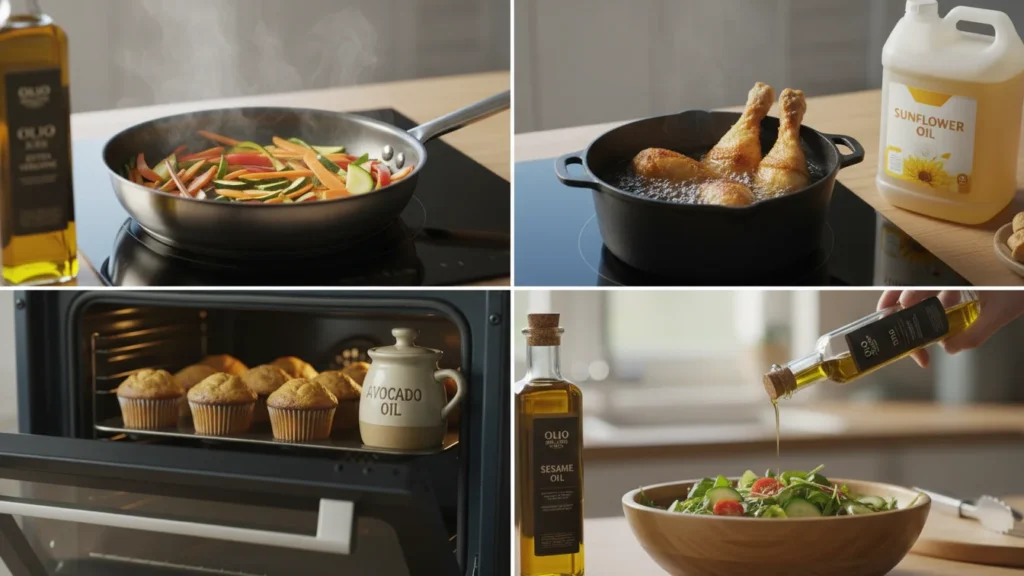
I pick oils based on smoke point, flavor, and how the oil holds up under heat. Below I show which oils work best for common methods and why.
Sautéing and Stir-Frying
For quick pans and high-heat tosses I favor oils with moderate to high smoke points and neutral to mild flavor. Avocado oil (refined) has a smoke point around 500°F, making it excellent for fast stir-fries without adding strong taste. Light or refined olive oil works well for sautéing at medium-high heat and gives a subtle fruitiness; I avoid extra-virgin olive oil at very high heat to protect its antioxidants.
Use a thin layer of oil and preheat the pan so food sears, not stews. If I want a flavor boost, I add a splash of extra-virgin olive oil off the heat after cooking. For safety and technique tips on handling high-heat oils, I reference guidance from the American Heart Association.
Deep Frying
Deep frying needs oil that stays stable at very high temperatures and resists breaking down. I choose oils with high smoke points and neutral taste: refined peanut, refined sunflower, refined avocado, or canola oil are good options. These oils handle 350–375°F typical frying temps without creating off-flavors.
I monitor oil temperature with a thermometer and avoid overcrowding the fryer to keep the oil from dropping too low. I change oil when it darkens or smells off. For safety and food-quality standards, I often consult resources from the USDA on frying best practices.
Baking
Baking favors oils that blend smoothly and add moisture without overpowering flavor. I use light olive oil, canola oil, or avocado oil for cakes, muffins, and quick breads because they keep crumb tender and tolerate moderate oven temps. For recipes that need a richer flavor, like some quick breads or brownies, I use extra-virgin olive oil sparingly to add fruity notes.
Measure oil with the same care as butter or shortening to keep texture consistent. I sometimes swap half the butter with oil to reduce saturated fat while keeping moisture. For conversions and tips on substituting oils in baked goods, I check guidelines from reliable baking resources.
Flavor and Culinary Uses
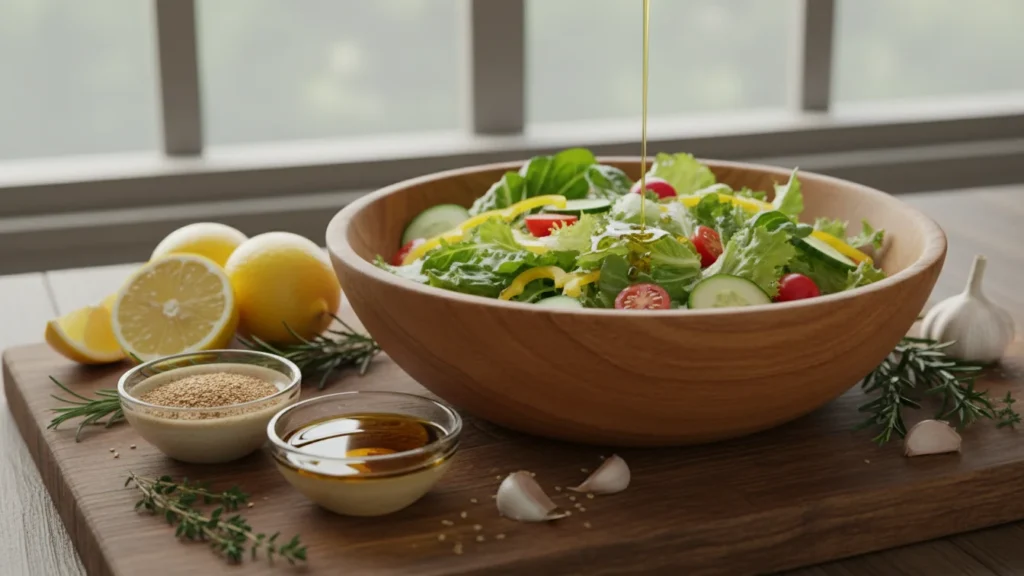
I focus on which oils bring the right taste and texture to a dish and when to use them for best results. I pick oils based on smoke point, flavor strength, and whether the oil will be heated or used raw.
Dressings and Marinades
I prefer extra-virgin olive oil for dressings because its fruity, peppery notes add depth to salads and cold sauces. It blends well with lemon, vinegar, mustard, and herbs. Use 2–3 tablespoons of olive oil per vinaigrette and whisk until emulsified for a smooth mouthfeel.
If I want a neutral base, I choose light-tasting oils like avocado or refined canola. These let acidic and spicy ingredients stand out without adding strong flavor. For Asian-style marinades, toasted sesame oil gives a clear nutty aroma; use it sparingly, usually a teaspoon to a tablespoon.
For marinades that will be cooked, I pick oils with higher smoke points—avocado or refined grapeseed—so flavors infuse without burning. I always taste and adjust salt, acid, and sweetness after the oil to balance the final dish.
Finishing Oils
I use finishing oils to add aroma and a final flavor boost, not for cooking. Extra-virgin olive oil drizzled over roasted vegetables or soup brings a fruity, slightly bitter finish that many people find satisfying.
Truffle oil and toasted sesame oil work as strong finishers; a few drops go a long way. I recommend warming the oil slightly in your hand first to release aroma, then add it right before serving.
For delicate dishes like grilled fish, I choose mild oils such as cold-pressed avocado or walnut oil to add richness without overpowering the main ingredient. I store finishing oils in a cool, dark place to keep their flavors fresh.
Sustainability and Sourcing Considerations
I focus on the real trade-offs between land use, emissions, and social practices when picking cooking oils. I highlight which oils often cause the biggest environmental harm and which labels can help you choose better.
Environmental Impact
I look at the main environmental harms tied to oil crops: deforestation, greenhouse gases, and water use. Palm oil is the top concern because large-scale plantations have cleared tropical forests, reducing biodiversity and releasing carbon. Soybean and sunflower expansion also drives land conversion in parts of South America and Eastern Europe.
Smaller-scale impacts matter too. Olive oil production can cause soil erosion if orchards are poorly managed, while almond oil (and other nut oils) uses high volumes of water in dry regions. I check life-cycle studies for greenhouse gas data and often point readers to resources like the FAO or peer-reviewed reviews for country-level details (see FAO on oilseed crops).
To reduce impact, I suggest choosing oils produced on existing agricultural land, those with verified landscape-restoration practices, or oils with certification that tracks deforestation risk. I also recommend using oils sparingly and recycling fryer oil where local programs exist.
Organic and Non-GMO Options
I explain what organic and non-GMO labels mean for cooking oils and what they do not guarantee. Organic certification limits synthetic pesticides and fertilizers, which can lower chemical runoff and protect soil life. It also often implies more careful land management, but organic does not automatically mean low carbon or low water use. Non-GMO labeling only confirms the crop variety and does not address farming practices or habitat loss.
When I evaluate brands, I look for third-party seals like USDA Organic or equivalent national certifiers and check whether the producer provides traceability back to the farm. For palm oil, I prefer oils with Roundtable on Sustainable Palm Oil (RSPO) mass-balance or better claims and transparent sourcing. For more on certification differences, I reference reliable guides such as the Environmental Working Group.
If you want lower risk, I advise prioritizing certified organic oils from regions with strong land-protection laws, and to favor locally grown oils when available to cut transport-related emissions.
How to Store Cooking Oils

I store oils in a cool, dark place to keep them fresh. Light and heat speed up rancidity, so I keep bottles away from the stove and out of direct sunlight.
I use dark glass or metal containers when possible. Clear plastic and glass let light through, which can harm oil quality. If the oil came in a clear bottle, I transfer it to a dark container.
I follow best-by dates and smell oils before use. Rancid oil smells sharp, stale, or soapy. If an oil smells off, I discard it rather than risk bad flavor or health effects.
I refrigerate nut and seed oils like flax or sesame to extend shelf life. Most common cooking oils (olive, avocado, canola) do fine at room temperature in a cool cabinet. The USDA and other food-safety sites offer helpful storage advice for oils and other fats: https://www.usda.gov and https://www.fda.gov.
I buy oils in sizes I can use within a few months. Smaller bottles reduce the time oil spends open to air. Oxygen also speeds spoilage, so I close caps tightly after each use.
I label opened bottles with the date I opened them. That simple habit helps me track freshness and avoid using old oil by mistake.
Signs of Oil Degradation
I check oil first by smell. Fresh oil has a neutral or mild scent, while degraded oil smells sour, bitter, or like old paint. If the scent seems off, I toss it.
I look at color and clarity. Many oils darken or become cloudy when they break down. Tiny particles or foam on the surface also tell me the oil has been used too long.
I pay attention to taste when safe to do so. Stale or bitter flavors mean the oil has oxidized and will ruin food. I only taste a small amount and discard any oil that tastes wrong.
I watch how the oil behaves when heated. If it smokes at lower temperatures than usual or bubbles excessively, that signals breakdown. Smoke can release harmful compounds, so I stop using an oil that smokes early.
I keep a short checklist to decide quickly:
- Smell: sour, bitter, or chemical
- Look: cloudy, darkened, particles, or foam
- Taste: stale or unpleasant
- Heat: low smoke point or excessive bubbling
I also follow basic storage rules to slow degradation: keep oil in a cool, dark place, seal the bottle, and use within the recommended time. When in doubt, I replace the oil—it’s cheaper than risking food quality or health.
FAQs
I often get asked which oil is best for everyday cooking. I recommend extra-virgin olive oil for low- to medium-heat use because it has heart-healthy fats and antioxidants. For high-heat cooking, I choose avocado oil or refined light olive oil for their higher smoke points.
What about coconut or butter?
I use them sparingly. Coconut oil is high in saturated fat, so I limit its use. Butter adds flavor but I watch portion sizes and use it mostly off heat or for low-heat cooking.
How do I store oils to keep them fresh?
I keep oils in a cool, dark place away from heat and light. I refrigerate flaxseed oil and use it within a short time, since it spoils fast.
Can I mix oils for cooking and flavor?
Yes. I mix a high-smoke-point oil for cooking with a small amount of extra-virgin olive oil for flavor after cooking. This balances function and taste without lowering the smoke point during cooking.
Are processed vegetable oils bad?
I avoid highly processed oil blends if possible. They can contain more omega-6 fats and fewer nutrients. I prefer single-ingredient oils with clear labels.
How much oil should I use daily?
I aim for moderation. A tablespoon or two daily fits most healthy diets, depending on calorie needs and other fats you eat.
Conclusion
I recommend choosing oils based on the type of cooking and your health goals. For everyday low-heat uses and salads, I pick olive oil for its heart-healthy fats and antioxidants. For high-heat cooking, I use avocado or refined light olive oil because they handle heat better.
I avoid oils high in trans fats or very high in saturated fat for frequent use. I also limit reheating oils repeatedly since that raises harmful oxidation products. A small change—like swapping butter for a healthier oil—can add up over time.
I keep a few bottles on hand so I can match oil to the task: extra-virgin olive for dressings, avocado for searing, and a neutral oil with a higher smoke point for frying. I store oils in cool, dark places and check best-by dates to keep flavors and nutrients intact.
Key points to remember:
- Use oils high in monounsaturated or omega-3 fats when possible.
- Match smoke point to cooking method.
- Limit heavily processed and hydrogenated oils.
I aim for simple, steady habits rather than strict rules. Small, consistent choices make cooking healthier and easier to maintain.