
If you’re short on eggs or cooking for someone with an allergy, you don’t have to stop making your favorite dishes. I’ll show practical swaps that work in most cooking situations, from binding and moisture to lightening pancakes and scrambles. Applesauce, mashed banana, silken tofu, and pantry mixes like flax or chia gel are reliable go-to options depending on whether you need moisture, binding, or structure.
I run this site with Emma Reed’s recipes and testing notes guiding our choices, so you get tips I’ve tried in real kitchens. Expect clear guidance on which substitute to use for common recipes and simple tricks to make the swap without ruining texture or flavor.
Key Takeaways
- Choose substitutes based on the role eggs play in the recipe.
- Simple pantry ingredients often work as well as commercial egg replacers.
- Test small batches to match texture and flavor before scaling up.
Contents
- 1 Understanding Egg Substitutes
- 2 Best Plant-Based Egg Substitutes for Cooking
- 3 Commercial Egg Replacement Products
- 4 Dairy and Protein-Based Substitutes
- 5 Egg Substitutes for Specific Cooking Needs
- 6 Tips for Using Egg Substitutes Effectively
- 7 Nutritional Comparison of Egg Substitutes
- 8 Choosing the Right Substitute for Your Recipe
- 9 Storing and Sourcing Egg Substitutes
- 10 FAQs
- 11 Conclusion
Understanding Egg Substitutes

I explain why cooks swap eggs, what eggs do in recipes, and the main categories of replacements you can use. This helps you pick the right substitute for binding, leavening, moisture, or structure.
Why Use Egg Substitutes
I choose egg substitutes for several clear reasons: allergies, vegan diets, cost, or running out of eggs. Allergies to egg proteins require a safe swap that won’t trigger reactions. Vegans avoid animal products and need plant-based options that mimic eggs’ roles.
Sometimes I replace eggs to change flavor or texture, like using applesauce to add moisture without egg taste. Other times I need a specific function — for example, aquafaba can mimic whipped egg whites for meringues. Practical reasons matter too: shelf life, pantry staples, or lower cholesterol influence my choice.
Common Functions of Eggs in Cooking
Eggs act as binders, leaveners, thickeners, and emulsifiers. As a binder, egg proteins hold ingredients together in meatloaf or burgers. As a leavener, beaten whites trap air to lift cakes and soufflés. As a thickener, yolks enrich custards and sauces. As an emulsifier, yolks stabilize mixtures like mayonnaise.
When I pick a substitute, I match the egg’s role. For binding, I use mashed banana, flaxseed, or silken tofu. For leavening, I turn to baking powder plus vinegar or whipped aquafaba. For emulsifying, I use mustard or commercial vegan lecithin. Knowing the function guides the right swap.
Types of Egg Substitutes
I group substitutes into plant-based, pantry starches, aquafaba, and commercial egg replacers. Plant-based options include mashed banana, applesauce, and silken tofu; they add moisture and binding. Flax and chia “eggs” (1 tbsp ground seed + 3 tbsp water) gel and bind well in baked goods.
Pantry starches like cornstarch, arrowroot, or mashed potato work as thickeners and binders in batters and fillings. Aquafaba (chickpea liquid) whips like egg whites and suits meringues, mousses, and macarons. Commercial egg replacers use starches and leavening to imitate eggs in cakes and cookies.
I list typical swaps and their common uses:
- Flax/chia egg — binding in muffins, pancakes.
- Applesauce/mashed banana — moisture in cakes, quick breads.
- Silken tofu — custards, dense cakes, vegan quiches.
- Vinegar + baking powder — leavening in cakes.
- Aquafaba — whipping for meringues and mousses.
- Commercial replacer — general baking when structure matters.
Choose the type that matches the egg’s job in your recipe for best results.
Best Plant-Based Egg Substitutes for Cooking
I use a few reliable plant-based swaps that work well in most savory and simple baked dishes. Each option below explains texture, binding power, ratios, and the best recipes to try them in.
Flaxseed Meal
Flaxseed meal makes a sticky gel that binds like an egg in pancakes, muffins, and veggie burgers. Mix 1 tablespoon ground flaxseed with 3 tablespoons warm water, let sit 5–10 minutes until thickened, then add to your batter or mix. I find it gives a slight nutty flavor and darker color, so I avoid it in light-colored cakes.
Flax is best when you need binding and mild moisture, not when you need strong leavening. Store ground flax in the fridge to keep oils fresh. For background on nutrition and uses, see this USDA overview and recipe ideas from a trusted baking site.
Chia Seeds
Chia seeds form a gelatinous gel similar to flax when combined with water. Use 1 tablespoon chia seeds to 3 tablespoons water; let them sit 10–15 minutes to fully gel. I prefer chia in pancakes, cookies, and quick breads because it adds moisture and a subtle crunch if seeds remain whole.
Chia works well as an egg replacer for binding and moisture but won’t add much rise. If texture matters, grind the seeds first. Chia also boosts fiber and omega-3s; you can read more about chia’s properties at a clinical nutrition resource.
Applesauce
Unsweetened applesauce adds moisture and mild sweetness, making it ideal for cakes, muffins, and brownies. Substitute 1/4 cup applesauce per egg. I use it when I want tender crumbs and lower fat content, but I skip it in recipes that need eggs for structure, like custards or meringues.
Applesauce can reduce the need for oil, so expect slightly denser results. Use unsweetened to control sugar. For recipe swaps and tips, reliable baking guides list common proportions and texture notes.
Silken Tofu
Silken tofu blends into a smooth, creamy binder that mimics eggs in quiches, custards, and dense cakes. Puree 1/4 cup silken tofu to replace one egg. I use it in savory dishes like tofu scrambles and in cheesecakes because it adds body without a noticeable flavor.
Tofu won’t aerate batter, so it’s not ideal for light sponge cakes. Pressing is unnecessary for silken tofu, but use extra-soft for silky textures and soft-silken for firmer results. For technique and recipe examples, check a reputable plant-based cooking site.
Commercial Egg Replacement Products

I choose commercial egg replacers when I need consistent results fast. These products come in powders, ready-to-use liquids, or plant-based blends, and each type works better in certain recipes.
Powdered Egg Replacers
Powdered replacers are dry mixes that I rehydrate with water or oil to mimic eggs. Brands often include starches, leavening agents, and protein-like binders. I like them for baking because they provide predictable rise and structure in cakes, muffins, and cookies.
Use: follow package ratios (typically 1–2 tablespoons powder + 2–3 tablespoons water per egg).
Pros: long shelf life, cheap, easy to store.
Cons: can taste slightly processed and may not brown like real eggs.
Tip: keep one for emergency baking. It works especially well in recipes where eggs mainly act as a binder or leavening agent, not where eggs add richness or glossy texture.
Liquid Egg Replacements
Liquid egg replacements arrive ready to pour and save prep time. They often target scrambled eggs, omelets, and some baking uses. I find them useful when I want egg-like texture without cracking shells.
Most products are made from egg whites or plant proteins dissolved in water.
Use: swap 1:1 for whole eggs in savory dishes or for recipes that call for beaten eggs.
Pros: fast, consistent texture, good for scrambling or custard-like preparations.
Cons: limited shelf life once opened, some varieties lack yolk-like richness.
Tip: check labels for added thickeners or sodium if you watch your diet. For baking, test one recipe first to confirm texture and flavor.
Vegan Egg Alternatives
Vegan egg products aim to reproduce both texture and function using plants. I use aquafaba, mung bean-based liquids, or commercial vegan mixes depending on the job. These alternatives can whip, bind, or create a custard feel.
Examples: aquafaba (chickpea brine) foams for meringues; mung bean mixes scramble like eggs; commercial vegan egg powders combine starches and proteins for baking.
Use: choose by function—whipping, binding, or scrambling—and follow the specific conversion on the package or recipe.
Pros: allergen-friendly, often lower in cholesterol, versatile.
Cons: variable performance across brands; some need recipe tweaks.
Tip: for glossy or rich results, combine a vegan replacer with a little oil or plant milk to boost mouthfeel.
Dairy and Protein-Based Substitutes
I recommend dairy or high-protein swaps when you want structure, moisture, or extra protein in a recipe. These options work best in baked goods and cooked dishes where a binding or creamy texture matters.
Greek Yogurt
I use Greek yogurt for binding and moisture in muffins, pancakes, and quick breads. Use plain, full-fat yogurt for best texture; it adds tenderness and a slight tang. Replace one egg with 1/4 cup (60 g) of Greek yogurt in batters.
Greek yogurt also helps when a recipe needs lift and moisture but not strong egg structure, so combine it with a little baking powder if extra rise is needed. For savory recipes like quiches, use 1/3 cup to replace an egg and add salt or herbs to balance flavor.
If a recipe calls for multiple eggs, add 1 tablespoon of cornstarch per 1/4 cup of yogurt to improve binding. Avoid using highly flavored or sweetened yogurts unless you adjust sugar in the recipe.
Buttermilk
I turn to buttermilk when I want a tender crumb and mild rise in cakes and pancakes. Replace one egg with 1/4 cup (60 ml) buttermilk plus 1 teaspoon of baking powder to help with lift. The acidity of buttermilk reacts with baking soda for extra rise and a soft texture.
Buttermilk adds moisture and a gentle tang that brightens baked goods without making them heavy. For savory batters and dressings, it improves mouthfeel and helps coat ingredients evenly. If you lack buttermilk, make a substitute by stirring 1 tablespoon of lemon juice or vinegar into 1 cup of milk and letting it sit for 5 minutes.
Cottage Cheese
I use cottage cheese to add protein, creaminess, and body to pancakes, certain quick breads, and savory bakes. For a smoother texture, blend low-sodium cottage cheese until silky before adding it to the batter. Replace one egg with 3 tablespoons of blended cottage cheese.
Cottage cheese supplies moisture and structure but fewer binding properties than eggs, so I often mix it with 1 teaspoon of flour or a small amount of xanthan gum when I need stronger cohesion. It works well in recipes where a mild dairy flavor fits, like blintzes, savory muffins, and some custard-style bakes.
Egg Substitutes for Specific Cooking Needs
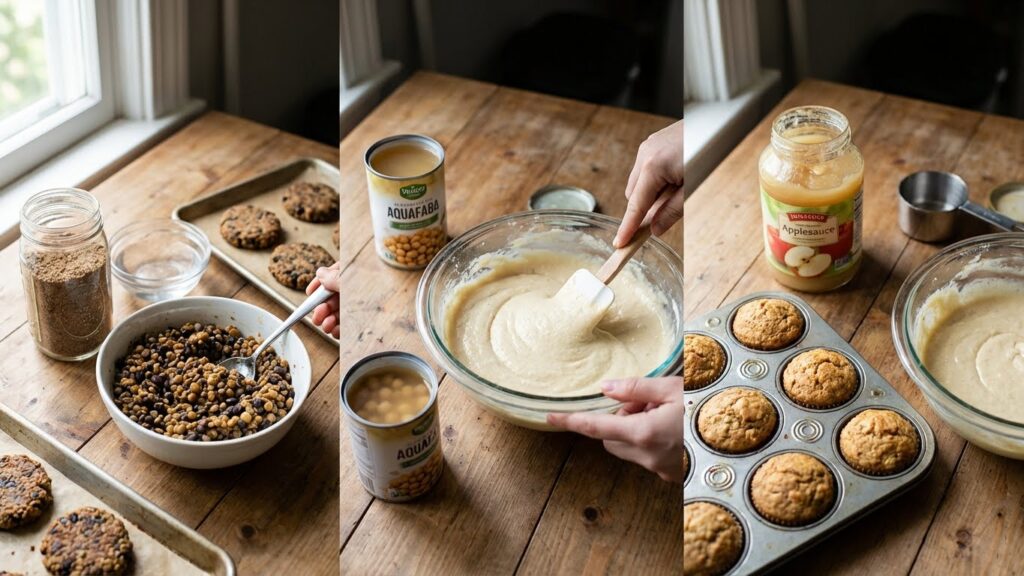
I pick substitutes based on the role the egg plays: binding, lifting, or adding moisture. Below I list practical swaps and how to use them for reliable results.
Binding in Savory Dishes
For meatballs, fritters, and veggie burgers I use flaxseed or chia egg because they hold ingredients together and add a little texture. Mix 1 tablespoon ground flaxseed or chia seeds with 3 tablespoons water, let sit 5–10 minutes until gelled. That replaces one whole egg.
Silken tofu works well when I want a neutral flavor and dense binding. Use 1/4 cup blended silken tofu per egg; it firms up as it cooks. For breadcrumb-heavy mixes, I sometimes add a tablespoon of plain yogurt or mashed potato to improve cohesion.
If you need a low-allergen option, commercial egg replacers (like Ener-G) provide consistent binding without changing flavor. For tips on handling tofu and seeds, I consult resources like the USDA’s food safety pages and recipe guides from reliable culinary sites.
Leavening for Baked Goods
When lift matters—cakes, pancakes, quick breads—I choose aquafaba or carbonated water. Aquafaba (liquid from canned chickpeas) whips similarly to egg whites; use 3 tablespoons aquafaba per egg. It can be beaten into soft peaks for meringue-like structure in mousses or soufflés.
Carbonated water replaces beaten whites in some batters. Substitute 1/4 cup sparkling water per egg and fold gently to keep bubbles. I also use baking powder with an extra liquid if a recipe calls for eggs mainly for rise: add 1/2 teaspoon baking powder plus 2 tablespoons liquid per egg removed.
For standardized guidance on aquafaba and whipping techniques, I refer to trusted culinary science resources and tested recipe sites.
Moisture in Cakes and Muffins
For tender cakes and moist muffins I use applesauce, mashed banana, or yogurt. Use 1/4 cup unsweetened applesauce or 1/4 cup mashed ripe banana per egg; both add moisture and a bit of sweetness. Plain yogurt or buttermilk (1/4 cup) adds richness and keeps crumbs soft.
When I want neutral flavor and extra fat, I add 3 tablespoons vegetable oil plus 2 tablespoons water for each egg replaced. For denser but moist texture, silken tofu (1/4 cup) blends smoothly into batter. I check baking times and toothpick tests because these swaps can change browning and bake time.
For detailed ratios and troubleshooting, I consult baking guides and ingredient science articles from established food publications.
Tips for Using Egg Substitutes Effectively
I focus on the exact amounts, mixing steps, and fixes that make egg substitutes work well in baking and cooking. Use the right substitute for the role eggs play—binding, leavening, or adding moisture—and adjust wet and dry ingredients as needed.
Measuring and Mixing Substitutes
I measure substitutes precisely because small changes affect texture. For single eggs, I use: 1 tablespoon ground flax or chia + 3 tablespoons water (let sit 5–10 minutes), 1/4 cup applesauce, 1/4 cup mashed banana, or 3 tablespoons aquafaba. For silken tofu, I blend 1/4 cup until smooth.
I mix wet substitutes into other wet ingredients first. That helps even distribution and prevents clumps. For gelatinous mixes like flax or chia, I make them ahead so they fully gel. For aquafaba, I whisk it like an egg white only if the recipe needs loft.
I weigh ingredients when possible. Grams give more reliable results than cups, especially for flours and sugar. When a recipe calls for beaten eggs, use a whipping-friendly substitute (aquafaba or commercial egg replacer) rather than applesauce or banana.
Adapting Recipes
I identify the egg’s job in the recipe first. If eggs are for rising, I choose baking powder with a foamy substitute or aquafaba. If eggs bind, I pick flax, chia, or mashed banana. If eggs add richness, I use yogurt, silken tofu, or mashed avocado.
I reduce other liquids slightly when using moist substitutes. For example, cut 1–2 tablespoons of liquid when adding 1/4 cup applesauce. I also increase leavening by 1/4–1/2 teaspoon baking powder for dense cakes or quick breads when eggs are omitted.
I test on small batches. If cookies spread too much, chill the dough longer. If muffins collapse, add an extra 1/4 teaspoon of baking powder or use aquafaba for more lift. I keep notes on successful swaps so I can repeat or tweak them later.
Troubleshooting Common Issues
If baked goods are dense, I check the substitute choice and leavening. Dense results often mean I used a binding substitute (flax) when the recipe needed lift. I swap to aquafaba or add 1/4–1/2 teaspoon baking powder next time.
If items are too wet or gummy, I reduce added liquids by 1–2 tablespoons or increase flour by 5–10 grams. With rubbery texture (common with silken tofu), I blend more thoroughly or use a different substitute for recipes needing light crumb.
If flavor is off—banana or applesauce can change taste—I use neutral options like silken tofu, aquafaba, or a commercial egg replacer. For dark crust or excess browning, I lower oven temperature by 10–15°F (5–8°C) and bake longer to avoid burnt edges while keeping the center cooked.
Nutritional Comparison of Egg Substitutes
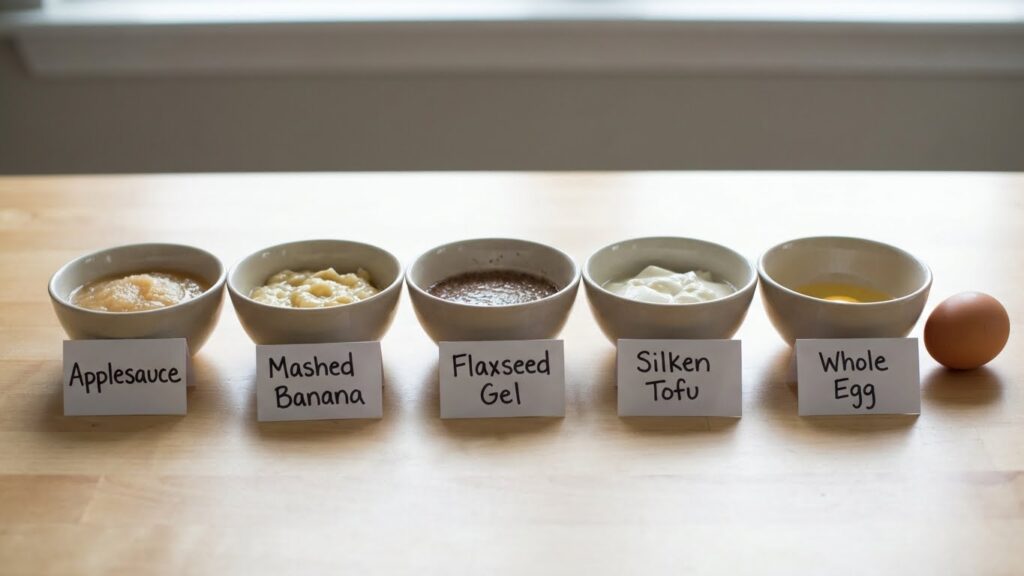
I compare calories, protein, and allergy risks so you can pick substitutes that match your diet and recipe needs. The options range from fruit purees to soy and seed-based choices, each with different nutrition and uses.
Calorie Differences
Different substitutes vary a lot in calories. For baking, 1/4 cup applesauce has about 50 calories, while 1/4 cup mashed banana runs near 60–65 calories. Both add moisture but also sweetness, so I count those calories when planning desserts.
Silken tofu provides about 45–55 calories per 1/4 cup and works well where creaminess or density matters. Commercial egg replacers and chia or flax “eggs” typically add 20–40 calories per serving, keeping overall calories lower than whole eggs (about 70 calories each).
I check labels on store-brand egg replacers; some add starches or sugar that raise calories. For precise counts, I use USDA FoodData Central or the manufacturer’s nutrition facts to match recipes to my calorie goals.
Protein Content
Protein varies the most between options. A large egg gives about 6–7 grams of protein, which most plant substitutes don’t match. Silken tofu gives roughly 3–4 grams per 1/4 cup, so it helps boost protein in baked goods or scrambles.
Chia and flax add about 1–2 grams per egg-equivalent; they work mainly as binders rather than protein sources. Commercial egg replacers are usually low in protein, often under 1 gram per serving. If I need protein, I choose tofu, chickpea flour (about 6 grams per 1/4 cup cooked), or add a scoop of protein powder suited to baking.
For recipes where protein matters—like pancakes or quiches—I swap in chickpea flour or tofu and adjust liquid. The USDA FoodData Central database helps me compare exact protein numbers when I adjust portions.
Allergen Information
Allergy risk guides my choices. Eggs are a common allergen, so people often use flax, chia, applesauce, or banana to avoid reactions. I avoid soy-based silken tofu if I or guests have soy allergies.
Commercial egg replacers are usually free of eggs and dairy, but I read labels for wheat or soy ingredients. Chickpea flour is often safe for those avoiding eggs and dairy but can trigger legume allergies in some people.
Cross-contact matters: I use clean utensils and surfaces when serving someone with severe allergies. For reliable allergen guidance, I consult resources like Food Allergy Research & Education (FARE) and product labels before choosing a substitute.
Choosing the Right Substitute for Your Recipe
I first look at what the egg does in the recipe: binding, leavening, moisture, or thickening. That guides my choice and often decides whether a pantry swap will work.
For binding (cookies, meatballs, veggie burgers) I reach for flax or chia “eggs” or mashed avocado. They hold ingredients together well but can change texture and flavor slightly.
When I need leavening (cakes, quick breads, muffins) I use baking powder plus a liquid or whipped aquafaba. These add lift but may not give the same richness as whole eggs.
For moisture (brownies, pancakes, muffins) applesauce, mashed banana, or yogurt work best. They keep baked goods soft but add sweetness or tang, so I adjust sugar or spices.
For thickening (custards, sauces, some batters) silken tofu, cornstarch slurry, or blended cooked potato can do the job. These give a smooth texture without adding egg flavor.
Quick reference:
- Binding: flax/chia egg (1 tbsp seeds + 3 tbsp water = 1 egg)
- Leavening: 1 tsp baking powder + 1 tbsp oil + 2 tbsp water ≈ 1 egg
- Moisture: 1/4 cup applesauce or mashed banana = 1 egg
- Thickening: 1/4 cup silken tofu = 1 egg
I always test small batches when trying a new substitute. Small changes in texture or flavor are normal, and minor recipe tweaks often fix them.
Storing and Sourcing Egg Substitutes
I store pantry-based substitutes like flax meal, chia seeds, and baking powder in airtight containers. They stay fresh for months in a cool, dry place and lose potency if exposed to heat or moisture.
For purees and mashed fruits (banana, applesauce), I keep them in the fridge for up to 3 days or freeze in portions for 1–3 months. Label bags or trays with the date so I use the oldest stock first.
Silken tofu and commercial egg replacers need refrigeration once opened. I follow package directions for shelf life and discard if the smell or texture changes.
Aquafaba (chickpea liquid) lasts 3–4 days in the fridge or can be frozen in ice-cube trays for easy use. I thaw cubes in the fridge before whipping.
I buy canned beans, baking soda, and pantry staples in bulk to avoid last-minute trips. For specialty items like commercial vegan egg mixes, I look for products with simple ingredient lists and check expiration dates at the store.
Quick reference:
- Pantry staples: airtight, cool, dry — months
- Purees (fruits): fridge 3 days, freezer 1–3 months
- Silken tofu / liquid replacers: refrigerate after opening
- Aquafaba: fridge 3–4 days, freeze in portions
When sourcing, I prioritize quality and clear labeling, and I check for allergens. Buying smaller quantities of perishable items helps reduce waste.
FAQs
How do I replace eggs for binding in recipes?
I use mashed banana, applesauce, or a flax/chia “egg” (1 tbsp ground seed + 3 tbsp water).
These help hold ingredients together in cookies, pancakes, and meatloaf.
Can I use commercial egg replacers?
Yes. I use powdered egg replacers when I want a neutral taste and reliable structure. They work well in recipes that need leavening and a light crumb.
Will substitutes change flavor or texture?
Some will. Fruit-based substitutes add sweetness and flavor. Tofu and commercial replacers have a milder taste and keep texture closer to eggs.
How do I swap quantities?
Common swaps: 1 whole egg = 1/4 cup applesauce or mashed banana, or 1 tbsp flax/chia mix.
Silken tofu: 1/4 cup per egg; baking powder + vinegar or carbonated water can replace leavening.
Conclusion
I tested many egg substitutes and found clear winners for different needs. Some mimic binding, others add moisture or lift. I chose options that are easy to find and simple to use.
For baking, I often use flax or chia “eggs” for binding and applesauce for moisture. Aquafaba works well when I need structure or whipped texture. Commercial egg replacers help when I want a neutral, consistent result.
In savory dishes I reach for silken tofu or mashed banana depending on flavor. Carbonated water can lighten batters without changing taste. I match the substitute to the role eggs play in the recipe.
If you want a quick reference, I keep this shortlist handy:
- Binding: ground flaxseed, chia seed
- Moisture: applesauce, mashed banana
- Leavening/airiness: aquafaba, carbonated water
- Neutral, versatile: commercial egg replacer, silken tofu
I recommend testing small batches when you try a new swap. Adjust liquid and baking time as needed. With a few trials, you can get results that closely match egg-based recipes.
