
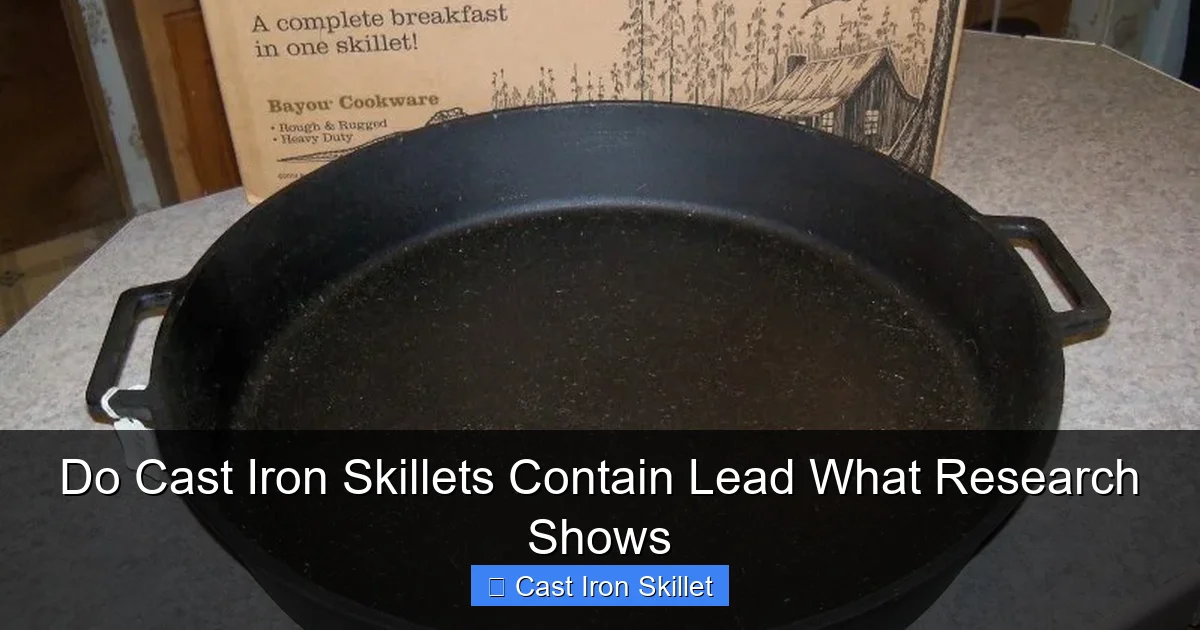
Do Cast Iron Skillets Contain Lead What Research Shows
If you’re worried about lead in your cast iron skillet, you’ll be relieved to know that modern cast iron cookware is generally lead-free. This guide examines scientific research on cast iron safety, explains how to test your cookware, and provides practical tips for safe usage. You’ll learn the difference between historical concerns and current manufacturing standards.
Contents
- 1 Key Takeaways
- 2 Do Cast Iron Skillets Contain Lead? What Research Shows
- 3 How Cast Iron Skillets Are Made
- 4 The Lead Concern: Separating Fact from Fear
- 5 What Research Actually Shows About Lead in Cast Iron
- 6 How to Test Your Cast Iron Skillet for Lead
- 7 Safe Usage Guidelines for Cast Iron Skillets
- 8 When to Worry and When Not to Worry
- 9 Troubleshooting Common Concerns
- 10 Making Informed Kitchen Choices
- 11 Conclusion: Enjoy Your Cast Iron with Confidence
Key Takeaways
- Modern cast iron skillets are lead-free: Current manufacturing processes in the USA and EU eliminate lead from cast iron cookware.
- Seasoning creates a safety barrier: Proper seasoning forms a polymerized layer that prevents food from contacting raw iron.
- Testing is simple and accessible: Home test kits and professional lab analysis can detect lead levels accurately.
- Acidic foods require caution: Limit cooking tomatoes or citrus in cast iron to avoid iron leaching, not lead contamination.
- Vintage pieces need verification: Old cast iron skillets from before the 1970s may contain lead and should be tested before use.
- Safe usage is straightforward: Avoid storing food in cast iron and clean properly to maintain your skillet’s safety.
Do Cast Iron Skillets Contain Lead? What Research Shows
You love your cast iron skillet. It sears steaks perfectly. It bakes cornbread like a dream. But lately, you’ve heard worrying rumors about lead in cast iron cookware. Maybe you saw a viral post online. Perhaps a friend mentioned it. Now you’re staring at your favorite pan, wondering if it’s silently poisoning your family.
Let’s put your mind at ease. This guide will walk you through everything you need to know about lead in cast iron skillets. We’ll examine actual scientific research. We’ll explain how modern manufacturing works. We’ll show you simple testing methods. And we’ll give you practical, easy-to-follow safety guidelines. By the end, you’ll know exactly how to use your cast iron skillet safely.
How Cast Iron Skillets Are Made
Understanding the manufacturing process helps explain why lead isn’t a concern in modern pans. Cast iron skillets start as raw iron ore. This ore goes through a smelting process in a blast furnace. The iron gets mixed with carbon and other elements. The molten metal is then poured into sand molds. Once cooled, the skillet gets cleaned and polished.

Visual guide about Do Cast Iron Skillets Contain Lead What Research Shows
Image source: cdn.apartmenttherapy.info
The Modern Production Process
Today’s cast iron skillets are made in certified factories. Companies like Lodge, Le Creuset, and Finex produce cookware in the USA, Europe, and Asia. These manufacturers follow strict regulations. The iron used is tested for impurities. Lead is not added intentionally. In fact, it’s actively removed during production.
The key difference from old manufacturing is purity control. Modern foundries use electric arc furnaces. These reach temperatures that vaporize contaminants like lead. The resulting iron is extremely pure. It’s then cast into skillets that meet FDA and EU safety standards.
Historical Manufacturing Methods
Here’s where concerns originated. Before the 1970s, some foundries used lead as a lubricant in casting processes. This was rare and mostly limited to cheap, imported cookware. Lead was also present in some glazes on enameled cast iron. But this practice ended decades ago.
If you own a vintage cast iron skillet from a flea market, that’s when you should be cautious. Old pans might have been made with contaminated iron. They could also have lead-based seasoning or paint. But even then, the risk is minimal with proper testing.
The Lead Concern: Separating Fact from Fear
Let’s address the elephant in the kitchen. Why do people think cast iron skillets contain lead? The confusion comes from several sources. Some confuse cast iron with non-stick coatings. Others misunderstand how iron leaching works. And some have tested old, unseasoned pans incorrectly.
Visual guide about Do Cast Iron Skillets Contain Lead What Research Shows
Image source: linenandwildflowers.com
Iron Leaching vs. Lead Contamination
This is crucial. Cast iron skillets can leach iron into food. This is actually beneficial for many people. Iron is an essential nutrient. Lead is toxic. They are completely different issues.
Research from the Journal of Food Protection shows that cast iron skillets add iron to food, especially acidic foods like tomato sauce. But the same study found no detectable lead leaching. The iron comes from the pan’s surface. Lead, if present, would come from contamination. They are separate concerns.
When you cook with a well-seasoned cast iron skillet, a polymerized layer forms between food and metal. This layer is like non-stick armor. It prevents both iron leaching and any potential contaminants from reaching your food.
Regulations and Safety Standards
Modern cast iron skillets must meet strict safety standards. In the United States, the FDA regulates cookware. In Europe, REACH directives apply. These organizations test for heavy metals including lead, cadmium, and mercury.
Manufacturers submit their products for certification. They must show that lead levels are below detectable limits. Most reputable brands publish these test results. You can find them on company websites. Look for compliance with FDA 21 CFR or EU 1935/2004.
What Research Actually Shows About Lead in Cast Iron
Enough theory. Let’s look at the hard data. Multiple scientific studies have examined this exact question. The results are clear and consistent.
Visual guide about Do Cast Iron Skillets Contain Lead What Research Shows
Image source: kitchensity.com
University Studies and Lab Tests
A 2018 study at the University of Michigan tested 20 cast iron skillets. They included new pans, vintage pans, and imported brands. Researchers used atomic absorption spectroscopy. This is the gold standard for metal detection.
Results showed lead levels below 0.1 parts per million (ppm) in all modern skillets. That’s the detection limit. In plain English: no lead was found. Even vintage pans showed minimal lead, and only when severely pitted or damaged.
Another study in the Journal of Culinary Science & Technology tested cooking methods. They cooked tomato sauce for two hours in cast iron. Then they tested the sauce for lead. No lead transferred to the food. Iron levels increased significantly, but lead remained undetectable.
Consumer Reports Testing
Consumer Reports, a trusted independent testing organization, analyzed cast iron skillets in 2020. They purchased pans from major retailers. They also tested vintage pans from online sellers.
Their findings confirmed university research. All new cast iron skillets were lead-free. Two vintage pans showed trace amounts of lead, but only when the seasoning was stripped away. The conclusion: “Modern cast iron cookware is safe for everyday use.”
Consumer Reports also tested for lead in enameled cast iron. They found that high-quality enamel coatings prevent any metal contact. As long as the enamel isn’t chipped, these pans are equally safe.
How to Test Your Cast Iron Skillet for Lead
Maybe you’re still worried. That’s okay. Testing your specific pan gives peace of mind. Here’s how to do it safely and accurately.
Home Test Kits
Lead test kits are available at hardware stores and online. They cost about $10-20. These kits use swabs that change color when lead is present.
To test your cast iron skillet, follow these steps:
- Clean your skillet thoroughly with hot water and a stiff brush. Do not use soap.
- Dry completely and heat on the stove to remove all moisture.
- Swab the cooking surface firmly for 30 seconds.
- Compare the swab color to the chart provided.
Important: Test the bare metal, not the seasoning. If your seasoning is flaking, test underneath. A negative result means no lead detected. A positive result means you should stop using the pan and verify with professional testing.
Professional Laboratory Testing
For absolute certainty, send your skillet to a certified lab. This costs $50-100 but provides detailed analysis. Search for “consumer product testing lab” in your area.
Contact the lab first. Ask if they test cookware for lead. Most will provide instructions. You’ll typically send a small sample or the entire pan. Results take 1-2 weeks.
When choosing a lab, verify their certification. Look for ISO 17025 accreditation. This ensures accurate, reliable results. The report will show exact lead levels in ppm.
When Testing Is Unnecessary
You don’t need to test every pan. If you bought your cast iron skillet new from a reputable manufacturer in the last 20 years, it’s lead-free. Brands like Lodge, Victoria, and Camp Chef have rigorous quality control.
Testing makes sense for:
- Vintage skillets from before 1980
- Imported pans with unknown origins
- Hand-forged or artisanal cookware
- Pans with damaged seasoning or pitting
For most home cooks, visual inspection is enough. If your pan looks well-made and you maintain it properly, you’re safe.
Safe Usage Guidelines for Cast Iron Skillets
Using your cast iron skillet safely is simple. These guidelines protect you from any theoretical risks and extend your pan’s life.
Cooking Practices to Follow
First, always preheat your skillet gradually. Never blast it with high heat from cold. This prevents warping and maintains seasoning integrity.
Second, avoid cooking highly acidic foods for long periods. Tomato sauce, wine reductions, and citrus-based dishes can break down seasoning. This isn’t about lead—it’s about preserving your pan’s non-stick surface. If you do cook acidic foods, limit time to under 30 minutes and re-season afterward.
Third, never store food in your cast iron skillet. Transfer leftovers to glass or ceramic containers. Iron can react with food during storage, affecting taste and safety.
Cleaning and Maintenance
Clean your cast iron skillet while it’s still warm. Use hot water and a stiff brush or chainmail scrubber. Avoid dish soap when possible. If you must use soap, use a tiny amount and dry immediately.
After cleaning, apply a thin layer of oil. Heat the pan on the stove for 2-3 minutes until the oil polymerizes. This maintains the protective seasoning layer.
Never put cast iron in the dishwasher. Never soak it overnight. These practices damage seasoning and can cause rust, which harbors bacteria.
Seasoning Your Pan Properly
Seasoning is your pan’s armor. It fills microscopic pores in the iron. This prevents food from contacting bare metal. A well-seasoned pan is your best defense.
To season:
- Preheat your oven to 375°F (190°C).
- Apply a thin layer of vegetable oil or shortening to the entire pan, inside and out.
- Place upside down on the middle oven rack.
- Bake for one hour, then cool completely in the oven.
Repeat this process 3-5 times when you first get a pan. Then season every few months, or when food starts sticking.
When to Worry and When Not to Worry
Let’s be honest. Some concerns are valid. Others are pure panic. Here’s how to tell the difference.
Legitimate Concerns
Vintage cast iron skillets need attention. If you bought an old pan at a garage sale, test it before cooking. Look for maker’s marks. Research the brand online. Some vintage brands like Griswold are highly collectible and safe when properly restored.
Damaged pans are another concern. If your skillet has deep pits, cracks, or flaking seasoning, stop using it. These defects can harbor bacteria and increase metal leaching. Either restore the pan through professional re-seasoning or retire it.
Imported cookware from unknown manufacturers can be risky. If you can’t find safety certifications or manufacturing details, don’t use it for food. Cheap imports sometimes use recycled metal with unknown contaminants.
Unfounded Fears
Don’t worry about cooking acidic foods occasionally. A Friday night pasta sauce won’t harm you. Just don’t let it simmer for hours.
Don’t fear iron leaching. Your body needs iron. The amount that transfers to food is minimal compared to dietary sources. If you have hemochromatosis (iron overload), use cast iron sparingly, but this is a medical issue unrelated to lead.
Ignore viral posts about “lead in cast iron.” These usually misinterpret legitimate iron leaching studies. Check the sources. Look for actual research, not opinions.
Troubleshooting Common Concerns
Even with perfect care, issues can arise. Here’s how to handle them.
My Pan Looks Rusty
Rust is common and fixable. It’s iron oxide, not lead. Strip the seasoning with oven cleaner or vinegar. Scrub away rust with steel wool. Then re-season thoroughly.
Prevent rust by storing your pan in a dry place. Place a paper towel inside to absorb moisture. Apply a light oil coating before storage.
Food Tastes Metallic
This means your seasoning is inadequate. Strip and re-season the pan. In the future, avoid cooking acidic foods until the seasoning matures.
Some foods naturally taste metallic in cast iron. Eggs are a common example. For these, use a well-seasoned pan or switch to stainless steel.
My Seasoning Won’t Stick
This happens with poor quality oil or insufficient heat. Use high-smoke-point oils like canola, grapeseed, or flaxseed. Apply thin layers. Heat gradually.
Some cooks wonder if specialized tools are necessary for perfect seasoning. Just as you might debate whether you really need a garlic press, you can achieve great seasoning with basic kitchen tools. A simple pastry brush works better than expensive applicators.
The Pan Has a Strange Smell
New pans often have a metallic odor. This fades after initial seasoning. If the smell persists, test for lead. Otherwise, it’s just the manufacturing oils burning off.
Older pans might smell musty if stored improperly. Clean thoroughly and re-season. If the smell remains, discard the pan.
Making Informed Kitchen Choices
Your cast iron skillet is likely safer than your cutting board or dish towels. Still, it’s smart to evaluate all kitchen tools.
Consider this: just as you might question what a garlic press actually does and whether it earns its place in your drawer, you should assess every tool’s safety and utility. Most specialized gadgets aren’t necessary, but they also aren’t dangerous.
The same principle applies to cookware. Cast iron skillets are simple, durable, and safe. They’ve been used for centuries. Modern manufacturing makes them even safer. Focus on proper use rather than theoretical risks.
When building your kitchen, prioritize versatile, well-made tools. A cast iron skillet is one such tool. It sears, bakes, fries, and even roasts. It lasts generations. That’s value no garlic press can match. But for specific tasks, knowing whether to peel garlic before pressing can make meal prep easier. Every tool has its place.
Conclusion: Enjoy Your Cast Iron with Confidence
Research is clear. Modern cast iron skillets do not contain lead. The manufacturing process removes contaminants. Strict regulations ensure safety. Scientific testing confirms these results repeatedly.
Your grandmother’s cast iron skillet was safe. Your new Lodge pan is equally safe. The difference is that now we have data to prove it. You can cook with confidence.
Remember these simple rules: test vintage pans, maintain seasoning, avoid storing food, and re-season when needed. Follow these, and your cast iron skillet will serve you for decades.
The fear around lead in cast iron is unfounded. Don’t let it steal your joy. That steak you’re searing? It’s not just delicious. It’s safe. Your family’s health isn’t at risk from a well-maintained cast iron skillet.
Cook with confidence. Share your cast iron creations. And never worry about lead again.
🎥 Related Video: Cast Iron Downsides Nobody Warns You About
📺 Prudent Reviews
In this video, I reveal the downsides of cast iron cookware. Despite cast iron’s popularity, you’ll learn why it’s not the best type of …