How to Juice Sugarcane at Home: A Beginner-Friendly Step-by-Step Guide

Sugarcane juice is one of those drinks that looks simple in a cup but takes a little know-how at home. The stalk is tough, very fibrous, and sticky, so the method you choose matters more than it does with softer fruits. If you understand that up front, the process becomes much less frustrating and much more doable.
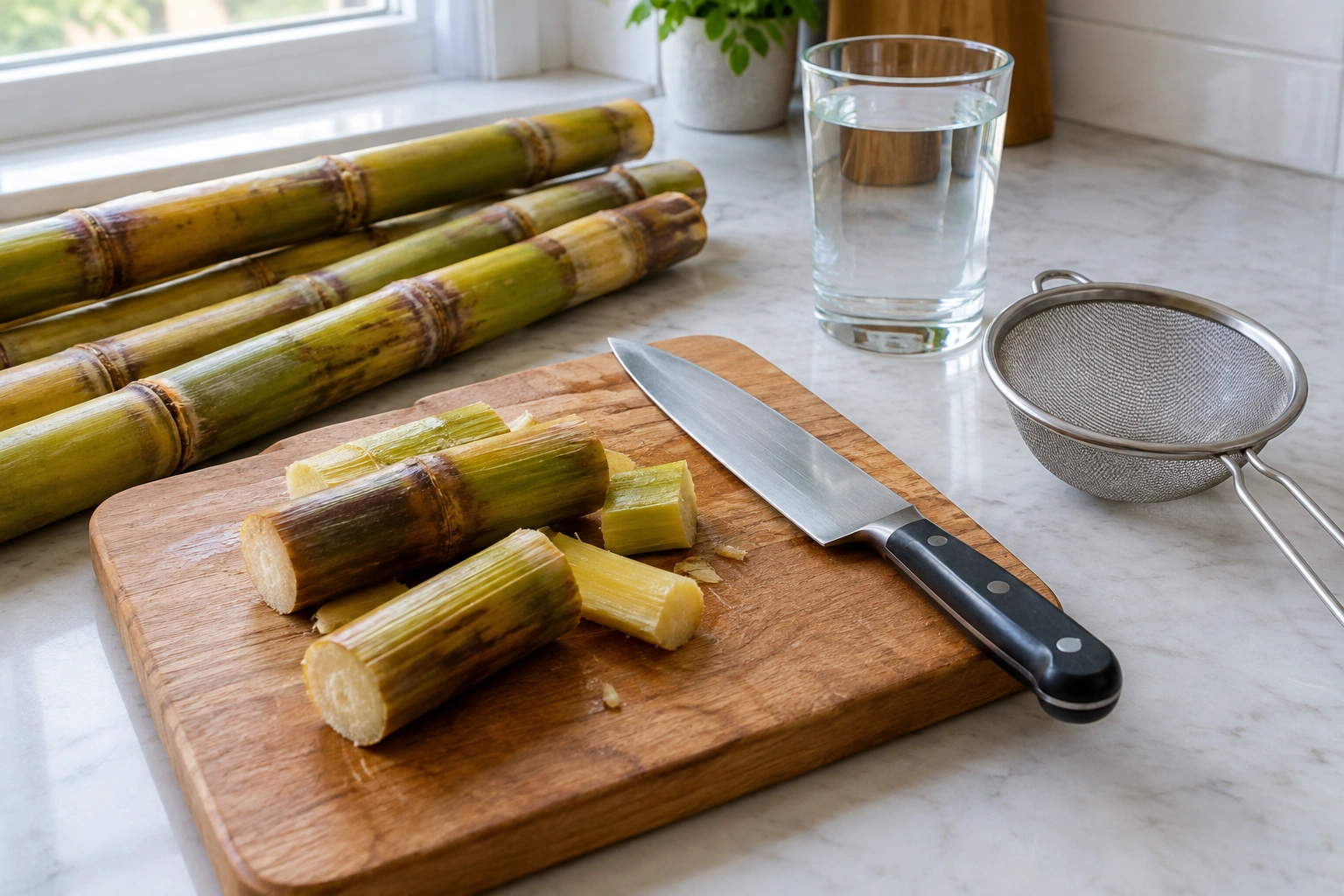
For beginners, the best mindset is this: sugarcane is not a “throw it in and blend” ingredient unless you prep it properly. You need clean stalks, a safe cutting setup, and the right extraction method for the equipment you actually have. Once those pieces are in place, fresh sugarcane juice can be made at home in a small batch without much drama.
Quick Decision Box: Which Method Should You Use?
- Dedicated press: Best overall if you have one. Fastest, easiest, and usually gives the best yield.
- Blender: Best fallback for most home kitchens. Works well for small batches, but you must strain the juice.
- Standard juicer: Only worth trying if your machine can handle very firm, fibrous produce without jamming.
- Manual method: Use only for a very small amount or when you do not have a machine.
If you want the shortest answer: use a press if you have one, a blender if you do not, and a standard juicer only if it is truly built for tough produce.
What Sugarcane Juice Is and What to Expect
Sugarcane juice is the liquid pressed or blended out of peeled sugarcane stalks. The flavor is naturally sweet, grassy, and sometimes a little earthy. Because the stalk is so fibrous, the juice usually needs straining, even if you use a machine.
That fiber is also why standard kitchen juicers can struggle. A dedicated sugarcane press is built for the job, while a blender or manual method can work in a pinch but usually takes more effort and cleanup. If you expect a smooth, clear drink straight from a blender, you will likely be disappointed. If you expect to strain it and serve it cold, the process feels much more realistic.
Best Sugarcane to Buy: How to Choose Fresh Stalks
The easiest sugarcane to juice is fresh, firm, and heavy for its size. A good stalk usually feels dense, not hollow or dry. The outside should look intact, with very little mold, splitting, or shriveling.
If you can choose between stalks, pick the ones that seem moist and sturdy. Older cane can still be usable, but it often gives less juice and a flatter flavor. If the stalk looks dry at the ends or feels light, expect more work for less reward.
For home juicing, it also helps to buy only what you plan to use soon. Fresh sugarcane is best when it is handled promptly, because the texture and flavor decline as it sits. If you do buy extra, freezing can be an option for later use, but it adds thawing time and a bit of planning.
A simple yield guide: 2 to 4 medium stalks are often enough for about 1 to 2 glasses, depending on thickness, freshness, and how much juice your method extracts. If you are making a small batch for the first time, start with a few stalks rather than a large pile.
How to Clean, Peel, and Cut Sugarcane Safely
Sugarcane needs a real cleaning step before juicing. The outside can carry dirt and debris, and the rind is too tough to leave on for most home methods. Wash the stalk under running water and scrub the surface well before you cut into it.
After washing, trim off the dry ends. Then peel away the tough outer skin with a sharp knife or sturdy peeler, working carefully on a stable cutting board. The stalk is hard, so use controlled pressure instead of forcing the blade. Short, deliberate cuts are safer than trying to hack through it quickly.
Once peeled, cut the cane into smaller sections that fit your equipment. For a blender, smaller chunks are easier to process. For a press, cut pieces that fit the feed opening. If the pieces are too long or awkward, you will spend more time fighting the stalk than extracting juice.
A simple rule helps here: the smaller and cleaner the pieces, the less strain on your equipment and the smoother the final drink.
Do You Need to Peel Sugarcane Before Juicing?
Yes, you should peel sugarcane before juicing in most home setups. The outer skin is tough, dirty, and not pleasant to drink, and it can make blending or pressing less efficient. Peeling also helps reduce grit and improves the flavor of the finished juice. If you are using a press, some machines may crush very well-cleaned cane with minimal trimming, but for beginners, peeling is the safer and more reliable choice.
Which Juicing Method Should You Use?
The best method depends on what you have in your kitchen and how much effort you want to spend.
| Method | Ease | Yield | Cleanup | Best for |
|---|---|---|---|---|
| Dedicated sugarcane press | Easiest if available | Usually highest | Moderate | Smoothest result, least guesswork |
| Blender | Accessible, but needs more steps | Moderate | Higher | Small batches without special equipment |
| Standard home juicer | Mixed results | Often inconsistent | Moderate to high | Only if the machine can handle very firm produce |
| Manual extraction | Most effort | Lowest | Moderate | Occasional small batch, no machine available |
If you have a sugarcane press, use it. If you do not, a blender is usually the most practical fallback because it is more common in home kitchens. A standard juicer may work only if it has enough power and a feed chute that can handle firm, fibrous pieces. Manual extraction is possible, but it is the least efficient and best treated as a last resort.
How to Juice Sugarcane with a Dedicated Press
A dedicated press is the simplest route if you have one. It is designed to crush fibrous cane and usually gives the smoothest, most efficient result.
- Wash, peel, and cut the cane into press-friendly pieces.
- Feed the pieces through the press according to the machine’s instructions.
- Collect the juice in a clean container.
- Strain it if you want a cleaner texture.
- Chill and serve right away.
The main advantage of a press is consistency. You do not need as much added liquid, and you usually get less pulp in the final cup. That matters if you want the drink to taste like sugarcane instead of blended cane fibers.
If you are using frozen sugarcane, make sure it is thawed enough to feed through the press safely and evenly. A slightly softened stalk is easier to handle than one that is still rock-hard. Follow your machine’s instructions if it has any specific guidance for frozen or chilled produce.
How to Juice Sugarcane with a Blender
A blender is the most realistic option for many beginners because it is easy to find and already in the kitchen. It is not the cleanest method, though, and it usually needs more straining afterward.
Here is the practical approach:
- Cut the peeled cane into small pieces.
- Add a small amount of water only as needed to help the blades move.
- Blend in short bursts until the cane is broken down.
- Pour the mixture through a fine mesh strainer or cheesecloth.
- Press the pulp to release as much liquid as possible.
- Chill the juice before serving.
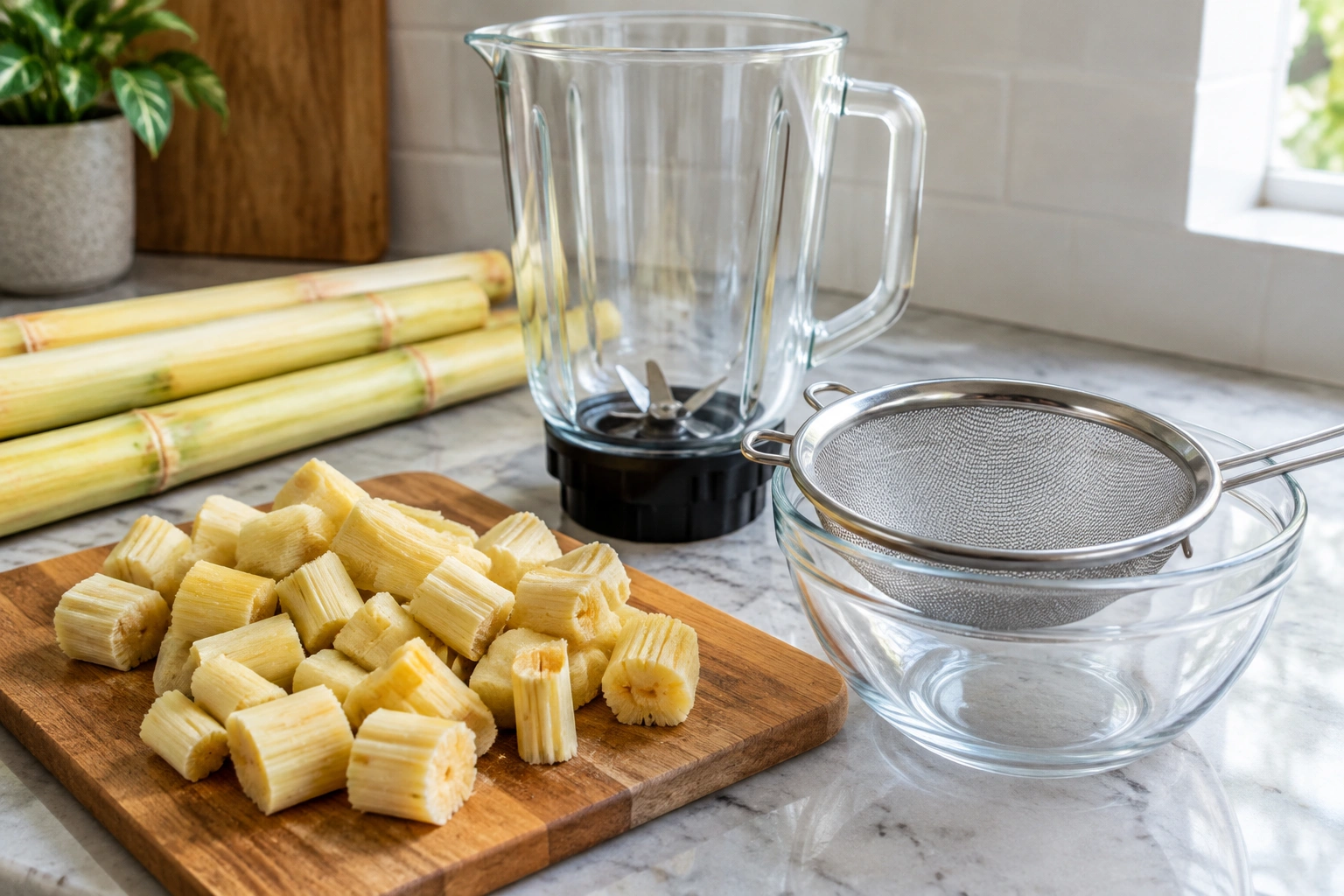
The key trade-off is flavor versus ease. Too much water makes the juice thinner and less sweet. Use just enough liquid to keep the blender moving, not enough to turn the drink watery.
A blender is also more likely to leave you with stringy pulp, so plan on straining. If the mixture looks thick, do not keep adding water to “fix” it. Blend in smaller batches instead.
Can You Use a Standard Home Juicer?
Sometimes, but not always. Sugarcane is much firmer and more fibrous than most fruits, so a standard juicer may clog, jam, or simply fail to extract much juice. Centrifugal juicers and masticating juicers are built for different textures, and sugarcane is outside the comfort zone of many home models.
If you want to test your juicer, use small, manageable pieces and stop if the feed chute starts to strain. Do not force hard stalks through a machine that is not designed for them. That can damage the juicer and make cleanup miserable.
If your juicer struggles, switch to a blender or manual method rather than fighting the machine. That choice is usually faster and safer than trying to make the wrong tool do the job.
Manual Extraction Methods When You Don’t Have a Machine
Manual extraction is possible, but it is the slowest method and works best for a very small amount of juice. Think of it as a backup plan, not a regular routine.
One simple approach is to crush very small cane pieces as much as possible, then press the liquid through a fine strainer or cheesecloth. Some people use a sturdy mortar-and-pestle style crushing method or a heavy press-like tool, but the goal is the same: break down the fibers enough to release liquid.
The trade-off is obvious. You save money and avoid special equipment, but you spend more time for less juice. If you only want a taste or a small glass, manual extraction can still make sense. If you want enough for a family, use a blender or press.
How to Strain Sugarcane Juice for a Smoother Drink
Straining is where the drink becomes much more pleasant. Sugarcane fibers can make the juice feel coarse, especially if you used a blender or manual method.
A fine mesh strainer removes the larger bits quickly. Cheesecloth gives you a cleaner result, especially if you fold it into a few layers and squeeze gently. If the juice is very pulpy, strain it twice rather than forcing all the liquid through one pass.
This is one of the steps that changes the whole experience. A well-strained juice is easier to sip, less stringy, and more refreshing when chilled. If you skip it, you may end up chewing your drink.
How to Improve Flavor Without Overcomplicating It
Fresh sugarcane juice is naturally sweet, so you do not need much to make it taste better. In fact, adding too many extras can hide the clean cane flavor.
A squeeze of lime is the simplest upgrade. It brightens the drink and can help slow browning after extraction. Some methods also use lemon or lime during pressing for the same reason. A little ginger can add a sharper edge if you like a more lively drink, but keep it subtle so the cane still tastes like cane.
Ice helps too, especially if the juice feels heavy or overly sweet. If you want a lighter drink, a small splash of water is fine, but keep it minimal. The more you dilute it, the less distinctive the flavor becomes.
How Long Fresh Sugarcane Juice Lasts
Fresh sugarcane juice is best right away. Once extracted, it can oxidize quickly and may darken or turn brown soon after juicing. That does not always mean it is unsafe, but it does mean the flavor and appearance decline fast.
If you are not drinking it immediately, refrigerate it promptly in a clean, covered container. For the best taste, make only what you plan to drink soon. Fresh juice has a short window, so it is not a “make-ahead for the week” drink.
A squeeze of lime may help slow visible oxidation, but it does not turn sugarcane juice into a long-storage beverage. Treat it like a fresh produce drink, not a shelf-stable juice.
Nutrition, Benefits, and Who Should Limit It
Sugarcane juice is mostly water and sugar, with limited fiber once it is extracted. It can provide some nutrients, but it is still a naturally high-sugar drink. That means the health conversation should stay balanced. It can be refreshing, but it is not something to treat like water.
The main benefit for many beginners is simple: it is a fresh, homemade juice with a clean, sweet flavor and no need for added sugar. It can be an enjoyable occasional drink, especially when chilled and served in a small glass. But because of the sugar content, portion size matters.
People who are managing blood sugar, including some people with diabetes or prediabetes, should limit sugarcane juice and keep portions modest. Ask a registered dietitian or doctor for personal guidance if sugar intake is a concern. The NIH’s nutrition resources are a useful starting point if you want to learn more about sugar and overall diet quality.
Bottled or store-bought sugarcane juice can be convenient, but it is not always the same as fresh homemade juice. It may be pasteurized, filtered, or packaged with added ingredients, and the flavor can be less bright than juice made and served right away. Always check the label for ingredients and sugar content.
Common Problems and How to Fix Them
If your juice is low-yield, the cane may be too dry, too old, or cut into pieces that are too large for your method. Fresh, firm stalks usually perform better, and smaller pieces are easier to process.
If your blender clogs or stalls, stop and reduce the batch size. Add only a little liquid, then blend again in short bursts. Forcing the blender usually makes the texture worse, not better.
If the juice tastes stringy, strain it again through cheesecloth. If it tastes weak, the most likely cause is too much added water. Next time, use less liquid and blend in smaller batches.
Sticky cleanup is part of the process. Rinse blades, strainers, and cutting boards soon after use so the sugar does not dry onto the surface. Warm water and prompt washing make the job much easier than waiting.
When to Ask a Registered Dietitian or Doctor
Ask a professional if you have diabetes, prediabetes, or another condition where sugar intake matters. That is especially useful if you want to know how sugarcane juice fits into your day, how much is reasonable, or whether it should be occasional rather than routine.
It is also worth asking if you are using juice as part of a larger nutrition change. A dietitian can help you decide whether sugarcane juice fits your goals without overpromising benefits.
Simple Serving Ideas and Final Takeaway
For the best home result, keep the process simple: choose fresh cane, peel and cut it carefully, use the strongest method you have, strain well, and chill before serving. A press gives the easiest smooth juice, while a blender is the most practical backup for most kitchens.
If you want a quick serving idea, pour the juice over ice and add a small squeeze of lime. That is usually enough to make it feel bright and refreshing without covering up the cane flavor. If you are making it for the first time, aim for a small batch so you can judge sweetness, texture, and cleanup before scaling up.
The main decision rule is straightforward: use a press if you have one, a blender if you do not, and a standard juicer only if it can truly handle very fibrous produce. Once you match the method to the stalk, sugarcane juice becomes much easier to make at home.
FAQ
Can you make sugarcane juice with a blender?
Yes. A blender can work for small batches, but you will need to strain the juice well afterward.
Can you use a standard juicer for sugarcane?
Sometimes, but many standard juicers struggle with sugarcane because it is so firm and fibrous. A press or blender is usually a better choice.
Should sugarcane be peeled before juicing?
Yes, in most cases. Peeling removes dirt, tough outer skin, and grit, and it helps the juice taste cleaner.
How much sugarcane do you need for one glass?
A rough starting point is 2 to 4 medium stalks for about 1 to 2 glasses, depending on size and juicing method.
Is bottled sugarcane juice the same as fresh?
Not exactly. Bottled juice may be processed, filtered, or pasteurized, and it can taste different from fresh homemade juice.