
Pull Cord Chopper for Nuts: How to Choose and Use One

Quick Answer
A pull cord chopper for nuts is a manual kitchen tool that spins sharp blades when you pull its handle. It can chop suitable nuts, including walnuts, almonds, and pecans, into coarse or fine pieces. Choose a model that explicitly supports nuts, has a secure lid, and offers easy cleaning.
What to Look For
- Suitable blades: Confirm that the manufacturer permits chopping nuts.
- Stable base: A nonslip base helps keep the bowl steady.
- Practical capacity: Choose a bowl that matches your usual portion size.
- Easy operation: A smooth pull mechanism makes manual chopping more convenient.
- Simple cleaning: Look for removable parts with clear washing instructions.
Chopping nuts for cookies, salads, oatmeal, and homemade snacks doesn’t always require an electric food processor. A pull cord chopper offers a compact, manual option for preparing smaller quantities.
In this guide, you’ll learn how these choppers handle nuts, which features matter most, and how to avoid uneven pieces or an unwanted nut paste.
What Is a Pull Cord Chopper for Nuts?
A pull cord chopper for nuts is a manual kitchen tool that uses a retractable cord to spin blades inside a covered bowl. Each pull rotates the blades and breaks suitable nuts into smaller pieces.
Most models include a container, a lid with a pull mechanism, a central blade assembly, and a handle. Some also have a nonslip base for better stability.
This tool works well for small quantities when you want chopped nuts without setting up an electric appliance. However, results depend on the blade design, nut hardness, batch size, and manufacturer’s instructions.
Can You Chop Nuts With a Pull Cord Vegetable Chopper?
Yes, you can chop nuts with a pull cord vegetable chopper if the manufacturer specifically allows it. Not every vegetable chopper can safely process hard ingredients.
For example, Kuhn Rikon’s Pull Chop is described as suitable for ingredients that include nuts.
Before using your chopper, consider these factors:
- Nut size: Break larger nuts into smaller pieces if the instructions recommend it.
- Batch size: Avoid overfilling the bowl.
- Desired texture: Use fewer pulls for coarse pieces and additional short pulls for finer results.
Never assume that a chopper designed for onions and herbs can handle every type of nut. If the instructions prohibit hard foods, choose another suitable tool.
Which Nuts Can You Chop in a Pull Cord Chopper?
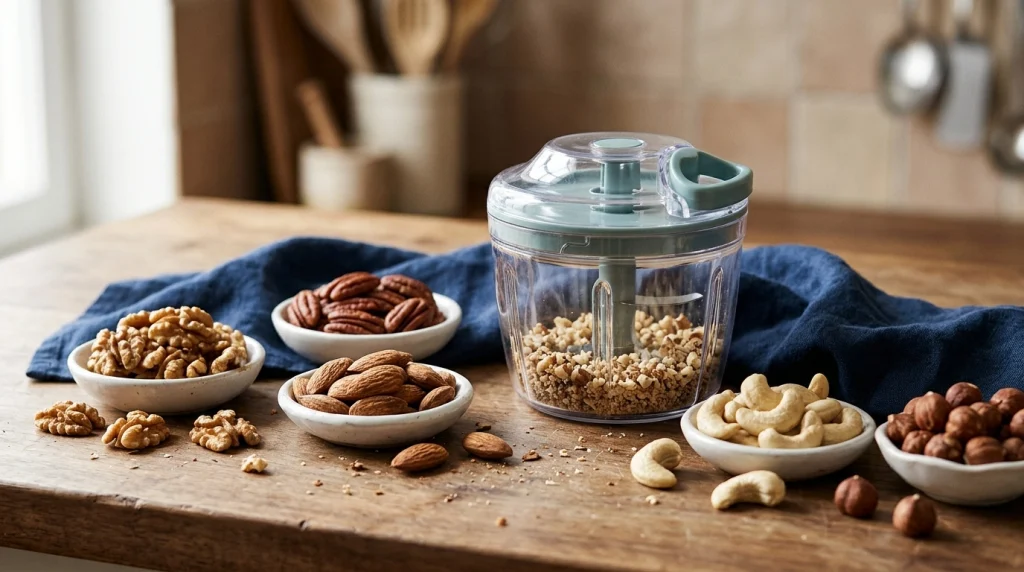
Many pull cord choppers can handle common nuts, but suitability varies by model. Walnuts, pecans, almonds, cashews, and hazelnuts are options only when the manufacturer permits them.
Use this table as a general guide.
| Nut Type | Common Uses | Important Consideration |
|---|---|---|
| Walnuts | Cookies, salads, oatmeal | Can break down quickly with repeated pulls. |
| Pecans | Desserts and toppings | Avoid excessive chopping that releases too much oil. |
| Almonds | Cereal and baking | Check that the model supports harder nuts. |
| Cashews | Cooking and snacks | Can become pasty if overprocessed. |
| Hazelnuts | Desserts and chocolate recipes | Check the permitted ingredient list. |
Use plain, dry nuts unless the manufacturer specifies otherwise. Avoid frozen nuts and ingredients that the product instructions exclude.
How Do You Use a Pull Cord Chopper for Nuts?
The best approach is to start with a small batch and check the texture frequently. Follow your particular model’s instructions because operating mechanisms and filling limits differ.
- Inspect the chopper: Check the bowl, lid, cord, and blades for damage.
- Prepare the nuts: Remove shells and break larger nuts into smaller pieces if recommended.
- Position the blades: Secure the blade assembly on its designated central post.
- Add the nuts: Stay within the manufacturer’s recommended capacity.
- Secure the lid: Make sure it fits correctly before operating the cord.
- Pull gently: Use controlled pulls and let the cord retract normally.
- Check the texture: Stop and inspect the nuts after the blades stop completely.
- Remove the nuts: Carefully remove the blade assembly before emptying the bowl.
Start with a few controlled pulls rather than trying to achieve a fine texture immediately. Add more pulls gradually until the nuts reach your preferred size.
Safety tip: Never force a jammed cord or operate a chopper with a loose lid. Stop using the tool if the bowl shifts, the mechanism feels strained, or any component appears damaged.
How Many Times Should You Pull the Cord?
There is no universal number of pulls for chopping nuts. The result depends on the nut type, blade design, quantity, and the texture you want.
- Coarse pieces: Use a few pulls and inspect the result.
- Medium pieces: Continue in short increments until the pieces are small enough.
- Fine pieces: Add a few more pulls at a time and check frequently.
For cookies, you may prefer recognizable nut pieces. For a salad topping, a finer texture may work better.
A pull cord chopper may not produce perfectly uniform pieces. If precise sizing matters, a knife or another suitable tool may provide better control.
What Features Matter Most When Buying a Pull Cord Nut Chopper?
The best chopper is one that supports nuts, remains stable during use, and cleans easily. A reliable cord mechanism and secure blade assembly matter more than unnecessary accessories.
1. Blade Design and Durability
Check the manufacturer’s list of approved ingredients and the blade assembly’s construction. Stainless steel blades are common, but the material alone doesn’t guarantee suitability for hard nuts.
Make sure the blade assembly sits securely in the bowl. Stop using the chopper if its blades become loose or damaged.
2. Bowl Capacity
A small bowl suits toppings, snacks, and occasional baking. A larger bowl may be more convenient for family meals, provided its design supports your intended ingredients.
Choose a capacity that matches your typical batch size. Processing two smaller batches can be better than overfilling one bowl.
3. Cord Mechanism and Grip
The handle should feel comfortable, and the cord should extend and retract smoothly. A nonslip base can help keep the bowl steady while you pull.
Review the operating instructions before buying if you plan to use the tool frequently. Different mechanisms may require different amounts of effort.
4. Cleaning and Storage
Nut oils can leave a greasy film, while small fragments can collect around the blade hub. Look for removable parts that you can clean thoroughly according to the manufacturer’s instructions.
Don’t assume that every component is dishwasher-safe. Dry washable parts completely and store the sharp blades securely.
5. Replacement Parts and Support
A clear manual helps you confirm suitable ingredients, filling limits, and cleaning requirements. Check whether replacement bowls or blade assemblies are available before purchasing.
These details can matter more over time than a low initial price. A damaged cord or cracked bowl can make the tool unsuitable for continued use.
Pull Cord Chopper vs. Food Processor vs. Knife
A pull cord chopper suits small batches and doesn’t require electricity. A food processor can handle larger quantities, while a knife offers direct control over each piece.
| Tool | Best Use | Main Advantage | Limitation |
|---|---|---|---|
| Pull cord chopper | Small batches | Manual operation and compact storage | Piece sizes can vary. |
| Food processor | Larger batches | Convenient for repeated preparation | Requires electricity and storage space. |
| Chef’s knife | Controlled chopping | Direct control over piece size | Requires careful handling and manual effort. |
| Mortar and pestle | Crushing small quantities | Useful for a crushed texture | Less suited to uniform pieces. |
Choose a pull cord chopper if you mostly prepare small quantities and prefer a manual tool. For large baking batches or frequent nut processing, compare its capacity with a suitable food processor.
How Can You Avoid Turning Chopped Nuts Into Nut Butter?
Nuts release natural oils when blades repeatedly cut them into smaller pieces. Continued processing can turn coarse crumbs into a sticky mixture, especially with oily nuts.
- Use small batches: Leave enough room for the nuts to move inside the bowl.
- Pull in short bursts: Inspect the texture between rounds.
- Stop early: Remove the nuts once they reach the desired size.
- Choose suitable equipment: Use a food processor designed for nut butter if you want a smooth paste.
Don’t add water or oil to free a stuck batch unless the instructions specifically permit it. Liquids may interfere with the mechanism or change the result.
How Do You Clean a Pull Cord Chopper After Chopping Nuts?
Clean the bowl and blade assembly promptly because nut oils and fine particles become harder to remove when they dry. Always follow the cleaning instructions for your particular model.
- Wait until the blades stop moving completely.
- Remove the lid and lift out the blade assembly by its designated grip.
- Empty the bowl without reaching across the exposed blades.
- Wash approved removable parts using suitable dish detergent.
- Use a soft brush to remove fragments around the blade hub.
- Rinse and dry washable parts thoroughly.
- Wipe the pull-cord lid as directed, keeping water away from components that cannot be immersed.
Never put the lid or pull mechanism in the dishwasher unless the manufacturer explicitly permits it. Store the blade assembly securely and keep it away from children.
Are Pull Cord Choppers Worth Buying in 2026?
A pull cord chopper can be a sensible choice if you regularly need small amounts of chopped nuts. Its manual operation and compact design can make everyday food preparation convenient.
However, it isn’t automatically the best option for every kitchen. A knife may be enough for occasional use, while a food processor may suit larger quantities.
Before purchasing, compare approved ingredients, bowl capacity, blade construction, stability, and cleaning requirements. These details are more useful than appearance or a long list of advertised features.
Common Mistakes to Avoid
Most problems arise from using unsuitable ingredients, overfilling the bowl, or pulling the cord too aggressively. A few precautions can help protect your hands and the tool.
- Overfilling: Follow the recommended capacity limit.
- Using unsuitable ingredients: Avoid frozen nuts and foods excluded by the manual.
- Forcing the cord: Stop if the mechanism jams or feels strained.
- Touching exposed blades: Handle the blade assembly carefully.
- Ignoring damage: Stop using cracked bowls, frayed cords, or loose blades.
- Incorrect cleaning: Check which parts can be washed or immersed.
For additional product information, visit the official Starfrit website and locate the manual for your specific chopper model.
Which Pull Cord Choppers Are Worth Considering?
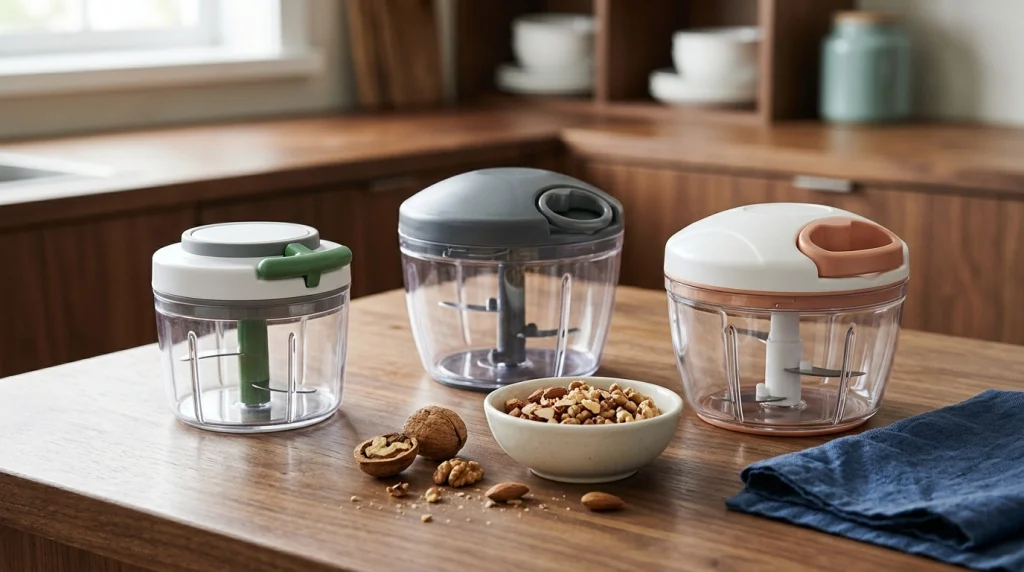
If you’re ready to choose a chopper, compare models whose manufacturers specifically mention nuts as suitable ingredients. The following options offer different designs and capacities.
🏆 BEST FOR COMPACT PREP
Kuhn Rikon Pull Chop Utility Chopper
Capacity varies by version.
This manual chopper is designed for ingredients including nuts, herbs, and vegetables. Consider it for small batches after confirming the selected model’s capacity and instructions.
🌰 BEST FOR MULTIPLE INGREDIENTS
Westmark Multi-Chopper with Cable Pull
Listed capacity: 450 ml.
Westmark lists nuts, fruit, vegetables, and herbs among the intended ingredients. Its compact bowl may suit smaller portions; check regional availability before ordering.
💰 BEST TO COMPARE FOR VALUE
Starfrit Pull Chopper
Confirm the selected model’s specifications.
Starfrit pull choppers are worth comparing for everyday manual food preparation. Check the exact model’s approved ingredients, capacity, and cleaning instructions before buying.
Buying tip: I haven’t physically tested these models, so these are research-based options rather than firsthand test winners. Compare current specifications, availability, and customer feedback before choosing.
Frequently Asked Questions
Can a pull cord chopper grind almonds into fine pieces?
A pull cord chopper can reduce almonds to smaller pieces if its manufacturer permits hard nuts. However, it may not produce uniform crumbs or almond flour, and prolonged chopping can release oils. Check the texture frequently and use a suitable grinder when you need a finer result.
Can I use a pull cord chopper for roasted nuts?
Possibly, provided the instructions allow the type of roasted nuts you’re preparing. Let freshly roasted nuts cool completely before chopping, and avoid coated or oily nuts if the manufacturer prohibits them. Start with a small batch and stop if the mechanism becomes difficult to pull.
Is a pull cord chopper better than a knife for nuts?
A pull cord chopper is convenient for small batches because the enclosed bowl helps contain the ingredients. A knife provides more direct control over piece size, especially when you need uniform pieces. The better choice depends on your quantity, preferred texture, and comfort using each tool.
Can a pull cord chopper make peanut butter?
Most ordinary pull cord choppers are intended for chopping rather than sustained nut-butter processing. Peanuts release oil as they’re broken down, and the resulting paste may strain a manual mechanism. Choose a food processor or appliance specifically designed for making nut butter instead.
How do I know whether a pull cord chopper is safe for nuts?
Check the manufacturer’s approved ingredient list and operating instructions before use. Look for explicit permission to chop nuts, a secure lid, a stable bowl, and clear cleaning directions. If the manual excludes hard foods or doesn’t establish whether nuts are suitable, choose another tool.
Final Takeaway: Choose a Chopper That Matches Your Needs
A pull cord chopper for nuts is a practical option for preparing small quantities of walnuts, pecans, almonds, and other suitable nuts without electricity. Its usefulness depends on the blade design, capacity, and manufacturer’s approved ingredients.
Before buying, confirm that nuts are permitted, check the cleaning instructions, and compare the capacity with your usual recipes. Start with small batches and controlled pulls to achieve your preferred texture.
If you mainly need toppings for salads, oatmeal, or baking, a compact manual chopper may be enough. For large batches, fine nut flour, or homemade nut butter, consider equipment designed specifically for those tasks.