
Push Down Chopper for Soft Vegetables: Tips

Quick Answer
A push down chopper can handle some soft vegetables, including zucchini, mushrooms, and certain firm-ripe tomatoes, but the result depends on the blade design and the vegetable’s texture. Use the appropriate attachment, prepare the vegetable into manageable pieces, and apply controlled pressure. For very ripe tomatoes, leafy greens, and delicate vegetables that crush easily, a sharp knife or a suitable slicing attachment usually gives better results.
Soft vegetables can be tricky in a push down chopper because they may compress before the blade grid cuts through them. The key is to match the vegetable’s firmness to the attachment instead of assuming every ingredient will produce neat, uniform pieces.
Understanding which vegetables work well, how to prepare them, and when to switch tools can help you avoid crushed ingredients, clogged blades, and unnecessary pressure on the chopper.
Which Soft Vegetables Can a Push Down Chopper Handle?
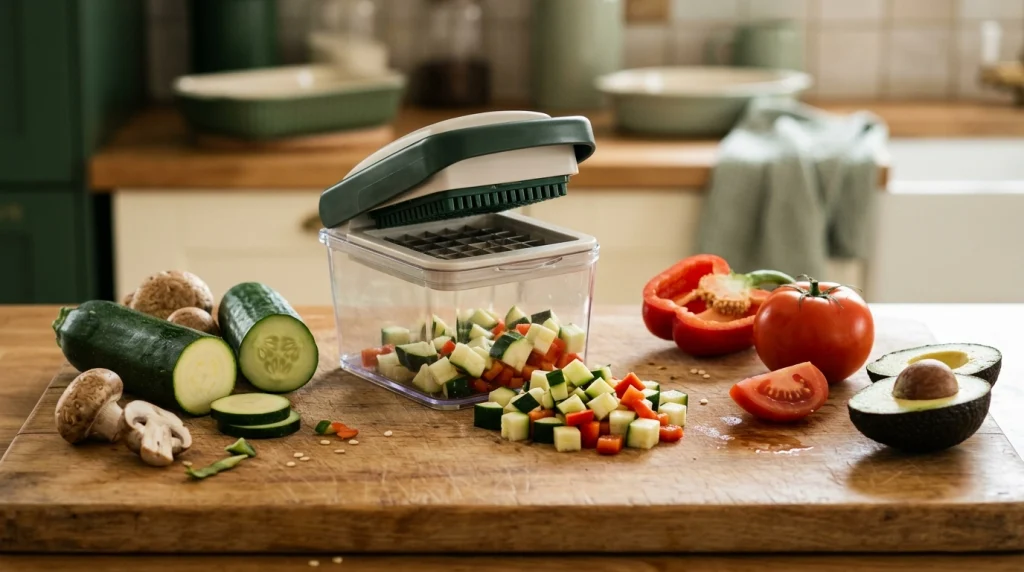
A push down chopper generally works best with vegetables that are tender enough to cut easily but firm enough to retain their shape under pressure. Some soft vegetables are suitable for dicing, while others are better sliced or chopped with a knife.
- Zucchini: Fresh, firm zucchini can usually be diced or sliced with a compatible attachment. Very mature or watery zucchini may compress during dicing.
- Cucumbers: Firm cucumbers often work well with suitable dicing grids or slicers. Remove unusually soft sections if they collapse under light pressure.
- Mushrooms: Firm mushrooms can work with some dicing blades, although their spongy texture may produce less uniform pieces than firmer vegetables.
- Bell peppers: These are relatively tender but have resilient skin. Use the blade arrangement recommended for your model and position the pepper so it can pass through the grid cleanly.
- Firm-ripe tomatoes: Some choppers can dice tomatoes, but juicy flesh and delicate skin make them more difficult than firmer vegetables. A slicing attachment may work better than a fine dicing grid.
- Avocado: A firm avocado may be suitable for a compatible attachment, but a ripe, creamy avocado can become mashed rather than neatly diced.
These are general guidelines, not a guarantee of compatibility. Check your particular chopper’s instructions because different blade designs support different ingredients.
Why Do Soft Vegetables Get Crushed Instead of Chopped?
Soft vegetables can deform under pressure before the blades separate them into pieces. Their high moisture content, delicate structure, and sometimes slippery surfaces can make clean cutting more difficult.
1. The vegetable is too ripe
As some vegetables ripen or deteriorate, their flesh becomes softer and less able to hold its shape. A very ripe tomato, for example, may release juice and collapse when pressed through a small dicing grid.
Choose produce that is fresh and firm enough for the intended cut. If it yields easily under gentle handling, use a knife or another method that applies less downward compression.
2. The blade is unsuitable for the texture
A dicing grid forces food through intersecting cutting edges. A slicing blade uses a different cutting action, so it may be more appropriate for delicate or thin ingredients.
Use the attachment intended for the vegetable and cut you need. Do not assume that a smaller grid will produce a better result; fine grids can be particularly troublesome with soft, juicy produce.
3. The vegetable is positioned poorly
An irregular piece may sit unevenly over the grid, allowing pressure to compress one section while another catches on the blades. Pieces that extend beyond the cutting area may also resist the lid.
Trim the vegetable into manageable pieces that fit within the blade frame. Follow the manufacturer’s preparation instructions, and stop if the food does not sit securely.
How to Prepare Soft Vegetables for Cleaner Cuts
Good preparation makes a difference, but it cannot overcome every limitation of the chopper. Use this sequence before processing tender vegetables.
- Choose suitable produce. Select fresh vegetables that retain their shape. Set aside excessively ripe, bruised, or collapsing pieces for another preparation method.
- Wash and dry the surface. Rinse the vegetables and remove excess water. Drying the surface helps with handling, although it will not remove moisture from the vegetable itself.
- Trim irregular ends. Remove stems and uneven sections that prevent the vegetable from sitting flat. Follow any model-specific preparation instructions.
- Cut oversized pieces smaller. Make sure each piece fits comfortably inside the cutting area without extending over the frame.
- Select the appropriate attachment. Use a dicing grid for compatible vegetables that hold their shape, or a slicing attachment if the design supports the cut you want.
- Position the vegetable securely. Center the piece as directed by the manufacturer. Keep fingers away from exposed blades.
- Press using the intended motion. Operate the lid or pusher as instructed. If the vegetable compresses, slips, or refuses to pass through, stop instead of forcing it.
The goal is to let the blade do the cutting, not to compensate for a poor ingredient match with extra force.
Tip
If you need clean tomato cubes for a salad, start with a firm tomato and test whether your chopper’s instructions permit dicing it. If the flesh collapses or releases too much juice, use a sharp knife instead of repeating the same press.
Which Soft Vegetables Are Better Cut by Hand?
Some vegetables are better handled with a knife because they are too delicate, too leafy, or too irregular for a press-down grid to cut cleanly.
- Leafy greens: Spinach and tender lettuce leaves can fold, bunch together, or become compressed in a dicing grid. A knife or suitable herb-cutting technique provides more control.
- Very ripe tomatoes: When the flesh is fragile and juicy, a sharp knife can separate the skin and flesh with less crushing than a press-down mechanism.
- Soft, ripe avocado: If the avocado is creamy or beginning to collapse, use a knife and spoon or another suitable utensil to preserve larger pieces.
- Cooked vegetables: Boiled zucchini, cooked eggplant, and other tender cooked vegetables may break apart under pressure. Cut them gently with a knife when distinct pieces matter.
- Delicate herbs: Tender herbs can bruise or clump under compression. Use a suitable knife technique or an attachment specifically designed for that task.
Hand cutting is not a failure of the chopper. It is simply a better match for ingredients that need a gentler cutting action.
What Should You Do If Soft Vegetables Get Stuck?
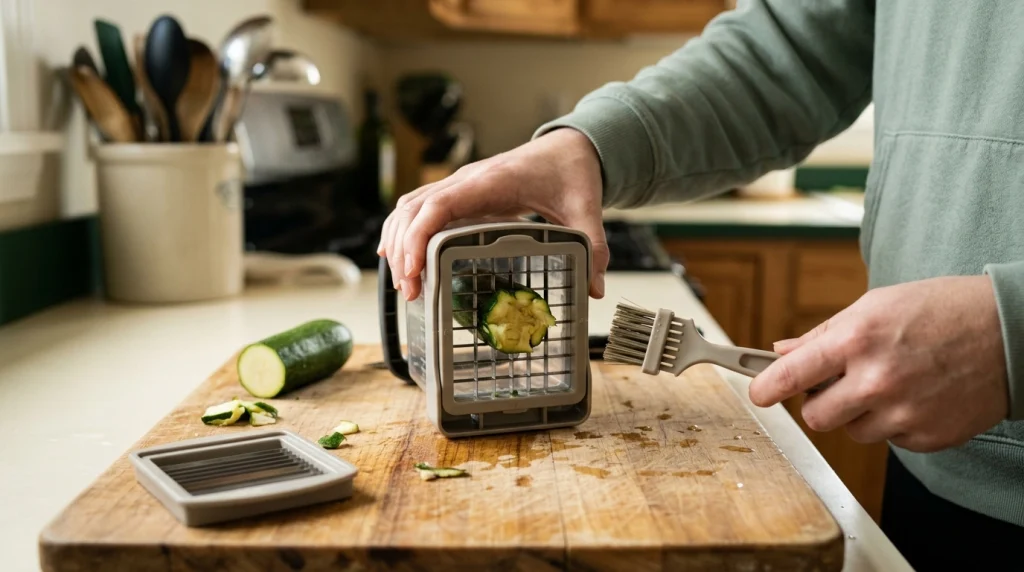
If a soft vegetable becomes trapped in the grid, stop pressing immediately. Repeatedly forcing the lid can worsen the blockage, damage parts, or expose you to sharp blades.
- Stop and stabilize the chopper. Keep the unit on a steady surface and avoid placing your fingers near the cutting grid.
- Open the lid carefully. Follow the model’s instructions for releasing the pusher or lid without touching the blade edges.
- Remove the obstruction safely. Use the supplied cleaning tool if the manufacturer provides one. Never push trapped food through with your fingers.
- Inspect the ingredient and attachment. Check whether the piece was too large, too soft, poorly positioned, or unsuitable for the blade.
- Change the preparation method. Cut the vegetable into a more suitable size or switch to a compatible attachment. If it is too delicate, finish the task with a knife.
For model-specific operating and safety guidance, consult the Cuisinart CTG-00-VC vegetable chopper instruction booklet or the manual supplied with your own device. Instructions can differ between models.
Common Mistakes to Avoid When Chopping Soft Vegetables
Small changes in technique can prevent a poor result, but the most important rule is to stop when the ingredient and attachment are not working together.
- Using excessive force: Extra pressure may squash soft flesh rather than improve the cut. Never force a lid that meets strong resistance.
- Choosing a fine grid automatically: Smaller openings do not suit every vegetable. A coarser grid or slicing attachment may be more appropriate, depending on the model.
- Overfilling the cutting area: Pieces that overlap or extend outside the frame can jam the mechanism. Process manageable portions.
- Expecting every piece to look identical: Natural differences in ripeness, shape, and firmness affect the result. A manual chopper cannot guarantee uniform cubes from every soft ingredient.
- Ignoring the manufacturer’s restrictions: Attachments are not interchangeable in purpose simply because they fit the same appliance. Use only approved configurations and foods.
- Cleaning around exposed blades carelessly: Food residue can be difficult to remove from a grid. Use the supplied cleaning implement and the method specified in the manual.
For broader preparation habits that save time without sacrificing control, see these practical kitchen preparation tips. The same principle applies: select the tool and technique that fit the ingredient rather than forcing the ingredient to fit the tool.
How Can You Tell Whether the Chopper or the Vegetable Is the Problem?
Before assuming the blade is damaged, check the ingredient, attachment, and setup. The pattern of the failure often points toward the next useful step.
| What happens | Possible explanation | What to do |
|---|---|---|
| Vegetable becomes mushy | Produce is too soft or the blade is unsuitable | Use firmer produce or switch to a knife |
| Pieces remain stuck in the grid | Food is oversized, misaligned, or too soft | Stop, clear safely, and resize the piece |
| Several suitable vegetables cut poorly | Residue, incorrect assembly, or possible blade wear | Check assembly and clean according to the manual |
| Lid will not close normally | An obstruction or incorrectly seated part | Do not force it; inspect the setup safely |
These are troubleshooting clues, not definitive diagnoses. If the blade is bent, cracked, loose, or otherwise damaged, stop using the chopper until the part has been replaced or the unit has been assessed according to the manufacturer’s guidance.
You can also review these common cooking mistakes and how to avoid them for related food-preparation advice. Keep the focus here on the specific issue: achieving a clean cut without crushing delicate vegetables.
Frequently Asked Questions
Can a push down chopper cut tomatoes without crushing them?
Sometimes. A firm-ripe tomato and a compatible blade may produce acceptable pieces, but very ripe tomatoes are easily crushed. If the chopper does not handle them cleanly, use a sharp knife.
Can I chop lettuce or spinach in a push down chopper?
Usually, a standard dicing grid is not the best choice for delicate leafy greens. They may fold or compress instead of separating cleanly. Use a knife or a tool specifically designed for leafy ingredients.
Should I refrigerate vegetables before chopping them?
Not as a universal rule. Chilling does not guarantee cleaner cuts, and the best preparation depends on the vegetable and attachment. Use fresh, appropriately firm produce and follow the device instructions.
Why does my chopper mash zucchini instead of dicing it?
The zucchini may be overly soft, watery, or poorly positioned, or the attachment may not suit it. Try a fresh, firm piece and check the recommended preparation method. Switch to a knife if the texture remains too delicate.
Can I use a push down chopper for cooked vegetables?
Only if the manufacturer permits the ingredient and the chosen attachment is appropriate. Cooked vegetables can be much softer than raw ones, so they may collapse under pressure. A knife or fork may be more suitable for preserving distinct pieces.
How do I clean soft vegetable residue from the blade grid?
Follow the manufacturer’s cleaning instructions and use the supplied brush or cleaning tool where available. Keep fingers away from the sharp edges, and never try to push residue through the grid by hand.
Conclusion
A push down chopper can make vegetable preparation easier when the produce is firm enough and the attachment suits the job. Zucchini, mushrooms, cucumbers, and some firm-ripe tomatoes may work well, but delicate leafy greens, very ripe tomatoes, and creamy avocado can be difficult to cut cleanly with a standard dicing grid.
Start with fresh produce, prepare pieces that fit the cutting area, and follow the manufacturer’s instructions. If the vegetable gets crushed or stuck, stop rather than applying more force. Choosing a knife or a suitable slicing tool for delicate ingredients will often produce a better texture with less frustration.
