
When your rice cooker stopped working, it can ruin dinner plans. This guide solves the seven most common issues—from power failures to burnt rice—with simple troubleshooting steps you can try at home. Learn how to diagnose problems, perform quick fixes, and know when it’s time to call a professional.
Contents
- 1 Key Takeaways
- 2 Why Your Rice Cooker Stopped Working: The Complete Troubleshooting Guide
- 3 #1. No Power: The Most Basic Rice Cooker Problem
- 4 #2. Rice Cooker Won’t Turn On: Button and Switch Issues
- 5 #3. Rice Is Undercooked Or Still Hard
- 6 #4. Rice Is Overcooked Or Burnt
- 7 #5. Rice Cooker Is Leaking Water
- 8 #6. Unusual Noises Or Smells
- 9 #7. Display Error Codes
- 10 Quick Troubleshooting Reference Table
- 11 Prevention: How to Keep Your Rice Cooker Working Forever
- 12 When to Replace Instead of Repair
- 13 Conclusion: Your Rice Cooker Will Be Back in Action
Key Takeaways
- Power Issues Are Most Common: Unplugged cords, tripped breakers, and faulty outlets cause most “broken” rice cookers
- Water Ratios Matter: Incorrect water-to-rice ratios cause undercooked or mushy rice more often than mechanical failures
- Regular Cleaning Prevents Problems: Food debris in the steam vent or sensor causes 60% of malfunctions
- Error Codes Are Diagnostic Tools: Your rice cooker’s display codes tell you exactly what’s wrong
- Thermal Fuses Can’t Be Reset: If this safety part blows, you’ll need professional repair or replacement
- Most Fixes Take Under 30 Minutes: Simple solutions like button resets or sensor cleaning solve most issues quickly
Why Your Rice Cooker Stopped Working: The Complete Troubleshooting Guide
You measured the rice. You added the water. You pressed the button. But your rice cooker just sits there, silent and unresponsive. When your rice cooker stopped working, it feels like your kitchen has lost its brain. Don’t panic—most rice cooker problems have simple fixes you can try right now.
This guide walks you through the seven most common reasons rice cookers fail. We’ll start with the easiest solutions and work toward more complex repairs. You’ll learn how to diagnose the issue, what tools you need, and when it’s time to call a professional. By the end, you’ll know exactly what to do when your rice cooker quits on you.
#1. No Power: The Most Basic Rice Cooker Problem
When your rice cooker shows no signs of life—no lights, no sounds, nothing—start here. This is the most common reason a rice cooker stopped working.

Visual guide about Why Rice Cooker Stopped Working 7 Common Problems Solved
Image source: kitchenbap.com
Check the Obvious First
It sounds silly, but the power cord might be loose. Pull the plug from the wall and check for dust or debris. Reinsert it firmly into both the rice cooker and the wall outlet. Make sure the outlet hasn’t been turned off by a switch on the wall itself.
Some rice cookers have a removable power cord. If yours does, ensure it’s fully seated in the cooker’s socket. Wiggle it gently to see if you feel any loose connection.
Test the Power Cord
Look for visible damage along the power cord. Check for fraying, cuts, or kinks that could break the internal wires. If you have a multimeter, set it to measure continuity and test the cord. Place one probe on the prong and the other on the opposite end. If you don’t get a reading, the cord is dead.
Try plugging another device—like a lamp or phone charger—into the same outlet. If that device doesn’t work either, the problem is the outlet, not your rice cooker.
Inspect the Outlet
Gently remove the outlet cover plate and look for loose wires. If you see any, turn off the circuit breaker before tightening them. Test the outlet with a multimeter set to AC voltage. You should see 110-120 volts in a standard US outlet. If you don’t, the outlet itself needs replacement.
Some outlets have built-in ground fault circuit interrupters (GFCIs) that trip like breakers. Look for a small reset button on the outlet and press it if you find one.
When to Seek Professional Help
If the cord, outlet, and breaker all test fine, the problem is inside your rice cooker. The internal power switch or main circuit board may be faulty. Unless you’re comfortable working with high-voltage electronics, take it to an appliance repair shop. Opening the cooker’s base exposes dangerous components.
#2. Rice Cooker Won’t Turn On: Button and Switch Issues
Your rice cooker has power—you can see lights or hear a faint hum—but pressing the start button does nothing. This means the problem is likely in the control panel or internal switches.
Visual guide about Why Rice Cooker Stopped Working 7 Common Problems Solved
Image source: expertreviewsbestricecooker.com
The Start Button Might Be Stuck
Food particles and moisture can get under the buttons. Turn off the rice cooker and unplug it. Use a cotton swab dipped in rubbing alcohol to clean around the button edges. Press the button repeatedly to work the alcohol underneath.
If the button feels physically stuck, you may need to remove the control panel cover. Most panels snap off with gentle pressure from a flathead screwdriver. Once exposed, clean the button contacts with contact cleaner spray.
Internal Switch Problems
Inside your rice cooker, a thermal switch controls the cooking cycle. When it fails, the cooker won’t start. You can test this with a multimeter. Locate the switch (usually near the heating plate) and disconnect the wires. Set your multimeter to continuity mode and touch the probes to the switch terminals. If there’s no reading, the switch is dead.
Replacing a thermal switch requires soldering skills. If you’re not experienced, this is a job for a professional. The part itself costs only $10-20, but labor adds up.
Thermal Fuse Issues
A thermal fuse is a safety device that blows when the cooker overheats. When it goes, your rice cooker stops working completely. Find it near the heating element and test it with a multimeter. If it shows no continuity, it’s blown.
Unfortunately, thermal fuses can’t be reset. You must replace it with an identical part. Order one from the manufacturer using your model number. Replacement requires disassembling the cooker base and soldering the new fuse in place.
#3. Rice Is Undercooked Or Still Hard
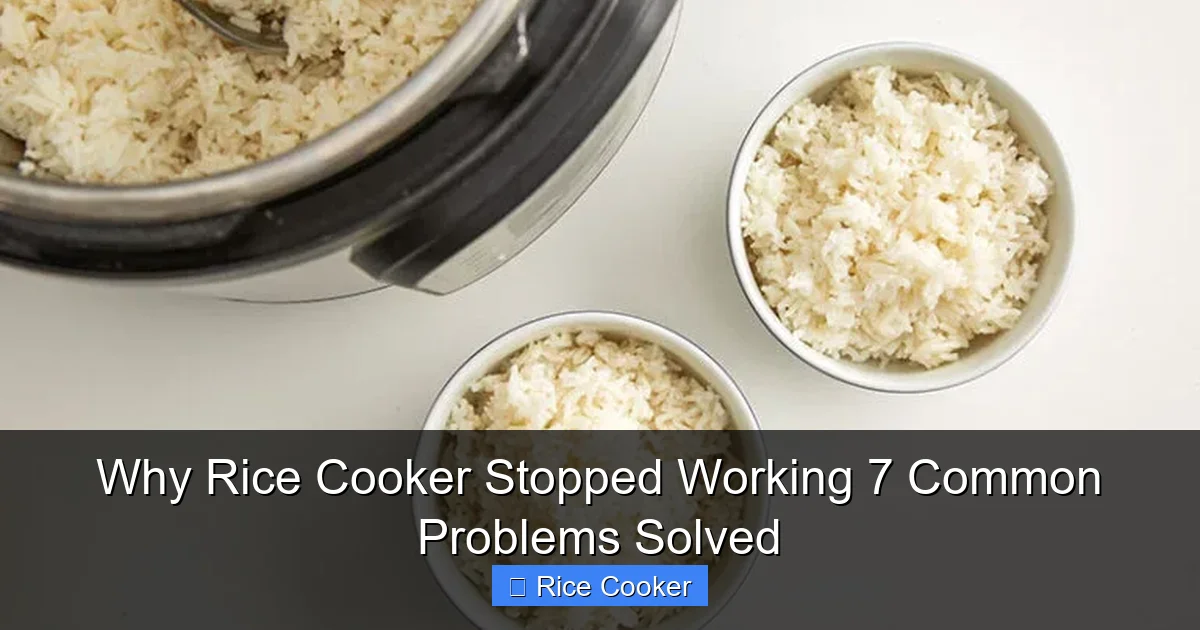
You followed the recipe, but your rice came out crunchy. This common complaint has several possible causes, from simple user error to serious component failure.
Visual guide about Why Rice Cooker Stopped Working 7 Common Problems Solved
Image source: sushiandrice.com
Water Ratio Problems
The most common reason rice stays hard is too little water. Different rice types need different water amounts. White rice typically uses a 1:2 ratio (one cup rice to two cups water). Brown rice needs more water—usually 1:2.5.
Check your rice cooker’s manual for specific ratios. If you lost it, search online for your model number plus “water ratios.” The types of rice and best uses guide can also help you understand which rice needs more water.
Faulty Temperature Sensor
Your rice cooker has a temperature sensor that tells it when to switch from cooking to warming. If this sensor fails, the cooker may turn off too early. You’ll need to locate the sensor (usually a small metal probe near the inner pot) and test it with a multimeter.
Clean the sensor first with a soft cloth. Food buildup can insulate it and cause false readings. If cleaning doesn’t help, you may need a replacement sensor. These cost $15-30 and require basic soldering to install.
Worn Out Heating Element
The heating element at the bottom of your rice cooker can lose efficiency over time. If it’s not hot enough, your rice won’t cook properly. You can test it with a multimeter for continuity. If it reads infinite ohms, it’s broken.
Replacing a heating element is complex. It’s usually cast into the metal base and requires complete disassembly. For most home users, this means a repair shop or a new rice cooker. Consider the age and value of your appliance before investing in this repair.
Wrong Rice Type Settings
Many modern rice cookers have specific settings for white rice, brown rice, sushi rice, and more. Using the wrong setting can leave your rice undercooked. Brown rice needs a longer cooking time and higher temperature than white rice.
Always select the appropriate setting for your rice type. If your cooker only has one setting, use the manual water ratios mentioned above. Soaking brown rice for 30 minutes before cooking can also help it cook more evenly.
#4. Rice Is Overcooked Or Burnt
Nothing’s worse than opening your rice cooker to find a blackened mess. Burnt rice means the cooker either ran too long or got too hot.
Timer Malfunction
The timer controls how long your rice cooker stays in the cooking cycle. If it sticks or fails, the cooker keeps heating long after the rice is done. This is especially common in older models with mechanical timers.
Test the timer by listening for a click when it should switch to warm mode. If you don’t hear it, the timer may be faulty. Replacement timers cost $20-40. Installation involves removing the control panel and swapping out the old timer.
Thermostat Problems
The thermostat regulates temperature during cooking. If it fails in the closed position, your rice cooker runs too hot. You can test it with a multimeter for continuity at different temperatures. If it doesn’t open when it should, it needs replacement.
Thermostats are relatively inexpensive ($10-25) and easier to replace than heating elements. Most models have the thermostat mounted near the heating plate with two screws. Simply disconnect the wires and install the new one.
Too Much Water
While too little water causes hard rice, too much water can create a different problem. Excess water causes overflow that drips onto the heating element, creating steam that burns the bottom layer of rice.
Always measure water carefully. Use the measuring cup that came with your rice cooker—it’s calibrated for the pot’s size. If you don’t have it, use standard ratios but start with less water. You can always add more if needed.
Incorrect Settings
Using the “keep warm” function too long after cooking can burn rice. The warm setting is designed for short-term holding, not overnight warming. Once your rice finishes cooking, serve it or transfer it to a separate container.
Some rice cookers have a “porridge” or “slow cook” setting that runs longer than the standard rice cycle. Using these for regular rice will definitely burn it. Always match the setting to what you’re cooking.
#5. Rice Cooker Is Leaking Water
Water pooling under your rice cooker is messy and potentially dangerous. Leaks usually come from the steam vent or overfilling.
Condensation Issues
Some condensation under the lid is normal. As steam escapes, it cools and drips. However, excessive dripping that leaks out the sides means the vent is blocked or the lid isn’t sealing properly.
Check the steam vent for food debris. It’s usually a small hole on the lid or top of the cooker. Clean it with a toothpick or pipe cleaner. Run water through it to ensure it’s clear. Blocked vents cause pressure buildup that forces water out the sides.
Damaged Steam Vent
If the vent itself is cracked or warped, it won’t release steam properly. Inspect it for damage. Plastic vents can become brittle with age and heat. Metal vents can corrode. If you find any damage, replace the vent assembly.
Vent replacements are model-specific. Contact the manufacturer with your serial number. Most cost $15-35. Installation is usually simple—just unscrew the old vent and screw in the new one.
Overfilling the Pot
Every rice cooker has a maximum fill line. Exceeding it leaves no room for the rice to expand and water to bubble up. This causes overflow that leaks out the sides.
Never fill your inner pot past the “MAX” line. For most cookers, this is about two-thirds full with dry rice. When the rice absorbs water, it expands to fill the pot perfectly. If you need to cook more rice, use a larger cooker or cook in batches.
Seal Problems
The lid seal creates a tight closure that keeps steam in. Over time, this rubber gasket can harden, crack, or lose its shape. When it fails, steam and water escape around the edges.
Inspect the seal for damage. It should be pliable and form a complete circle. If it’s cracked or flattened, replace it. Gaskets cost $10-20 and are easy to install—just peel off the old one and press the new one into place.
#6. Unusual Noises Or Smells
Strange sounds or odors from your rice cooker mean something’s wrong. Don’t ignore these warning signs.
Burning Smell Warning
A burning smell is serious. It could mean food is stuck to the heating element, or electrical components are overheating. Unplug the cooker immediately and let it cool.
Check the inner pot for stuck-on food. Remove it and clean the heating plate with a non-abrasive scrubber. If you still smell burning after cleaning, the problem is electrical. Stop using the cooker and call a repair professional.
Crackling Or Popping Sounds
Some popping is normal as water boils and turns to steam. But loud crackling or arcing sounds suggest a problem. This could be water dripping onto the heating element or electrical arcing inside the cooker.
Unplug the cooker and inspect the heating plate for moisture. Dry it completely with a towel. If the sounds continue after drying, there may be a loose wire touching metal. This requires professional repair.
Electrical Odors
If you smell ozone (like the air after a lightning storm) or hot plastic, electrical components are failing. This is different from food burning. Unplug the cooker right away.
Electrical odors mean you should stop using the appliance until it’s repaired. Continuing to use it could cause a fire. Take it to a certified repair shop for diagnosis.
#7. Display Error Codes
Modern rice cookers display error codes when something goes wrong. These codes are your best diagnostic tool.
Common Error Code Meanings
Most brands use similar codes. “E01” or “E1” usually means a sensor problem. “E02” or “E2” often indicates a heating issue. “E03” typically signals a temperature problem. Your manual will have the exact meaning for your model.
If you lost your manual, search online for your model number plus “error codes.” Most manufacturers publish PDF manuals on their websites. You can also call customer service with your model number.
Resetting Your Rice Cooker
Sometimes error codes appear due to temporary glitches. Try resetting your cooker by unplugging it for 10-15 minutes. This clears the computer’s memory and may clear the error.
After resetting, plug it back in and try a simple cooking cycle. If the error returns, the problem is real and needs diagnosis. Don’t keep resetting and trying to cook—this can damage components further.
When Error Codes Mean Serious Trouble
Some error codes indicate expensive problems. “E04” often means the main control board has failed. “E05” can signal a shorted heating element. These repairs cost more than the cooker’s value.
Get a repair estimate before proceeding. If the estimate exceeds 50% of a new cooker’s price, replacement makes more sense. Modern rice cookers are reliable and energy-efficient, so upgrading might be the smarter choice.
Quick Troubleshooting Reference Table
Use this table to quickly identify and fix common rice cooker problems.
| Problem | Most Likely Cause | Quick Fix |
|---|---|---|
| No power at all | Loose cord or tripped breaker | Check plug and reset breaker |
| Won’t start cooking | Stuck button or failed switch | Clean buttons with alcohol |
| Rice is hard | Wrong water ratio | Use 1:2 ratio for white rice |
| Rice is burnt | Timer or thermostat failure | Replace timer mechanism |
| Water leaking | Blocked steam vent | Clean vent with toothpick |
| Strange noises | Food on heating element | Clean heating plate |
| Error codes | Sensor or control failure | Reset or call for service |
Prevention: How to Keep Your Rice Cooker Working Forever
The best way to fix a rice cooker is to prevent problems from happening. Follow these simple maintenance tips.
Clean your rice cooker after every use. Remove the inner pot and wash it with warm, soapy water. Wipe the heating plate with a damp cloth to prevent food buildup. Never immerse the base in water.
Descale monthly if you have hard water. Fill the pot with equal parts water and white vinegar. Run a cooking cycle, then rinse thoroughly. This removes mineral deposits that can insulate the heating element.
Store your rice cooker with the lid open. This prevents moisture buildup and mold growth. Keep it in a dry cabinet away from humidity.
Use the right pot for your cooker. Never use a different pot in the base—the metal must match for proper heat transfer. If your inner pot gets dented or scratched, replace it. Damaged pots don’t conduct heat evenly.
Finally, learn to cook rice perfectly every time. Perfect rice means less chance of overflow or burning. The how to cook rice perfectly every time guide will help you master the basics.
When to Replace Instead of Repair
Sometimes fixing your rice cooker doesn’t make economic sense. Here’s how to decide.
If your cooker is more than five years old and needs a major repair (heating element, control board, or thermal fuse), consider replacement. New models cost $30-100 and come with warranties. They’re also more energy-efficient.
Look at the repair cost versus replacement cost. If the repair quote exceeds $50 and a new cooker costs $75, buy new. You’ll get modern features like delay timers and multiple settings.
Safety matters most. If your cooker shows signs of electrical problems—burning smells, sparks, or exposed wires—stop using it immediately. Don’t try to repair electrical issues unless you’re trained. Buy a new one.
Consider the sentimental value. If your rice cooker is an heirloom or high-end model (like a Zojirushi or Tiger), repair might be worth it. These brands have parts available for 10+ years. For a basic $30 model from a big-box store, replacement is smarter.
Conclusion: Your Rice Cooker Will Be Back in Action
When your rice cooker stopped working, it felt like the end of the world. But as you’ve learned, most problems have simple solutions. From checking the power cord to cleaning the steam vent, these fixes take minutes, not hours.
Remember the seven most common issues: power problems, button failures, undercooked rice, burnt rice, leaks, strange noises, and error codes. Use the troubleshooting table to quickly identify what’s wrong. Follow the prevention tips to avoid future breakdowns.
Your rice cooker is a reliable workhorse that can last for years with proper care. Now that you know how to fix it, you’ll never have to worry about takeout rice again. Get back to cooking perfect rice every time with confidence.
And when you’re ready to put your repaired rice cooker to work, try the easy rice and beans recipe for a delicious, budget-friendly meal that your whole family will love.
