
Rice Cooker Not Switching to Warm? Causes and 7 Fixes

If your rice cooker is not switching to warm, the most common reasons are too much water in the pot, a dirty heating plate or warped inner pot that stops the thermostat from sensing the heat, or a worn thermostat that no longer trips. If the light switches to warm but the rice goes cold, the keep-warm heater or its thermostat has failed. Start with the water ratio and a clean, flat pot. Those two fix most cases without tools.
How a Rice Cooker Knows When to Switch to Warm
A basic rice cooker does not use a timer. Under the inner pot sits a spring-loaded thermostat that presses against the pot’s base. While there is still free water in the pot, the temperature stays near boiling point, about 100°C (212°F). Once the rice absorbs the last of the water, the pot base gets hotter than that. The thermostat senses the jump and flips the cooker to warm, usually with an audible click.
Digital and fuzzy logic models do the same job with an electronic temperature sensor and a control board, but the principle is identical: the switch happens when the water is gone. That is why most “won’t switch to warm” problems are really about heat not reaching the sensor properly, or the sensor itself.
Symptom, Likely Cause and Fix
| What you see | Likely cause | First fix |
|---|---|---|
| Stays on cook for a long time, rice is soggy | Too much water | Use the cup and line marks for your rice type |
| Stays on cook, bottom burns | Dirty plate, warped pot or sticking thermostat | Clean the plate, check the pot sits flat |
| Switches to warm too early, rice is hard | Too little water or debris under the pot | Add water, clean the plate and sensor |
| Warm light on but rice goes cold | Keep-warm heater or warm thermostat failed | Repair or replace the cooker |
| Nothing heats at all | Blown thermal fuse or power fault | Check outlet, then fuse or replace |
| Digital model shows an error code | Sensor or control board fault | Check the manual for the code |
Before You Start
Unplug the cooker and let it cool completely before you touch the heating plate or look underneath. Never put the base unit in water. If your cooker is still under warranty, contact the maker before opening the case, because opening it usually voids the warranty.
Fix 1: Check the Water Ratio
This is the most common cause and the easiest to fix. If there is too much water, the pot keeps boiling and the thermostat never sees the temperature rise, so the cooker stays on cook much longer than normal. Use the measuring cup that came with your cooker and fill to the line marked for that number of cups. White rice and brown rice often have different lines. If you rinse rice, drain it well so extra water does not stay in the pot.
Fix 2: Clean the Heating Plate and Pot Base
Grains of rice, burnt starch or mineral scale on the heating plate stop the pot from touching the thermostat properly. The cooker then reads the temperature late or not at all.
- Lift out the inner pot and look at the heating plate and the round sensor button in its center.
- Wipe the plate with a damp cloth. For dried-on starch, use a little dish soap on the cloth, then wipe again with clean water.
- For hard-water scale or light burnt spots, use a soft brush or a fine nylon scrub pad. Do not use steel wool or sharp tools.
- Check the outside bottom of the inner pot as well and clean off any residue.
- Dry everything fully before plugging in again.
For burnt marks inside the pot, see our guide on how to clean a burnt rice cooker bottom.
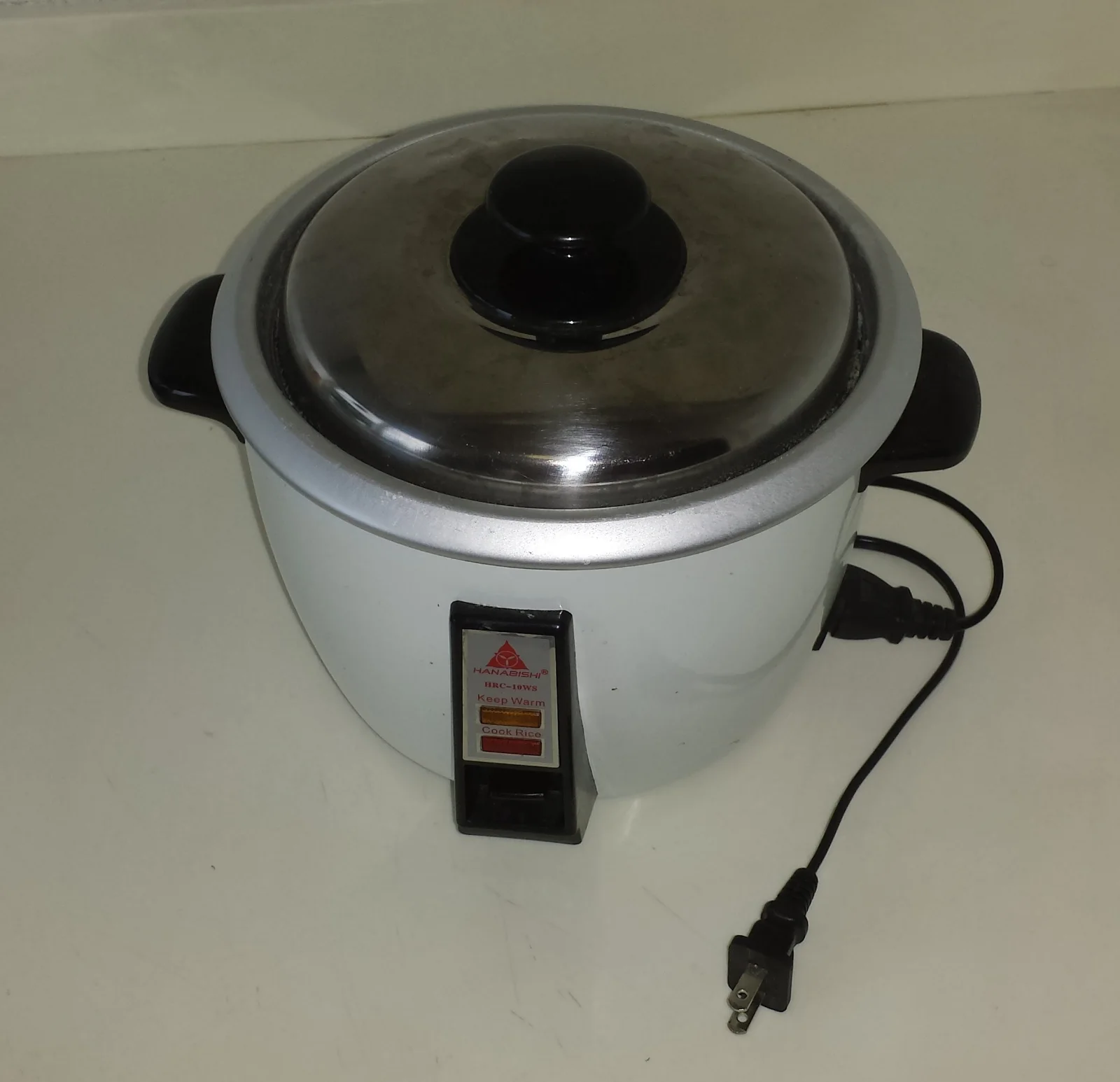
Fix 3: Make Sure the Pot Sits Flat
The pot must sit level and press down on the spring-loaded sensor. A dented or warped pot, or one from a different model, leaves a gap. Set the pot in place and turn it gently. It should sit flat without rocking, and you should feel the center button push back slightly. If the base of the pot is dented, a replacement pot made for your model usually solves the problem.
Fix 4: Check the Thermostat Moves Freely
On basic cookers, press the center sensor button down with your finger while the cooker is unplugged. It should move smoothly and spring back. If it sticks, food or scale may be jammed around it. Clean around the edge with a dry soft brush. A thermostat that is weak or stuck after cleaning needs replacing. On many low-cost cookers the part costs more in time than a new cooker, so compare before you repair.
Fix 5: Test the Keep-Warm Function Separately
If the cooker clicks to warm but the rice cools down, the cooking side works and the keep-warm side has failed. Many basic cookers have a small separate warming heater and a bimetal warm thermostat. Fill the pot with a little water, let it switch to warm and check after 20 minutes whether the water is still hot. If it is cold, the warm circuit is faulty. Repairs need a qualified technician or a replacement cooker.
Fix 6: Rule Out Power Problems
Plug the cooker straight into a wall outlet you know works, not a long extension lead or a shared power strip. Check the cord for damage at both ends. If the cooker does not heat at all, the thermal fuse may have blown. The fuse is a safety part that cuts power when the cooker overheats, often after it was run dry or with a dirty plate. Replacing it means opening the base, which is a job for someone confident with electrical repairs.
Fix 7: Digital Models: Reset and Check Error Codes
For digital or fuzzy logic cookers, unplug the cooker for 10 minutes to reset the control board, then try a normal cook. If a code like E1, E2 or H appears, look it up in your manual, because the meaning changes from brand to brand. Repeated sensor errors usually mean the sensor or control board needs service.
When to Replace the Rice Cooker
Replace it if the cord or plug is damaged, you smell burning plastic, the base gets hot on the outside, the thermal fuse keeps blowing, or the repair costs more than half the price of a new cooker. Basic models are inexpensive, and a new one with a reliable keep-warm function is often the safer choice. If you are shopping, our guide to the best rice cooker for a small kitchen is a good place to start.
How to Prevent the Problem
- Wipe the heating plate and pot base after each use so starch does not build up.
- Always use the correct water line for the rice type and amount.
- Never run the cooker empty or with only a few spoonfuls of water.
- Keep the inner pot from being dropped or used on a stove, which can warp it.
- Leave the lid open after cleaning so the cooker dries fully.
Frequently Asked Questions
Why does my rice cooker stay on cook for so long?
Usually because there is extra water in the pot, so it keeps boiling. A dirty plate or a pot that does not sit flat can also delay the switch.
Why does my rice cooker switch to warm before the rice is done?
There may not be enough water, or something under the pot is making the sensor heat up too fast. Add the right amount of water and clean the plate.
Is it safe to keep using a rice cooker that won’t switch to warm?
Only if you stay nearby and switch it off yourself. A cooker that never switches can burn the rice and overheat. Fix or replace it if it keeps happening.
How long should rice stay on warm?
Food safety advice is to eat cooked rice soon after cooking or cool and refrigerate it within about an hour. Many makers say rice can stay on warm for several hours, but quality drops and it can dry out.
Can I fix the thermostat myself?
Cleaning around it is easy and safe when unplugged. Replacing it means opening the base and handling mains wiring, so leave that to a qualified repair person unless you have electrical experience.
Final Thoughts
A rice cooker switches to warm when the water is gone and the heat reaches the sensor. Get the water ratio right, keep the plate and pot base clean, and make sure the pot sits flat, and most cookers will start switching normally again. If the warm light comes on but the rice goes cold, or the cooker shows signs of overheating, it is time for a repair or a new cooker. For better results next time, see our guide on how to cook rice perfectly every time.