Best Rice Cooker for Health Conscious Users Top Rated Picks

Finding the best rice cooker for health conscious users means prioritizing non-toxic materials and smart features that preserve nutrients. This guide reveals how the right appliance can simplify healthy eating with perfect brown rice, steamed vegetables, and more. Learn exactly what to look for and how to use your cooker for maximum wellness benefits.
Key Takeaways
- Choose non-toxic materials: Look for ceramic, stainless steel, or titanium-coated inner pots to avoid harmful chemicals like PFOA and BPA.
- Prioritize nutrient retention: Advanced models with fuzzy logic and germinated rice settings preserve up to 30% more vitamins than standard cookers.
- Opt for versatile functions: The best rice cooker for health conscious users includes steaming, slow cooking, and porridge settings for complete meals.
- Consider portion control: Smaller 3-5 cup models prevent overeating and reduce food waste for solo cooks or couples.
- Check cleaning ease: Removable, dishwasher-safe parts with non-stick coatings make healthy cooking sustainable long-term.
- Master the soak: Pre-soaking brown rice for 30 minutes before cooking reduces phytic acid and improves digestibility.
- Use the keep-warm wisely: Limit keep-warm time to 2 hours maximum to prevent nutrient degradation and bacterial growth.
Why a Rice Cooker is Your Healthy Kitchen Ally
If you’re serious about eating well, a rice cooker might be the most underrated tool in your kitchen. The best rice cooker for health conscious users does so much more than just prepare grains. It steams vegetables, cooks whole grains, and even ferments foods—all while preserving nutrients that traditional cooking methods often destroy.
Think about it: how many times have you skipped making brown rice because it takes too long? Or burned your quinoa because you got distracted? A quality rice cooker solves these problems automatically. For health-focused eaters, this means consistent access to whole grains, which are essential for balanced nutrition.
But not all rice cookers are created equal when it comes to health. Some contain questionable chemicals in their non-stick coatings. Others cook at temperatures that destroy delicate nutrients. This guide will show you exactly what separates a truly healthy rice cooker from just another kitchen gadget.
Key Features to Look for in a Health-Conscious Rice Cooker
Before you buy, understand which features actually matter for your health goals. The best rice cooker for health conscious users should check these boxes:

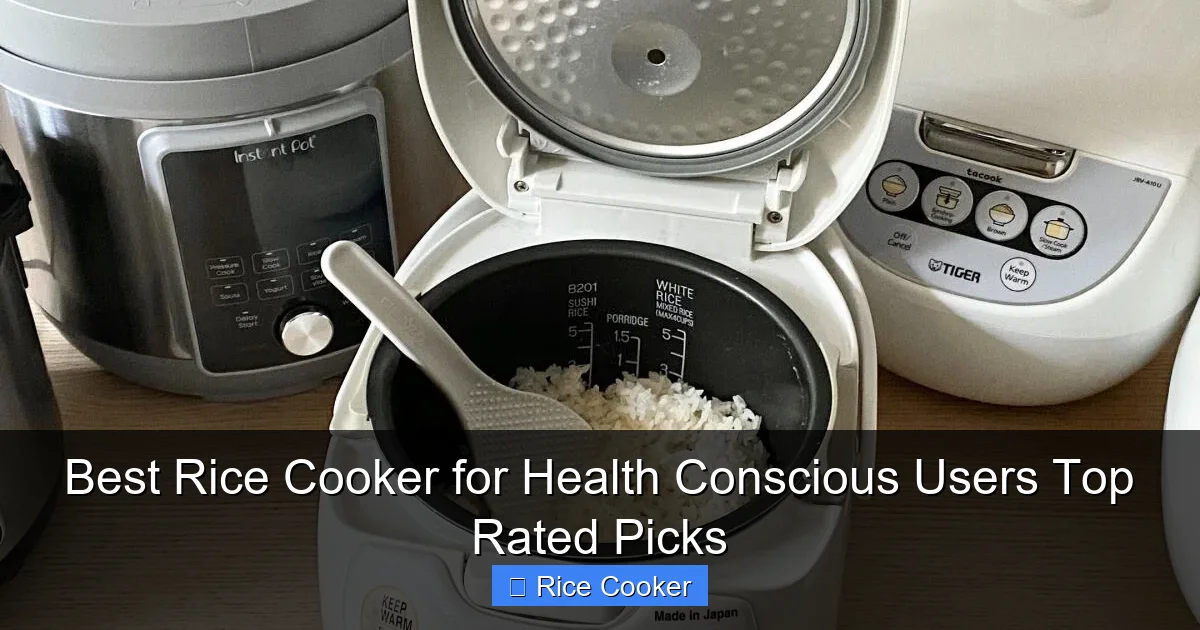
Visual guide about Best Rice Cooker for Health Conscious Users Top Rated Picks
Image source: ricecookeradvice.com
1. Non-Toxic Inner Pot Material
This is non-negotiable. Most budget rice cookers use aluminum pots with chemical non-stick coatings that can leach into your food, especially when cooking acidic foods or at high temperatures.
Instead, look for:
- Ceramic: Naturally non-stick, chemical-free, and excellent at distributing heat evenly.
- Stainless steel: Durable, inert, and won’t react with foods. Look for 304-grade or higher.
- Titanium or diamond-infused: Premium options that offer superior non-stick properties without harmful chemicals.
Avoid anything labeled “PFOA-free” alone—this is a marketing term that doesn’t guarantee safety. The best brands will explicitly state they’re free from PFOA, PTFE, lead, and cadmium.
2. Multiple Cooking Settings
Brown rice, white rice, wild rice, quinoa, oats—your cooker should handle them all. The best rice cooker for health conscious users recognizes that different grains require different cooking approaches.
Essential settings include:
- Germinated brown rice: This setting soaks and cooks brown rice at precise temperatures to activate enzymes and increase GABA (gamma-aminobutyric acid), a nutrient linked to reduced stress.
- Quick cooking: For when you’re short on time but still want whole grains.
- Slow cook: Perfect for making healthy congee or fermenting rice for probiotic benefits.
Bonus points for a steaming tray. This lets you cook vegetables above your rice, creating a complete one-pot meal that retains up to 90% of water-soluble vitamins.
3. Fuzzy Logic Technology
Don’t let the name fool you—this is about intelligent cooking. Fuzzy logic allows the rice cooker to adjust temperature and time based on the amount of rice, water, and even ambient humidity.
For health-conscious users, this means:
- Perfectly cooked grains every time (no more gummy or undercooked brown rice)
- Better nutrient retention through optimized cooking curves
- Energy efficiency, which is better for the planet
While more expensive, fuzzy logic models often pay for themselves in reduced food waste and consistently better results.
4. Proper Keep-Warm Functionality
The keep-warm feature is convenient, but it can be a double-edged sword for health. Leaving rice on keep-warm for hours degrades B vitamins and can create resistant starch that’s harder to digest.
The best rice cooker for health conscious users includes:
- Automatic shut-off after 2-3 hours
- Adjustable keep-warm temperatures (ideally 140°F or lower)
- Timer functions so you can delay cooking without over-keeping
Some premium models even switch to a “resting” mode that cycles power on and off to maintain freshness without continuous heat exposure.
Step-by-Step: Choosing Your Perfect Health-Focused Rice Cooker
Ready to shop? Follow this process to find your ideal match.
Visual guide about Best Rice Cooker for Health Conscious Users Top Rated Picks
Image source: helios-i.mashable.com
Step 1: Determine Your Capacity Needs
Overcooking leads to waste and overeating. Be honest about how much rice you actually need.
- 1-2 people: Choose a 3-cup (uncooked) model
- 3-4 people: Go for 5-6 cups
- 5+ people or meal prepping: Consider 8-10 cups
Remember: rice expands 3-4 times when cooked. A 3-cup cooker makes 9-12 cups of cooked rice—plenty for meal prep.
Step 2: Set Your Budget
Healthy rice cookers range from $50 to $400+. Here’s what you get at each level:
- $50-$100: Basic models with stainless steel or ceramic pots. Limited settings but safe materials.
- $100-$200: Mid-range with fuzzy logic, multiple grain settings, and better build quality.
- $200+: Premium features like induction heating, germinated rice settings, and advanced keep-warm controls.
For most health-conscious users, the $100-$200 range offers the best value. You get safety features and smart cooking without paying for unnecessary bells and whistles.
Step 3: Research Brands Known for Safety
Not all brands prioritize health. Stick with companies that have transparent material sourcing and third-party testing.
Look for:
- FDA compliance statements
- LFGB certification (German food safety standard, stricter than FDA)
- Explicit “no harmful chemicals” labeling
- Positive reviews from health-focused cooking communities
Step 4: Read the Fine Print on Materials
Go beyond the marketing claims. Check product manuals and manufacturer websites for:
- Exact inner pot material composition
- Coating thickness and type
- Temperature limits for non-stick surfaces
- Warranty coverage for pot coating durability
If you can’t find this information easily, the brand probably isn’t prioritizing transparency.
Step 5: Test Drive Before Committing
If possible, see the cooker in person. Check:
- Weight of the inner pot (heavier usually means better quality)
- Ease of removing and replacing the pot
- Clarity of control panel (confusing buttons lead to improper use)
- Steam vent design (should be easy to clean to prevent mold)
Step-by-Step: Using Your Rice Cooker for Maximum Nutrition
Having the best rice cooker for health conscious users is only half the battle. Use it correctly to unlock its full health potential.
Visual guide about Best Rice Cooker for Health Conscious Users Top Rated Picks
Image source: ricecookerjunkie.com
Step 1: Rinse Your Rice Properly
Rinsing removes surface starch and reduces arsenic levels in rice by up to 30%. Here’s how:
- Place rice in a fine-mesh strainer
- Rinse under cool water for 30-60 seconds
- Gently rub grains between your fingers
- Stop when water runs mostly clear
For brown rice, consider soaking for 30 minutes to 2 hours before cooking. This reduces phytic acid, an anti-nutrient that blocks mineral absorption. Learn more about perfect rice preparation.
Step 2: Use the Right Water-to-Rice Ratio
Too much water dilutes nutrients. Too little leaves rice undercooked. Follow these guidelines:
- White rice: 1:1.5 ratio (1 cup rice to 1.5 cups water)
- Brown rice: 1:2 ratio (1 cup rice to 2 cups water)
- Wild rice: 1:3 ratio (1 cup rice to 3 cups water)
- Quinoa: 1:2 ratio (1 cup quinoa to 2 cups water)
Many health-conscious models include measuring cups specifically calibrated for these ratios. Use them—they’re more accurate than standard measuring cups.
Step 3: Choose the Correct Setting
Using the “white rice” setting for brown rice is like using a bicycle to cross the country—it might get you there, but it’s not efficient.
Match your grain to its specific setting:
- White rice: Quick or regular white setting
- Brown rice: Brown rice or whole grain setting
- Mixed grains: Multigrain or mixed setting
- Vegetables: Steam setting (3-5 minutes for leafy greens, 8-10 for dense veggies)
When in doubt, consult your manual. The best rice cooker for health conscious users will have clear guidance for each grain type.
Step 4: Steam Your Vegetables While Rice Cooks
This one technique transforms your rice cooker into a complete meal machine. Place chopped vegetables in the steaming basket above your rice. As steam rises from the cooking rice, it gently cooks your veggies without leaching nutrients into water.
Try these combinations:
- Broccoli and carrots with brown rice
- Spinach and mushrooms with quinoa
- Green beans and bell peppers with white rice
Season with herbs instead of salt to keep meals low-sodium. A squeeze of lemon after cooking adds vitamin C that helps with iron absorption from whole grains.
Step 5: Let Rice Rest Before Serving
After cooking, let rice sit (with the lid on) for 10-15 minutes. This allows:
- Even distribution of moisture
- Better texture and fluffiness
- Reduction of resistant starch
- More consistent nutrient availability
Then fluff with a fork instead of a spoon to avoid compacting the rice and releasing more starch.
Healthy Rice Cooking Tips and Techniques
Master these advanced strategies to get even more from your appliance.
Make Germinated Brown Rice at Home
Germinated brown rice (GABA rice) is soaked and partially sprouted before cooking, which increases its nutritional value dramatically. If your cooker has a germinated setting, use it. If not, you can germinate manually:
- Rinse 1 cup brown rice thoroughly
- Soak in water for 24 hours at room temperature
- Drain and rinse every 8 hours
- When tiny sprouts appear (about 1mm), cook immediately on brown rice setting
This process increases GABA by up to 10x and makes minerals more bioavailable.
Create Healthy Rice Bowls
Use your rice cooker as a foundation for complete meals. Cook your base grain, steam your vegetables, then assemble with:
- Lean protein (grilled chicken, tofu, beans)
- Healthy fats (avocado, nuts, olive oil)
- Fermented foods (kimchi, sauerkraut)
- Fresh herbs (cilantro, basil)
These bowls are perfect for healthy lunch ideas for workdays and meal prep.
Batch Cook for the Week
Cooking once and eating multiple times is a cornerstone of healthy food habits for beginners. Most rice cookers make 6-10 cups of cooked rice easily.
Cool cooked rice quickly on a baking sheet (prevents bacterial growth), then store in airtight containers in the fridge for up to 5 days. Reheat with a splash of water to restore moisture.
Make Healthy Congee
Congee is a healing rice porridge used in traditional medicine. Use the slow cook or porridge setting:
- 1 part rice to 8-10 parts water
- Cook for 2-3 hours on low
- Add medicinal herbs like ginger or turmeric
- Top with scallions and sesame oil
This easily digestible meal is perfect for recovery or when you need gentle nutrition.
Clean Your Cooker Properly
Harmful bacteria can grow in neglected steam vents and lids. Clean after every use:
- Remove inner pot and wash with warm, soapy water
- Wipe the inner lid and steam vent with a damp cloth
- Never immerse the main unit in water
- Check manufacturer instructions for dishwasher safety
A clean cooker not only lasts longer but prevents cross-contamination and off-flavors.
Troubleshooting Common Health-Focused Rice Cooker Issues
Even the best rice cooker for health conscious users can have hiccups. Here’s how to solve them without compromising your health goals.
Problem: Rice Tastes Metallic or Chemical
Solution: This usually indicates coating breakdown or low-quality materials. Stop using the cooker immediately. If the pot is scratched or peeling, replace it. For new cookers, try boiling a 1:1 vinegar-water solution for 10 minutes, then rinse thoroughly. This can remove manufacturing residues.
Problem: Brown Rice Comes Out Gummy
Solution: You’re likely overcooking. Brown rice needs more water but less time than you think. Try reducing water by 1/4 cup and ensure you’re using the brown rice setting. Also, make sure you’re rinsing and soaking properly before cooking.
Problem: Vegetables Are Mushy After Steaming
Solution: Timing is everything. Add vegetables only during the last 5-10 minutes of cooking. Dense vegetables like carrots need more time than leafy greens. Use the steaming basket that came with your cooker—it’s designed for optimal airflow.
Problem: Keep-Warm Makes Rice Hard
Solution: Extended keep-warm degrades texture and nutrients. If you won’t eat within 2 hours, turn off the cooker and refrigerate. Some models have a “fresh keep” setting that cycles heat—use this instead of continuous keep-warm.
Problem: Rice Sticks to the Bottom
Solution: This can happen with older non-stick coatings. Try using a light coating of healthy oil (coconut or avocado) before adding rice and water. Or consider replacing the inner pot with a ceramic or stainless steel version if your brand sells replacements.
Problem: Cooker Won’t Switch from Cook to Warm
Solution: Usually a thermostat issue. Unplug the cooker and let it cool completely. Check that the inner pot is sitting flat on the heating plate. If the problem persists, contact the manufacturer—don’t continue using a malfunctioning appliance.
Conclusion: Making the Most of Your Health-Conscious Rice Cooker
The best rice cooker for health conscious users is more than just a convenient appliance—it’s a tool that can transform your relationship with whole grains and healthy eating. By choosing non-toxic materials, using the right settings, and following proper preparation techniques, you’ll unlock more nutrition in every bowl.
Remember that consistency beats perfection. Even a basic healthy rice cooker used regularly will serve you better than a premium model gathering dust. Start with one grain type you love, master it, then expand your repertoire.
Pair your rice cooker with other healthy habits like healthy cooking tips for families and smart meal prep, and you’ll build a sustainable approach to wellness that doesn’t feel like a chore. Your body will thank you with more energy, better digestion, and the satisfaction of knowing exactly what’s in your food.