Healthy Workday Lunches – Simple Meals That Boost Focus

You want lunches that save time, fuel your afternoon, and taste good. I write this with Emma Reed to share simple, practical ideas you can use right away. Pack meals that combine protein, fiber, and healthy fats so you stay full and focused through the workday.
I’ll walk you through easy recipes, smart meal-prep steps, and storage tips that fit a busy schedule. Expect options for meat-eaters, vegetarians, and anyone with dietary needs, plus snacks and reheating tricks to keep lunches fresh.
Key Takeaways
- Plan lunches that balance protein, carbs, and healthy fats for lasting energy.
- Use quick meal-prep and smart storage to save time and reduce stress.
- Choose simple swaps to fit different diets while keeping meals tasty and portable.
Healthy Workday Lunches – Simple Meals That Boost Focus
Benefits of Healthy Lunches for Workdays
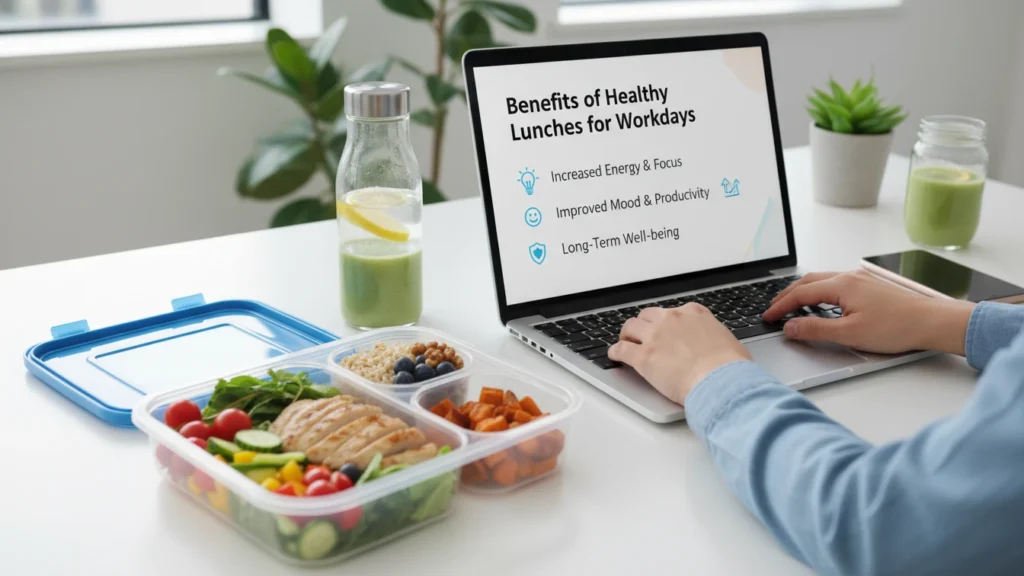
I notice clear gains when I choose a healthy lunch: sharper focus, steady energy, and meals that fit my nutrition goals. These benefits make workdays smoother and help me avoid afternoon slumps or overeating later.
Improved Productivity
When I eat a balanced lunch, I concentrate better during afternoon tasks. Meals with lean protein and whole grains—like grilled chicken with quinoa or a tuna salad on whole-wheat bread—help maintain my attention for meetings and detailed work. I avoid heavy, greasy foods that make me slow or drowsy.
I also plan for easy digestion. Including vegetables and a moderate portion size prevents the sluggish feeling that kills productivity. Simple routines, such as prepping lunches the night before, cut decision time at noon and help me stay on task.
For evidence-based tips on fueling work performance, I refer to resources from trusted health organizations like the American Heart Association.
Sustained Energy Levels
I aim for steady blood sugar by combining protein, fiber, and healthy fats. For example, pairing hummus and vegetables with a small portion of brown rice gives me lasting energy without spikes. Snacks like a small handful of almonds or Greek yogurt help bridge long afternoons.
Timing matters. I eat a main lunch plus a small protein-rich snack 3–4 hours later when my schedule allows. That pattern keeps my energy stable and reduces the urge for sugary snacks or multiple coffees.
If I travel or eat at my desk, I pack cold-friendly options—egg salad on whole-grain crackers or a protein bento—to avoid relying on vending machines or fast food.
Better Nutritional Balance
I use lunch to hit key nutrients: fiber from vegetables and whole grains, protein from beans or fish, and healthy fats from avocado or olive oil. That mix supports heart health and keeps me full longer. A simple checklist helps me assemble balanced lunches quickly.
Meal prepping helps me control portions and avoid extra sodium or added sugars common in takeout. I follow credible guidance for healthy portions and food safety from sources such as the USDA to plan meals that fit my goals.
By swapping refined carbs for whole grains and adding a colorful vegetable, I improve nutrient density without extra effort. Small changes add up over the workweek and make it easier to meet daily nutrition targets.
Key Principles of a Balanced Workday Lunch
I focus on portions that match my energy needs, include protein, carbs, and fats in sensible amounts, and choose whole foods that stay fresh and boost focus. These choices help me avoid mid-afternoon crashes and keep my meals simple to pack and eat at work.
Portion Control
I match portion size to how active my afternoon will be. For a desk job, I aim for about 400–600 calories. That usually looks like a palm-sized protein, a cupped-hand portion of cooked grains or starchy veg, and two handfuls of salad or cooked vegetables.
I use easy tools to stay consistent: a food scale for meal prep, measuring cups for grains, or visual cues—like half the plate for veggies. I avoid oversized single-portion containers and split larger portions into two meals if needed.
I also watch calorie-dense extras: oils, nuts, and dressings. I measure 1–2 tablespoons of dressing or oil and keep nut servings to a small handful. This keeps the meal satisfying without making me sleepy.
Macronutrient Composition
I aim for a mix: about 25–35 g of protein, 30–50 g of carbohydrates, and 10–20 g of healthy fats per lunch. That balance helps steady blood sugar and keeps me alert through the afternoon.
Good protein choices I pack include grilled chicken, canned tuna, tofu cubes, or a hard-boiled egg. For carbs, I prefer brown rice, whole-grain bread, or a medium sweet potato. For fats, I add avocado slices, olive oil, or a small handful of almonds.
I vary the balance by day: heavier protein and veggies on busy workdays, and a bit more carbs before long meetings or physical activity. I keep portions simple and measurable to avoid guessing.
Incorporating Whole Foods
I pick foods that need little processing and travel well. Fresh vegetables, whole grains, beans, eggs, and plain yogurt form the base of most lunches I prepare. These options stay nutrient-dense and help me feel fuller longer.
I prep items in advance: roast a batch of veggies, cook a pot of quinoa, or portion hummus into small containers. I avoid highly processed ready meals that have added salt and sugar. When I buy packaged items, I check labels for short ingredient lists and low added sugars.
I balance convenience with quality. Frozen vegetables, canned beans (rinsed), and pre-washed greens speed up prep while keeping meals wholesome.
Meal Prep Strategies for Busy Professionals
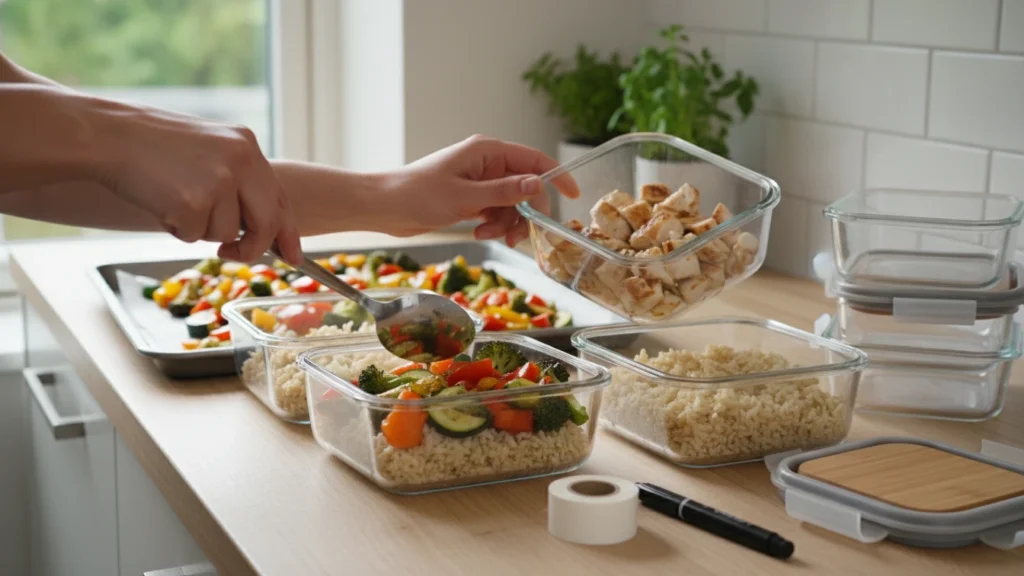
I focus on systems that save time, cut waste, and keep lunches tasty all week. You’ll get practical tips for cooking once, packing smart, and using tools that speed up weekday meals.
Batch Cooking Tips
I pick two or three recipes I can scale up, like baked chicken, roasted vegetables, and a grain (quinoa or brown rice). Cook proteins and grains in large pans or sheet trays at the same time to save oven cycles and reduce cleanup.
Use portion containers to divide food as soon as items cool. Label each container with the date and reheating instructions. Freeze half if you won’t eat it within 3–4 days to keep food safe.
Rotate flavors by keeping a small jar of different sauces or dressings. A single batch of chicken can become a salad, a grain bowl, or wraps with simple swaps. This keeps lunches varied without extra cooking.
Make-Ahead Lunch Ideas
I rely on three reliable formats: grain bowls, mason jar salads, and reheatable casseroles. Grain bowls: layer cooked grain, a protein, roasted veg, and a dressing in separate small containers to keep textures fresh.
Mason jar salads stay crisp when I put dressing at the bottom and hearty ingredients (beans, carrots) toward the middle. Flip into a bowl at work or shake in the jar before eating.
Casseroles and soups reheat well. Freeze single portions in microwave-safe containers and thaw in the fridge overnight. For safe storage guidance and recipe ideas, I consult USDA food safety tips and trusted recipe sites like the Mayo Clinic for balanced meal ideas.
Time-Saving Tools and Containers
I use a rice cooker with a timer, a sheet pan for roasting multiple items, and an instant pot for one-pot meals. These three appliances cut active time and let me set-and-forget.
For storage, I prefer glass meal prep containers with leak-proof lids and built-in compartments. Bento-style boxes keep wet and dry foods separate. Use silicone muffin tins to portion sauces or hard-boiled eggs.
Labeling tools matter: a dry-erase marker on containers or a roll of masking tape and date-stamp. I also pack an insulated lunch bag with an ice pack to keep perishable items cold until lunch.
Quick and Easy Healthy Lunch Ideas
I focus on recipes that take little time, need minimal cooking, and still give protein, fiber, and flavor. Choose simple swaps like whole-grain wraps, canned beans, or precooked chicken to save time and stay full.
No-Cook Recipes
I rely on no-cook lunches when mornings are tight. Start with canned tuna or chickpeas, mix with plain Greek yogurt, lemon, and chopped celery for a quick salad. Pair with whole-grain crackers or pita for a balanced bite.
Keep a few ready items in the fridge: hummus, sliced avocado, pre-washed greens, and grated carrots. Assemble a snack plate with hard cheese, olives, sliced apple, and a handful of nuts for variety and healthy fats. For refreshment, pack a cold soup like gazpacho or a store-bought vegetable soup labeled low-sodium; I check Nutrition Facts before buying.
If you want plant-based protein, mash canned white beans with olive oil, garlic powder, and parsley for a spread. These no-cook options cut prep to 5–10 minutes and travel well in a sealed container. For safe storage, keep cold items below 40°F in an insulated lunch bag.
Sandwiches and Wraps
I build sandwiches that hold up all morning by using sturdy breads like whole-grain ciabatta or wraps made from whole-wheat. Layer a protein—sliced turkey, grilled chicken, or mashed chickpeas—then add a moisture barrier such as hummus or avocado to keep bread from getting soggy.
Flavor boosters matter: add pickled onions, mustard, or a squeeze of lemon. For extra nutrition, include dark leafy greens, shredded carrots, and sliced bell pepper. Toasting the bread briefly adds crunch and helps seals in fillings if you prepare them the night before.
For warm options, I use a panini press or heated skillet to melt cheese and warm fillings; if you need ideas, the USDA MyPlate site offers clear portion tips. Wraps travel well and fit in lunchboxes. Cut sandwiches in half and wrap in parchment for easy handling.
Salads with Protein
I make salads that satisfy by starting with a base of sturdy greens like kale or romaine. Toss in a protein such as grilled chicken, hard-boiled eggs, canned salmon, or a cup of cooked quinoa. These proteins keep you full through the afternoon.
Texture and dressing matter: include a crunchy element—roasted chickpeas, toasted seeds, or sliced almonds—and a simple dressing of olive oil, vinegar, and a pinch of salt. Pack dressing separately to avoid soggy leaves. For quick meal prep, I roast a tray of mixed vegetables and a batch of chicken on Sunday to use in salads all week.
If you want guidance on mixing nutrients, the American Heart Association has clear advice on building balanced meals. Store salads in airtight containers with heavier ingredients on the bottom and greens on top to stay fresh.
International Inspiration for Workday Lunches
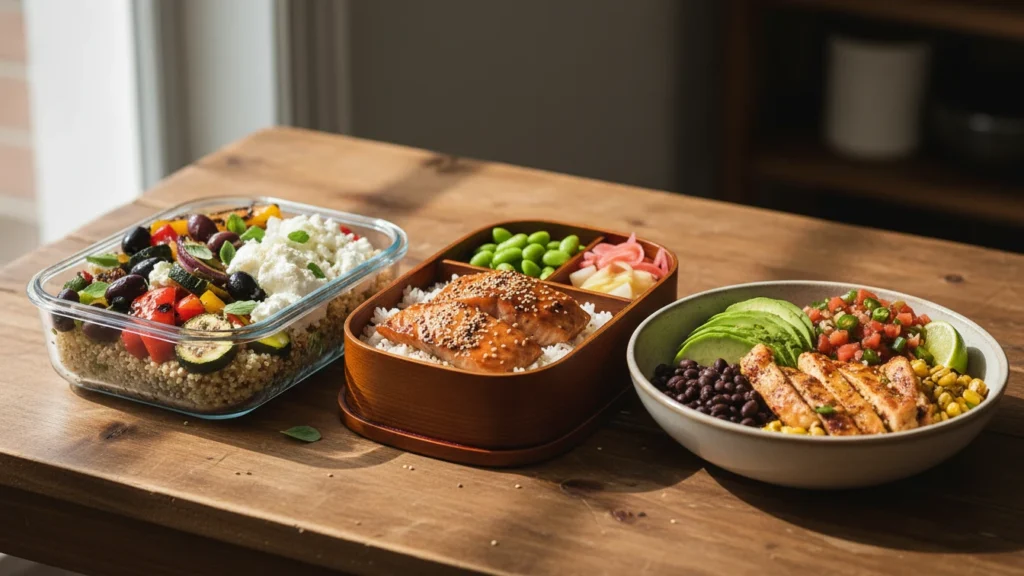
I pick flavors from different cuisines to keep lunches interesting and balanced. Each idea focuses on easy prep, strong protein, and ingredients that travel well.
Mediterranean Bowls
I build bowls around a base like quinoa, farro, or mixed greens. I add a protein — grilled chicken, tuna, chickpeas, or feta — and pick roasted vegetables such as eggplant, bell pepper, or zucchini for texture.
For flavor, I use simple dressings: olive oil, lemon juice, garlic, and oregano. I keep olives, cucumber, and cherry tomatoes on the side so they stay fresh until lunch.
Packing tip: store dressing separately in a small container to avoid soggy greens. Leftovers last 3–4 days if kept cold, so I often prep two bowls at once for the week.
Asian-Inspired Bento Boxes
I make bento boxes with small compartments to balance tastes and portions. A typical box includes a main like teriyaki salmon, tofu stir-fry, or shredded chicken; a grain such as brown rice or soba; and two sides like edamame and pickled cucumber.
Sauces go in leakproof cups to keep rice dry. I use quick pickles (vinegar, sugar, salt, 30 minutes) to add tang without much prep.
Texture matters: include something crunchy (carrot sticks, roasted seaweed) and a soft element (steamed sweet potato or tamago). Bento boxes travel well and feel satisfying without heavy sauces.
Mexican-Inspired Options
I focus on bowls, wraps, or layered jars using black beans, grilled corn, and lean proteins like grilled steak, chicken, or tempeh. I add avocado or a small scoop of guacamole for healthy fat and flavor.
Fresh salsa (tomato, onion, cilantro, lime) brightens the meal and stores well in a separate container. For ease, I prep fillings in bulk and assemble lunches in minutes during the week.
To control sodium and calories, I season with cumin, chili powder, and lime rather than store-bought sauces. Tortillas stay soft if wrapped in a paper towel and sealed in a container.
Vegetarian and Vegan Lunch Options
I focus on meals that keep energy steady, pack protein, and travel well. You’ll find options that fit meatless diets, store easily, and taste good reheated or cold.
Plant-Based Protein Sources
I rely on beans, lentils, and chickpeas for steady protein and fiber. Cooked lentils make a great base for salads or wraps and hold up well in a lunchbox. Canned or cooked chickpeas mash into a quick salad filling or get roasted for crunchy bowls.
Tofu and tempeh give me concentrated protein and swap easily into stir-fries or sandwiches. I press tofu to remove water, then marinate and bake or pan-fry for firm texture. Tempeh slices crisp in a skillet and add a nutty flavor.
Nuts, seeds, and nut butters add protein plus healthy fats. I pack a small bag of mixed nuts or a spoon of peanut butter for dipping fruit or spreading on whole-grain toast. For quick protein counts: 1 cup cooked lentils ≈ 18 g, 1/2 cup chickpeas ≈ 7–8 g, 100 g firm tofu ≈ 8–12 g.
Flavorful Vegan Salads
I build salads with a mix of cooked grains, beans, and raw vegetables so they stay interesting and filling. Start with a sturdy green like kale or romaine, add a cup of cooked grain (quinoa, farro), a protein (chickpeas, lentils), and at least two textures—crunchy seeds, roasted veggies, or avocado slices.
Dressings should be bold but low in oil when possible. I use lemon-tahini, miso-ginger, or a simple balsamic-mustard to prevent sogginess. Pack dressing separately or toss just before eating to keep greens crisp.
Top with finishing touches: roasted nuts, dried fruit, fresh herbs, or a sprinkle of nutritional yeast for a savory boost. These small items lift flavor without extra work.
Nutritious Grain Bowls
I make grain bowls the night before for fast mornings. Layer 1/2–1 cup cooked whole grain (brown rice, barley, quinoa), add a protein (tofu, tempeh, beans), and include roasted vegetables for warmth and depth.
I balance flavors with a sauce and an acid. A drizzle of tahini-lemon, a spoonful of chimichurri, or a splash of soy-ginger sauce ties ingredients together. Add pickles or fresh herbs for brightness.
Texture matters: include one soft element (mashed sweet potato), one crunchy element (toasted seeds), and a leafy green. Bowls reheat well or eat cold, and they make portion control and nutrition simple.
Healthy Snacks to Complement Your Lunch
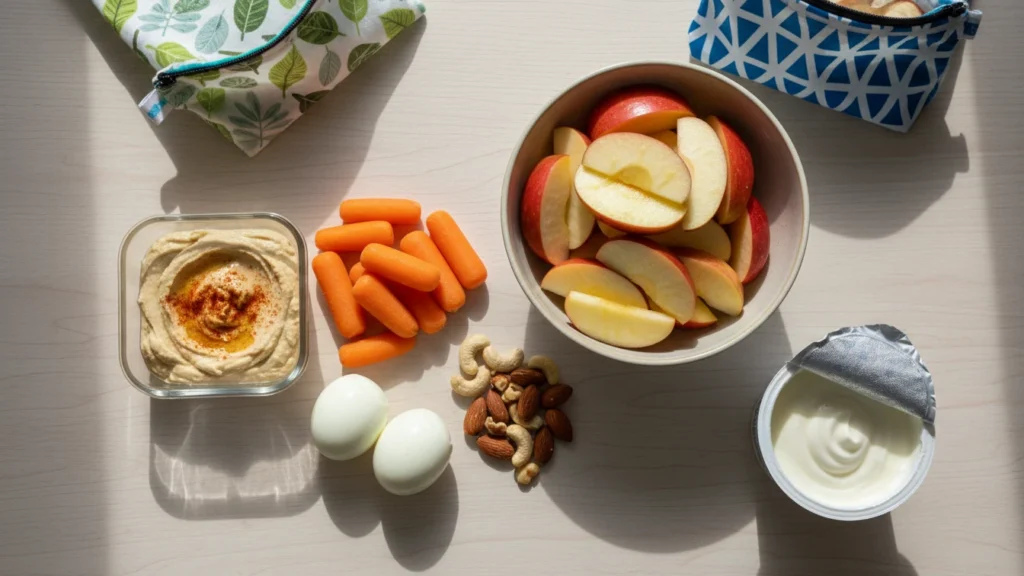
I pick snacks that boost energy, add nutrients, and keep me full until my next meal. Choose items that travel well, need little prep, and pair with your main dish.
Fresh Fruits and Vegetables
I pack fruits and vegetables that stay crisp and don’t need refrigeration for short periods. Good choices include apple slices with a squeeze of lemon to prevent browning, whole clementines, baby carrots, cherry tomatoes, snap peas, and cucumber rounds. These provide fiber and vitamins and help me avoid sugar crashes.
For portability, I use reusable snack bags or small containers. If I want extra flavor, I sprinkle a little sea salt or chili powder on mango or cucumber. For salad add-ins, I keep mixed greens in a separate container and add them to my lunch right before eating.
For reliable nutrition info on portions and storage, I often check USDA guidance on fruits and vegetables.
Protein-Rich Snacks
I choose protein snacks that are easy to eat and keep me satisfied. Hard-boiled eggs, Greek yogurt cups, single-serve cottage cheese, roasted chickpeas, and mixed nuts are staples. A 1/4 cup of nuts or a single-serving Greek yogurt can control hunger and stabilize blood sugar.
I also make simple protein boxes: sliced turkey or chicken, a few whole-grain crackers, and some cheese cubes. For plant-based options, I pack edamame or hummus with veggie sticks. When possible, I aim for 10–20 grams of protein per snack to feel full longer.
For safety and shelf life, I follow refrigeration tips from food-safety resources like the FDA when bringing dairy or eggs.
Healthy Dips and Spreads
I use dips and spreads to make veggies and crackers more satisfying without adding empty calories. Hummus, tzatziki, guacamole, and plain Greek yogurt-based dips work well. A two-tablespoon serving of hummus or guacamole adds healthy fats and flavor.
I portion dips into small containers to avoid overeating. For pairing, I bring whole-grain pita triangles, sliced bell pepper, or baked pita chips. To keep dips fresh, I store them in an insulated lunch bag with a small ice pack if I’m out for more than a few hours.
When I try new recipes, I look for simple, lower-sodium versions or check nutrition labels to compare saturated fat and salt.
Storing and Reheating Tips for Office Lunches
I focus on food safety, container choice, and heating methods that keep meals tasty and safe. Follow simple rules for cooling, packing, and reheating to avoid soggy textures or food-borne illness.
Safe Storage Practices
I cool hot foods to room temperature for no more than two hours before refrigerating. For summer or warm offices, I reduce that to one hour. I label meals with the prep date so I know what to eat first.
I store cooked proteins and dairy on lower fridge shelves to avoid cross-contamination. I keep salad greens and dressings separate; dressings go in small containers and get added right before eating. I use airtight containers to limit air and moisture, which slow spoilage.
For freezer storage, I leave a little headspace in containers because foods expand as they freeze. I thaw in the fridge overnight rather than on the counter to maintain safe temperatures.
Best Containers for Transport
I choose leakproof, airtight containers with compartments when I want a full meal that stays separate. Glass containers with locking lids are my top pick because they don’t stain or absorb odors. They work cold or hot and are dishwasher-safe.
For salads and items that must stay crisp, I use a small dressing cup or silicone muffin liner inside the container. Insulated lunch bags with a frozen gel pack keep perishable items under 40°F for several hours. For sandwiches, I wrap in wax paper then place in a rigid container to avoid squishing.
When weight or space matters, I pick high-quality BPA-free plastic or stainless steel. I avoid single-use plastics; they’re less airtight and can leak.
Microwave and Oven Safety
I check container labels before microwaving. Only microwave-safe glass or plastic should go in; metal and most lids must be removed. I vent lids slightly to prevent steam pressure build-up.
I stir liquids and rotate dense foods halfway through heating to warm evenly. I use a food thermometer when reheating meats: I heat until the internal temperature reaches 165°F (74°C). If the microwave leaves cold spots, I continue heating in 30-second intervals.
For oven reheating, I transfer food to an oven-safe dish and cover lightly with foil to retain moisture. I preheat the oven and use 325–350°F for casseroles or grain bowls to avoid drying them out.
Adapting Lunches for Dietary Restrictions
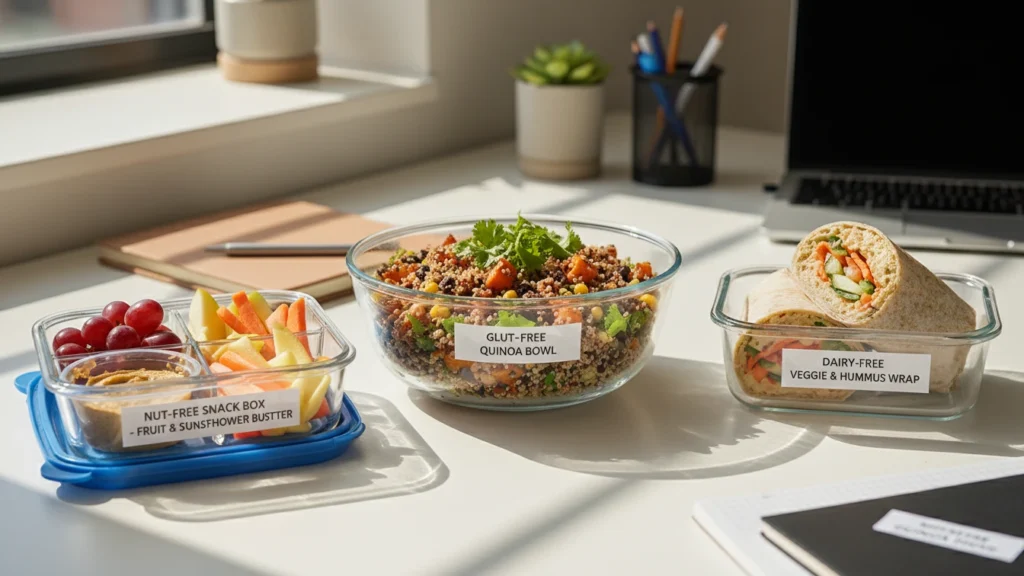
I focus on swaps and simple recipes that keep meals tasty and filling while meeting dietary needs. I show exact ingredient swaps, safe prep steps, and packing tips so lunches stay fresh and stress-free.
Gluten-Free Adjustments
I replace wheat-based items with reliable gluten-free grains like brown rice, quinoa, and certified gluten-free oats. For sandwiches, I use gluten-free bread or sturdy lettuce wraps; for bowls, I layer quinoa, roasted vegetables, and a protein such as grilled chicken or chickpeas. Always check labels for hidden gluten in sauces and pre-made dressings. I make my own dressings with olive oil, lemon, and mustard to avoid cross-contamination.
When prepping, I keep separate utensils and containers for gluten-free items and label them. If you need guidance on safe gluten-free practices, the Celiac Disease Foundation offers clear tips and resources (Celiac Disease Foundation). I also recommend using a toaster bag or separate toaster to avoid crumbs that can contaminate gluten-free bread.
Dairy-Free and Allergen-Friendly Ideas
I choose plant-based milks, nut-free protein options, and simple swaps for creamy textures. For salads and wraps, I use mashed avocado, hummus, or tahini instead of cheese. For creamy dressings or soups, I blend silken tofu or coconut milk with herbs for a smooth texture. If nuts are a concern at your workplace, sunflower seed butter gives similar flavor and protein without nut allergens.
I read ingredient lists to avoid hidden dairy in sauces and pre-made mixes. The FDA provides guidance on food allergen labeling that I trust when buying packaged foods (FDA Food Allergens). For packing, I keep allergen-free snacks in clearly marked containers and store them separately from common allergens during prep to reduce risk.
Tips for Staying Motivated to Eat Healthy at Work
I plan meals ahead so I’m not tempted by fast food when I’m busy. Packing lunches the night before saves time and reduces stress in the morning.
I keep easy, healthy snacks at my desk like nuts, yogurt, or fruit. Small choices between meals stop me from overeating at lunchtime.
I set simple goals, such as eating a balanced lunch three times a week. Goals help me track progress and stay focused.
I make meals I enjoy. If food tastes good, I’m more likely to stick with it. I rotate recipes so I don’t get bored.
I use tools that make healthy eating easier: a cooler bag, portion containers, or a small cooler for salads. They keep food fresh and help me control portions.
I reward myself for consistency with non-food treats, like a new book or a short walk. These rewards keep me motivated without undoing progress.
I enlist support from coworkers by sharing recipes or swapping meal-prep tips. A small group keeps me accountable and makes eating healthy more social.
Quick checklist:
- Pack the night before
- Keep healthy desk snacks
- Set simple goals
- Rotate recipes
- Use practical tools
- Reward non-food wins
- Share with coworkers
FAQs
I get asked which lunches hold up best until midday.
I recommend meals with sturdy ingredients like grains, beans, roasted vegetables, and hard cheeses. These keep texture and flavor without reheating.
Can I save time with meal prep?
Yes. I prep proteins, grains, and chopped veggies once or twice a week. Mixing them into bowls or wraps each morning saves minutes and reduces decision fatigue.
What if I don’t have a fridge at work?
Choose shelf-stable or insulated options. Think canned tuna, nut butter, whole fruits, and salads with dressings packed separately. An insulated lunch bag and ice pack help keep items safe.
How do I keep lunches healthy and satisfying?
I balance protein, fiber, and healthy fats to stay full longer. Simple combos like chicken + quinoa + veggies or hummus + whole-grain pita + raw veggies work well.
Any tips for picky eaters or picky coworkers?
Start small and swap one ingredient at a time. I suggest making single-serve portions so people can try without committing to a full new dish.
What about food safety?
I follow basic rules: keep perishable foods cold, don’t leave cooked food out over two hours, and reheat leftovers to 165°F (74°C) when possible. When in doubt, toss it.
Conclusion
I picked ideas here that fit busy workdays and simple meal prep. You can mix and match bowls, wraps, salads, and leftovers to keep lunch interesting and balanced.
I recommend planning two or three go-to lunches each week. That cuts stress, saves money, and helps you choose healthier options instead of fast food.
I encourage small swaps: whole grains, extra veggies, and lean proteins make a big difference. Simple seasonings and a quick dressing can keep flavors fresh without extra work.
I find that containers, a good cooler pack, and basic meal prep time make weekdays smoother. Little routines—like batch-cooking grains or chopping veggies—pay off all week.
If you want a quick checklist, use this:
- Pack protein and veggies first.
- Add a whole grain or healthy fat.
- Include a fresh fruit or yogurt for dessert.
- Keep sauces separate until lunchtime.
I’ll support any changes you try. Start small, adjust to your schedule, and build habits that match your tastes and needs.