
How to Care for Cast Iron Frying Pan

Cast iron frying pans are durable and versatile, but they need special care to last a lifetime. This guide covers everything—from cleaning and seasoning to storage—so you can keep your pan rust-free, non-stick, and ready for cooking.
Key Takeaways
- Proper seasoning: Essential for a natural non-stick surface and rust protection.
- Cleaning methods: Avoid soap and harsh scrubbing; use warm water and gentle tools.
- Drying thoroughly: Prevents rust by making sure the pan is completely dry after washing.
- Regular oiling: Maintains the seasoning and protects the pan from moisture.
- Storage tips: Store in a dry place and consider using paper towels between pans to prevent scratching.
- Troubleshooting rust: How to remove rust safely and restore seasoning.
- Cooking tips: Preheat your pan properly to enhance performance and longevity.
How to Care for Cast Iron Frying Pan
Cast iron frying pans are a kitchen favorite. They heat evenly, last decades, and improve with age if cared for right. But many people don’t know how to maintain their cast iron properly. This guide will show you step-by-step how to care for your cast iron frying pan so it stays rust-free, non-stick, and ready for your next meal.
Step 1: Understanding Your Cast Iron Pan
Before diving into care, it helps to know why cast iron needs special attention. Unlike stainless steel or non-stick pans, cast iron is porous and reactive. This means it can rust if left wet and it needs seasoning — a layer of polymerized oil — to protect the surface and keep food from sticking.
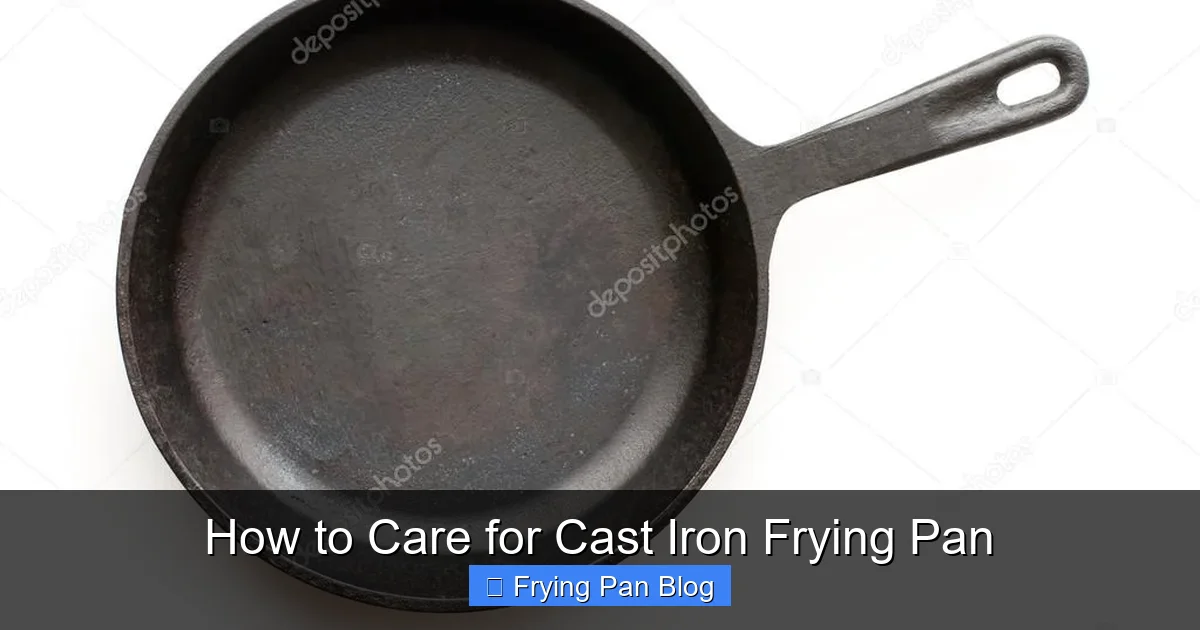
Visual guide about How to Care for Cast Iron Frying Pan
Image source: st.depositphotos.com
Step 2: Cleaning Your Cast Iron Pan
Cleaning cast iron is different from cleaning other pans. Here’s how to do it right:
2.1 Clean Right After Cooking
While the pan is still warm (not hot), wipe away food with a paper towel or soft cloth. This prevents food from hardening and sticking.
2.2 Use Warm Water and a Brush or Sponge
Rinse the pan under warm water. Use a stiff brush or non-metal sponge to scrub off stuck-on bits. Avoid soap as it can strip seasoning. If you must use soap occasionally, use a very small amount and re-season after.
2.3 For Tough Residue, Use Salt
If food is stubborn, sprinkle coarse kosher salt inside the pan and scrub with a paper towel or sponge. Salt acts as a mild abrasive and helps lift residue without damaging seasoning.
2.4 Never Soak the Pan
Do not soak cast iron in water. Prolonged water exposure causes rust quickly.
Step 3: Drying Your Cast Iron Pan
Drying is key to avoid rust.
3.1 Use a Towel to Dry Thoroughly
After washing, wipe the pan dry with a clean towel.
3.2 Heat on the Stove to Remove Moisture
Place the pan on low heat for a few minutes to evaporate any remaining moisture. This step is especially important in humid climates.
Step 4: Seasoning Your Cast Iron Pan
Seasoning means coating your pan with oil and baking it to create a strong, non-stick layer.
4.1 Choose the Right Oil
Use oils with high smoke points like flaxseed, vegetable, or grapeseed oil.
4.2 Apply a Thin Coat of Oil
Once dry, apply a thin, even layer of oil inside and outside the pan using a paper towel. Too much oil will make a sticky surface.
4.3 Bake the Pan
Place the pan upside down in an oven preheated to 450°F (230°C). Put a sheet of aluminum foil underneath to catch drips. Bake for one hour.
4.4 Cool in the Oven
Turn off the oven and let the pan cool inside. This allows the oil to polymerize and bond well with the metal.
4.5 Repeat as Needed
New pans or rusty pans may require several seasoning cycles to build up a strong coating.
Step 5: Cooking Tips for Cast Iron
How you cook affects your pan’s condition.
5.1 Preheat Gradually
Cast iron heats slowly but holds heat well. Preheat your pan over low to medium heat before adding food.
5.2 Use Enough Oil or Fat
Even a well-seasoned pan benefits from some cooking oil to maintain the non-stick surface.
5.3 Avoid Acidic Foods in New Pans
Tomatoes or vinegar can break down seasoning on new or lightly seasoned pans. Wait until your pan is well-seasoned.
Step 6: Proper Storage
6.1 Store in a Dry Place
Keep your pan somewhere dry to prevent rust.
6.2 Use Paper Towels Between Stacked Pans
If you stack your pans, place a paper towel between them to absorb moisture and avoid scratches.
6.3 Lightly Oil Before Storage
Applying a very light coat of oil before storing can help keep moisture out.
Troubleshooting: Removing Rust and Restoring Seasoning
Rust Removal
If your pan gets rusty, don’t panic. Scrub the rust off with steel wool or a stiff brush under warm water. Once rust is removed, dry thoroughly and re-season the pan following Step 4.
Sticky or Flaky Seasoning
If your seasoning feels sticky or peels, it may be from applying too much oil. Strip the seasoning by scrubbing with steel wool and soap, then start fresh with thin coats during seasoning.
Food Sticking
If food sticks often, your seasoning might be thin or uneven. Clean and re-season your pan, and make sure to use enough cooking oil when frying.
Conclusion
Caring for your cast iron frying pan is simple once you know the steps. Clean it gently, dry it carefully, season regularly, and store properly. With good care, your cast iron will reward you with years of excellent cooking and a naturally non-stick surface. Enjoy your pan and happy cooking!
🎥 Related Video: Easy way to clean and care for Cast Iron Skillet #lodgecastiron
📺 Yuliya Pav