
What Is a Dish Rack? Uses, Types, and How It Works

Quick Answer: A dish rack is a kitchen rack designed to hold washed plates, bowls, cups, utensils, and other items while they air-dry. It keeps dishes separated and elevated so water can drain away and air can circulate around them. Dish racks commonly sit beside a sink, inside a sink, or over it.
Key things to know:
- Its main job is holding and drying washed dishes.
- Upright storage helps water drain from plates and bowls.
- Many racks include a drain tray or spout.
- Countertop, over-sink, foldable, and roll-up styles are common.
- A rack should be kept clean and allowed to dry between uses.
You finish washing a plate, rinse away the soap, and immediately face another question: where should the wet plate go?
Leaving dishes stacked together can trap water. Towel-drying every piece takes extra work. A dish rack creates an organized place where washed kitchenware can sit while excess water drains and the surfaces dry naturally.
For this guide, Daniel Hartman focuses on the practical side of the tool: what a dish rack does, how its design affects drying, and which style makes sense for different kitchens.
What Is a Dish Rack Exactly?
A dish rack is a kitchen accessory that holds washed dishes while they dry. Merriam-Webster defines it simply as a rack on which dishes are placed to dry.
Most versions provide slots or raised supports for plates, while larger open areas accommodate bowls, glasses, cookware, or cutting boards. Many also have a separate compartment for forks, spoons, and other utensils.
The rack is therefore different from ordinary dish storage. A cabinet holds clean, dry dishes for longer-term storage; a dish rack is mainly a temporary drying station between washing and putting those dishes away.
How Does a Dish Rack Work?
A dish rack works by keeping wet items separated, supported, and exposed to air while gravity pulls excess water downward.
Plate slots hold dishes vertically instead of letting them lie flat against each other. Open spaces around cups, bowls, and utensils allow more surfaces to remain exposed to circulating air.
Water then needs somewhere to go. Depending on the design, it may:
- Drip into a removable tray.
- Flow through a drain spout toward the sink.
- Fall directly into the sink from an over-sink rack.
- Collect on a drying mat placed underneath.
Testing by Serious Eats and other kitchen publications repeatedly treats effective drainage as one of the important characteristics of a useful dish rack.
Air-drying itself is also a recognized drying method. CDC guidance for cleaned and sanitized household items recommends allowing them to air-dry thoroughly rather than rubbing them dry with a used dish towel that could transfer germs.
What Is a Dish Rack Used For?
A dish rack is mainly used for air-drying hand-washed kitchenware while keeping the sink and surrounding counter more organized.
Depending on its size and design, you may use one for:
- Dinner plates and side plates
- Bowls
- Cups and mugs
- Drinking glasses
- Flatware
- Cooking utensils
- Cutting boards
- Pots and pans
Larger racks can accommodate substantial cookware, while compact designs sacrifice some capacity to preserve counter space. That tradeoff appears consistently in hands-on dish-rack testing.
A rack is particularly useful for kitchen items you prefer or need to wash by hand. Even homes with dishwashers may still have cookware, knives, glassware, wooden items, or oversized pieces that need another place to dry.
What Types of Dish Racks Are Available?
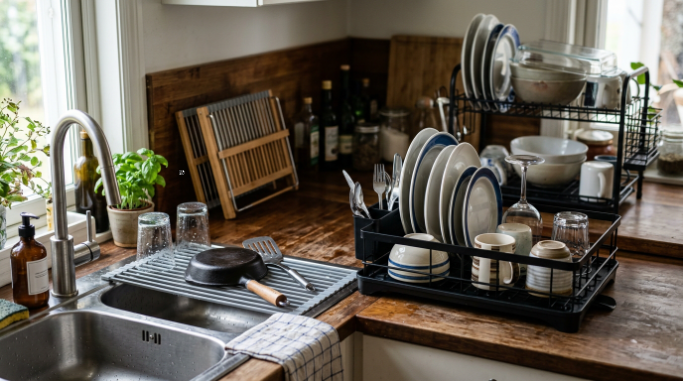
Dish racks come in several layouts because kitchens differ in counter space, sink size, and the amount of hand washing involved. Tested dish-rack guides commonly include countertop, compact, in-sink, over-sink, foldable, and roll-up designs.
| Type | How It Works | Best Fit |
|---|---|---|
| Countertop rack | Sits beside the sink, usually over a tray | Regular hand washing |
| Over-the-sink rack | Holds items above the sink so water falls directly in | Limited counter space |
| Roll-up rack | Unrolls across part of the sink and stores compactly | Small kitchens |
| Foldable rack | Opens for drying and folds down afterward | Occasional use |
| Two-tier rack | Uses vertical levels to increase usable drying space | Larger dish loads |
A traditional countertop model is convenient when you have permanent counter space available. If your counter is tight, an over-sink, foldable, or roll-up design can reduce the amount of space devoted permanently to drying.
What Makes a Good Dish Rack?
A good dish rack does more than simply hold plates. In practical testing, drainage, stability, usable capacity, space efficiency, and cleanability repeatedly separate effective racks from frustrating ones.
Good drainage
Water should leave the rack instead of sitting underneath dishes. A sloped tray or adjustable spout can direct water toward the sink.
Stable construction
The rack should stay balanced when one side contains heavier cookware. This becomes especially important if you regularly dry pots, pans, or large plates.
Enough space between items
A huge rack is not automatically better. What matters is having useful slots and open areas that fit the dishes you actually wash.
Easy-to-clean parts
Removable utensil holders and trays make it easier to reach areas where water or residue can collect. Stainless steel, silicone, aluminum, plastic, and combinations of these materials appear across commonly tested designs.
Practical rule: choose the smallest rack that comfortably handles your normal hand-washed load rather than buying the largest model that fits on the counter.
Where Should You Put a Dish Rack?
The most useful location is normally beside or over the kitchen sink, where wet dishes can move from rinsing to drying without dripping water across the counter.
If the rack uses a drain spout, position the outlet so water flows into the sink. If it has a closed drainboard, empty standing water rather than letting it remain underneath the rack.
In a small kitchen, an in-sink, roll-up, or folding rack can preserve valuable worktop space. Larger countertop racks make more sense when you hand-wash frequently and have enough permanent space.
How Do You Use a Dish Rack Correctly?
Using a dish rack is simple, but the way you load it can affect drainage and stability.
- Wash and rinse the dishes completely.
- Shake off excessive water before placing each item on the rack.
- Stand plates in their slots rather than stacking wet plates together.
- Angle bowls and cups so trapped water can drain out.
- Keep heavy cookware stable and avoid unbalancing one side of the rack.
- Allow everything to air-dry thoroughly before putting it into cabinets.
Air-drying is used in recognized food-safety procedures because it avoids recontamination that can occur when sanitized utensils are manually dried with an unsuitable towel.
Complete drying also matters before storing moisture-sensitive cookware. RecipesPalette’s guide on why cast iron skillets rust specifically highlights moisture left during storage as a cause of corrosion.
How Do You Keep a Dish Rack Clean?
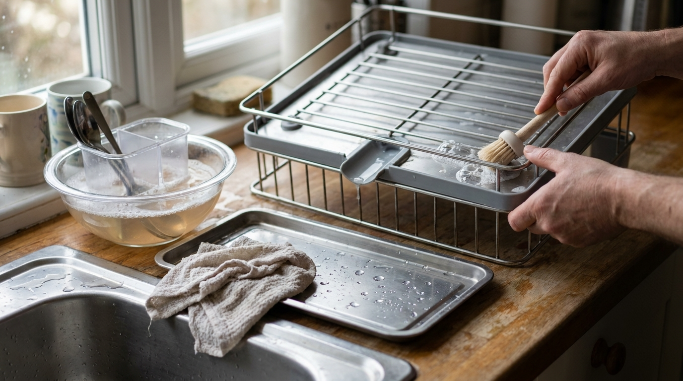
Keep your dish rack clean by removing standing water, allowing the rack to dry, and periodically washing its removable parts with warm soapy water according to the manufacturer’s care instructions.
Pay particular attention to:
- The drain tray
- Corners and seams
- Utensil holders
- Rubber or silicone feet
- Areas underneath the rack
- Drainage spouts
Residue is easier to remove before it builds up. A rack that remains continuously damp is also harder to keep fresh than one that drains well and dries between uses.
The same complete-drying principle applies to smaller kitchen tools. For example, RecipesPalette’s guide to whether a garlic press can go in the dishwasher also stresses thoroughly drying the tool before storage.
Do You Really Need a Dish Rack?
You do not absolutely need a dish rack, but it is useful if you regularly hand-wash dishes and want a dedicated place for them to drain and air-dry.
A conventional rack makes sense when you wash larger loads. A drying mat may be easier to store when you only hand-wash a few items, while an over-sink or foldable rack may work better in a very small kitchen.
Even having a dishwasher does not automatically make a drying rack unnecessary. Items that are hand-washed still need somewhere clean and practical to dry.
The decision is therefore less about whether a dish rack is essential and more about how often you wash by hand and how much sink-side space you can spare.
Conclusion
A dish rack is a simple kitchen tool with one clear purpose: holding washed dishes so water can drain away and the items can air-dry before storage.
The best setup is not necessarily the biggest or most complicated. Good drainage, stability, enough room for your normal dishes, and easy cleaning matter more.
If counter space is limited, choose an over-sink, folding, or roll-up style. If you regularly wash full loads or larger cookware by hand, a stable countertop rack with an effective drainage system is usually more practical.
Frequently Asked Questions
Is a dish rack sanitary?
A dish rack can provide a practical place for ordinary washed dishes to air-dry, but the rack itself needs to stay clean and drain properly. CDC guidance supports thoroughly air-drying cleaned items and warns against rubbing sanitized items dry with towels that could transfer germs.
Can I leave dishes in a dish rack overnight?
Yes, ordinary washed dishes can remain on a clean rack while they finish air-drying. Before moving them into a cabinet, make sure they are completely dry so moisture is not trapped during storage.
Is a drying mat better than a dish rack?
Neither is always better. A drying mat stores easily and works well for smaller loads, while a rack separates and supports dishes and often provides better organization for plates, glasses, and utensils. Small kitchens may benefit from foldable racks or mats that can be put away after use.
Can you use a dish rack without a drainboard?
Yes, depending on the design. Some racks drain directly into the sink, while others require a separate tray or drying surface beneath them. Some conventional racks are even sold without an included drain tray.
Do you need a dish rack if you have a dishwasher?
Not necessarily, but it can still be useful. Pots, pans, knives, glassware, oversized cookware, and other items are often washed by hand, leaving you in need of a separate drying area even when a dishwasher handles most dishes.
Can I use a regular dish rack for baby bottles?
Use extra care with infant feeding equipment. CDC guidance says air-drying infant feeding items on a clean, unused dish towel or paper towel is probably more hygienic than using a drying rack because racks can retain moisture and be difficult to clean. If you choose a rack, CDC recommends using it only for the infant’s feeding items.