
Vegetable Chopper With Multiple Blades: Complete Buying Guide

Quick Answer
A vegetable chopper with multiple blades is a manual kitchen tool that lets you dice, slice, shred, or julienne vegetables by changing blade attachments. For most home cooks, a model with fine and coarse dicing grids, a stable container, and removable stainless steel blades is a practical choice. The Fullstar vegetable chopper range offers several configurations worth comparing.
What to look for before buying
- Useful blade options: Choose dicing, slicing, and shredding attachments that match your usual meals.
- Sharp stainless blades: Look for strong, replaceable inserts that can handle regular vegetable prep.
- Stable cutting base: A nonslip bottom helps keep the tool steady.
- Easy blade cleaning: Removable inserts and a cleaning brush make daily care easier.
- Suitable container: Pick a catch bin that holds enough vegetables for your typical recipes.
My simple buying rule
- Start with daily meals: A well-built four-blade chopper may be more useful than a large attachment kit.
Chopping vegetables is part of almost every meal I plan, yet choosing the right kitchen tool can feel harder than it should. There are models with four attachments, eight blades, and even larger accessory collections.
I prefer to judge a chopper by the jobs it can handle, not the biggest number on its packaging. This guide explains which blades matter, what to avoid, and how to choose a model that fits your kitchen.
What Is a Vegetable Chopper With Multiple Blades?
A vegetable chopper with multiple blades is a kitchen cutting tool with interchangeable blade inserts. Each insert creates a different cut, such as cubes, slices, thin strips, or shreds.
Most manual models use a hinged pressing lid or a sliding cutting surface. The cut vegetables fall into a container or onto the work surface.
How does a multi-blade chopper work?
A pressing-style chopper forces vegetables through a fixed blade grid. Changing that grid lets you control the size and shape of the pieces.
- Dicing grids: Create small or medium cubes for soups, salsa, and salads.
- Slicing inserts: Cut vegetables into relatively even slices.
- Julienne blades: Make narrow strips for stir-fries and garnishes.
- Grating inserts: Shred carrots, vegetables, and suitable cheese.
- Spiralizer attachments: Turn firm vegetables into curly strands.
Not every model includes all these blades. Some are basic dicers, while others combine a chopper, mandoline slicer, and grater.
What Are the Benefits of a Vegetable Chopper With Multiple Blades?
The biggest benefit is having several cutting methods in one tool. Instead of reaching for a separate slicer, grater, and dicer, you can swap attachments.
1. More consistent vegetable pieces
Uniform cuts help vegetables cook more evenly. This matters when preparing potatoes, onions, carrots, or peppers for the same dish.
A medium dicing grid also makes salads look neat. It is useful when you want each bite to contain similarly sized ingredients.
2. Less repetitive knife work
A pressing chopper can reduce repeated knife movements during large prep sessions. You still need a knife to trim and size many vegetables before chopping.
The tool is most useful for repeated cuts. One tomato may not justify the setup and cleaning.
3. Better control over meal preparation
Different recipes need different textures. Fine onion pieces work well in salsa, while larger vegetable cubes suit soups and roasted dishes.
- Breakfast: Dice peppers and onions for omelets.
- Lunch: Slice cucumbers or shred carrots for salads.
- Dinner: Chop vegetables for soups, tacos, and stir-fries.
- Batch cooking: Prepare similar cuts for several meals.
4. One main tool instead of several
A multi-blade chopper can replace several basic prep gadgets for some households. That said, extra blades still need a safe place to live.
I would check the attachment storage design before buying. Loose, uncovered blades can make a crowded kitchen drawer less safe.
Which Vegetable Chopper Blades Do You Actually Need?
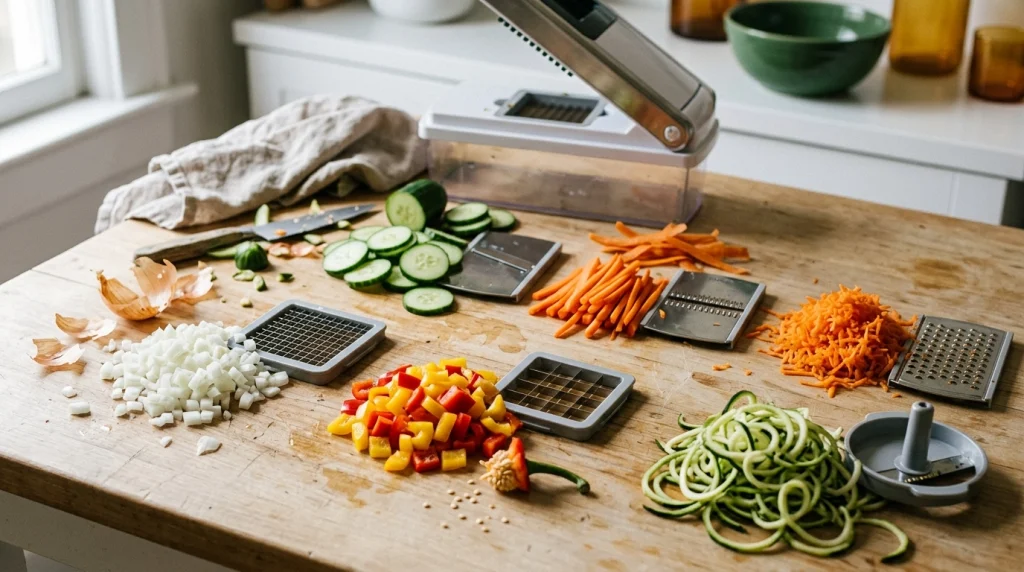
Most home cooks need only a handful of blade types. Fine dicing, coarse dicing, and slicing cover many everyday recipes.
Other inserts become useful when your cooking calls for them regularly. The table below shows where each attachment fits best.
Vegetable chopper blade comparison
| Blade type | Cut produced | Best uses | Priority |
|---|---|---|---|
| Fine dicer | Small cubes | Onions, salsa, relish | High |
| Coarse dicer | Larger cubes | Peppers, zucchini, potatoes | High |
| Straight slicer | Flat slices | Cucumber, potato, zucchini | High |
| Julienne blade | Thin strips | Carrots, slaw, stir-fries | Medium |
| Grater | Fine or coarse shreds | Carrots, firm cheese | Medium |
| Spiralizer | Curly strands | Zucchini noodles, garnishes | Optional |
These priorities are practical buying guidelines, not performance scores. Your preferred recipes should decide which attachments matter.
How Many Blades Should a Good Vegetable Chopper Have?
For typical home cooking, two dicing options and a slicing attachment make a useful starting point. A four-to-eight-function model may offer enough variety without becoming difficult to store.
A larger attachment collection makes sense for someone who frequently grates, juliennes, and spiralizes vegetables. Otherwise, the extra parts may remain unused.
Four-blade vs. eight-blade vs. larger sets
- Small attachment set: Best for regular onion, pepper, and vegetable chopping.
- Medium attachment set: Useful for cooks who also slice, shred, and make thin strips.
- Large attachment set: Better for varied recipes that need several cutting styles.
One detail deserves attention: brands do not always count attachments the same way. A model advertised as eight-in-one may not contain eight separate cutting blades.
Always read the included-parts list. Confirm the actual blade shapes instead of relying on the number printed on the box.
What Should You Look for Before Buying a Multi-Blade Vegetable Chopper?
I would focus on safety, cutting options, construction, and cleanup. Those details affect daily use more than decorative features.
Blade material and replacement options
Stainless steel is common in vegetable chopper blades because it resists corrosion and holds a cutting edge. However, steel quality and blade construction vary between models.
Check whether replacement inserts are available. A damaged or worn blade should not force you to replace an otherwise usable chopper.
Container size and stability
A clear catch container lets you monitor the amount of food inside. Larger containers need emptying less often during batch preparation.
Look for nonslip feet and a secure lid. A chopper that moves while pressing can become frustrating and unsafe.
Cleaning tools and removable parts
Small vegetable pieces often lodge inside dicing grids. A matching cleaning brush or press plate can make removal easier.
I would also check the manufacturer’s washing instructions for each component. Dishwasher-safe claims may apply to only certain pieces or configurations.
Blade storage and hand protection
Exposed slicer blades deserve special care. A blade guard, dedicated storage tray, and food holder are valuable features.
A food holder keeps fingers away from a mandoline-style cutting surface. Never substitute bare fingers when a vegetable becomes too short to grip safely.
Which Vegetables Work Best in a Multi-Blade Chopper?
Firm vegetables that fit the cutting grid tend to work best. Softer produce can crush or release excess juice under pressure.
Vegetables that are usually easy to chop
- Onions: Excellent for fine and medium dicing.
- Bell peppers: Suitable for evenly sized cubes after removing the core.
- Cucumbers: Useful for dicing and slicing, depending on firmness.
- Zucchini: Works for cubes, slices, and spiralized cuts.
- Celery: Can work when cut into short sections and aligned correctly.
Vegetables that require more care
Raw carrots and potatoes can require more pressing force. Cut them into manageable pieces and follow the manufacturer’s guidance on suitable foods.
Very ripe tomatoes may collapse inside a pressing grid. A sharp knife or suitable slicer often gives better results.
- Dense vegetables: Use smaller sections and avoid forcing the lid.
- Soft tomatoes: Choose firm produce or use a sharp knife.
- Leafy greens: A knife generally gives better control.
- Fibrous vegetables: Remove tough ends and check that the grid can handle them.
How Do You Use a Vegetable Chopper With Multiple Blades Safely?
Choose the correct blade, secure the unit, and prepare vegetables before pressing. Never force food through a blade that resists normal pressure.
- Wash the produce: Rinse vegetables under running water before cutting.
- Place the chopper: Set it on a stable, dry, level countertop.
- Insert the blade: Follow the manufacturer’s locking instructions.
- Trim the vegetable: Remove hard stems and cut large pieces to fit.
- Position the food: Keep it centered over the cutting grid.
- Press with control: Apply steady pressure without slamming the lid.
- Empty the container: Avoid overfilling the catch bin.
- Clean carefully: Remove inserts using their designated grip areas.
The FDA’s produce safety guidance recommends washing fruits and vegetables before preparation. This includes produce that you plan to peel.
What mistakes should you avoid?
Do not press on vegetables that are too large for the grid. Excess force can damage the tool or cause slipping.
- Never test blade sharpness with your fingertips.
- Do not reach into a grid to remove stuck food.
- Never operate the tool with a loose blade insert.
- Keep removable blades away from children.
- Do not use the chopper for bones, frozen food, or other unsupported ingredients.
Stop using the device if the lid, hinge, or blade frame cracks. Small damaged parts can make the tool unsafe.
How Do You Clean and Maintain a Multi-Blade Vegetable Chopper?
Clean the chopper after each use to prevent food residue from drying inside its blade grids. Use a brush rather than your fingers around sharp cutting edges.
A simple cleaning routine
- Disassemble the tool according to its manual.
- Empty any remaining vegetable pieces.
- Rinse removable parts carefully.
- Use the supplied brush to clear trapped food.
- Wash each part as the manufacturer directs.
- Dry every component before storage.
- Cover or safely store sharp attachments.
The USDA’s kitchen cleaning guidance explains why food-contact surfaces need careful cleaning. It also stresses cleaning surfaces after handling raw foods.
Can you put vegetable chopper blades in the dishwasher?
Some brands allow specific blades and containers on the dishwasher’s top rack. Others require hand washing, so instructions can vary even within one product range.
Check the exact model’s care guide before using the dishwasher. Dry metal blades completely to help reduce spots and corrosion.
How should the blades be stored?
Use protective covers or a dedicated storage compartment when available. Keep the edges from rubbing against other metal utensils.
I favor storage systems that make every attachment easy to identify. That helps prevent accidental contact with an exposed blade.
Multi-Blade Vegetable Chopper vs. Food Processor: Which Is Better?
A manual vegetable chopper is well suited to controlled dicing and slicing. A food processor is usually more versatile for powered chopping, mixing, and puréeing.
| Feature | Multi-blade chopper | Food processor |
|---|---|---|
| Power | Usually manual | Usually electric |
| Uniform cubes | Good with dicing grids | Depends on attachments |
| Puréeing | Not a standard function | Common function |
| Counter space | Often smaller | Often larger |
| Best fit | Vegetable prep and uniform cuts | Mixing, chopping, and processing |
If you frequently prepare diced vegetables for soups and salads, a manual chopper is worth considering. For hummus, sauces, or broader food preparation, a food processor offers more options.
Are Vegetable Choppers With Multiple Blades Worth Buying?
They are worth considering if you regularly prepare vegetables in batches or want consistent cutting shapes. Their value depends on how often you use the attachments.
For a small household preparing occasional vegetables, a knife and cutting board may be enough. Larger households can benefit from a dedicated prep tool.
Who should consider buying one?
- Busy home cooks: People who prepare onions, peppers, and similar vegetables often.
- Meal-prep households: Cooks who want repeatable cuts across several recipes.
- Salad lovers: Anyone who frequently dices vegetables into consistent pieces.
- Kitchen gadget fans: Cooks who enjoy interchangeable preparation tools.
Who might not need one?
If you rarely chop vegetables, the cleanup may outweigh the convenience. A sharp chef’s knife remains more flexible for irregular ingredients.
A manual chopper also requires hand strength. Some hard vegetables can be difficult to press through its grid.
Which Multi-Blade Vegetable Choppers Are Worth Considering in 2026?
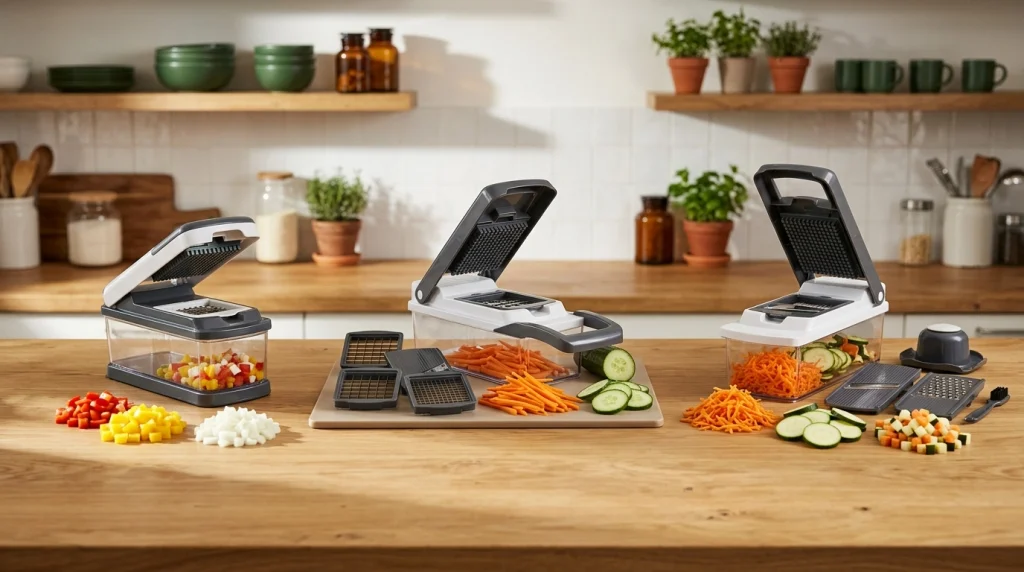
My shortlist focuses on three different priorities: everyday chopping, attachment variety, and a larger all-in-one cutting system. These are specification-based recommendations, not personally tested performance ratings.
🏆 Best for everyday prep
Fullstar Pro Original 4-in-1 Vegetable Chopper
★★★★☆ 4.5/5 editorial fit
This configuration offers a simpler set of cutting functions with a catch container, stainless steel blades, and a nonslip base. I would shortlist it for frequent onion and pepper prep because it focuses on useful everyday cuts without an oversized accessory collection.
🔪 Best for blade variety
Mueller Pro-Series 10-in-1 Vegetable Chopper
★★★★☆ 4.4/5 editorial fit
The commonly reviewed 10-in-1 configuration features eight interchangeable blade attachments for several cutting tasks. I would consider it for someone who wants more cutting styles, provided the exact listing includes the required blades and storage accessories.
🥕 Best for versatile cutting
Fullstar Pro Original 14-in-1 Chopper and Slicer
★★★★☆ 4.3/5 editorial fit
Fullstar lists this stainless steel configuration for dicing, slicing, julienning, and grating. I would consider it for cooks who need several cutting methods and have room to store the extra parts safely.
The scores above are editorial suitability judgments, not measured test results or Amazon customer ratings. Before ordering, confirm the selected variation, included accessories, care instructions, and current availability.
Frequently Asked Questions About Vegetable Choppers With Multiple Blades
Can a vegetable chopper with multiple blades cut potatoes?
Yes, many sturdy choppers can dice raw potatoes when the pieces fit the cutting grid. However, raw potatoes are dense and may need more force than softer vegetables.
Cut potatoes into smaller sections first. Follow the manufacturer’s instructions and stop if the blade resists or the unit begins to flex.
Are stainless steel vegetable chopper blades better?
Stainless steel is a practical material because it resists corrosion and can maintain a sharp edge. However, performance also depends on steel grade, blade thickness, and construction.
Look for securely mounted blades and replacement availability rather than choosing a model based on stainless steel claims alone.
Can a multi-blade vegetable chopper replace a knife?
No. A vegetable chopper handles repetitive cuts well, but you still need a knife for trimming, peeling, and preparing oversized vegetables.
A good knife also offers better control for delicate ingredients, irregular shapes, and cuts that do not match the chopper’s attachments.
What is the difference between a vegetable dicer and a mandoline slicer?
A vegetable dicer pushes food through a grid to create cubes or similar pieces. A mandoline slicer moves food across a blade to produce slices or strips.
Some multi-function tools combine both systems. Always use the supplied food holder when operating an exposed mandoline blade.
How long do vegetable chopper blades last?
Blade lifespan depends on construction, how often you use the tool, and what foods you cut. Proper cleaning and safe storage may help extend its useful life.
Replace inserts that become bent, chipped, loose, or excessively dull. Never continue using a damaged blade simply because it still cuts.
Final Takeaway: Choosing the Right Vegetable Chopper
A vegetable chopper with multiple blades can be a useful addition to a busy kitchen. The right model offers the cuts you need, stable construction, and cleaning that fits your routine.
My recommendation is to start with your most common recipes and choose blades around those tasks. A smaller, reliable set is often a better buy than a large collection of attachments you rarely use.
For more guidance on preparing food safely, review the FoodSafety.gov resources and the USDA food safety website before your next meal-prep session.
