
Can a Garlic Press Be Used for Ginger? How to Do It Right

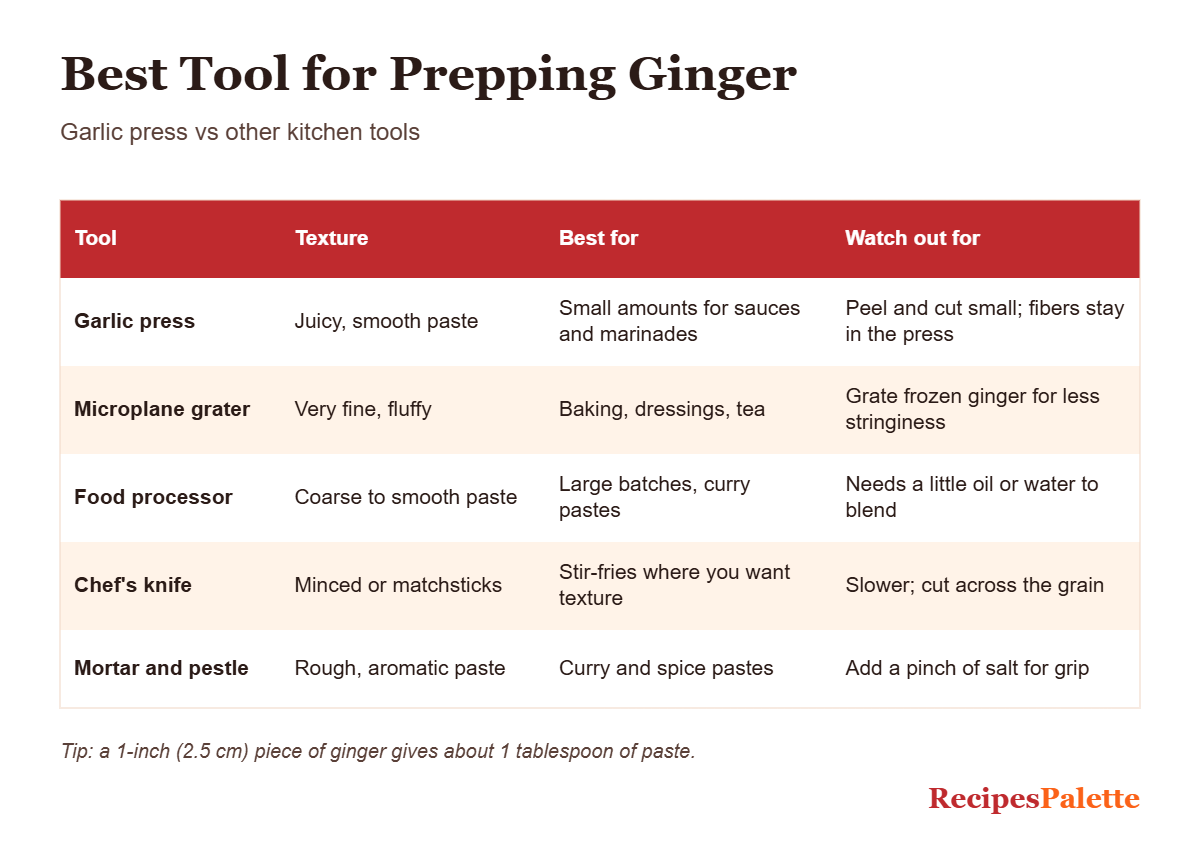
Yes, a garlic press can be used for ginger, as long as you peel it, cut it into small pieces and use a sturdy press. The press squeezes out juicy ginger pulp and leaves the tough fibers behind in the chamber, which is great for stir-fries, marinades and dressings. A flimsy press may jam or bend, and for large amounts a microplane or food processor is faster.
Why Use a Garlic Press for Ginger?
Fresh ginger adds warmth and zing to curries, stir-fries, marinades and baked goods, but mincing it by hand takes time. A garlic press turns small pieces of peeled ginger into a smooth, juicy paste in a few seconds, and you do not need good knife skills to get an even texture.
Because the press holds back the stringy fibers, the ginger you get is smoother than most hand-minced ginger. That makes it a good choice for sauces and dressings, where fibers would be unpleasant.
Can Every Garlic Press Handle Ginger?
Not every press is up to the job. Ginger is much denser than a garlic clove, so check your press for these features:
- Sturdy build: stainless steel or heavy cast aluminum handles. Thin plastic presses can bend or crack.
- Good holes: a pressing plate with clean, evenly sized holes lets the pulp through without huge effort.
- Long handles: longer handles give you more leverage, so you squeeze less hard.
- Easy cleaning: a removable basket or a press that opens flat makes it easy to clear out the fibers.
If your press is light and wobbly, use it for garlic only and grate ginger instead.
What to Look for When Buying a Garlic Press for Ginger
If you are shopping for a press that will handle ginger as well as garlic, these points matter most:
- Material: stainless steel or solid zinc alloy. Avoid all-plastic presses, which flex under the force ginger needs.
- Chamber size: a large chamber takes two or three pieces of ginger at once, so you press fewer times per batch.
- Comfortable handles: padded or wide handles spread the pressure and are easier on your wrist.
- Cleaning: a swing-out basket, a cleaning brush or a press that comes apart saves time, because ginger fibers collect in the holes.
- “No peel” claims: some presses crush unpeeled garlic, but ginger skin is tougher, so peel ginger anyway for the smoothest paste.
- Warranty: a long warranty is a good sign that the hinge and handles are built to take hard ingredients.
Garlic presses cost from under $10 to over $30. Cheap, light presses are fine for garlic, but for regular ginger use a heavier mid-range press is usually worth the extra few dollars, because it lasts longer and needs less effort.
How to Prepare Ginger for the Press
1. Choose fresh ginger
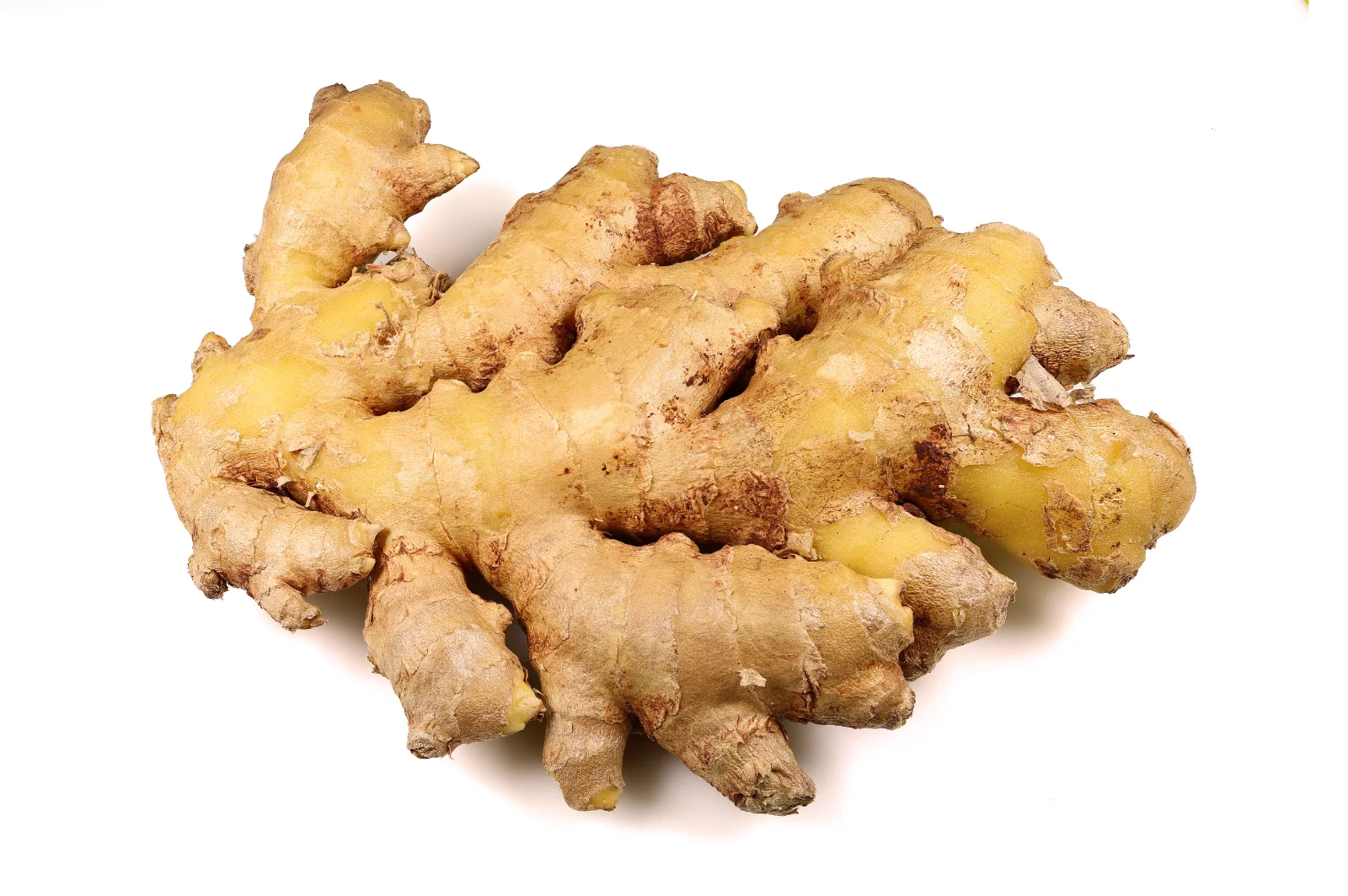
Pick plump, firm roots with smooth, tight skin. Fresh ginger is juicier and presses far more easily than old, wrinkled ginger.
2. Peel it with a spoon
Scrape the skin off with the edge of a teaspoon. The spoon follows the bumps of the root and wastes less ginger than a knife or peeler.
3. Cut it into small pieces
Slice the ginger across the grain into pieces of about 1/2 inch (1 cm). Cutting across the fibers makes them shorter, so the press works more easily and jams less.
4. Warm older ginger (optional)
If the ginger is a little dry or tough, soak the pieces in hot water for 5 to 10 minutes, then pat them dry before pressing.
How to Use a Garlic Press for Ginger, Step by Step
- Open the press fully and make sure the chamber is empty.
- Add one or two small pieces of peeled ginger. Do not overfill the chamber.
- Squeeze firmly and steadily. Scrape the paste off the outside of the plate with a small knife.
- Empty the fibers left inside the chamber before adding the next pieces. You can stir them into a broth or tea for extra flavor.
- Repeat until you have the amount you need.
As a rough guide, a 1-inch (2.5 cm) piece of ginger gives about 1 tablespoon of paste.
Troubleshooting
- The press jams: the pieces are too big or the chamber is full of fibers. Cut smaller pieces and empty the chamber after each squeeze.
- Little comes out: the ginger is old and dry. Soak it in hot water or switch to a microplane.
- The handle bends: the press is not strong enough for ginger. Stop before it breaks and use a grater.
- The paste is stringy: you cut along the grain. Slice across the root instead.
When a Garlic Press Is Not the Best Tool
- Large amounts: for more than a few inches of ginger, a food processor or a microplane grater is quicker.
- Very old, dry ginger: it gives little paste and strains the press.
- Baking: for gingerbread or cookies, a microplane gives the finest, most even texture.
- A weak or damaged press: do not force it, because a broken press can pinch your fingers.
Alternatives to a Garlic Press
- Microplane or fine grater: the best all-round tool for ginger. Grate frozen ginger for an even finer result.
- Food processor or mini chopper: best for large batches of ginger paste.
- Chef’s knife: slice thinly across the grain, cut into matchsticks, then mince.
- Mortar and pestle: pound ginger with a pinch of salt or garlic for curry pastes.
How to Clean the Press After Ginger
- Rinse it under warm water right away, before the pulp dries.
- Push out any fibers stuck in the holes with a small brush or a toothpick.
- Wash it in warm, soapy water and dry it fully to prevent spots or rust.
Check the maker’s label before putting a press in the dishwasher. Many aluminum presses darken in a dishwasher.
Storing Ginger and Ginger Paste
- Whole ginger: keep unpeeled ginger in a sealed bag in the fridge for about 3 weeks, or freeze it for up to 6 months.
- Fresh paste: keep it in a clean, airtight jar in the fridge and use it within about a week.
- Frozen paste: freeze spoonfuls in an ice cube tray, then move the cubes to a freezer bag for up to 3 months.
Frequently Asked Questions
Can you put unpeeled ginger in a garlic press?
You can, but the paste will be coarser and the skin clogs the holes quickly. Peeling with a spoon takes only a few seconds and gives a much smoother result.
What is the best material for a garlic press used on ginger?
Stainless steel or heavy zinc alloy. Both are strong enough for dense ginger and resist rust. Avoid plastic presses for ginger.
Is a garlic press better than a microplane for ginger?
A press is quicker for a small piece and leaves the fibers behind. A microplane is better for larger amounts, frozen ginger and baking.
Final Thoughts
A garlic press is a fast way to get smooth ginger paste for everyday cooking. Peel the ginger, cut it small and across the grain, use a sturdy press and empty the fibers between squeezes. For big batches or baking, reach for a microplane or a food processor instead.
For more kitchen help, see our guides on essential kitchen tools, pressed garlic and basic cooking tips for beginners.