
You ever open the fridge and realize the recipe wants an ingredient you don’t have? I’ve been there. I test swaps in my kitchen so you can keep cooking without running to the store.
I give quick, reliable substitutes for things like dairy, eggs, flours, oils, and spices so your meal still turns out great. Emma Reed helps me vet tips and recipes so the advice here comes from real cooks and real tests.
We’ll cover easy swaps for baking, cooking, and emergency last-minute fixes you can trust. Stay with me and you’ll learn simple options that save time, money, and stress.
Key Takeaways
- Learn practical swaps for common dairy, egg, and flour needs.
- Find quick fixes for fats, sweeteners, and seasoning gaps.
- Use tested emergency alternatives to avoid extra grocery trips.
Contents
- 1 Dairy Ingredient Substitutes
- 2 Egg Substitutes for Cooking and Baking
- 3 Flour and Grain-Based Replacements
- 4 Sugar and Sweetener Alternatives
- 5 Oil and Fat Swaps
- 6 Meat and Protein Replacements
- 7 Salt, Seasoning, and Flavor Enhancer Options
- 8 Vegetable and Fruit Replacements
- 9 Baking Powder and Baking Soda Alternatives
- 10 Vinegar, Wine, and Acidic Ingredient Replacements
- 11 Specialty Ingredient Substitutes in International Cuisine
- 12 Emergency Swaps for Last-Minute Ingredient Shortages
- 13 FAQs
- 14 Conclusion
Dairy Ingredient Substitutes
I list reliable swaps for milk, butter, cream, and yogurt that keep texture and flavor close to the original. Each option notes measurements and any adjustments you should make for baking or cooking.
Milk Alternatives
I reach for plant milks, diluted creams, or shelf-stable milk depending on the recipe.
- Whole milk: Use 3/4 cup evaporated milk + 1/4 cup water for 1 cup whole milk. Fat and body stay similar for sauces and baking.
- Low-fat milk: Mix equal parts water and whole milk, or use unsweetened oat or soy milk without further change.
- Flavor notes: Oat milk gives mild sweetness and thickness. Soy milk has neutral flavor and protein that helps in baking.
- For coffee or savory dishes: Half-and-half thinned with a little water matches mouthfeel. Avoid coconut milk if you don’t want a coconut taste.
- Measurement tip: Plant milks generally substitute 1:1, but reduce added sugar in sweet recipes when using sweetened plant milk.
Butter Substitutions
I choose swaps based on whether the recipe needs solid fat, flavor, or both.
- Baking (solid fat needed): Use chilled coconut oil (1:1) or a stick margarine with similar water content. Keep the same technique for creaming or cutting in.
- Cooking and sautéing: Use equal parts olive oil or vegetable oil for butter. Flavor will change; olive oil suits savory dishes.
- Flavor and browning: Clarified butter (ghee) keeps butter flavor but raises smoke point. Use 1:1.
- Moisture and structure: In cakes where butter adds structure, a blend of oil + a tablespoon of applesauce per 1/2 cup butter can help retain moisture but slightly change crumb.
Cream and Yogurt Replacements
I swap heavy cream, sour cream, or yogurt with options that preserve richness and acidity.
- Heavy cream: For soups and sauces, use 3/4 cup whole milk + 1/4 cup melted butter for 1 cup cream. For whipping, use chilled coconut cream or a commercial non-dairy whipping cream.
- Sour cream: Use plain Greek yogurt 1:1 for tang and thickness. If you need a looser consistency, thin yogurt with a little milk.
- Crème fraîche: Mix heavy cream with a tablespoon of buttermilk and let sit at room temperature for 12–24 hours for tang and stability in sauces.
- Baking tip: When a recipe calls for yogurt, full-fat plain yogurt gives better moisture and browning than low-fat versions.
Egg Substitutes for Cooking and Baking
I list practical swaps that match eggs’ roles: moisture, binding, or lift. Choose a substitute based on whether your recipe needs structure, chew, or rise.
Plant-Based Egg Alternatives
I use mashed banana, applesauce, silken tofu, and aquafaba most often for vegan cooking.
- Mashed banana: 1/2 cup equals one egg. It adds moisture and mild sweetness, so it suits pancakes, muffins, and quick breads.
- Applesauce: 1/4 cup equals one egg. It keeps cakes and brownies moist without changing flavor much.
- Silken tofu: 1/4 cup blended equals one egg. It gives dense, creamy texture for custards, cheesecakes, or brownies.
- Aquafaba (chickpea liquid): 3 tablespoons equals one egg white. Whips like egg whites for meringues and mousses.
For technical tips, I recommend checking aquafaba whipping methods on Serious Eats and tofu substitution notes at the USDA Food Safety pages for safe handling.
Egg Replacements for Binding
I pick flax or chia “eggs,” yogurt, or mashed potato when a recipe needs binding.
- Flax egg: 1 tablespoon ground flaxseed + 3 tablespoons water = 1 egg. Let sit 5 minutes until gelled. Works well in cookies, bars, and veggie burgers.
- Chia egg: same ratio and method as flax; slightly firmer gel. Good for energy bars and granola bars.
- Yogurt or buttermilk: 1/4 cup equals one egg. They add moisture and help hold ingredients together in muffins and quick breads.
- Mashed potato or pumpkin: 1/4 cup equals one egg. These add starch and hold wet ingredients, useful in savory bakes and hearty loaves.
I avoid these in recipes that need a light, airy texture since they add density.
Egg Substitutes for Leavening
I use baking powder + vinegar, carbonated water, or commercial egg replacer when I need lift.
- Vinegar + baking soda: 1 tablespoon vinegar + 1 teaspoon baking soda = 1 egg. This creates bubbles that help cakes and cupcakes rise.
- Carbonated water: 1/4 cup replaces one egg in batters. It adds air and keeps pancakes and light cakes tender.
- Commercial egg replacer (powdered): Follow package directions. These are formulated to mimic eggs’ leavening and binding in cakes and cookies.
Use these in recipes where eggs act mainly to aerate. Measure precisely and mix gently to preserve trapped air for best rise.
Flour and Grain-Based Replacements

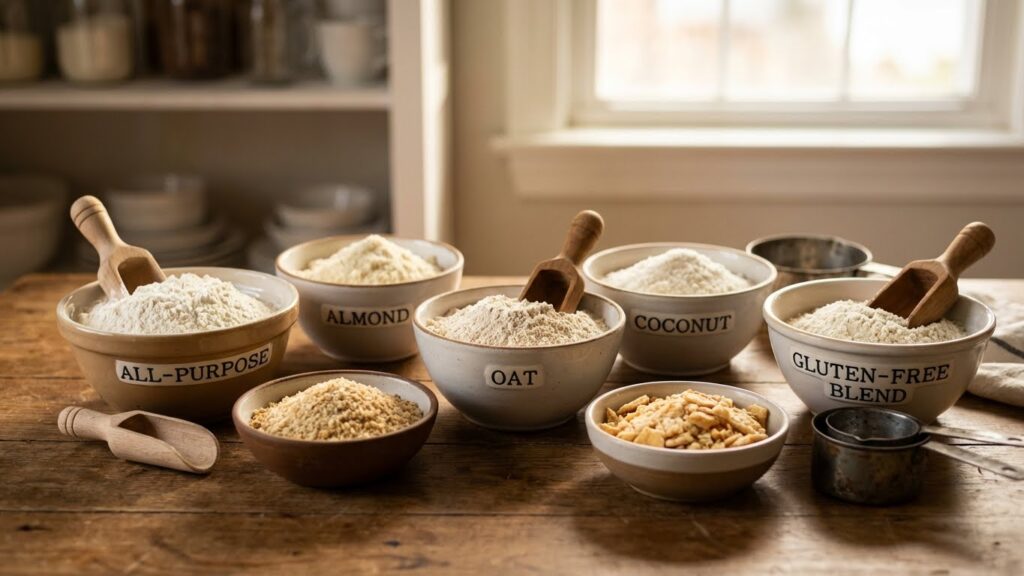
I focus on practical swaps that keep texture and flavor while matching dietary needs. Expect options for direct swaps, gluten-free choices, and crumbs for coating or binding.
Wheat Flour Alternatives
I often replace all-purpose wheat flour with alternatives based on the recipe. For sauces and gravies, I use cornstarch or arrowroot: mix 1 tablespoon starch with 1 tablespoon cold water for each 2 tablespoons of flour called. For thickening pies or fruit fillings, tapioca starch works well and keeps a clear, glossy finish.
For baking, I turn to whole wheat pastry flour or spelt for a similar structure but nuttier taste. Use 3/4 cup whole wheat pastry or spelt per 1 cup all-purpose and add 1–2 tablespoons extra liquid if batter feels stiff. For savory batters and breads, oat flour (made from ground oats) gives a soft crumb; swap 1:1 but expect denser results.
Gluten-Free Flour Options
I choose gluten-free flours by matching protein and absorbency to the recipe. Almond flour (blanched) adds fat and moisture—use 1:1 in cookies but cut back on added fat in recipes. Coconut flour soaks up liquid; start with 1/4–1/3 cup coconut flour per 1 cup wheat flour and increase eggs or liquid.
For breads and cakes, I use commercial 1:1 gluten-free blends that include xanthan gum or guar gum for structure. If using single flours, add 1/2 teaspoon xanthan gum per cup of flour for cakes and 1 teaspoon per cup for yeasted breads. Measure flours by weight when possible to improve consistency.
Breadcrumb and Crumb Replacements
I replace breadcrumbs based on texture needs: panko gives crispiness, crushed crackers add savory flavor, and cornmeal offers a gritty crunch. For a 1:1 breadcrumb swap, pulse crackers, cereal (like cornflakes), or pretzels in a food processor until coarse.
For gluten-free coatings, I use ground almonds or crushed gluten-free crackers. Mix 1 cup almond meal with 1/4 cup grated Parmesan for extra browning. To bind fillings without breadcrumbs, I use cooked rice, mashed potato, or oats (quick oats bind more than steel-cut). Toast stale bread into crumbs in a 300°F oven for 10–15 minutes to refresh flavor and improve crisping.
Sugar and Sweetener Alternatives
I explain which sweeteners work best for baking, cooking, and drinks, and when to change liquids or textures. I focus on taste, measure swaps, and heat stability so you get reliable results.
Refined Sugar Substitutes
I replace white granulated sugar most often with brown sugar, coconut sugar, or maple sugar depending on the recipe. Brown sugar adds moisture and a molasses note—use a 1:1 swap but expect softer, darker baked goods. Coconut sugar browns like cane sugar and measures 1:1; it has a mild caramel flavor and lower moisture, so cookies may be drier.
Maple sugar dissolves well and gives a clear maple flavor; use it 1:1 in cookies and muffins but reduce other liquid slightly. For syrups and sauces, use honey or light corn syrup at about 3/4 cup per 1 cup sugar and cut 1–2 tablespoons liquid. If a recipe needs creaming (butter + sugar), choose a granulated substitute so texture holds.
Natural Sweetener Options
I use honey, maple syrup, molasses, and fruit purées when I want flavor and some nutrients. Honey is sweeter than sugar—use 3/4 cup honey for 1 cup sugar and lower oven temp by 25°F. It adds moisture and browning, so reduce other liquids by about 2 tablespoons per 1/4 cup honey. Maple syrup offers a subtle maple flavor; swap 3/4 cup maple syrup for 1 cup sugar and reduce liquid.
Molasses gives a strong, bitter-sweet taste; use it sparingly in gingerbread or baked beans. Applesauce and mashed banana work as sweet, moist binders in cakes and muffins—replace half to all of the sugar depending on desired sweetness, and cut other liquids to avoid soggy results. Taste as you go.
Low-Calorie Sweetening Choices
I choose erythritol, allulose, stevia, or monk fruit when I need fewer calories. Erythritol measures roughly 1:1 with sugar and works well in baked goods, though it can leave a cooling aftertaste and can be slightly less sweet. Allulose behaves most like sugar when baking: it browns and caramelizes, so use it in a near 1:1 ratio but expect a lighter texture in some recipes.
Stevia and monk fruit are high-intensity sweeteners; they need careful measuring. Use blends made for baking to get volume and avoid bitterness. When replacing sugar fully, add a small bulking agent like yogurt, applesauce, or xanthan gum to mimic texture. Check labels for heat tolerance and follow product conversion charts.
Oil and Fat Swaps
I focus on swaps that keep flavor and texture while cutting saturated fat or matching cooking needs. Choose oils for high-heat work, and pick wetter, lower-fat options for baking when you want fewer calories.
Cooking Oil Alternatives
I use olive oil for most sautéing and roasting because it has a good flavor and moderate smoke point. For high-heat searing or stir-fry, I switch to avocado oil or refined canola oil; both tolerate higher temperatures without burning. I avoid unrefined nut oils for frying but keep them for dressings and finishing because they add aroma.
If I want a neutral oil, I choose canola or sunflower. For heart-health benefits, I reach for extra-virgin olive oil for dressings and low-heat cooking; see USDA and American Heart Association guidance for healthy oil choices. I store oils in a cool, dark place and replace them after rancid smells develop.
Baking Fat Replacements
When baking, I replace butter with unsweetened applesauce or mashed banana to cut fat and calories in cakes and muffins. I swap 1/4 to 1/2 cup of applesauce for each cup of butter or oil, which keeps moisture but changes crumb and flavor slightly. For cookies and pastries that need structure, I use part butter and part oil or use Greek yogurt to keep tenderness with more protein.
If I need a dairy-free option, I use coconut oil solid at room temperature for texture in shortbread, but I reduce overall amount because coconut adds saturated fat. For flaky pie crust, I keep some cold butter or use a mix of chilled vegetable shortening and oil to mimic layers.
Meat and Protein Replacements
I focus on swaps that keep flavor and texture while matching protein needs and cook times. Below I list practical options, amounts, and simple tips so you can replace meat or seafood without guesswork.
Plant-Based Protein Options
I often use tofu, tempeh, lentils, and textured vegetable protein (TVP) as direct swaps for meats.
- Tofu: Use firm or extra-firm for stir-fries and grilling. Press it 15–30 minutes, cube, and marinate. Swap 1 cup cubed tofu for 8 oz cooked chicken.
- Tempeh: Has a nutty taste and firm texture. Steam 10 minutes to reduce bitterness, then pan-fry or crumble into sauces.
- Lentils: Brown or green lentils stand in for ground beef in tacos or Bolognese. Use 1 cup cooked lentils per 8 oz ground meat.
- TVP: Rehydrates quickly and mimics ground meat texture. Rehydrate with broth (1:1 by volume) and season boldly.
Nutrition and cooking notes:
- Combine plant proteins with vitamin C (tomato, lemon) to improve iron absorption.
- Add oil or a fat source when needed; some plant proteins are low in fat and can dry out.
Seafood Substitutes
I choose substitutes based on texture and cooking method so fish dishes keep their character.
- For flaky fish (cod, haddock): Use firm tofu or canned chickpeas smashed lightly and baked with a lemon-butter herb topping. Use 3/4–1 cup tofu per fillet.
- For fish steaks or salmon: Try thick slices of marinated tempeh or portobello caps for grilling. Marinate 30 minutes for best flavor.
- For shellfish (shrimp, scallops): Use king oyster mushroom slices or small diced tofu, seared until golden. Slice mushrooms into scallop-like rounds; cook 2–3 minutes per side.
- For tuna/salmon salads: Use canned chickpeas or mashed smoked tempeh with mayo, celery, and lemon.
Cooking tips:
- Match cooking time: slice substitutes thinner for quick sautés, thicker for grilling.
- Use sea flavors—nori flakes, kelp granules, or a dash of fish sauce substitute (or miso for vegan) to add umami.
Salt, Seasoning, and Flavor Enhancer Options
I focus on practical, low-sodium swaps, herbs and spices that carry bold flavor, and umami-rich ingredients that make food taste complete. Below I list specific choices and how I use them in everyday cooking.
Salt Alternatives
I often reach for potassium chloride blends when I need a direct salty note without sodium. These work well sprinkled on cooked vegetables or mixed into sauces, but I taste-test first because some people notice a slight metallic aftertaste.
Acidic touches like lemon juice or apple cider vinegar brighten dishes without salt. I add a splash at the end of soups, steamed greens, or roasted vegetables to lift the overall flavor.
For baking and pantry use, I substitute with spice blends that include garlic powder, onion powder, and celery seed. They add savory depth and work well in breads, meatloaf, and savory muffins.
Herb and Spice Substitutions
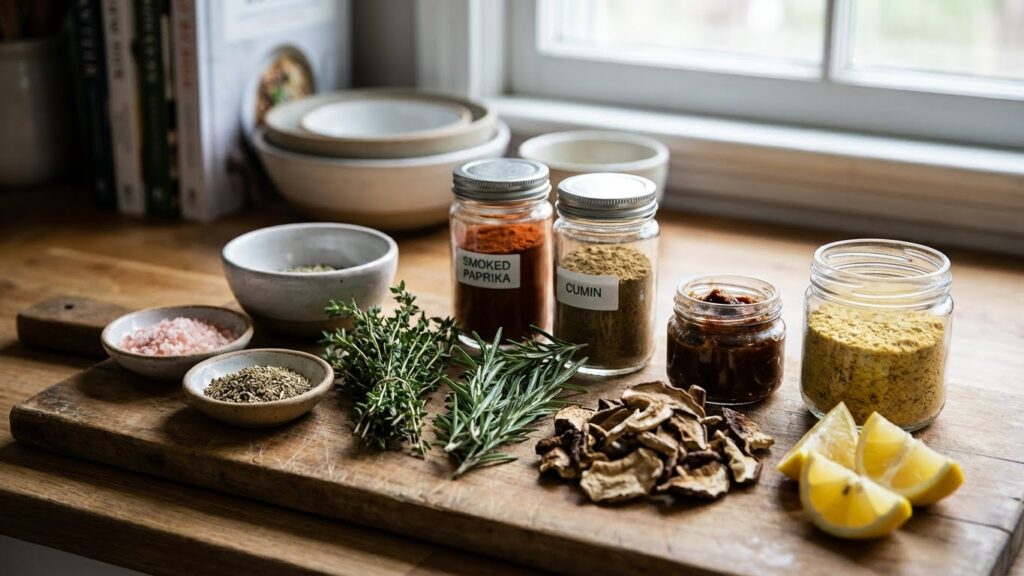
Fresh herbs give the biggest impact. I use basil, cilantro, and parsley raw on salads and finished dishes. For long cooks I prefer thyme, rosemary, and bay leaf because they hold up to heat.
Dried spices concentrate flavor. I swap 1 teaspoon dried herb for 1 tablespoon fresh in recipes. Smoked paprika and ground cumin add warmth and complexity to beans, grains, and roasted root vegetables.
I also keep a simple mix—garlic powder, onion powder, black pepper, and crushed red pepper—in my pantry. It saves time and seasons everything from eggs to roasted potatoes.
Umami Boosters
I rely on mushrooms, tomatoes, and aged cheeses to add umami naturally. A spoonful of tomato paste in stews or a few slices of Parmesan on pasta increases savory depth without extra salt.
Fermented items like soy sauce alternatives (low-sodium tamari) or a splash of fish sauce go a long way; I use just a teaspoon to avoid overpowering the dish. For vegetarian umami, I use miso paste diluted into sauces or dressings—try white miso for a milder taste.
I also sauté chopped mushrooms until deeply browned and add to sauces, or sprinkle nutritional yeast on popcorn and vegetables for a cheesy, savory finish.
External resources: see the USDA guidance on sodium reduction and Harvard’s tips for using herbs and spices for more details.
Vegetable and Fruit Replacements
I focus on swaps that keep texture and flavor close to the original so your dish still cooks the same way and tastes right. I list options by role—bulky veg, quick-cooking greens, sweet fruits for baking—and note cook-time or moisture changes you must adjust.
Vegetable Swaps for Recipes
I choose substitutes by texture and cook time. For recipes needing a firm, roasting vegetable, use butternut squash or sweet potato instead of pumpkin; both brown well and hold shape. For soups or stews, replace potatoes with turnips or rutabaga for lower starch and similar bite.
For quick-cooking greens like spinach, swap in Swiss chard or baby kale, but add chard earlier because its stems take longer. If a recipe calls for zucchini but you only have eggplant, cut eggplant thicker and salt it to remove moisture before cooking.
When you need a crunchy raw element, use jicama or fennel in place of cucumber. For pureed sauces that rely on tomato, use roasted red peppers plus a splash of vinegar to mimic brightness.
Fruit Substitutes in Baking and Cooking
I pick fruit swaps based on sweetness, acidity, and moisture. Use applesauce or mashed banana for oil in quick breads; reduce added sugar slightly because these fruits add sweetness and moisture. For recipes calling for raspberries, you can use strawberries chopped small, but reduce cook time to preserve seeds and texture.
When a recipe needs lemon juice, substitute white wine vinegar or apple cider vinegar at half the volume, then taste for brightness. For pies and tarts that call for fresh berries, frozen mixed berries work—thaw and drain excess liquid to avoid a soggy crust.
If a recipe relies on fruit firmness (like sliced peaches), use nectarines or canned peach slices drained well. For chutneys and salsas, swap mango for pineapple for similar sweet-tart balance, but cut back on additional sugar.
Baking Powder and Baking Soda Alternatives
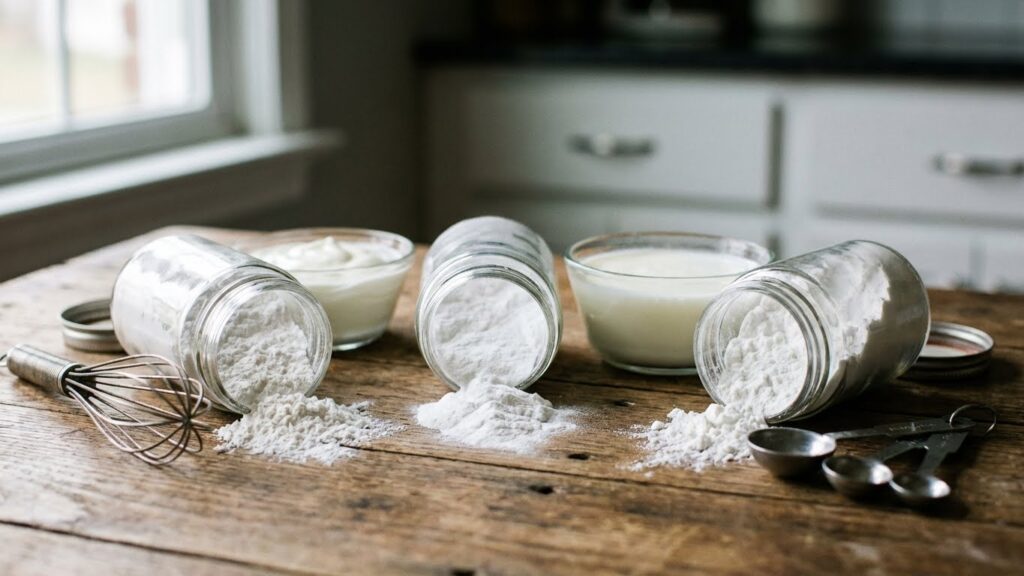
I keep both baking powder and baking soda on hand, but I also know good swaps when I run out. Baking powder is baking soda plus an acid, so I often mix 1 part baking soda + 2 parts cream of tartar to replace baking powder. That gives a similar rise and neutral taste.
When a recipe calls for baking soda, I use 1/4 the amount of baking powder because baking soda is stronger. For example, 1 teaspoon baking soda ≈ 4 teaspoons baking powder. Use this carefully — too much baking powder can change texture and flavor.
I use yogurt, buttermilk, or sour cream as both acid and moisture when needed. Combine 1/2 cup of one of these with 1/4 teaspoon baking soda to replace 1 teaspoon baking powder in quick breads or pancakes. I reduce other liquid in the recipe to keep batter consistency right.
If I want a low-sodium option, I try potassium bicarbonate in equal measure to baking soda, then add an acid like cream of tartar. For egg-based recipes, whipped egg whites can add lift without chemical leaveners. They work best in cakes and soufflés, not dense batters.
Quick reference:
- Substitute for 1 tsp baking powder: 1/4 tsp baking soda + 1/2 tsp cream of tartar.
- Substitute for 1 tsp baking soda: 4 tsp baking powder (adjust salt).
- Acidic liquid swap: 1/2 cup yogurt/buttermilk + 1/4 tsp baking soda for 1 tsp baking powder.
Vinegar, Wine, and Acidic Ingredient Replacements
I reach for acidic swaps when a recipe needs brightness or a chemical reaction, like in dressings, marinades, or baking. Common pantry acids—lemon juice and apple cider vinegar—work well in a 1:1 ratio for most uses.
For white wine in cooking, I often use low-sodium chicken or vegetable broth plus a splash of lemon juice or vinegar to mimic the tang. If a recipe calls for white wine vinegar, apple cider vinegar or rice vinegar makes a good swap without changing texture.
When you need acidity for baking (to react with baking soda), I use cream of tartar or citric acid dissolved in water. For cleaning or pickling, plain distilled white vinegar is best, but lemon juice or citric acid can substitute in small quantities.
Quick reference:
- Lemon juice — bright, fresh; 1:1 for vinegar.
- Apple cider vinegar — slightly fruity; 1:1 for most vinegars.
- Rice vinegar — milder; use 1:1, may need a pinch of sugar.
- White wine — stock + lemon/vinegar, use 1:1 total liquid.
- Citric acid/cream of tartar — for baking reactions; dissolve before using.
I adjust amounts by taste and function. Acids change flavor and texture, so I add a little, taste, then add more.
Specialty Ingredient Substitutes in International Cuisine
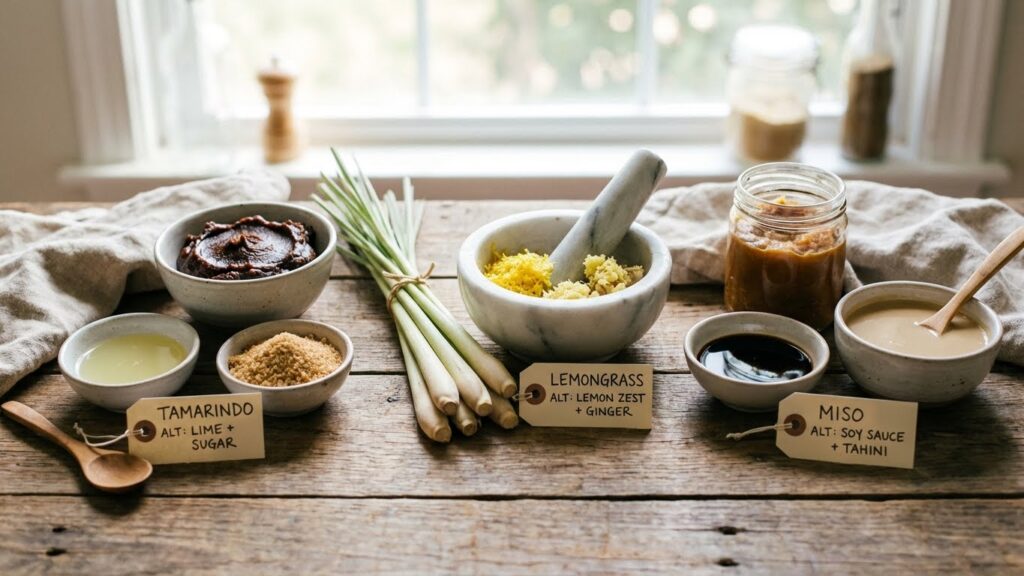
I often face recipes that call for ingredients I can’t find locally, so I rely on substitutes that match flavor, texture, and function. I pick replacements based on the dish’s role—acid, umami, spice, or thickener—rather than trying to copy the original exactly.
For tangy or sour elements like tamarind, I use a mix of lime juice and brown sugar or a small splash of vinegar to mimic the sweet-tart balance. For lemongrass, I combine lemon zest and a little grated ginger to get citrus and warmth without the fibrous stalk.
When a recipe needs miso or fermented depth, I reach for soy sauce plus a touch of tahini or anchovy paste for body and savory notes. For fish sauce, I dilute soy sauce with a squeeze of lime and a pinch of sugar to recreate salty-umami and acidity.
I list quick swaps I use most often:
- Tamarind → lime juice + brown sugar (1:1 by taste)
- Lemongrass → lemon zest + grated ginger (1 stalk ≈ 1 tsp zest + 1/2 tsp ginger)
- Fish sauce → soy sauce + lime + pinch sugar (start 3:1 soy)
- Miso → soy sauce + tahini or anchovy paste (adjust for salt)
If texture matters, like coconut cream in curries, I use full-fat coconut milk reduced on the stove until thick. I test and adjust seasoning as I cook; small changes have big effects, so I taste frequently.
Emergency Swaps for Last-Minute Ingredient Shortages
I keep a short list of reliable swaps to save time when a recipe calls for something I don’t have.
These choices focus on preserving texture and basic flavor so the dish still works.
If a recipe needs eggs, I often use 1 mashed banana, 1/4 cup applesauce, or 1 tablespoon ground flaxseed mixed with 3 tablespoons water per egg.
For dairy, I thin heavy cream with water for milk, or use plain yogurt or buttermilk for baking when a tang helps.
I replace butter with equal parts oil or mashed avocado in many savory recipes.
For baking where structure matters, I use coconut oil or a solid vegetable shortening instead.
When a recipe asks for buttermilk, I stir 1 tablespoon vinegar or lemon juice into 1 cup milk and let it sit five minutes.
If you lack baking powder, combine 1/2 teaspoon cream of tartar plus 1/4 teaspoon baking soda.
I rely on pantry staples to replace fresh herbs and aromatics: 1 teaspoon dried herb equals 1 tablespoon fresh, and 1/2 teaspoon garlic powder equals one clove.
If a sauce needs thickening, cornstarch mixed with cold water (1:1) works faster than flour.
Quick reference
- Eggs: 1 banana / 1/4 cup applesauce / 1 tbsp flax + 3 tbsp water
- Milk: heavy cream + water / yogurt / evaporated milk
- Butter: oil (1:1) / coconut oil / mashed avocado
- Buttermilk: 1 tbsp acid + 1 cup milk
- Baking powder: 1/2 tsp cream of tartar + 1/4 tsp baking soda
I test swaps before serving to guests when I can, since results vary with recipes and quantities.
FAQs
How do I replace butter or oil?
I often swap equal amounts of neutral oil for melted butter in cooking. In baking, I reduce oil by about 25% when using applesauce to keep moisture without extra fat.
Will substitutions change flavor or texture?
Yes. Some swaps alter taste or structure, so I taste and adjust seasoning. For leavening, I match baking soda with baking powder carefully because they act differently.
What about meat or dairy for dietary needs?
I use firm tofu or tempeh in place of meat in stir-fries, and canned beans for slow-cooked dishes. For dairy, plain yogurt or silken tofu thinned with water can replace sour cream.
Quick reference:
Eggs (binding): 1 tbsp flax + 3 tbsp water = 1 egg
Milk: half-and-half diluted 1:1 or plant milk 1:1
Butter (cooking): equal oil; (baking) 3/4 oil for 1 butter I test swaps on small batches when trying them for the first time. This helps me fine-tune texture and flavor before serving guests.
Conclusion
I want you to feel ready to swap ingredients without stress. Small changes often keep flavor and texture close to the original, especially when you match function—like moisture, binding, or acidity.
I recommend testing substitutes in small batches first. That helps you learn how each swap changes taste and texture.
Keep a short list of go-to swaps for eggs, milk, flour, and fats. Those four categories solve most last-minute problems.
I encourage experimenting. Try one change at a time and note results. Over time you’ll build confidence and quick instincts.
When in doubt, favor simple swaps that mirror the original ingredient’s role. Acid for tang, oil for moisture, and starches for structure usually work well.
I trust you’ll use these tips to adapt recipes for taste, diet, or what’s on hand. My goal is to help you cook with less worry and more creativity.
