
Can Juicing Replace Meals? What Actually Works for Nutrition, Energy, and Fullness

Usually, no. Fresh juice can sometimes stand in for a light meal, but most juices are too low in protein and fiber to replace regular meals for long. To make juice work better, pair it with protein, healthy fat, and solid food.
I’m Emma Reed, and this is one of those kitchen questions I hear a lot from busy home cooks. A homemade juice sounds healthy and easy, but many people end up hungry, tired, or disappointed because the drink does not actually function like a balanced meal.
In this guide, I’ll walk you through what meal replacement juicing really means, when it can work, when it usually does not, and how to make a juice routine more practical for real life. I’ll also cover texture, flavor, storage, common mistakes, and simple fixes.
Quick Answer: Can Juicing Replace Meals?
Featured Snippet Answer
Juice can replace a very light meal once in a while, but it usually should not replace regular meals every day. Most fresh juices are low in protein and fiber, which means they digest quickly and may leave you hungry. For better balance, pair juice with foods like eggs, yogurt, toast, nuts, or oatmeal.
- Best for: quick breakfasts, light lunches, or short-term convenience
- Not ideal for: long workdays, heavy activity, or replacing several meals daily
- Most important rule: think of juice as part of a meal, not automatically the whole meal
What It Means to Replace a Meal with Juice
What counts as meal replacement juicing?
Meal replacement juicing means using a glass or bottle of fresh juice in place of breakfast, lunch, or dinner. That is different from having a small juice on the side of eggs, toast, or another meal.
For most people, a true meal needs enough calories, protein, fat, and staying power to keep hunger away for a few hours. A plain juice made from apples, celery, and spinach may taste fresh, but it usually behaves more like a snack than a full meal.
- A snack juice: small serving, often fruit-forward, light calories
- A meal-style juice: larger serving, vegetable-heavy, paired with protein or healthy fat
- A juice fast: drinking juice only for a period of time, which is a separate approach and not the same as balanced eating
Why this matters for beginners
When beginners start juicing, they often focus on vitamins and freshness but forget fullness. That is the biggest reason meal replacement juicing fails in real life. You drink something that feels healthy, but then you are hungry again in 30 to 60 minutes.
This matters even more on busy mornings, during meal prep weeks, or when you are trying to feed a family and keep your own routine simple. If a juice does not keep you satisfied, it can lead to extra snacking, sugar crashes, and low energy later in the day.
- Hunger control matters just as much as nutrition
- Low-protein juices are rarely enough on their own
- Very sweet juices can leave you tired instead of energized
- Replacing too many meals may create nutrition gaps
Juicing vs eating whole produce
Whole fruits and vegetables still have their fiber, which slows digestion and helps you feel full. Juicing removes much of that fiber, so the nutrients are easier to drink but also faster to move through your system.
That is why a whole apple and a plate of eggs often keeps you fuller than apple juice alone. If you want a thicker, more filling option, a blended drink is often the better path. My green smoothie recipe is a good example of how keeping the fiber changes texture and fullness.
How Meal Replacement Juicing Works
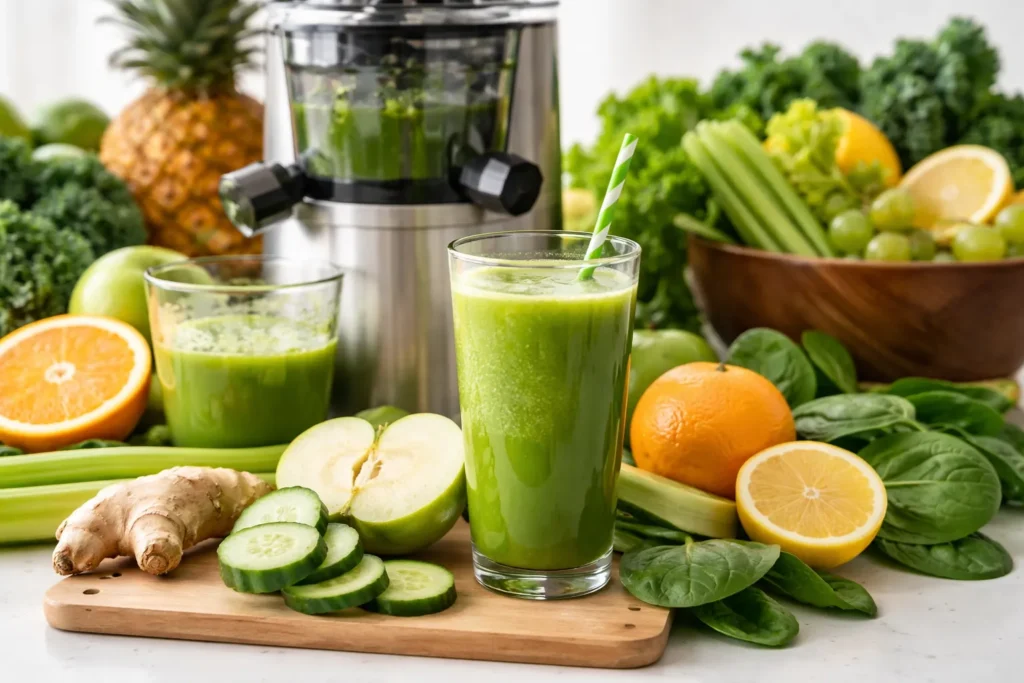
How the body digests juice differently from whole meals
Juice is quick to drink and quick to digest. There is less chewing, less fiber, and usually less protein than in a normal meal. That can be helpful when you want something light, but it also means the fullness does not last as long.
In practical kitchen terms, think of juice like a fast pass for produce. You get the flavor and many nutrients, but not the same staying power as a plate with protein, grains, or healthy fats.
- Fast digestion can mean quick energy
- Low fiber can mean shorter fullness
- Fruit-heavy juice may raise and drop blood sugar faster
- Chewing whole foods often helps people feel more satisfied
What a meal-replacement juice needs to be more balanced
If you want juice to work better in place of a meal, it needs support. The juice itself should lean vegetable-first, and you should pair it with foods that add protein and fat.
I like to think in simple meal-building parts. The juice brings hydration, flavor, and produce. The side food brings structure, fullness, and balance.
- Calories: enough to feel like more than a snack
- Protein: eggs, Greek yogurt, cottage cheese, tofu, or protein powder on the side
- Healthy fats: nuts, seeds, avocado toast, peanut butter, or cheese
- Vegetables: cucumber, celery, spinach, kale, carrots, beets
- Fruit: use mainly for sweetness and balance, not as the full base
When juicing may make sense
There are real-life times when juicing is useful. A quick weekday breakfast, a light lunch on a hot day, or a meal prep routine when you know you are short on time can all be reasonable uses.
It can also help when your appetite is low or when you want something easier to digest. But if you are heading into a long day, chasing kids, commuting, or doing physical work, whole meals usually perform better.
Key Ingredients That Make Juice More Filling and Balanced
Best produce choices
The best meal-style juices are usually built from vegetables with one or two sweet ingredients for balance. This keeps the flavor fresh without turning the drink into dessert.
- Cucumber: adds water, freshness, and a clean taste
- Celery: savory flavor and light saltiness
- Carrots: natural sweetness and thicker body
- Beets: earthy flavor, deeper color, and more body
- Spinach: mild green flavor for beginners
- Kale: stronger green flavor, best used in smaller amounts
- Romaine: light, mild, and easy to blend into green juices
- Apple: a common sweetener, but use it in moderation
- Citrus: lemon or orange brightens flavor and cuts bitterness
Texture matters here. Watery ingredients like cucumber and celery make juice refreshing but thin. Carrots and beets make it feel more substantial. Greens can become bitter if the balance is off.
Add-ins that improve nutrition
This is where a lot of beginners get stuck. A juicer strips out fiber, so ingredients like chia seeds or nut butter do not mix into pure juice well. Instead, it is often easier to pair the juice with other foods or use a smoothie if you want everything in one glass.
- Greek yogurt on the side for protein
- Hard-boiled eggs for a fast breakfast
- Nut butter on toast for healthy fat
- Cottage cheese with fruit for extra staying power
- Oatmeal if you want a more complete morning meal
- Protein powder in a separate shaker or smoothie-style drink
If you want a flexible morning routine, pair fresh juice with one simple side and keep it repeatable. That works much better than trying to force juice alone to do everything.
Best option for flavor, texture, and ease
For most beginners, the easiest and most practical formula is a mild green juice with cucumber, celery, spinach, carrot, apple, and lemon. It tastes fresh, is not too bitter, and gives you room to adjust sweetness.
If your past juices tasted harsh or watery, the issue was usually balance. Too many strong greens make the drink grassy. Too much fruit makes it sweet but not very satisfying. A little carrot and lemon often fix both problems.
Types of Juicing Approaches
Vegetable-heavy juices
Vegetable-heavy juices are the best choice if you want something closer to a meal-support drink. They are usually lower in sugar and easier to pair with eggs, toast, yogurt, or another light side.
These are also the most forgiving for meal prep because the flavor stays fresher when the drink is not overloaded with sweet fruit.
Fruit-forward juices
Fruit-forward juices are sweeter and easier for some beginners to enjoy at first, but they are also the least filling. They can taste great and still leave you hungry fast.
If you love fruit juice, try using it more as a snack or a smaller breakfast drink instead of depending on it as your whole meal.
Protein-supported juice meals
This is the most realistic approach for everyday life. You drink a fresh vegetable-based juice and pair it with something that brings protein and fat. It is faster than cooking a full breakfast but more balanced than juice alone.
I use this method most often because it works on busy days. A green juice plus eggs or Greek yogurt is simple, beginner-friendly, and much easier to stick with.
Juicing vs smoothies vs whole meals
These three options can all fit into a home kitchen routine, but they do different jobs. Juice is light and fast, smoothies are thicker and more filling, and whole meals still give the best all-around balance for fullness and nutrition.
Juicing vs Smoothies vs Whole Meals: Full Comparison
| Option | Fiber | Protein Potential | Fullness | Prep Time | Best Use |
|---|---|---|---|---|---|
| Fresh juice | Low | Low unless paired | Short-lasting | Fast to moderate | Light meal, snack, or quick breakfast add-on |
| Smoothie | Medium to high | Easy to increase | More filling | Fast | Breakfast or practical meal replacement |
| Whole meal | High | Balanced | Long-lasting | Moderate | Best for complete nutrition and satiety |
If your main goal is fullness, smoothies and whole meals usually win. If your main goal is quick freshness or getting more vegetables into your day, juicing has a place. Serious Eats has a useful guide on juicer styles and what they do best if you want to compare machines before buying: Serious Eats juicer guide.
Step-by-Step Guide: How to Make Juice That Works Better as a Meal
Step 1: Choose a vegetable-first base
Start with ingredients that keep the sugar lower and the flavor fresh. A beginner-friendly base might be cucumber, celery, spinach, and romaine. If you want more body, add carrots or a small beet.
Wash produce well, trim tough ends, and cut large pieces to fit your machine. This small prep step makes juicing faster and helps prevent jams.
Step 2: Add one naturally sweet ingredient
Use one apple, orange, or extra carrot to round out the flavor. This is enough to make the drink pleasant without turning it overly sweet.
If your greens tend to taste bitter, lemon and ginger help a lot. They brighten the drink and make the flavor feel cleaner.
Step 3: Think beyond the juice itself
This is the key step most people skip. If you want the juice to act like a meal, decide what you will eat with it before you even start juicing.
- For breakfast: juice plus eggs or Greek yogurt
- For lunch: juice plus avocado toast or cottage cheese
- For a busy workday: juice plus nuts and a piece of whole-grain toast
- For meal prep: pack the side item at the same time as the juice
Step 4: Watch portion size and calories
A tiny 8-ounce juice is usually not enough for a meal. A larger 12- to 16-ounce vegetable-based juice paired with a protein side is much more realistic for breakfast or a light lunch.
You do not need to chase exact numbers every day, but you do need to pay attention to whether the drink actually holds you until the next meal. If it does not, adjust the side food first.
Step 5: Drink it fresh or store it properly
Fresh juice tastes best right after juicing. The flavor is brighter, the texture is smoother, and separation is minimal. If you need to make it ahead, pour it into a tightly sealed container, fill it close to the top, and refrigerate it right away.
For food safety, keep fresh juice cold at 40 degrees Fahrenheit or below. Same-day is best, and 24 hours is ideal for flavor. Up to 48 hours can work in many home kitchens, but quality drops as it sits.
Why Your Meal Replacement Juice Is Not Turning Out Right
Common signs your juice is not working as a meal
If your juice routine feels frustrating, the signs are usually pretty clear. You may be hungry soon after drinking it, feel shaky by mid-morning, or notice that the flavor is either too sweet, too grassy, or too thin.
- You feel hungry again in 30 to 60 minutes
- You get an energy crash instead of steady fuel
- The juice tastes like fruit punch instead of fresh produce
- The texture is watery and unsatisfying
- It separates heavily in the fridge
- You feel like you need to snack right away
Main causes behind the problem
The biggest cause is expecting juice alone to do the work of a full meal. After that, the most common problems are too much fruit, too little protein, and not enough attention to texture and balance.
Another common issue is choosing only high-water produce like cucumber and celery. Those ingredients are useful, but if they make up almost the entire drink, the result can feel more like flavored water than food.
Most Common Juicing Problems and Solutions
| Problem | Likely Cause | Quick Fix |
|---|---|---|
| Still hungry soon after | Too little protein, fat, or calories | Pair juice with eggs, yogurt, nuts, cottage cheese, or toast |
| Energy crash | Too much fruit sugar | Use more greens and cucumber, and reduce fruit |
| Juice tastes bitter | Too many strong greens | Add lemon, carrot, ginger, or a small apple |
| Juice is too watery | High-water ingredients only | Add carrots or beets, or reduce cucumber and celery |
| Texture separates fast | Natural separation during storage | Shake well, store cold, and drink fresh when possible |
| Stomach discomfort | Too much juice too quickly or harsh ingredients | Start with smaller servings and milder produce |
| Not enough nutrients | Replacing too many meals | Use juice occasionally and keep whole meals in your routine |
How to Fix It Step-by-Step
If the juice is not filling enough
Start by fixing the meal, not just the drink. Add a protein-rich side before changing the recipe. This is usually the fastest and most effective solution.
- Add eggs, yogurt, tofu, cottage cheese, or nuts
- Increase the serving to a realistic meal size
- Use juice as part of breakfast or lunch instead of the entire plate
If the juice is too sweet
Cut back on apples, oranges, pineapple, or other sweet fruits. Replace some of that volume with cucumber, spinach, celery, or romaine.
A squeeze of lemon also helps because it sharpens the flavor without adding more sugar.
If the flavor is flat or harsh
Flat juice often needs acid. Harsh juice usually needs sweetness or a milder green balance. Lemon, ginger, mint, and carrot are reliable fixes because they change the flavor quickly without making the drink heavy.
If kale keeps taking over the drink, reduce it and swap in spinach or romaine for a softer green taste.
If the texture is too thin
Thin texture usually comes from too many watery ingredients. Carrots and beets create a fuller feel, even in juice. If what you really want is body and thickness, switch to a smoothie instead of trying to force a juicer recipe to behave like one.
Common Mistakes to Avoid When Replacing Meals with Juice
Using fruit-only juices
Fruit-only juices taste good, but they are usually the least filling and the most likely to cause a fast hunger rebound.
Skipping protein completely
This is the biggest mistake. Even a beautiful green juice is still not doing the job of protein-rich food.
Replacing multiple meals every day
One light juice-based meal once in a while is very different from using juice for breakfast, lunch, and dinner. The second approach is much harder to balance and maintain.
Assuming juice cleanses are the same as balanced eating
A juice cleanse and a balanced meal plan are not the same thing. One is very restrictive. The other is built for regular energy, family life, and a normal kitchen routine.
Ignoring portion size and total calories
If the glass is tiny, it probably will not feel like a meal. Beginners often underestimate how light juice really is.
Storing juice too long and expecting fresh taste
Fresh juice loses brightness as it sits. If the flavor seems dull or separated after a couple of days, that is normal. Drink it sooner for better results.
Practical Tips for Better Results
Best practices for beginners
Keep the routine simple at first. Choose one juice formula, one protein side, and one time of day that fits your life. That is easier than trying a full juicing schedule right away.
- Start with replacing no more than one meal
- Pick breakfast first because it is the easiest meal to simplify
- Keep flavors mild until you know what you like
- Pay attention to how long the meal keeps you full
- Adjust with side foods before making the recipe more complicated
If you want a simple backup option, keep a smoothie plan ready too. My easy breakfast smoothie guide is helpful when you want something more filling but still fast.
Best use cases in real life
Juice works best when you use it strategically. It can be great on hot summer mornings, during busy workweeks, or when you want a lighter meal after a heavy holiday weekend.
For family cooking, juice is usually easiest when it serves one person’s lighter meal rather than trying to replace everyone’s breakfast. Most kids and active adults still do better with more solid food.
Meal planning tips
Prep the produce ahead so the actual juicing takes just a few minutes. Wash, dry, and cut your vegetables in advance, then store them in ready-to-use containers. That turns juicing into a real weeknight or weekday option instead of a big project.
I also recommend building a small rotation of two or three combinations and learning how to store your produce well. These guides can help: meal prep breakfast ideas, how to store cut vegetables, and my ingredient substitutions guide for easy swaps when you run out of something.
Best Option for Flavor, Texture, and Ease
For beginners
A mild green juice with cucumber, celery, spinach, apple, and lemon is usually the best starting point. It is easy to drink, not too grassy, and simple to tweak.
For fullness
A vegetable-based juice paired with eggs or Greek yogurt is the best choice if you want something that actually holds you over. Juice alone almost never wins here.
For quick weekday meals
Make the juice ahead the night before, then pair it with a ready protein side in the morning. This is one of the few ways meal replacement juicing fits naturally into real life without turning into a hassle.
Optional Tools and Kitchen Equipment
Juicer vs blender
A juicer makes lighter, smoother drinks by separating the pulp. A blender keeps everything in the glass, which means more fiber, thicker texture, and usually more fullness.
If your goal is true meal replacement, a blender often gives better results. If your goal is a fresh, lighter drink with a clean texture, a juicer is the better tool. Food Network and Allrecipes both have beginner-friendly produce pairing ideas, but I still like to keep the choice simple: juicer for light drinks, blender for filling ones.
Breville Juice Fountain Compact
A practical pick if you want fast weekday juicing without a huge machine taking over the counter.
Ninja Professional Blender
A good option if you decide smoothies fit your meal replacement goals better than juice alone.
Helpful but optional tools
Airtight bottles, mason jars, a cutting board, and prep containers are often more useful than fancy extras. If you batch prep produce, the whole routine gets easier.
If you want more detailed buying advice for machines, this breakdown from Serious Eats is a solid starting point.
Storage, Freshness, and Make-Ahead Tips
How long fresh juice lasts
Fresh juice is best the same day you make it. That is when the flavor is brightest and the texture is least separated. In the refrigerator, 24 hours is ideal, and up to 48 hours can work if it is sealed tightly and kept cold.
Use clean containers and chill the juice right away. Do not leave it sitting out on the counter during a busy morning rush.
How to reduce separation and flavor loss
Separation is normal, especially with homemade juice. Fill the container almost to the top so there is less air inside, keep it cold, and shake before drinking.
A little lemon helps preserve brightness. Allrecipes also has practical batch-juicing tips if you want another reference for timing and storage: Allrecipes.
Can you reheat juice?
Not really. Juice is meant to be served cold or lightly chilled. Heating changes the fresh flavor and can make the drink taste flat or cooked.
If you want a warm produce-based breakfast, soup or a blended vegetable drink is a better choice than trying to reheat juice.
When Juicing May Help and When It May Not
Good situations for meal-style juice
Meal-style juice can help when life is busy and you need something quick, fresh, and easy to digest. It works best when used with intention instead of as a catch-all health fix.
- Busy weekday breakfasts
- Light lunches in warm weather
- Short-term convenience during meal prep weeks
- Days when your appetite feels low
- Moments when you want more vegetables without cooking a full plate
When whole meals are the better choice
Whole meals are better when you need serious staying power. They also tend to work better for families, active adults, long work shifts, and anyone who gets hungry quickly.
- High-hunger days
- After workouts or physical labor
- School mornings for kids
- Family dinners
- Long-term routines focused on balance and satiety
FAQ
Can juicing replace meals for weight loss?
It can for a short time, but it is not always the most practical method. If the juice is too light, you may get hungry and snack later. For weight loss, balance and fullness usually matter more than simply drinking fewer calories.
Is it healthy to replace breakfast with juice every day?
Usually not if the juice is the only thing you have. A better plan is juice plus protein, such as eggs, yogurt, or toast with nut butter.
How can I make juice more filling?
Use more vegetables than fruit, make a realistic serving size, and pair it with protein and healthy fat. If you want a drink that fills you up on its own, a smoothie is often a better fit.
What is better for meal replacement: juice or smoothie?
Smoothies are usually better for meal replacement because they keep the fiber and are easier to build with protein, yogurt, oats, seeds, or nut butter.
Can green juice replace lunch?
It can replace a very light lunch once in a while, but it works better with a side like yogurt, eggs, cheese, nuts, or whole-grain toast.
How much juice should I drink if I am using it as a meal?
For most people, 12 to 16 ounces is more realistic than a tiny glass. Even then, it is usually best paired with another food.
Is juicing safe for kids or the whole family as a meal?
For most kids, juice should not replace a full meal. Children usually need more complete, solid foods for fullness and balanced nutrition. For families, juice works better as a side or occasional add-on.
My simple takeaway is this: juicing can be helpful, but it usually works best as part of a meal instead of the whole thing. If you keep the juice vegetable-forward, pair it with protein, and use it in the right situations, it can fit nicely into a real home kitchen routine.