
How to Make Ramen in a Rice Cooker

Yes, you can make ramen in a rice cooker. Add about 2 cups of water to the pot, close the lid and switch to Cook until it boils, then add the noodles and cook for about 3 minutes, stirring once. Stir in the seasoning, add an egg or vegetables if you like, and serve. It works in basic one-switch cookers and in menu cookers, and it is a handy option in dorms, offices, hotel rooms and small kitchens without a stove.
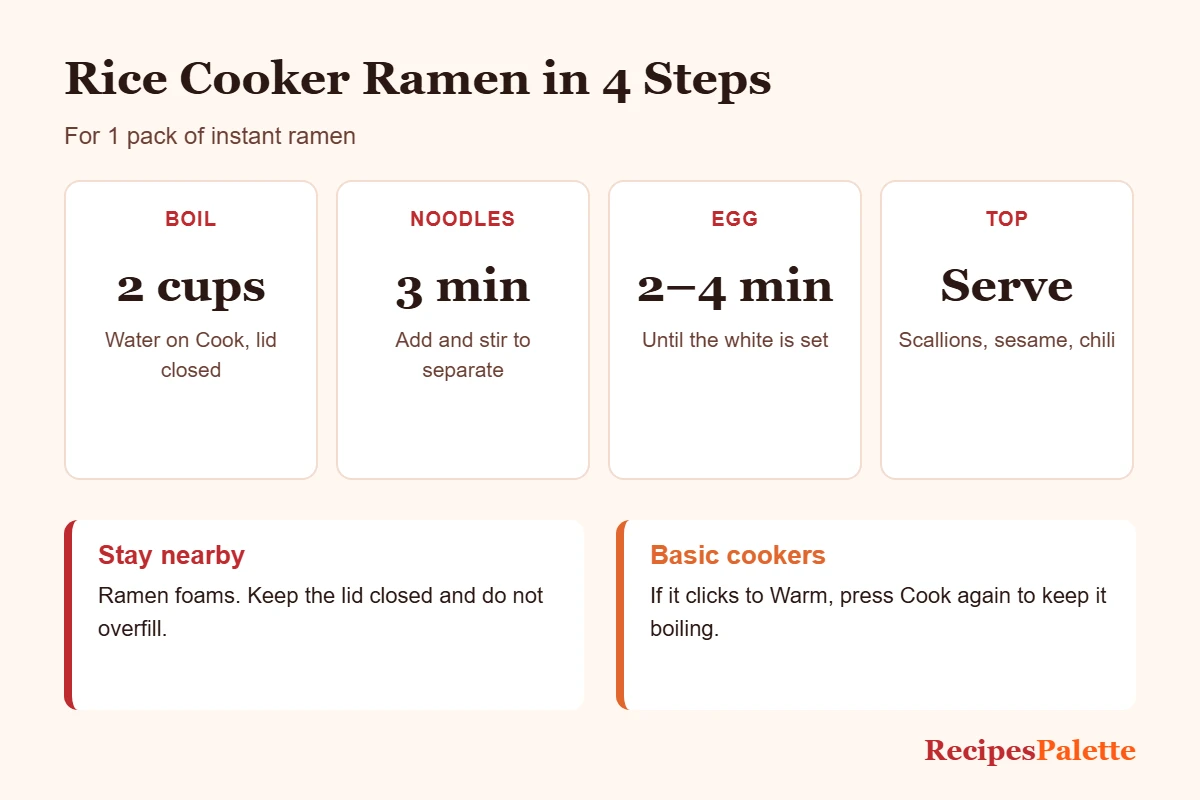
A rice cooker is really just a pot with a heater and a thermostat, so it can boil water for noodles. The tricky part is that some cookers switch to Warm on their own, and ramen can foam. This guide covers instant and fresh noodles, timing, add-ins and how to avoid a mess.
What You Need
- 1 pack of instant ramen (or 1 portion of fresh or frozen ramen noodles plus broth)
- About 2 cups (500 mL) water, or the amount on the package
- Optional: 1 egg
- Optional: a handful of vegetables such as baby bok choy, spinach, frozen corn or peas, sliced mushrooms
- Optional: cooked protein such as sliced chicken, tofu or leftover pork
- Toppings: sliced scallions, sesame seeds, chili oil or crisp, a drizzle of sesame oil, nori
How to Make Instant Ramen in a Rice Cooker
- Add the water. Pour about 2 cups of water into the inner pot. Stay well below the maximum line, because the noodles and boiling water foam.
- Bring it to a boil. Close the lid and switch to Cook (on menu cookers, choose Steam, Quick or Soup if available, otherwise White Rice). It usually takes 8 to 15 minutes to boil, depending on the cooker.
- Add the noodles. When the water is boiling, add the noodle block and close the lid.
- Cook for about 3 minutes (or the time on the package). Open the lid once to stir and separate the noodles.
- Add seasoning and extras. Stir in the seasoning packet. Add vegetables and an egg now (see below).
- Serve. Turn the cooker off, ladle the ramen into a bowl and add toppings.
If you have a basic cooker that clicks to Warm before the water boils or while the noodles are cooking, simply push the switch back to Cook.
Adding an Egg
- Poached egg in the broth: After adding the noodles, make a small space and crack the egg into the boiling broth. Close the lid and cook 2 to 4 minutes, until the white is set and the yolk is as firm as you like.
- Egg drop style: Beat the egg and pour it slowly into the boiling broth while stirring, for silky ribbons.
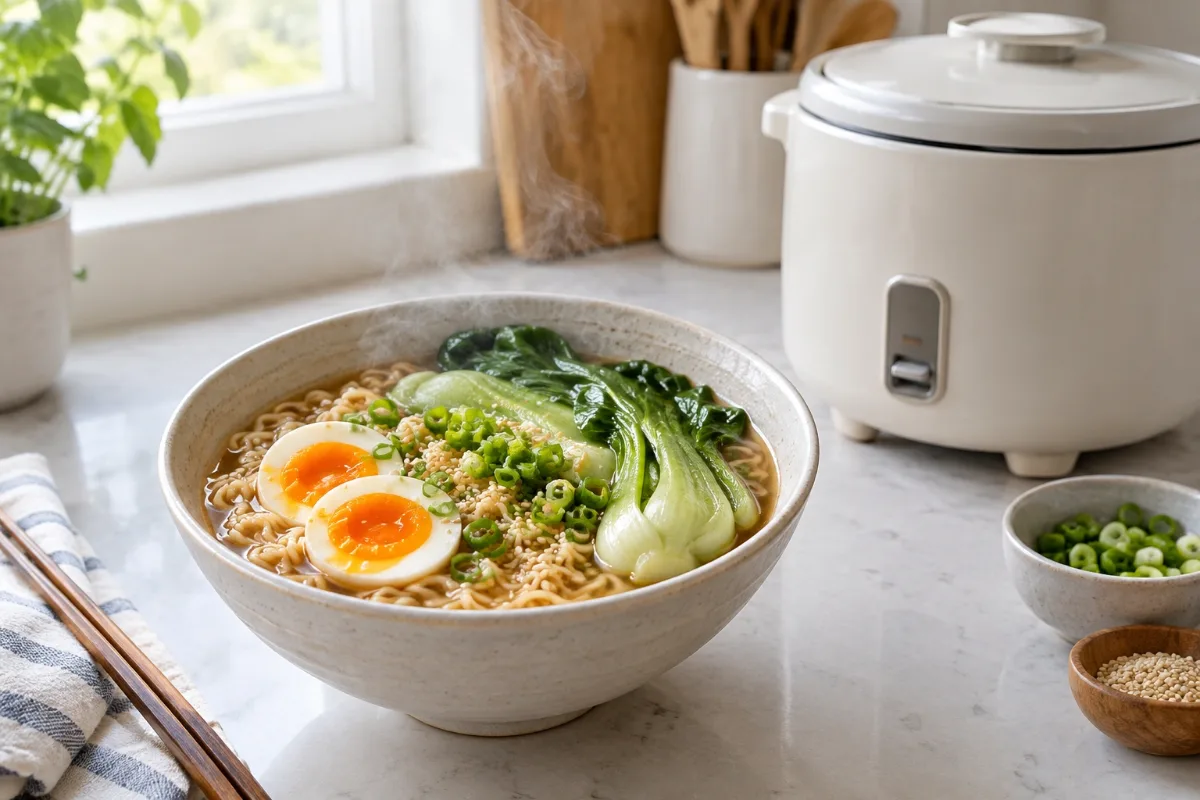
- Soft-boiled egg: Boil an egg in the water before adding the noodles, about 6 to 7 minutes from boiling, then cool it in cold water, peel and halve it.
For the safest result, cook eggs until the white is fully set.
Adding Vegetables and Protein
| Add-in | When to add | Approximate time |
|---|---|---|
| Frozen peas or corn | With the noodles | 3 min |
| Sliced mushrooms | With the noodles | 3 min |
| Baby bok choy or cabbage | With the noodles | 2–3 min |
| Spinach | At the end | 30–60 sec |
| Cooked chicken, pork or tofu | With the noodles, to heat through | Until steaming hot |
| Thin raw beef or chicken slices | Not recommended in a basic cooker | Hard to be sure they cook through |
Using Fresh or Frozen Ramen Noodles
Fresh ramen noodles usually cook in 1 to 3 minutes, and frozen ones a little longer. Bring broth (or water plus a soup base) to a boil as above, add the noodles, stir to separate, and cook for the time on the package. Taste a strand to check.
Better Broth Ideas
- Use chicken or vegetable broth instead of water and half the seasoning packet.
- Stir in a spoonful of miso paste at the end (do not boil it hard).
- Add a splash of soy sauce, a little grated garlic or ginger, and a few drops of sesame oil.
- For a creamy version, stir in a small spoonful of peanut butter or a splash of milk at the end.
Tips to Avoid a Mess
- Use less water than the pot can hold. Ramen foams, and water can escape through the steam vent.
- Keep the lid closed while it boils, and stay nearby. Do not leave it unattended.
- Do not use the timer with noodles or eggs sitting in water.
- Clean right away. Broth and seasoning can leave smells in the inner lid and seal. Wash the pot, inner lid and steam vent cap after cooking. See how to clean a rice cooker.
- Do not scratch nonstick pots with metal chopsticks or forks; use wooden or silicone utensils.
Other Easy Rice Cooker Meals
Once you see how flexible a rice cooker is, there is a lot more you can make. Try congee, yellow rice, beans or browse our rice cooker meal ideas.
Which Rice Cookers Work Best for Ramen?
Ramen is easiest in a simple rice cooker or a multicooker with a lid you can open during cooking.
- Basic one-switch rice cookers: The best fit. They heat quickly, let you open the lid to add noodles, and the switch can be pressed again if the water cools.
- Mini rice cookers (2 to 3 cups): Great for a single pack in a dorm or office. Watch the water level, because small pots boil over faster.
- Menu-based cookers: Many have a Porridge, Soup, Steam or Quick setting you can use for noodles. Some models do not like being opened mid-cycle, so check the manual first.
- Multicookers: A sauté or soup function works well. Keep the lid off or vented while noodles cook.
Never fill the pot above its maximum line. Noodle starch foams as it boils, and an overfilled cooker can push hot liquid out through the steam vent.
Three Easy Rice Cooker Ramen Bowls
1. Miso butter ramen
Cook one pack of noodles in about 2 cups of water. Skip half of the seasoning packet and stir in 1 tablespoon of white miso and a small knob of butter when the noodles are done. Top with corn, sliced green onion and a soft-cooked egg.
2. Kimchi ramen
Add a handful of chopped kimchi and a spoonful of its juice to the water as it heats. Cook the noodles as usual, then top with a slice of cheese, which melts into the broth, and sesame seeds.
3. Garlic chicken noodle soup
Heat chicken broth instead of water with a grated garlic clove and a few slices of ginger. Add shredded cooked chicken and spinach with the noodles. Season with a dash of soy sauce and a drizzle of sesame oil. Since the broth is already flavored, use only part of the seasoning packet or none at all.
Making Ramen for Two or More
Most standard rice cookers (5 to 6 cups) can handle two packs of noodles at once. For two packs, start with about 3 1/2 to 4 cups of water, check that it stays below the maximum line, and break the noodle blocks in half so they fit flat.
For more than two people, it is often faster to cook in rounds. Keep the broth hot on Keep Warm, cook one batch of noodles, ladle into bowls, and add the next batch. This prevents overcrowded noodles that turn soft and gluey.
Cleaning Up After Ramen
Ramen leaves oil and seasoning in the inner pot that can stain or carry odors into your next batch of rice. Clean up soon after cooking:
- Unplug the cooker and let the inner pot cool slightly.
- Wash the pot with warm soapy water and a soft sponge to protect any nonstick coating.
- Remove and wash the steam vent cap and inner lid if your model has them. Broth can splash up inside.
- Wipe the heating plate and the rim of the cooker with a damp cloth once it is completely cool.
- If a smell remains, fill the pot with water and a tablespoon of lemon juice or vinegar, run a short cycle, and rinse.
Safety Tips for Cooking Noodles in a Rice Cooker
- Stay nearby. Unlike rice, noodles cook in a lot of boiling liquid. Keep an eye on the pot so it does not foam over.
- Keep the cord and vent clear. Place the cooker on a stable, heat-safe surface away from cabinets, and do not cover the steam vent.
- Use the paddle or tongs. Avoid metal forks or whisks in nonstick pots.
- Cook eggs and meat fully. Raw meat should be fully cooked before eating. If you add raw chicken or pork, slice it thin and simmer until no pink remains, or use cooked leftovers.
- Unplug when done. Some basic cookers stay on Keep Warm indefinitely. Turn it off once you have served the noodles.
Frequently Asked Questions
How long does ramen take in a rice cooker?
About 10 to 20 minutes in total: most of that is waiting for the water to boil, then about 3 minutes for the noodles.
Can I cook ramen and rice together in a rice cooker?
No. Rice needs a measured amount of water absorbed over a long time, while ramen needs a short boil in lots of liquid. Cook them separately.
Will ramen damage my rice cooker?
Not if you stay below the max line, use soft utensils and clean the cooker afterward. Boil-overs and lingering smells are the main risks.
Can I make ramen in a Zojirushi or other menu cooker?
Many menu cookers are designed for rice and may not boil water continuously on the White Rice setting. If yours has a Steam, Soup or Slow Cook menu, try that, and check the manual for what is allowed.
Can I add cheese to rice cooker ramen?
Yes. Lay a slice of American cheese on top at the end and stir it into the broth for a creamy, popular twist.
Can I add the seasoning packet at the start?
Yes. Adding it to the water as it heats gives a more even broth. If you plan to add other seasonings like miso or kimchi, use only part of the packet.
Can I steam vegetables while the ramen cooks?
If your cooker has a steamer basket, you can steam leafy greens or broccoli above the noodles. Small, quick-cooking pieces work best.
How much water for two packs of ramen?
Start with about 3 1/2 to 4 cups, then adjust to taste. Always stay below the pot’s maximum line.
The Bottom Line
Making ramen in a rice cooker is easy: boil about 2 cups of water on Cook, add the noodles for about 3 minutes, stir in the seasoning, and add an egg or vegetables if you like. Keep it below the max line, stay nearby while it boils, and clean the lid and vent afterward.