
How to Clean a Rice Cooker (Inside, Lid and Steam Vent)

To clean a rice cooker, unplug it and let it cool, then wash the inner pot, inner lid, steam vent cap and condensation collector in warm soapy water with a soft sponge. Wipe the heating plate and the outside of the cooker with a damp cloth, never immersing the main body in water, and let every part dry before putting it back together. Do this after every use for the removable parts, and give the heating plate and outside a wipe about once a week.
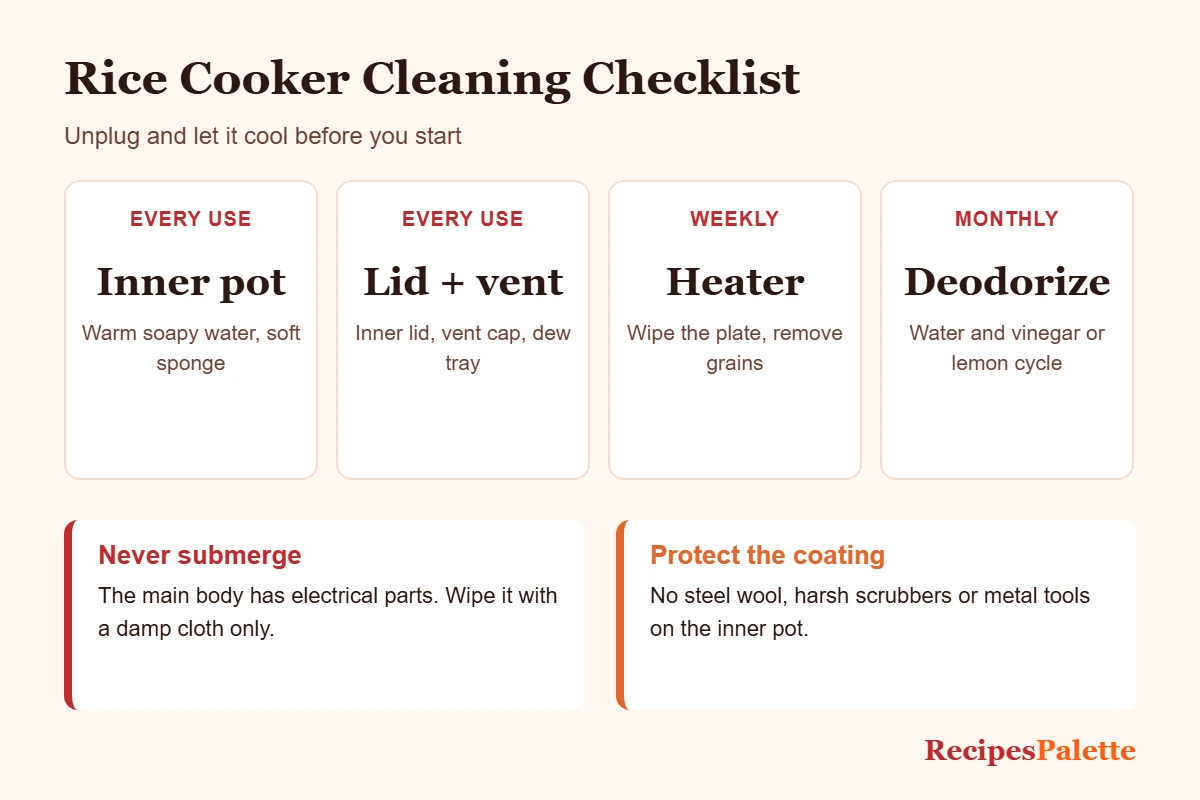
A rice cooker is easy to clean, but it is also easy to forget the small parts. Starchy steam and bits of rice build up in the lid and vent, leading to smells, sticky residue and even rice that tastes off. Here is a step-by-step guide to cleaning every part, removing odors and stains, and keeping your cooker in good shape.
What You Need
- Mild dish soap
- A soft sponge or non-scratch scrubber
- A soft cloth or microfiber towel
- A small brush or old soft toothbrush for the vent and seals
- White vinegar or a lemon (for deodorizing)
- Baking soda (for stains and stuck-on residue)
Before You Start
- Unplug the cooker and let it cool completely.
- Check your manual for which parts detach and which are dishwasher-safe. Designs vary between brands and models.
- Never put the main unit in water or under a running tap. It contains electrical parts.
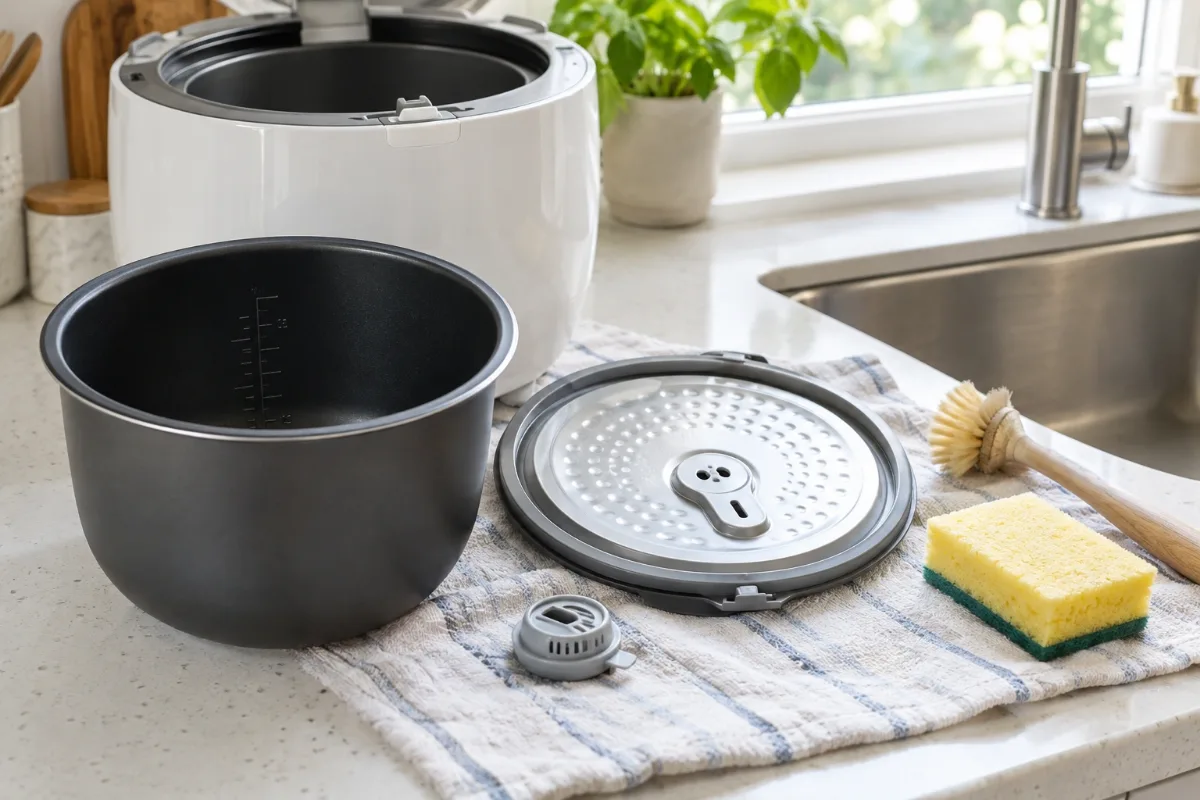
Step 1: Clean the Inner Pot
- Remove leftover rice as soon as you can. Dried rice is much harder to remove.
- If rice is stuck, fill the pot with warm water and let it soak for 15 to 30 minutes.
- Wash with warm soapy water and a soft sponge. Avoid steel wool, abrasive pads and harsh cleansers, which scratch nonstick coatings.
- Rinse and dry thoroughly, inside and out. The outside bottom of the pot must be dry, because it sits directly on the heating plate.
Many manufacturers recommend hand washing the inner pot even if it is labeled dishwasher-safe, because dishwasher detergents can wear down nonstick coatings over time. For burnt rice, see how to clean a burnt rice cooker bottom.
Step 2: Clean the Inner Lid and Seal
Many rice cookers have a detachable inner lid (a metal plate with a rubber gasket) on the underside of the main lid. This part catches starchy steam and should be cleaned after every use.
- Remove the inner lid according to your manual, usually by pressing tabs or pulling it gently.
- Wash it in warm soapy water. Use a soft brush around the rubber seal, where residue collects.
- Rinse, dry and reattach it securely. A loose inner lid can cause steam leaks or poor results.
If your inner lid does not detach, wipe the underside of the main lid with a damp, soapy cloth, then with a clean damp cloth.
Step 3: Clean the Steam Vent
The steam vent on top of the lid lets steam escape during cooking. On many models the vent cap pops out.
- Remove the vent cap and take it apart if your manual shows that it separates.
- Wash the pieces in warm soapy water and use a small brush to clean the openings.
- Dry and reassemble, making sure it clicks back into place.
A blocked vent can cause sputtering or water spilling out during cooking.
Step 4: Empty the Condensation Collector
Some rice cookers have a small plastic cup or tray on the back or side, called a condensation collector or dew tray, which catches water dripping from the lid. Slide it out, empty it, wash it and dry it after each use. Left alone, it can grow mold and smell.
Step 5: Wipe the Heating Plate and Inside of the Cooker
- With the cooker unplugged and cool, look inside the empty cooker body.
- Remove any grains of rice or crumbs from the heating plate. A grain stuck on the plate can stop the inner pot from sitting flat and lead to uneven cooking.
- Wipe the plate and inside walls with a damp, well-wrung cloth. For stuck bits, gently use a soft plastic scraper or a little very fine-grit cleaning pad if your manual allows.
- Dry with a clean cloth.
Step 6: Clean the Outside
Wipe the outer body, control panel and power cord with a damp cloth and a little mild soap, then wipe again with a clean damp cloth. For stainless steel exteriors, a microfiber cloth helps avoid streaks.
How to Remove Smells From a Rice Cooker
A lingering smell usually comes from residue in the inner lid, seal, vent or condensation collector. Clean those parts first. If a smell remains:
- Vinegar or lemon steam: Fill the clean inner pot about one-third full with water and add a few tablespoons of white vinegar or the juice and rind of half a lemon. Run a cooking or Clean cycle, then let it cool, discard the liquid and wipe everything dry.
- Air it out: Leave the lid open for a few hours after cleaning so everything dries fully.
- Check the seal: Rubber gaskets can absorb odors over time and may need replacing on older cookers.
Many newer cookers, including some Zojirushi models, have a Clean cycle for this. See how to use a Zojirushi rice cooker.
How to Remove Stains
Discoloration in the inner pot is often from minerals in water or from turmeric and other spices. Make a paste of baking soda and water, rub it gently over the stain with a soft sponge, leave it for 10 to 15 minutes, then rinse. For more methods, see how to remove rice cooker stains.
How Often to Clean Each Part
| Part | How often | How |
|---|---|---|
| Inner pot | After every use | Warm soapy water, soft sponge |
| Inner lid and seal | After every use | Remove, wash, dry, reattach |
| Steam vent cap | After every use (or every few uses) | Remove, wash, brush openings |
| Condensation collector | After every use | Empty, wash, dry |
| Heating plate and interior | Weekly, or when you see crumbs | Damp cloth, remove grains |
| Outside and cord | Weekly | Damp cloth |
| Deodorizing cycle | Monthly, or when it smells | Water with vinegar or lemon |
Cleaning Mistakes to Avoid
- Immersing the main unit in water.
- Using steel wool or metal utensils on a nonstick inner pot.
- Putting a wet inner pot back on the heating plate.
- Forgetting the inner lid, vent and dew tray, which is where most smells start.
- Leaving rice in the cooker on Keep Warm for a day or more, which bakes residue onto the pot.
- Storing the cooker with the lid closed while parts are still damp.
Frequently Asked Questions
Can you put a rice cooker inner pot in the dishwasher?
Some are labeled dishwasher-safe, but hand washing is gentler on nonstick coatings. Check your manual.
How do you clean an Aroma or other basic rice cooker?
Basic cookers with a glass lid are simpler: wash the inner pot and glass lid in warm soapy water, wipe the heating plate and outside, and dry everything. The steps are the same, just with fewer parts.
Why does my rice cooker smell bad?
Usually from starchy residue in the inner lid, seal, vent or condensation collector. Clean those parts and run a water and vinegar or lemon cycle.
Can I use vinegar to clean a rice cooker?
Yes. Diluted white vinegar is useful for deodorizing and removing mineral spots. Rinse well afterward.
Is it safe to use a rice cooker with a scratched pot?
Minor scratches mostly affect nonstick performance. If the coating is peeling or flaking, replace the inner pot. Many brands sell replacement pots.
The Bottom Line
Cleaning a rice cooker takes only a few minutes. After each use, wash the inner pot, inner lid, steam vent cap and condensation collector, and dry everything well. Once a week, wipe the heating plate and outside, and once a month or whenever it smells, run a quick water and vinegar or lemon cycle. Your rice will taste better and your cooker will last longer.