
How to Stop a Dish Rack from Rusting: Easy Prevention and Repair

Quick Answer
To stop a dish rack from rusting, keep it clean, rinse away soap and salt residue, and dry the metal after heavy use. Avoid leaving water trapped around joints, feet, welds, and coated areas, because moisture and chloride residue can encourage corrosion even on some stainless steel surfaces.
Quick rust-prevention steps
- Drain the water: Keep the rack positioned so water flows toward the sink instead of pooling underneath it.
- Rinse residue: Remove dish soap, hard-water deposits, food residue, and salty splashes regularly.
- Dry problem areas: Wipe welds, joints, feet, corners, and utensil holders when they remain wet.
- Skip harsh cleaners: Don’t attack coated or stainless racks with bleach, steel wool, or aggressive abrasives unless the manufacturer specifically approves them.
- Repair chips early: Exposed steel beneath damaged coatings can begin rusting quickly.
- Replace severe damage: Deeply pitted, flaking, or structurally weakened racks usually aren’t worth repeatedly patching.
My simple rule
- If water is still sitting on the rack long after the dishes are dry, fix the drainage or drying routine first.
A dish rack lives in one of the toughest spots in the kitchen. It gets wet several times a day, collects soap residue, and often sits beside a sink where splashes never stop.
I’ve found that preventing rust is much easier than repeatedly removing it. The trick is knowing what your rack is made from and eliminating the moisture traps that start the problem.
Why Does a Dish Rack Rust in the First Place?
A dish rack rusts when iron-containing metal is repeatedly exposed to moisture and oxygen without enough protection. Scratched coatings, mineral deposits, salts, and some cleaning chemicals can make the situation worse.
Stainless steel is more corrosion-resistant than ordinary steel, but “stainless” doesn’t mean completely immune. As of 2026, corrosion guidance still recognizes chloride exposure as an important cause of localized staining and pitting in stainless steel.
- Standing water: Water sitting around feet, welds, screws, or corners keeps the surface wet longer.
- Damaged coating: Vinyl, paint, chrome, or protective finishes can expose ordinary steel when chipped.
- Salt and chlorides: Salty water and some cleaners can increase corrosion risk.
- Hard-water buildup: Deposits hold moisture and make cleaning harder.
- Harsh scrubbing: Steel wool and aggressive abrasives can scratch finishes and damage protective layers.
- Poor drainage: A tray that never empties creates a constantly damp environment.
Dish rack rust is corrosion of exposed iron-containing metal. The reddish-brown material you see is different from simple hard-water staining or soap residue.
How Do You Stop a Dish Rack From Rusting?
The most effective approach is to reduce how long the rack stays wet. Clean residue before it builds up, protect intact coatings, and deal with small rust spots before they spread.
I use the following routine because it addresses the cause instead of just polishing the visible stain.
- Empty the rack completely. Remove dishes, cups, utensils, removable trays, and detachable holders.
- Wash with mild detergent. Use warm water, dish soap, and a soft cloth or non-scratch brush.
- Rinse thoroughly. Don’t leave soap, salt, or cleaner residue on the metal.
- Check hidden areas. Inspect welds, joints, screw heads, feet, corners, and the underside of the rack.
- Dry it well. Wipe persistent droplets with an absorbent cloth.
- Fix drainage. Adjust the tray or spout so water flows into the sink.
- Treat small rust spots. Use a method appropriate for the rack’s exact finish.
- Repeat weekly. Regular light cleaning is safer than occasional aggressive scrubbing.
The same principle matters with other metal kitchen equipment. If you’re unsure how moisture and dishwasher exposure affect cookware, my guide on whether a frying pan can go in the dishwasher explains the differences between common materials.
What Type of Dish Rack Resists Rust Best?
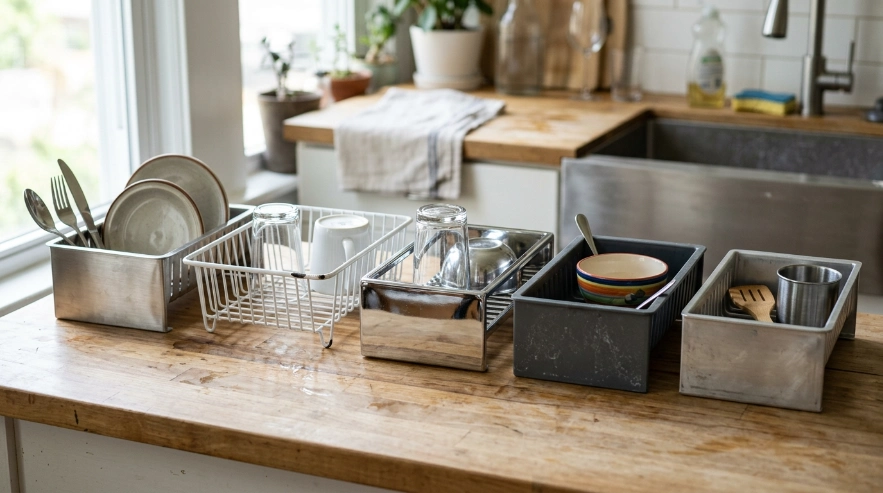
Stainless steel generally gives you the best balance of appearance, strength, and corrosion resistance. Quality still varies, and any exposed ordinary-steel components can become weak points.
Plastic avoids iron rust altogether, although plastic racks can still collect mineral deposits and mildew. Coated steel works well until the protective coating gets cut or chipped.
| Dish Rack Material | Rust Risk | Main Weak Point | Best Care Method |
|---|---|---|---|
| Stainless steel | Low to moderate | Chlorides, scratches, crevices | Mild detergent, rinse, dry |
| Vinyl-coated steel | Low until coating fails | Cuts and chipped coating | Gentle cleaning, protect coating |
| Chrome-plated steel | Moderate | Pitted or scratched plating | Non-abrasive cleaning, prompt drying |
| Plastic | No iron rust | Mineral buildup and staining | Regular washing and drying |
| Aluminum | No red iron rust | Oxidation or chemical attack | Mild cleaner approved for aluminum |
How Should You Clean a Dish Rack Without Causing Rust?
Start with the gentlest method that works. Warm water and mild dish detergent are enough for routine cleaning on most racks.
The University of Minnesota Extension describes detergent and warm water as part of normal wet cleaning for food-contact equipment. Rinsing afterward helps remove loosened residue before the equipment dries.
- Move the rack into the sink or onto a towel.
- Remove the drain board and utensil cup when possible.
- Wash surfaces with warm water and mild dish detergent.
- Use a soft toothbrush around joints and tight corners.
- Rinse every surface with clean water.
- Shake off excess water.
- Wipe metal sections with a clean absorbent cloth.
- Let removable plastic parts finish air-drying before reassembly.
For more kitchen-cleaning techniques, see my guide to cleaning stubborn frying pan stains. The important lesson in both cases is to match the cleaner to the material instead of reaching for the harshest product first.
Should you use bleach on a dish rack?
I don’t use chlorine bleach as a routine rust-prevention cleaner on metal dish racks. It may damage certain metals or coatings, and some manufacturers specifically warn against it.
More importantly, CDC bleach-safety guidance says household bleach should never be mixed with other cleaners or disinfectants. That includes acidic cleaning mixtures.
- Don’t mix bleach and vinegar.
- Don’t mix bleach and ammonia.
- Don’t combine cleaners experimentally.
- Follow the rack manufacturer’s cleaning instructions first.
Should you use steel wool?
Steel wool is usually a poor choice for stainless or coated dish racks. It can scratch a finish, damage protective coatings, and leave iron contamination behind.
The safer starting tools are microfiber cloths, soft nylon brushes, and non-scratch pads approved for the surface.
How Do You Remove Rust From a Dish Rack?
First identify whether you’re dealing with true rust or a removable orange-brown stain. Then check whether the underlying surface is stainless steel, chrome, painted steel, or vinyl-coated steel.
Never assume a rust remover that’s safe on bare stainless steel is safe on a painted or coated rack.
For light rust on appropriate stainless steel
Start with mild detergent and a soft cloth. If the mark remains, use a stainless-compatible rust-stain cleaner only after checking the rack manufacturer’s instructions.
- Clean the rack with soap and water.
- Rinse and inspect the stain.
- Spot-test the cleaner in an inconspicuous area.
- Use the product for the shortest recommended contact time.
- Rinse thoroughly.
- Dry the area immediately.
Don’t leave acidic rust removers sitting on metal longer than directed. More chemical exposure isn’t automatically more effective.
For rust under vinyl or painted coating
Rust bubbling from beneath a coating means moisture has reached the underlying steel. Simply cleaning the orange stain won’t restore the protective layer.
- Remove loose material gently.
- Clean and completely dry the damaged area.
- Use a repair coating specifically suitable for the rack material and intended use.
- Replace the rack if the coating continues to peel around dish-contact areas.
I’ve learned to treat coating damage early because a pin-sized chip is easier to manage than a long section of flaking metal.
For chrome-plated racks
Be conservative. Once chrome plating is deeply pitted, aggressive polishing can expose even more base metal.
Remove loose surface staining gently, rinse, dry, and inspect the area. Persistent pitting usually signals that replacement will be more reliable than repeated cosmetic repair.
Can Vinegar Prevent a Dish Rack From Rusting?
Vinegar can help dissolve some mineral deposits, but I wouldn’t treat it as a universal rust-prevention coating. Acids can also affect certain metals, finishes, or damaged plated surfaces.
If the manufacturer approves diluted vinegar for cleaning, use it briefly and rinse the rack thoroughly afterward. Never leave acidic residue sitting on the metal overnight.
Some manufacturers provide their own care instructions for stainless products. Following those instructions is safer than relying on a one-size-fits-all homemade mixture.
How Often Should You Clean and Dry a Dish Rack?
A lightly used rack may need a full wash about once a week. Busy kitchens, hard water, and poor drainage can justify more frequent cleaning.
My routine separates daily moisture control from deeper cleaning. That makes maintenance quick enough that I’m more likely to keep doing it.
- After heavy use: Empty standing water and wipe persistent wet spots.
- Every few days: Check the drain tray, corners, feet, and utensil holder for buildup.
- About weekly: Wash removable parts and clean the entire rack with mild detergent.
- Monthly: Inspect coatings, welds, screws, and joints for early rust.
- Immediately: Address any chip, orange spot, or developing pit before corrosion spreads.
What Mistakes Make Dish Rack Rust Worse?
Most recurring rust problems come from a few habits rather than a defective cleaning product. Correcting them often works better than buying stronger chemicals.
- Letting water pool underneath: Adjust the tray so water reaches the sink.
- Never cleaning the rack itself: A dish rack needs washing even though clean dishes sit on it.
- Using abrasive metal scrubbers: They can scratch stainless steel or rupture coatings.
- Leaving salty residue: Rinse after brine, salty cooking water, or food splashes reach the rack.
- Ignoring coating chips: Exposed ordinary steel can corrode beneath surrounding coating.
- Leaving chemical cleaner behind: Always rinse products when their directions require it.
- Assuming stainless means rust-proof: Stainless steel still needs sensible cleaning and drainage.
If you also use cast iron, the moisture lesson will sound familiar. My explanation of why cast iron skillets rust shows how quickly exposed iron reacts when it stays damp.
When Should You Replace a Rusty Dish Rack?
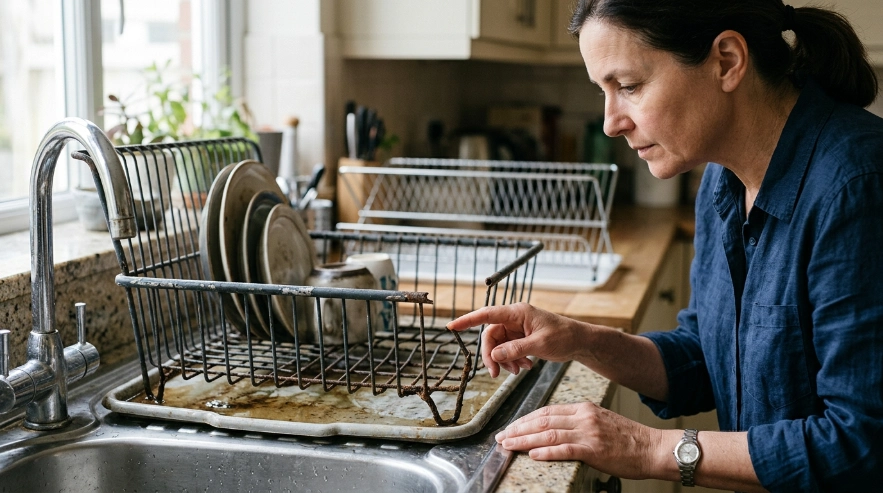
Small cosmetic spots aren’t always a reason to throw a rack away. Deep corrosion, structural damage, and widespread coating failure are different.
I replace a rack when cleaning stops being a lasting solution or the damaged metal could scratch dishes and hands.
- Rust keeps returning from beneath several coated areas.
- Metal wires have become thin, rough, or deeply pitted.
- Welded joints are weakening.
- Large sections of coating are peeling.
- Sharp exposed edges are developing.
- The drain design constantly traps water and can’t be corrected.
If you’re buying a replacement, prioritize drainage as much as material. A well-designed rack that sheds water quickly reduces the amount of time metal stays wet.
If you’re ready to improve the setup, here are two products I’d consider for the job.
🧽 BEST FOR RUST STAINS
Bar Keepers Friend Cleanser
★★★★½ 4.6/5 editorial fit
This oxalic-acid powder is designed to remove rust stains and mineral deposits from suitable stainless and chrome surfaces. I reserve it for manufacturer-approved, spot-tested metal because coated racks may need gentler care.
🏆 BEST REPLACEMENT
Simplehuman Steel Frame Dishrack
★★★★¾ 4.8/5 editorial fit
Its swivel drain spout directs water toward the sink, while the inner tray is designed to encourage fast drainage and evaporation. I like that approach because better moisture control attacks the main cause rather than asking you to constantly remove rust afterward.
Frequently Asked Questions
Does stainless steel dish rack rust?
Yes, stainless steel can develop rust-colored staining or localized corrosion under unfavorable conditions. Standing moisture, chloride residue, scratches, contaminated cleaning tools, and crevices can all contribute, so regular rinsing and drying still matter.
Can I put oil on my dish rack to stop rust?
I wouldn’t coat a dish rack with cooking oil as routine protection. Oil can become sticky, trap dust, contact dishes, and create extra cleaning work, so maintaining the manufacturer’s original finish is usually the better solution.
Will baking soda remove rust from a dish rack?
Baking soda may help with light surface residue because it provides mild abrasive action, but results depend on the rack’s finish. Check manufacturer instructions first, use gentle pressure, rinse completely, and stop if the finish begins scratching or dulling.
Why does my new dish rack already have rust spots?
Early spots can come from coating damage, contamination with ordinary iron particles, trapped moisture, or aggressive cleaners. Clean the spot gently and inspect it closely; if corrosion quickly returns on a new rack, contact the manufacturer while warranty coverage may still apply.
Is rust on a dish rack dangerous?
A tiny surface spot usually signals a maintenance problem more than an emergency. However, replace a rack with severe flaking, deep pitting, weakening joints, or sharp corroded edges because physical deterioration can make continued use impractical.
Final Takeaway
The best way to stop a dish rack from rusting is simple: keep water moving, keep residue off the metal, protect the finish, and catch damage early. You usually don’t need aggressive chemicals.
Give the rack a quick inspection the next time you empty it. If water is pooling around joints or the drain tray, fixing that small problem today may save you from fighting rust later.