
Spices are one of the easiest ways to elevate everyday cooking, but they’re also one of the most commonly misstored ingredients in the kitchen. I’ve learned that even high-quality spices can lose their aroma, color, and flavor far sooner than expected if they’re exposed to the wrong conditions. The issue usually isn’t safety—it’s potency. When spices go flat, dishes lose depth, balance, and impact.
In this guide, I break down how to store spices for longer shelf life using practical, kitchen-tested methods. I cover how light, heat, air, and moisture affect spices, why whole spices last longer than ground ones, and how the right containers and placement can make a noticeable difference.
Whether you cook daily or only occasionally, these tips will help you keep your spices fresher, more flavorful, and worth the money you spend on them.
Contents
- 1 Understanding Spice Shelf Life
- 2 Choosing the Right Storage Containers
- 3 Optimal Storage Conditions for Spices
- 4 Proper Placement in the Kitchen
- 5 Tips for Preserving Flavor and Aroma
- 6 Signs Your Spices Need to Be Replaced
- 7 Using Technology and Tools to Extend Freshness
- 8 Long-Term Storage Solutions
- 9 FAQs
- 10 Conclusion
Understanding Spice Shelf Life
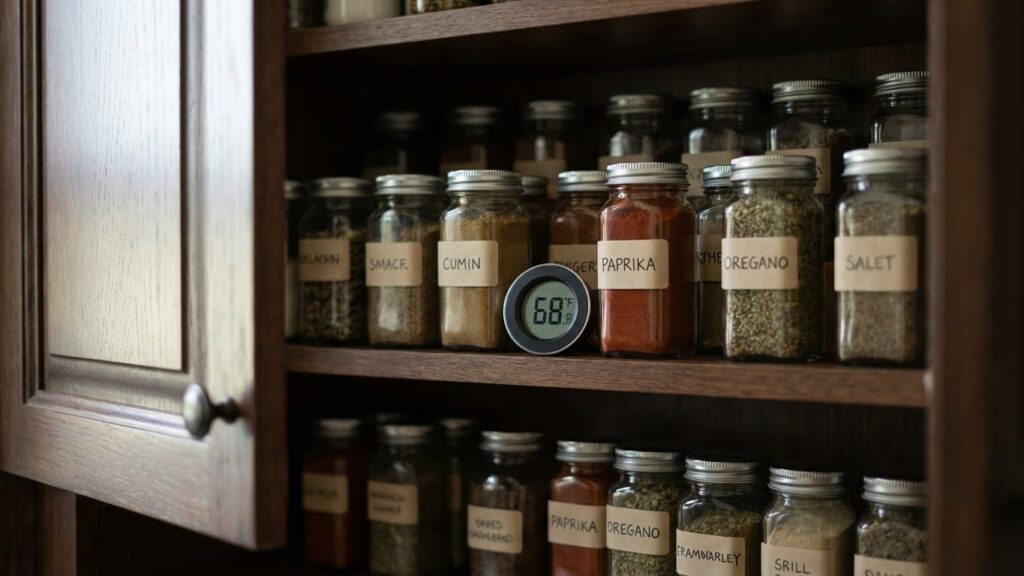
I explain how storage, spice form, and labeling affect flavor and potency. These factors determine how long spices give the best aroma and taste, not just whether they are safe to use.
Factors That Affect Spice Longevity
I track four main enemies of spice quality: light, heat, air, and moisture. Light and heat break down volatile oils that carry flavor. Keep jars away from direct sunlight and stove heat.
Air causes oxidation and loss of aroma. I recommend airtight containers and only opening jars when needed. Moisture invites clumping and mold; I avoid storing spices over the sink or near the dishwasher.
Whole spices hold oils inside intact cells, so they resist loss better than ground forms. Spices stored in clear glass still lose quality faster than those in opaque, cool containers.
Labeling with the purchase or opened date helps me rotate stock. I use small containers for frequent-use spices to limit air exposure for the larger reserve.
Whole vs. Ground Spices
I prefer whole spices when possible for longer shelf life and fresher flavor. Whole peppercorns, cinnamon sticks, and nutmeg can keep strong for 3–4 years if stored properly.
Ground spices lose volatile oils faster because grinding increases surface area. I expect ground spices like paprika or cumin to peak in 1–3 years. Aroma and taste fade before the spice becomes unsafe.
If I need quick flavor, I grind whole spices just before cooking. For fast everyday use, I keep a small jar of ground spice and a bulk reserve of whole spice in a cooler, darker spot.
Expiration Dates vs. Best Quality
I treat most spice dates as “best by” rather than safety limits. Labels often show a manufacture or best-by date that signals peak flavor, not spoilage.
After the date, spices usually remain safe but weaker. I test a spice by smell; if aroma is faint or flat, it won’t add intended flavor.
Some exceptions exist: blends with salt or added oil may deteriorate faster. If a spice shows off odors, color shifts, or visible mold, I discard it immediately.
Choosing the Right Storage Containers
I focus on three clear factors: how airtight the jar is, whether light will reach the spice, and what the container is made of. Choosing jars that seal well, block light when needed, and don’t react with spices will extend flavor and aroma.
Airtight Options for Maximum Freshness
I use airtight jars to keep spices potent longer. Look for lids with silicone gaskets or screw threads that close tightly. Flip-top shakers and poorly fitting lids let air in and speed up loss of volatile oils.
For whole spices, I prefer larger airtight jars so they sit less disturbed. For ground spices, smaller jars work because less air stays inside after opening. Vacuum-seal options and jars with a two-part lid (seal plus shaker) also reduce air exposure.
Quick checklist:
- Silicone gasket or tight screw cap
- Minimal headspace after filling
- Two-part lids for shaker jars I often buy jars with measurement markings to refill accurately.
Opaque vs. Clear Containers
I choose opaque containers for light-sensitive spices like paprika, turmeric, and saffron. Light breaks down color and flavor compounds, so a dark or opaque jar preserves potency. Use clear glass for spices you use fast or need to identify quickly, like cumin or coriander.
If using clear jars, store them in a closed cupboard or drawer away from the stove. Labels help if jars are opaque—use a consistent labeling system with date bought or ground. For visible spice displays, rotate stock more often and keep hard-to-replace spices in opaque backup containers.
Material Considerations: Glass, Metal, and Plastic
I prefer glass for most spices. Glass is nonreactive, easy to clean, and won’t absorb odors. Amber or colored glass adds light protection. Link to a reputable source about glass benefits: American Chemical Society on food-safe materials.
Stainless steel works well for bulk storage and keeps light out. It’s durable and hygienic, but you can’t see contents, so label clearly. Avoid reactive metals like untreated copper for acidic spice blends.
Use food-grade plastic only for short-term storage. Plastic can hold odors and slowly absorb oils, which lowers spice quality. If you choose plastic, pick BPA-free types and replace them every year. For longer guidance on safe containers, I refer to FDA food storage recommendations.
Optimal Storage Conditions for Spices
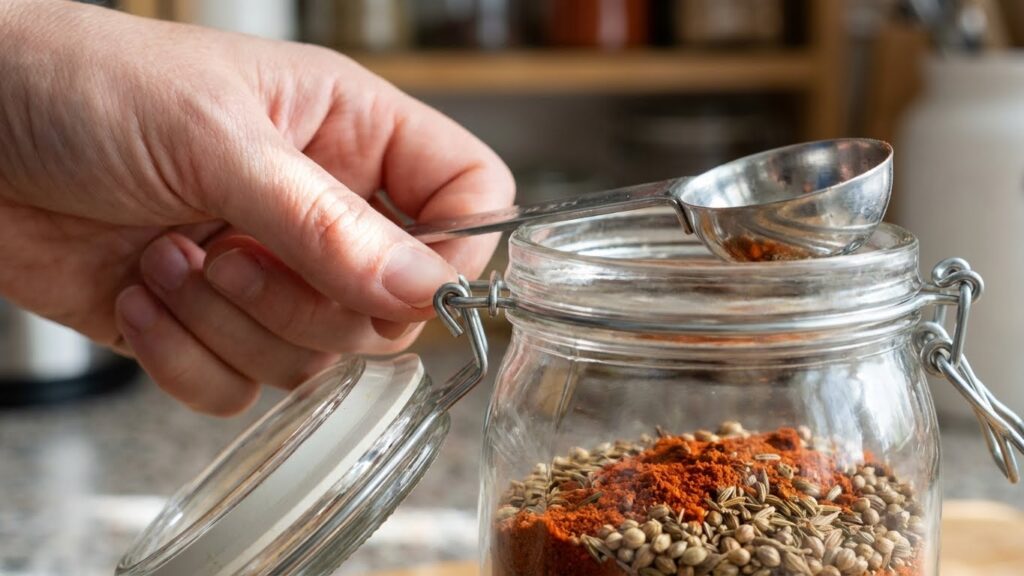
I focus on three things that make spices last: keep moisture out, block light and heat, and store at steady, cool temperatures. Small changes in where and how you store spices keep oils and aroma longer.
Humidity and Moisture Control
I keep spices dry because moisture causes clumping and mold. Use airtight containers with tight-sealing lids — glass jars with silicone or rubber gaskets work best. Avoid shaker tops when possible; they let humid air in each time you open them.
Silica gel packets or food-safe desiccants help in damp climates. Place them in your spice drawer or cabinet, not directly touching powdered spices. For whole spices, drying in a low oven for a few minutes before storing reduces residual moisture.
Label jars with the date opened so I can rotate older spices first. Never store spices above the stove or near the dishwasher; steam and splashes raise humidity too often.
Protecting From Light and Heat
Light and heat break down the aromatic oils that give spices flavor. I choose opaque or dark glass containers to block light, or keep clear jars inside a closed cabinet. Avoid windowsills and open shelving that get sun exposure.
Heat speeds oxidation. I keep spices away from ovens, microwaves, and dishwashers. If you cook often, store spices in a pantry or a drawer on the opposite side of the kitchen from cooking heat sources.
For long-term protection, vacuum-sealed bags or metal tins work well. The USDA and spice trade guides recommend limiting light and heat to retain color and aroma — see the USDA spice storage tips for more details.
Ideal Temperature Ranges
I store most spices between 50°F and 70°F (10°C–21°C). This range slows oil evaporation and keeps volatile compounds stable. Temperatures above 80°F (27°C) can halve a spice’s life faster.
Avoid freezing whole spices; condensation when thawing can introduce moisture. Ground spices tolerate slightly cooler storage but not freezing. Maintain steady temperature — avoid spots with wide daily swings like garages or uninsulated attics.
Use a kitchen thermometer in pantries that are not climate-controlled. If your home gets hot in summer, consider storing less-used bulk spices in a cool basement or a temperature-stable cabinet.
Proper Placement in the Kitchen
I place spices where they stay cool, dry, and away from heat or direct light. I focus on spots that keep jars sealed and easy to reach when I cook.
Storing Away From Stoves and Sinks
I keep spices at least 2–3 feet from stoves and ovens to avoid heat, steam, and oil splatter. Heat and steam speed flavor loss, so I never store spices on the backsplash or the top of the range hood.
I avoid placing jars above the sink for the same reasons. Water and humidity cause clumping and can reduce potency. If I must store near a sink, I use airtight containers and a desiccant packet.
I choose low-traffic areas that stay at room temperature (60–75°F or 15–24°C). I check occasionally for oil or food residue and clean the outside of jars to prevent cross-contamination.
Utilizing Cabinets and Pantries
I use an interior cabinet or pantry shelf that does not get sun. A deep pantry shelf works well for bulk containers; a shallow cabinet near my prep area works best for daily-use jars.
I prefer opaque or dark-colored containers to protect against light. Glass is fine if it sits in a dark cabinet; otherwise I use metal tins or tinted jars. Always use airtight lids to cut air exposure.
I organize by use: daily spices at eye level, less-used ones higher or lower. I keep similar items together (baking spices, curry blends, dried herbs) so I can find what I need quickly.
Safe Labeling and Organization
I label every jar with the spice name and the date I opened it. Plain labels and a waterproof marker work best. This helps me rotate stock and discard stale items.
I arrange jars so the oldest opened batch sits in front. I keep whole spices separate from ground ones; whole spices last longer and I treat them differently when checking freshness.
I store small quantities for daily use and larger backups sealed and tucked away. I note any changes in smell or color on the label to track potency over time.
Tips for Preserving Flavor and Aroma
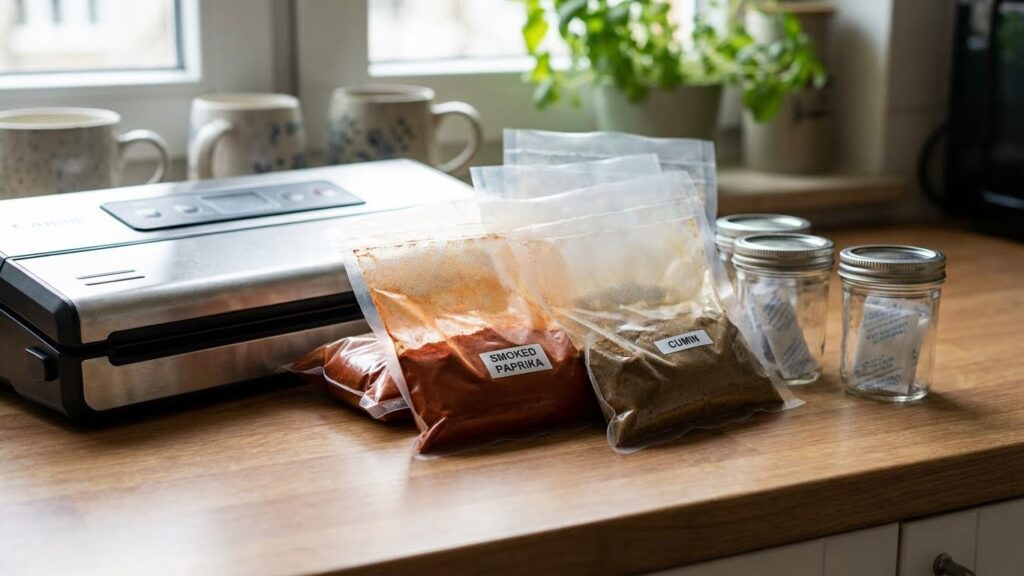
I focus on keeping spices airtight, dry, and separate so they stay potent and true to their original aroma. Small steps—like using tight lids and clean scoops—make the biggest difference over months and years.
Minimizing Air Exposure
I store spices in airtight containers to slow oxidation and flavor loss. Glass jars with silicone seals or metal tins with tight lids work best. If I buy spices in bulk, I transfer small daily-use amounts into a smaller jar and keep the rest sealed in a cool, dark place.
I label jars with purchase or grind dates so I rotate older spices first. For ground spices, I keep lids closed during cooking and avoid leaving jars open near heat. Vacuum-seal bags or oxygen-absorbing packets help for long-term storage of whole spices.
Quick checklist:
- Use airtight glass or metal containers
- Buy whole spices when possible; grind as needed
- Store in a cool, dark cabinet away from the stove
- Consider vacuum sealing or oxygen absorbers for long storage
Avoiding Cross-Contamination
I prevent flavor transfer by using dedicated spoons and keeping strongly scented spices separate. For example, I store cumin and cinnamon apart so their aromas don’t mix.
I avoid dipping wet or dirty utensils into spice jars. Moisture promotes clumping and mold, and a used spoon can carry other flavors in. If I need to measure directly from a jar, I pour a small amount into a clean dish first.
Best practices:
- Use clean, dry measuring spoons for each spice
- Store potent spices (like smoked paprika) in separate containers
- Keep whole and ground forms apart to limit particle transfer
- Clean lids and rims periodically to remove residue
Useful reading: I often refer to USDA storage guidelines and the National Center for Home Food Preservation for specifics on shelf life and safe handling.
Signs Your Spices Need to Be Replaced
I check spices by sight, smell, and a quick potency test. Look for faded color, clumps, or off smells, and then verify strength by crushing or tasting a small amount.
Visual and Aroma Cues
I scan jars for color loss and texture changes first. Ground spices that look pale or dull have lost volatile oils and flavor. Whole spices that are cracked, dry, or broken into powder can also be past peak.
Clumps or damp spots mean moisture got in. Toss anything with mold, a sticky feel, or a musty smell. Also watch for foreign bits like insects or threads; contamination is a reason to discard immediately.
Smell each spice by opening the jar and putting the nose close. If the aroma is weak or smells stale, it won’t add the expected flavor to food. Fresh spices should have a clear, strong scent you can notice right away.
Testing for Potency
I confirm potency with two simple tests: crush and taste. For ground spices, rub a pinch between fingers and smell again. If the scent is faint, the spice is likely too old.
For whole spices, crack one and sniff the interior. If the fragrance doesn’t revive after crushing, replace the spice. I also do a small taste test—pinch a tiny amount and taste on the tongue. A lack of heat in pepper or weak flavor in cumin or coriander means the spice won’t perform in recipes.
Keep a simple rule: if a spice fails either the smell or taste check, it’s time to replace it. This saves time and keeps dishes tasting as intended.
Using Technology and Tools to Extend Freshness
I focus on tools that remove air and moisture, and on small tech upgrades that keep spices potent longer. These methods cut oxidation and mold risk, so spices hold flavor and aroma for months or years.
Vacuum Sealing Spices
I use a vacuum sealer to remove air from bags or jars, which slows oxidation and preserves volatile oils. For whole spices, I place small amounts in heat-sealable bags, remove excess air with the machine, and double-seal the edges. Ground spices need the same care but I label each bag with date and type to avoid repeated opening.
For jars, I use a vacuum pump attachment that pulls air out without cracking glass. This works well for batches I won’t use quickly. Avoid vacuum sealing warm or damp spices; always dry them fully first.
See manufacturer guides for safe use and USDA storage tips when handling food packaging. Proper sealing paired with a cool, dark cabinet gives the best results.
Desiccants for Moisture Reduction
I add food-safe desiccant packets to containers when humidity is a concern. Silica gel packets rated for food use or oxygen scavengers work well to keep ground spices from clumping and losing aroma. Place the packet on top of the spice, not buried, so you can replace it without contaminating the spice.
For jars with screw lids, I recommend small, reusable desiccant packs that you can recharge in a low oven per the product instructions. Check packet labels to ensure they are non-toxic and intended for edible products. In humid climates, pair desiccants with airtight containers and low-light storage to prevent moisture-driven spoilage.
For more on food-safe desiccants and reuse, I refer to guidance from food safety resources like the FDA and reputable packaging suppliers.
Long-Term Storage Solutions
I focus on methods that keep flavor, aroma, and color for months or years. I use airtight, light-blocking containers and control temperature and moisture to slow oil and aroma loss.
Bulk Storage Strategies
I buy whole spices like seeds, pods, and sticks for longer shelf life. Whole spices keep their essential oils better, so I store them in dark glass jars with silicone gaskets or metal tins that seal tightly.
I label each jar with the spice name and purchase date. I keep jars in a cool, dark cupboard away from the stove, oven, and sunlight. I avoid clear jars on open shelves unless they sit in a closed cabinet.
For very large amounts, I portion spices into small, airtight bags and seal them with a vacuum sealer. I rotate stock by using the oldest portions first and grind whole spices in small batches right before use.
Freezing and Refrigeration Considerations
I freeze delicate herbs and some seeds when I expect long gaps between use. I transfer spices to freezer-safe, airtight containers or heavy-duty vacuum bags to prevent moisture and freezer burn.
I do not refrigerate whole dry spices routinely because condensation can form when moved to room temperature. If I refrigerate ground spices, I keep them sealed and bring them to room temperature before opening to avoid moisture uptake.
I freeze only what I will use within a year and test small amounts first. Freezing preserves volatile oils but can change texture, so I thaw and use frozen spices mostly for cooking, not for dry rubs or garnishes.
FAQs
How do I tell when a spice has gone bad?
Smell and taste are the best tests. If a spice smells weak or off, it has likely lost its potency. Ground spices fade faster than whole spices.
Where should I keep my spice jars?
I keep spices in a cool, dark place like a pantry or cupboard, not above the stove. Avoid humidity and direct sunlight to slow flavor loss.
Can I store spices in the fridge or freezer?
Most dried spices do fine at room temperature. Freezing can cause condensation when opened and may clump spices, so I only freeze large quantities of fresh herbs if needed.
How long should I keep opened spices?
I follow rough guidelines: ground spices 1–3 years, dried herbs 1–3 years, whole spices 3–4 years. These are estimates; use your senses to judge freshness.
What containers work best?
I use small airtight glass jars with tight lids. Clear jars are okay if stored in a dark spot. Label jars with purchase or opening dates for easy tracking.
Do blends lose flavor faster?
Yes. Blends can lose balance as individual spices fade. I refresh blends by replacing the oldest components first.
Conclusion
I recommend simple steps that make a big difference: keep spices in airtight containers, store them in a cool, dark place, and buy whole spices when you can. These choices slow flavor loss and help you get the best value from each jar.
I check my spices by smell and color before using them. If a spice has weak aroma or faded color, I replace it. Ground spices lose strength faster than whole spices, so I use ground ones more quickly.
I store duplicates in the freezer only when I won’t use them soon, sealing them tightly to avoid moisture. I label containers with purchase dates so I can rotate older spices forward.
Quick reference:
- Whole spices: last longer; best for long-term storage.
- Ground spices: use within a year for best flavor.
- Storage tips: airtight, cool, dark, dry.
I follow these steps to keep my spices useful and flavorful. They save me money and make my cooking more consistent.
