
How to Save Time While Cooking Daily Meals: Practical Strategies for Faster, Stress-Free Weeknight Dinners

You want dinner on the table fast without losing flavor or sanity. I’ll show simple ways to plan, prep, and cook so you spend less time in the kitchen and more time doing what matters. Batch prep, smart tools, and easy one-pot recipes cut daily cooking time dramatically.
I write this as Emma Reed and I use these steps every week to keep meals quick and tasty. You’ll learn practical habits that fit real life—no special skills needed and no extra hours added to your week.
Key Takeaways
- Plan and prep ahead to shorten weekday cooking.
- Use quick methods and multitaskable recipes to save time.
- Choose tools and cleanup habits that keep cooking simple.
Planning and Preparation
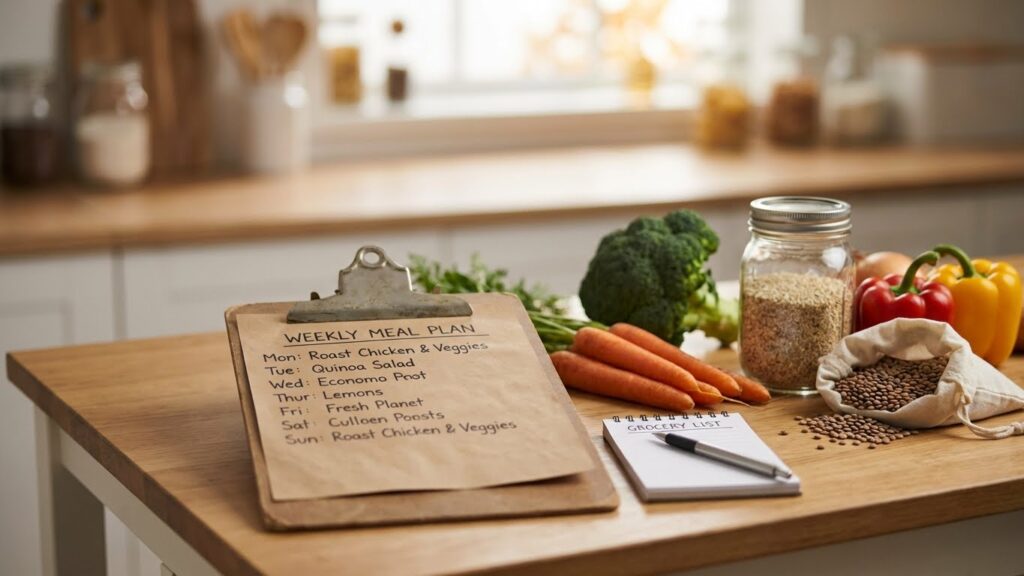
I plan meals, lists, and prep steps so I cut cooking time every day. Small habits—like choosing 2–3 repeat dinners and prepping veggies once—save minutes that add up.
Weekly Meal Planning
I pick 5–7 meals for the week and assign each to a day by how busy I am. For example: quick stir-fry for Monday, slow-cooked chili for Wednesday, and a sheet-pan roast for Sunday. That matches cooking time to my schedule.
I reuse core ingredients across meals to reduce shopping and waste. If I buy chicken, I plan a roast, a salad topping, and a grain bowl using the same herbs and peppers. I also note which meals share a side (rice, roasted veg) so I cook those in bulk.
I write the plan on a single sheet or app with portions, so I don’t guess amounts midweek. This prevents last-minute takeout and keeps costs lower.
Creating Effective Grocery Lists
I build my list from the weekly plan, grouping items by store sections: produce, dairy, meats, pantry, frozen. This cuts aisle back-and-forth and saves 10–20 minutes per trip.
I list exact amounts (e.g., 2 bell peppers, 1 lb chicken) to avoid buying extras I won’t use. I mark staples I need to restock like olive oil, salt, and plastic storage bags.
I use a two-column list at home: “Buy this week” and “Running staples” so I grab essentials quickly. If I shop online, I keep a saved list to reorder the same items fast.
Batch Prep Techniques
I set aside 60–90 minutes once or twice a week for batch tasks. I chop all vegetables, cook a large grain pot (rice, quinoa), and roast a tray of proteins to use across meals.
I portion food into meal-sized containers right after cooking. That keeps portions steady and lets me grab a ready meal in seconds.
I also freeze single portions of soups, sauces, and cooked proteins. That gives me at least two no-cook evenings each week and reduces daily stress.
Time-Saving Kitchen Organization
I organize my most-used tools within easy reach: knives, cutting boards, measuring cups, and a large skillet near the stove. I keep lids and mixing bowls in one cabinet so I don’t hunt for them.
I label and stack clear containers by size. That makes reheating and storing food fast and keeps counters clutter-free.
I clean as I go—wash one bowl while a pot simmers. This habit prevents long cleanups and means the kitchen is ready for the next meal.
Cooking Methods That Save Time
I focus on methods that cut hands-on time, reduce cleanup, and keep flavor high. Each method uses simple tools and clear steps so I can get dinner on the table faster.
One-Pot and One-Pan Meals
I use one-pot and one-pan meals to save time on cooking and cleanup. I choose recipes where proteins, vegetables, and starches cook together, like sheet-pan chicken with roasted veggies or a skillet pasta. This lets flavors meld while I do other tasks.
To speed prep, I trim and chop ingredients in a set order: vegetables first, then proteins, then aromatics. I also use pre-chopped produce or frozen vegetables when short on time.
I control doneness by staggering additions: dense vegetables first, quick-cook items last. A heavy skillet or Dutch oven gives even heat and prevents burning. For crisp texture, I finish under the broiler or on high heat for a few minutes.
Slow Cooker and Instant Pot Strategies
I plan meals around appliance strengths. For hands-off cooking, the slow cooker is perfect for stews, shredded meats, and beans. I brown meat quickly on the stovetop first to improve flavor, then set low and let it cook for 6–8 hours.
For speed, I use the Instant Pot or other pressure cookers. Dried beans, tough cuts, and whole grains that take hours in a pot finish in 20–40 minutes under pressure. I always use the natural-release method for large cuts to keep meat tender.
To save time overall, I batch-cook in these devices. I portion and freeze meals in meal-size containers. I also keep a simple binder or app with cook times and liquid ratios for my favorite recipes to avoid re-checking instructions.
Stir-Frying and Quick-Cooking Techniques
I rely on stir-frying and quick sautéing when I need dinner in 10–20 minutes. I cut ingredients into uniform, bite-sized pieces so everything cooks evenly and fast. High heat and a well-seasoned wok or large skillet give the sear and texture I want.
I prepare a simple mise en place: sauces mixed, aromatics minced, and proteins pre-cut. I cook in small batches to avoid crowding the pan, which keeps food from steaming and slows cooking. After cooking, I toss everything together briefly with the sauce to coat and finish.
For grains and sides, I use pre-cooked rice or quick-cook noodles to shave extra time. Frozen vegetables also work well because they’re already cleaned and chopped, and they reheat quickly without losing much texture.
Efficient Ingredient Handling
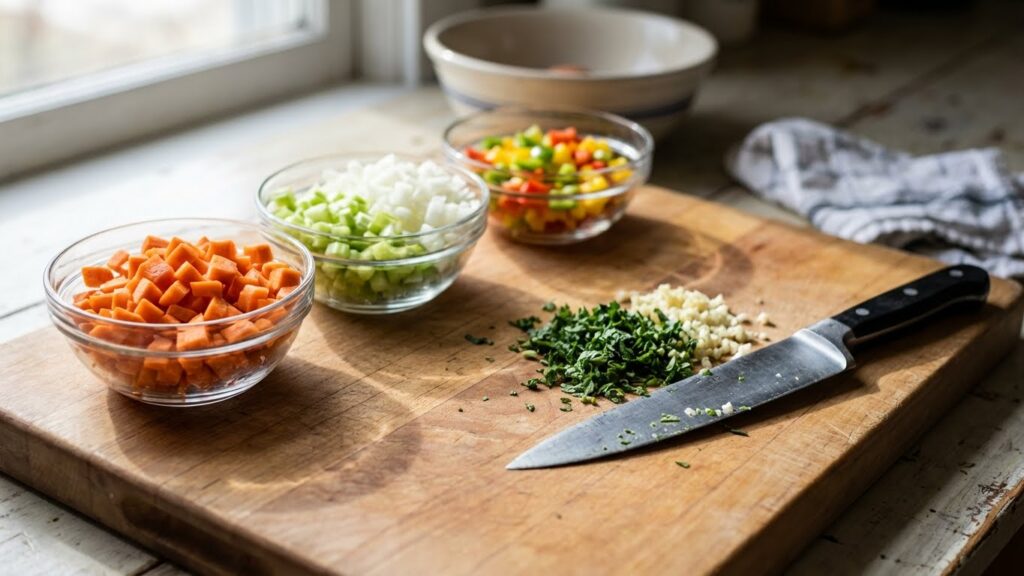
I focus on prepping and storing ingredients so I can cook faster every day. Good habits with cutting, seasoning, and storage cut active cook time and reduce cleanup.
Prepping Ingredients in Advance
I pick one or two days each week to do basic prep: peel onions, chop peppers, grate cheese, and portion spices. I use a sharp chef’s knife or a food processor for larger tasks to save time and keep cuts even. Labeling bags with the date helps me rotate items and avoid waste.
I also pre-measure dry ingredients for recipes I use often, like rice, oats, or spice blends. That saves decision time during busy evenings. For herbs, I wash, dry, chop, and store in a small airtight container or freeze in oil cubes for quick use.
For safety, I keep raw proteins separate from produce and clean cutting boards between uses. The USDA provides clear guidance on safe food handling that I follow to prevent cross-contamination: https://www.fsis.usda.gov.
Storing Pre-Cut Vegetables and Proteins
I store pre-cut vegetables in clear, airtight containers to keep them visible and fresh. Hard veggies like carrots and bell peppers last 4–7 days in the fridge when stored with a paper towel to absorb excess moisture. Leafy greens need blotting dry and a loose lid to avoid wilting.
For proteins, I use vacuum-seal bags or well-sealed containers and label with the prep date. Cooked proteins keep 3–4 days refrigerated; raw chicken and ground meats should be used within 1–2 days or frozen. I freeze portioned proteins on a tray, then transfer to freezer bags to prevent clumping and speed thawing when needed.
I rely on fridge zones: top shelf for ready-to-eat foods, bottom for raw meats. For more on safe storage times and tips, I check FDA food storage charts at https://www.fda.gov.
Utilizing Leftovers and Multi-Use Recipes
I reuse cooked proteins, grains, and roasted vegetables to cut cooking time and avoid waste. I keep simple swaps and quick recipes ready so a short reheating step turns last night’s dinner into a fresh meal.
Transforming Leftovers Into New Meals
I start with a base: cooked chicken, roasted vegetables, or rice. One night’s roasted chicken becomes chicken tacos with salsa, or I shred it for a quick curry. Cooked rice turns into fried rice by sautéing with an egg, scallions, and a splash of soy sauce.
I follow safety rules: refrigerate within two hours and eat leftovers within 3–4 days. I reheat thoroughly to 165°F (74°C) or until steaming hot.
I keep a few fast formulas in mind:
- Protein + sauce + wrap = sandwich or taco.
- Grain + veg + egg = bowl or fried rice.
- Starchy veg + cheese + herbs = frittata or baked hash.
These templates save time and help me combine small amounts of odds and ends into a full meal.
Meal Components That Serve Multiple Dishes
I cook components that fit at least three meals. Examples I prep: a pan of roasted vegetables, a pot of brown rice, and a big batch of seasoned ground beef or lentils.
I store components in clear containers and label them with the date. That saves guessing and speeds meal assembly.
Use these components across meals:
- Roasted vegetables: breakfast frittata, grain bowl, pasta topper.
- Brown rice: fried rice, burrito filling, soup addition.
- Seared chicken breasts: sliced for salads, diced for sandwiches, or tossed into stir-fries.
I aim for simple seasoning on components so I can change flavors later with sauces and herbs. This keeps meals varied while cutting daily cook time.
Smart Kitchen Tools and Gadgets
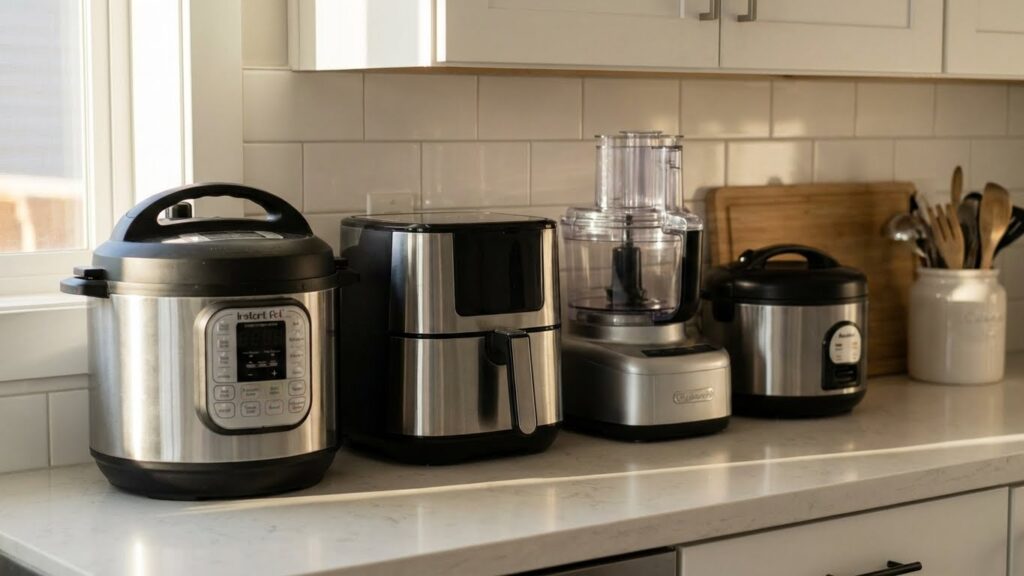
I recommend tools that cut hands-on time, reduce cleanup, and give consistent results. Focus on appliances that handle long or fussy steps and utensils that speed prep and keep work tidy.
Essential Time-Saving Appliances
I rely on a few appliances that do heavy lifting. A multicooker (like an Instant Pot) lets me pressure-cook beans, grains, and stews much faster than stovetop. A programmable rice cooker gives perfect rice and frees the stove; some models also steam vegetables while rice cooks.
A smart oven or air fryer shortens roast and reheat times and reduces oil use. I use a sous-vide circulator for precise, hands-off protein cooking; it keeps food ready without active attention. For monitoring, a wireless meat thermometer with alerts stops overcooking and saves checking time. For trusted info on safety and temps, I use guidelines from the USDA (https://www.usda.gov) when setting targets.
Must-Have Utensils for Efficiency
Small tools add big time savings in prep and cleanup. I keep a high-quality food processor for chopping, shredding, and making sauces; it replaces many manual tasks. An electric hand mixer speeds batters and small doughs faster than mixing by hand.
I use a good mandoline or adjustable slicer for even, fast veg cuts and a sturdy bench scraper to move chopped food and clean counters quickly. Digital measuring cups and a precision scale give repeatable results and reduce rework. For quick cleanup, I choose silicone mats and nonstick bakeware that wipe clean. For guidance on efficient tool choices, I often consult consumer reviews from reliable outlets like Consumer Reports
Streamlining Cleanup
I focus on steps that cut the time I spend washing and wiping. Small habits—like using one pan for a whole meal and cleaning while food cooks—shave minutes off every dinner.
Minimizing Dishes While Cooking
I choose recipes that let me reuse tools. For example, I cook proteins then add vegetables to the same skillet, so I only use one pan and one spatula. I also measure ingredients into a single bowl when possible, wiping it out between uses instead of switching to new bowls.
I keep multi-use tools nearby: a chef’s knife, a cutting board, and a silicone spatula handle most tasks. I line baking sheets with foil or parchment to avoid scrubbing.
I use stackable mixing bowls and nest lids to save space while I work. When a recipe calls for many small items, I collapse them into a single prep tray to limit the number of containers I must wash.
Quick Cleaning Routines
I clean as I cook to avoid a big mess later. While something simmers, I rinse used utensils and put them in the dishwasher, or soak grease-coated pans in hot soapy water so grime loosens.
I follow a short checklist after each meal:
- scrape plates into the trash or compost,
- load dishwasher items immediately,
- wipe stove and counters with a damp cloth.
I keep cleaning supplies in one caddy under the sink. That way I grab everything—spray, cloth, brush—without hunting. For stubborn spots, I sprinkle baking soda, let it sit five minutes, then scrub; this saves time versus long soak-and-scrub cycles.
Maintaining Consistency and Motivation
I set small, clear goals so cooking feels doable every day. Short goals like “make dinner three times this week” keep momentum without pressure.
I build simple routines that fit my schedule. For example, I chop vegetables on Sundays and choose one night for a slow-cooker meal to reduce evening work.
I use reminders and visible cues to stay on track. A sticky note on the fridge or a calendar checkmark makes me more likely to follow through.
When I lose motivation, I switch to faster methods. Batch-cooking, one-pan recipes, or using a pressure cooker saves time and keeps meals consistent.
I keep a short list of favorite quick recipes handy. This prevents decision fatigue and helps me avoid takeout when I’m tired.
I track small wins to stay encouraged. Crossing off completed meals or saving photos of good dishes reminds me I’m making progress.
I make cooking social when I can. Sharing tasks with family or swapping recipes with a friend makes the process easier and more enjoyable.
- Bold habit: plan one shopping list for the week.
- Italic tip: freeze portions for busy days.
- Quick habit: prep a salad jar in minutes.
I adjust expectations when life gets busy. Consistency means regular effort, not perfection, and that mindset keeps me cooking more often.
FAQs
What should I prep ahead?
I prep proteins, grains, and chopped veggies once or twice a week. This cuts daily work to simple reheating or quick tossing.
How do I avoid food waste?
I plan meals around what I already have and freeze leftovers in meal-sized portions. I also reuse ingredients across dishes to keep them fresh.
Is batch cooking worth it?
Yes. I cook larger batches of staples like rice, beans, and sauces. They save time and make it fast to assemble meals later.
Which tools save the most time?
A sharp knife, a good cutting board, and a multi-function cooker help the most. I also use airtight containers for storage.
How do I speed up cleanup?
I clean as I go and soak pans right after use. Small steps cut final clean-up time a lot.
What if I don’t like leftovers?
I transform them—turn roasted veggies into a soup, or shredded meat into tacos. Changing the form keeps meals interesting.
Conclusion
I learned that small changes add up fast. Choosing simple recipes, prepping ingredients ahead, and using tools wisely cuts hours from my week.
I use batch cooking and meal planning to keep weekdays easy. These steps save time and reduce stress without sacrificing variety.
I keep a short list of go-to meals for busy nights. That makes decision-making quick and keeps shopping simple.
I clean as I go and set a mini prep station. This keeps my counters clear and speeds up the whole process.
I track what works and tweak routines often. A few adjustments can make dinner feel effortless.
Bold choices help: pick one night to cook double, or use a slow cooker on busy days. Small habits lead to steady gains.
I encourage you to pick two tips to try this week. Test them, then add more when you’re ready.
