
Manual Vegetable Chopper Safety: How to Prevent Cuts and Injuries

Quick Answer
Manual vegetable chopper safety starts with stable placement, correct assembly, controlled operation, and careful blade handling. Always keep fingers away from cutting edges, secure the lid before chopping, and remove the blade assembly before cleaning the container. Follow the manufacturer’s instructions and the FDA’s produce safety guidance to reduce contamination risks.
Essential Safety Rules
- Check the blades: Inspect for cracks, loose fittings, and damaged cutting edges.
- Stabilize the base: Place the chopper on a flat, dry, nonslip surface.
- Secure the lid: Make sure all locking parts engage before operation.
- Control the load: Cut oversized vegetables into manageable pieces without overfilling.
- Protect your hands: Never touch blades while operating or clearing a jam.
- Clean carefully: Handle removable blades by their designated grips and store them protected.
Before Every Use
- Inspect, assemble, stabilize, then chop. Stop immediately if the chopper slips, jams, or makes an unusual sound.
Manual choppers simplify meal preparation, but their exposed blades deserve the same attention as sharp kitchen knives. A moment of distraction during assembly or cleaning can cause an avoidable cut.
In this guide, I’ll explain the precautions I recommend for pull-cord, push-down, and grid-style vegetable choppers. You’ll also learn how to handle stuck food, clean safely, and recognize when equipment needs replacing.
What Makes a Manual Vegetable Chopper Dangerous?
A manual vegetable chopper is a hand-powered kitchen tool that cuts vegetables using rotating blades, a pressing mechanism, or a fixed cutting grid. The main hazards are sharp edges, unstable equipment, unexpected movement, and incorrect assembly.
Some designs enclose the blades during operation. However, their cutting edges can become exposed when users empty, disassemble, or wash the device.
Five Common Safety Hazards
- Exposed cutting blades: Removable blades can injure fingers during installation, removal, or washing.
- Unstable placement: A sliding container can cause unexpected hand movement.
- Incorrect assembly: A loose lid or poorly seated blade may shift during operation.
- Excessive force: Forcing a jammed mechanism can cause sudden release or component damage.
- Unsafe cleaning: Reaching into a bowl containing loose blades creates an unnecessary cutting hazard.
One particularly important detail is the blade’s location after chopping. A removable cutting assembly can remain extremely sharp even when the device is no longer operating.
For that reason, I recommend treating disassembly as a separate safety task rather than the final step of chopping.
How Do You Use a Manual Vegetable Chopper Safely?
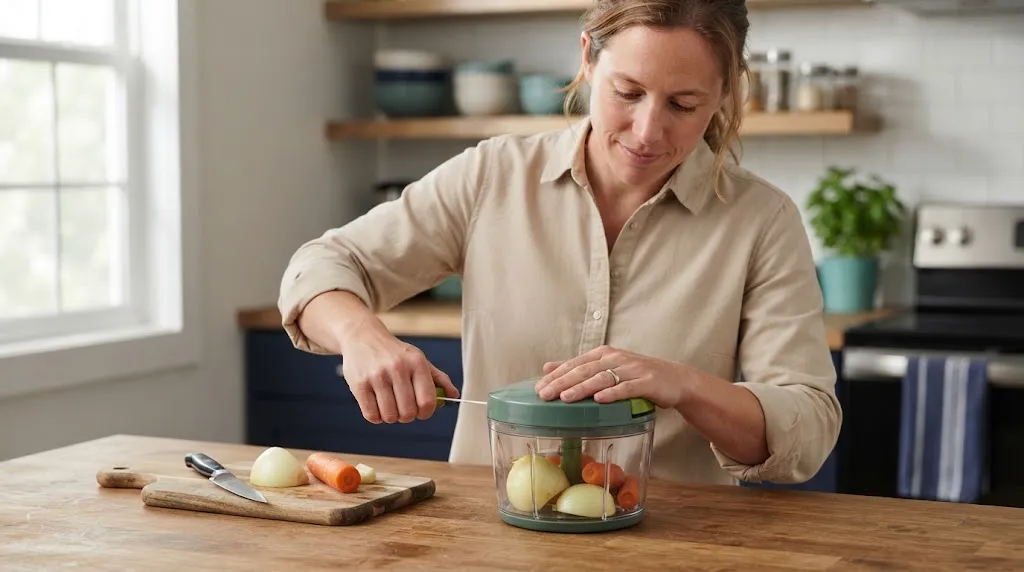
The safest method is to prepare the ingredients, assemble the chopper correctly, stabilize its base, and operate it with controlled movements. Never bypass a lid, blade guard, or safety mechanism.
Step 1: Inspect the Chopper Before Assembly
Start by checking the container, blades, handle, and lid. Look for damage that might interfere with normal operation.
- Examine the bowl for cracks or deformation.
- Check whether the blade assembly fits securely.
- Inspect pull cords for fraying or sticking.
- Make sure push-down mechanisms move normally.
- Confirm that protective guards and locks remain intact.
Do not operate a chopper with a loose blade mount or broken safety feature. Replace damaged components according to the manufacturer’s guidance.
Step 2: Prepare Vegetables Before Loading
Wash fresh produce under running water before cutting it. The FDA advises against using soap or detergent on vegetables.
Remove damaged portions and trim ingredients into sizes that fit the device. Oversized pieces can interfere with rotating blades or prevent a lid from closing.
- Onions: Peel and divide large onions into smaller sections.
- Carrots: Cut thick carrots into shorter pieces when needed.
- Bell peppers: Remove the core and seeds before chopping.
- Herbs: Remove unsuitable stems and avoid tightly packing the bowl.
Do not assume every manual chopper can process hard vegetables, frozen food, or large amounts of nuts. Follow its specified ingredient limits.
Step 3: Stabilize the Chopper
Place the device on a level countertop with enough room for your hands. Keep the surface dry and free from loose utensils.
If your model has a nonslip base, check that it makes full contact with the counter. A slipping base should be corrected before chopping begins.
Step 4: Secure the Lid and Operate Slowly
Close the lid according to the manufacturer’s directions. Keep hands on the designated handles or pressing surfaces.
Start with controlled strokes or pulls instead of maximum force. Stop if resistance suddenly increases or the mechanism feels unstable.
Step 5: Remove Food Without Touching Blades
Wait until all moving parts stop before opening the container. Carefully remove the blade assembly using its intended grip when required.
Use a suitable spatula or spoon to transfer chopped food. Never scrape food away using your fingertips near an exposed blade.
Which Manual Chopper Type Is Safest?
No manual chopper design eliminates blade hazards. The better choice depends on how securely it operates, how easily it disassembles, and whether your hands remain separated from the cutting area.
Here is a practical comparison of three common designs.
| Chopper Type | Main Hazard | Important Precaution | Typical Use |
|---|---|---|---|
| Pull-cord | Exposed rotating blades during cleaning | Secure lid and remove blades by designated grip | Onions, herbs, salsa ingredients |
| Push-down | Blade exposure and unexpected plunger movement | Keep hands clear and avoid forcing resistance | Small vegetable portions |
| Grid-style | Fingers contacting fixed cutting grid | Use intended holder, pusher, or lid | Diced onions, potatoes, peppers |
For routine chopping, I favor designs that keep cutting edges enclosed during operation and provide secure nonslip support. Easy access for safe cleaning matters just as much.
A convenient product is not automatically a safer product. Read the instructions for its exact model.
What Should You Do If a Vegetable Chopper Gets Jammed?
Stop operating the chopper immediately when its blades or pressing mechanism jam. Never use extra force or insert fingers into the cutting chamber to remove stuck vegetables.
Safe Jam-Clearing Steps
- Stop applying force. Release the handle or pull cord and allow all movement to stop.
- Stabilize the container. Keep it flat on the countertop.
- Open according to instructions. Avoid placing your fingers near the cutting edge.
- Remove the blade assembly carefully. Use its designated handle if the design permits removal.
- Clear trapped ingredients. Use a suitable utensil instead of your fingertips.
- Check for damage. Inspect blades, fittings, and the mechanism before reassembly.
Do not try to repair a damaged pull-cord spring or internal mechanism while the blade assembly remains installed. Consult the manufacturer about compatible replacement parts.
Repeated jamming may indicate overloading, oversized ingredients, or unsuitable food. Reduce the batch size before trying again.
How Can You Clean Manual Chopper Blades Without Cutting Yourself?
Disassemble the chopper carefully, wash individual parts according to the manufacturer’s instructions, and keep cutting edges away from your hands. Avoid blindly reaching into a sink containing sharp blades.
Cleaning presents a different risk from normal operation because protective covers may no longer separate your fingers from the cutting edges.
Safe Cleaning Procedure
- Separate the parts. Carefully remove the lid and blade assembly using designated gripping points.
- Keep blades visible. Never leave loose cutting blades hidden beneath soapy water or other dishes.
- Remove food residue. Use a long-handled brush or suitable cleaning tool rather than your fingers.
- Wash according to the manual. Use appropriate dish soap and warm water for hand-washable parts.
- Rinse carefully. Direct water away from yourself and maintain a secure grip.
- Dry completely. Allow parts to air-dry in a secure location before storage.
Never assume every removable blade is dishwasher safe. Cleaning instructions differ between manufacturers and even between models from the same brand.
Can Manual Chopper Blades Go in the Dishwasher?
Some can, but dishwasher compatibility depends on the exact model. Check whether the manufacturer approves cleaning the blades, bowl, and lid separately.
For example, Zyliss lists the bowl and blades of its Easy Pull Food Processor as dishwasher safe, while its pull-cord lid requires handwashing. The cord mechanism should not be immersed.
Follow the manufacturer’s recommended rack placement and temperature restrictions. Sharp components must also be positioned to avoid injuring anyone unloading the dishwasher.
Prevent Cross-Contamination
Clean the chopper between different foods, especially if raw animal products have contacted its surfaces. Cross-contamination occurs when harmful microorganisms transfer between foods or utensils.
The USDA’s cleaning recommendations distinguish washing away visible residue from sanitizing food-contact equipment.
- Use clean utensils for fresh vegetables and ready-to-eat food.
- Wash food-contact components thoroughly after use.
- Sanitize when appropriate using food-contact-safe products and manufacturer-approved methods.
- Discard equipment with cracks or grooves that cannot be cleaned effectively.
For more background, consult the USDA’s cutting board safety guidance. The same principle of avoiding cross-contamination applies to food preparation tools.
What Are the Most Common Manual Chopper Safety Mistakes?
The most preventable mistakes involve rushing, overloading, careless cleaning, and using damaged equipment. Small habits often make the biggest difference in everyday kitchen safety.
- Overfilling the bowl: Too much food can restrict blade movement and create jams.
- Touching stuck vegetables: Fingers can contact cutting edges during attempts to clear food.
- Using excessive pressure: Hard pushing can damage components or cause sudden movement.
- Ignoring lid alignment: An improperly closed lid can make operation unstable.
- Washing blades carelessly: Sharp components hidden among dishes create a serious cutting hazard.
- Leaving blades exposed: Loose attachments create risks for children and other household members.
- Skipping inspections: Cracked containers, worn handles, or damaged fittings may fail during operation.
A useful kitchen rule is to stop whenever a tool requires unexpected force. Investigate the problem rather than trying to overpower it.
How Should You Store a Manual Vegetable Chopper Safely?
Store the chopper clean, dry, and with its cutting edges protected. Keep removable blade attachments out of children’s reach.
A blade guard, manufacturer-approved storage case, or safely assembled container can help reduce accidental contact. Follow the product’s storage instructions.
Safe Storage Checklist
- Confirm that all components are completely dry.
- Cover exposed blades using compatible guards.
- Keep the chopper away from countertop edges.
- Avoid placing loose blades in crowded drawers.
- Store the device in a secure location inaccessible to children.
- Check that heavy objects cannot crush plastic components.
If you regularly remove the cutting assembly, create a dedicated storage space for it. This avoids searching through drawers containing other sharp utensils.
When Should You Replace a Manual Vegetable Chopper?
Replace the device or affected components when damage compromises safe assembly, operation, or cleaning. Do not continue using a chopper simply because its blade still cuts vegetables.
Warning Signs
- Cracks in the food container or lid
- Loose blade connections or damaged blade mounts
- Broken or unreliable locking mechanisms
- Frayed pull cords or malfunctioning return mechanisms
- Bent, chipped, or severely corroded blades
- Unusual slipping or movement during operation
- Damage that prevents thorough cleaning
As of 2026, there is no single replacement schedule that applies to every manual vegetable chopper. Actual service life depends on product construction, use, cleaning, and manufacturer guidance.
Inspect condition instead of relying on age alone. A relatively new device with broken safety parts should not remain in use.
Can Children Use Manual Vegetable Choppers?
Manual vegetable choppers are not automatically suitable for children. Sharp cutting assemblies can cause injuries even when a device does not require electricity.
Adults should control blade installation, disassembly, cleaning, and storage. Follow the manufacturer’s age restrictions and supervision instructions.
Kitchen Safety Around Children
- Keep unused choppers and spare blades inaccessible.
- Never allow children to handle exposed cutting attachments.
- Do not leave a partly disassembled chopper unattended.
- Use age-appropriate, child-safe preparation activities instead.
- Maintain direct adult supervision for any permitted use.
Push-down and enclosed models may appear less intimidating, but that does not eliminate their hazards. The manufacturer’s recommendations should always take priority.
What Features Make a Manual Vegetable Chopper Safer?
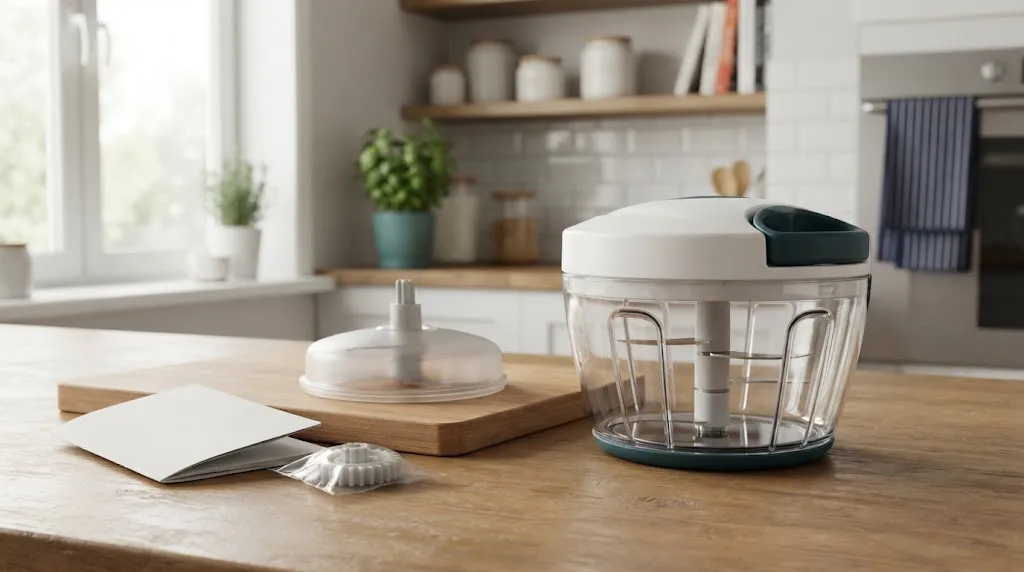
Look for stable construction, secure blade mounting, clear assembly instructions, and guarded cutting components. Cleaning and storage design also deserve attention.
Important Features to Consider
- Nonslip base: Helps keep the container stable during use.
- Secure lid: Reduces unexpected movement when correctly installed.
- Covered blades: Separates hands from cutting edges during normal operation.
- Accessible blade grip: Helps users remove attachments without touching sharp edges.
- Simple disassembly: Makes cleaning less awkward.
- Replacement parts: May allow safe replacement of worn components when supported.
- Clear documentation: Explains correct operation, limitations, and maintenance.
My preferred approach is to evaluate how a chopper behaves during its entire use cycle. Safe chopping means little if removing or cleaning the blade requires awkward handling.
Manual Vegetable Choppers Worth Considering
If you’re choosing a manual chopper, prioritize the design that matches your preparation habits. The following models offer different operating mechanisms and features worth comparing.
Disclosure: This section contains affiliate links. We may earn a commission from qualifying purchases at no additional cost to you.
Easy Push-Down Operation
OXO Good Grips Chopper
★★★★☆ 4.5/5 editorial fit
This manual chopper uses a push-down knob that rotates a stainless steel blade. Its catcher cup has measurement markings, and the device disassembles for cleaning. I would consider it for small chopping jobs where controlled pressing matters.
Pull-Cord Chopping
Zyliss Easy Pull Food Processor
★★★★☆ 4.5/5 editorial fit
The 800 ml model has three rotating stainless steel blades and a nonslip base. Its bowl and blades are dishwasher safe, while the lid requires handwashing. I like its clearly documented cleaning requirements and compact design.
Adjustable Chop Texture
Kuhn Rikon Pull Chop
★★★★☆ 4/5 editorial fit
This manual chopper uses a pull mechanism to rotate its cutting blades. More pulls produce a finer texture. I would consider it for cooks who want simple control over chopped vegetable consistency without electricity.
Editorial scores reflect feature suitability for the stated use cases, not laboratory safety testing or Amazon customer ratings. Always confirm the exact model specifications before buying.
Frequently Asked Questions About Manual Vegetable Chopper Safety
Are manual vegetable choppers safer than knives?
Some manual choppers keep cutting blades enclosed during normal operation, which can reduce direct contact with sharp edges. However, they introduce other hazards during assembly, cleaning, and jam removal. Neither a chopper nor a kitchen knife is automatically safer in every situation.
Can a manual vegetable chopper cut your fingers?
Yes. Sharp cutting blades can cause finger injuries during loading, disassembly, cleaning, and attempts to remove stuck ingredients. Keep your hands away from exposed blades, use designated gripping surfaces, and avoid reaching into the chopping chamber.
Should you wear cut-resistant gloves when cleaning chopper blades?
Suitable food-safe, cut-resistant gloves may provide additional protection when handling sharp attachments. However, gloves are not cut-proof and should never replace careful handling. Follow the chopper manufacturer’s cleaning instructions and keep blades visible throughout the process.
Can you put hot vegetables into a manual food chopper?
Only if the manufacturer specifically allows the temperature involved. Hot food can create burn hazards, while heat may damage containers not designed for it. Let ingredients cool when necessary and check the model’s instructions before processing warm or hot food.
How often should manual vegetable chopper blades be replaced?
There is no universal replacement interval. Inspect blades for damage, corrosion, loose connections, and cutting problems. Replace components when their condition affects safe operation, using manufacturer-approved parts whenever available.
Final Takeaway: Make Every Chop Safer
Manual vegetable chopper safety depends on more than keeping your fingers away from the blades. Correct assembly, controlled operation, careful cleaning, and protected storage are equally important.
Before your next meal-prep session, inspect the device, secure its lid, and work with manageable ingredient portions. If anything slips, jams, or feels damaged, stop and investigate before continuing.
Good safety habits protect your hands while helping you get more reliable results from everyday kitchen tools.
