
Pull Cord Chopper for Meal Prep: How to Choose and Use One

Quick Answer
A pull cord chopper for meal prep is a manual kitchen tool that spins sharp blades when you pull its handle. It helps chop onions, garlic, herbs, peppers, and other suitable vegetables without electricity. Choose a model with the right bowl capacity, a comfortable handle, a stable base, and easy-to-clean parts.
What to Look for Before Buying
- Bowl capacity: Match the container size to your typical meal-prep portions.
- Blade quality: Look for securely fitted stainless steel blades.
- Pull mechanism: Choose a handle and cord that move smoothly.
- Stable base: A nonslip base helps keep the bowl steady.
- Easy cleaning: Check which components can be removed and washed safely.
- Compact storage: Consider the available space in your kitchen.
Quick Meal-Prep Tip
Cut large ingredients into manageable pieces, work in small batches, and use a few controlled pulls before checking the texture.
Meal prep becomes easier when you spend less time chopping ingredients and more time preparing meals. A pull cord chopper can help with everyday tasks such as chopping onions for soup, preparing salsa, or mincing garlic for dinner.
In this guide, you’ll learn how pull cord choppers work, which foods they handle well, how to choose the right size, and what to consider before buying one in 2026.
What Is a Pull Cord Chopper for Meal Prep?
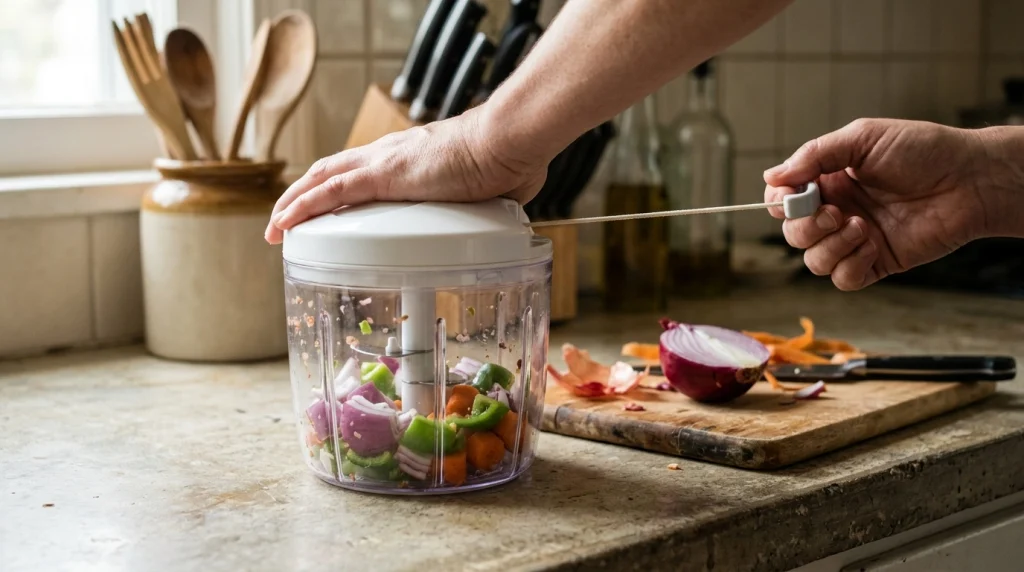
A pull cord chopper is a manual kitchen tool that uses a retractable cord to rotate blades inside a container. Each pull spins the blades and cuts the ingredients into smaller pieces without electricity.
Unlike a traditional knife and chopping board, this tool keeps ingredients inside a bowl while you work. Its compact design can also make storage easier in kitchens with limited counter space.
How Does a Pull Cord Chopper Work?
The mechanism is simple: place the ingredients inside the bowl, secure the lid, and pull the handle to rotate the blades. Additional pulls generally produce finer pieces, depending on the ingredients and the chopper’s design.
- Prepare the ingredients: Wash vegetables and cut large pieces into manageable chunks.
- Fill the bowl: Add a suitable amount without overcrowding the blades.
- Secure the lid: Make sure the lid fits correctly according to the instructions.
- Pull the cord: Use controlled pulls while keeping the bowl stable.
- Check the texture: Wait for the blades to stop completely before opening the lid.
The main advantage is control over the chopping process. You can stop when the ingredients reach the texture your recipe requires.
Why Use a Pull Cord Chopper for Meal Prep?
A manual chopper can be useful when you regularly prepare small or medium quantities of vegetables. It reduces repetitive knife work without requiring a large countertop appliance.
- Faster preparation: Chop several pieces of onion or pepper together.
- Less countertop mess: Keep chopped ingredients inside the container.
- No electricity required: Use the chopper wherever you have a stable work surface.
- Adjustable texture: Control the chopping process by checking the ingredients between pulls.
- Compact storage: Many models fit easily inside a kitchen cabinet.
However, a pull cord chopper still requires physical effort and has a limited bowl capacity. For large family meal-prep sessions, a food processor or a sharp chef’s knife may be more practical.
Which Foods Can You Prepare With a Pull Cord Chopper?
A pull cord chopper works well with many everyday ingredients, particularly vegetables and herbs that need coarse or fine chopping. The best results come from using manageable pieces and avoiding an overcrowded bowl.
| Ingredient | Meal-Prep Use | Preparation Tip |
|---|---|---|
| Onions | Soups, curries, sauces | Peel and cut into chunks. |
| Bell peppers | Stir-fries, salads, fillings | Remove seeds and the tough core. |
| Garlic | Marinades, dressings, curries | Peel the cloves first. |
| Fresh herbs | Salsas, dips, garnishes | Dry washed herbs before chopping. |
| Carrots | Soups and vegetable mixtures | Cut into small chunks first. |
| Nuts | Toppings and fillings | Check the manufacturer’s instructions. |
Can You Use a Pull Cord Chopper for Tomatoes?
Yes, many models can chop tomatoes, but ripe tomatoes need a gentle approach. Their soft flesh releases juice quickly, so start with a few pulls and check the texture frequently.
For salsa, combine tomatoes with firmer ingredients in small batches if the manufacturer’s instructions allow it. Drain excess liquid if you prefer a thicker mixture.
What Foods Should You Avoid Chopping?
Not every ingredient suits every manual chopper. Hard, oversized, frozen, or fibrous foods may strain the mechanism or produce inconsistent results.
- Very hard vegetables: Avoid large chunks of raw sweet potato or similar dense produce unless the manufacturer permits them.
- Frozen ingredients: Frozen foods may be too hard for some blade assemblies.
- Large quantities of meat: Use only a model specifically designed and approved for meat.
- Sticky ingredients: These can cling to the blades and make cleaning more difficult.
- Excess liquid: Too much moisture can turn chopped ingredients into an uneven puree.
When you’re unsure about an ingredient, check the manufacturer’s instructions first. Never force the cord if the blades become stuck.
How Do You Choose the Right Chopper Size for Meal Prep?
The right capacity depends on how many portions you prepare and how often you want to empty the bowl. Smaller containers suit quick tasks, while larger bowls can reduce the number of batches needed for family meals.
Remember that bowl capacity doesn’t guarantee how much food a chopper can process effectively. The blade layout, ingredient size, and recommended fill level also matter.
| Approximate Capacity | Best Suited To | Main Consideration |
|---|---|---|
| 350 ml | Garlic, herbs, small garnishes | Limited room for bulky vegetables. |
| 500–700 ml | Small household meals and dips | A practical middle-ground size. |
| 900 ml–1 litre | Larger vegetable batches | Check stability and storage space. |
These are general size categories, not guarantees of performance. Confirm the actual capacity and maximum fill level of the model you choose.
What Features Matter Most?
Reliable operation and easy cleaning matter more than unnecessary accessories. A chopper that fits your ingredients and cleans up quickly is easier to use regularly.
- Blade arrangement: Multiple blade levels may help distribute chopping throughout the bowl.
- Comfortable handle: A well-shaped grip helps during repeated pulls.
- Secure lid: The lid should fit properly and stay in place during use.
- Nonslip base: A stable container is easier to control.
- Replacement parts: Check whether the manufacturer sells replacement cords, lids, or blades.
- Cleaning instructions: Confirm which parts are dishwasher-safe and which require handwashing.
Pull Cord Chopper vs. Electric Chopper vs. Knife
All three options can prepare vegetables, but each suits a different cooking routine. A manual pull cord chopper offers a balance between convenience, portion control, and compact storage.
| Feature | Pull Cord Chopper | Electric Chopper | Chef’s Knife |
|---|---|---|---|
| Power source | Manual | Electricity or battery | Manual |
| Batch size | Small to medium | Varies by model | Flexible |
| Texture control | Adjust with pulls | Adjust with pulses | Direct visual control |
| Physical effort | Repeated pulling | Low during operation | Repeated knife work |
| Storage | Usually compact | Requires appliance space | Usually minimal |
These comparisons describe typical designs. Actual capacity, cleaning requirements, and performance vary by model.
When Is a Manual Chopper the Better Choice?
Choose a pull cord chopper if you regularly prepare ingredients for one or two dishes and want a tool that’s easy to store. It can be useful for onions, garlic, peppers, and chopped herb mixtures.
An electric chopper may suit you better if you prepare large quantities or prefer not to pull a cord repeatedly. A knife remains useful for precise slices, uniform cubes, and ingredients that need careful handling.
How Can You Get More Consistent Chopping Results?
Consistent results start with proper ingredient preparation and frequent texture checks. Pulling harder or faster isn’t necessarily the solution.
- Cut evenly: Start with similarly sized pieces.
- Leave room: Follow the recommended fill level.
- Use small batches: Process dense vegetables in manageable quantities.
- Start with a few pulls: Check the texture before continuing.
- Redistribute carefully: Stop the blades before moving ingredients with a suitable utensil, following the manufacturer’s instructions.
For example, when preparing onions and peppers for fried rice, a few controlled pulls can produce a coarse mixture. Additional pulls may create finer pieces for a sauce.
This is a starting point rather than a guaranteed number of pulls. The best result depends on your ingredients, chopper design, and recipe.
How Do You Clean and Store a Pull Cord Chopper?
Clean the chopper promptly after use, especially after chopping garlic, onions, herbs, or sticky ingredients. Food residue can collect around the blade assembly and inside the lid.
- Disassemble safely: Follow the manufacturer’s instructions and keep your fingers away from the cutting edges.
- Wash removable parts: Use warm water and dish soap where permitted.
- Clean the lid carefully: Never immerse a cord mechanism unless the manufacturer explicitly allows it.
- Rinse and dry: Remove food residue and dry components thoroughly.
- Store securely: Protect the blade assembly and keep it out of children’s reach.
Never pull the cord while your fingers or a utensil are inside the bowl. Wait until the blades stop completely before opening the lid or checking the food.
How Should You Store Prepped Vegetables?
A chopper makes preparation easier, but chopped produce still needs proper storage. Use clean, food-safe containers, refrigerate perishable cut vegetables promptly, and consult FoodSafety.gov food safety resources for safe handling guidance.
Keep raw produce separate from raw meat and its juices. Return perishable ingredients to refrigeration during longer meal-prep sessions rather than leaving them on the counter.
Common Pull Cord Chopper Mistakes to Avoid
Frustrating results often come from overloading the bowl, using unsuitable ingredients, or expecting every vegetable to chop the same way. A few simple habits can help prevent unnecessary mess and wear.
- Overfilling the bowl: Too much food can block the blades and make the cord harder to pull.
- Ignoring the fill line: Stay within the manufacturer’s recommended capacity.
- Overchopping soft produce: Check frequently to avoid turning tomatoes into watery puree.
- Forcing a jammed cord: Stop if resistance increases and follow the troubleshooting instructions.
- Washing every part in the dishwasher: Some lids contain mechanisms that water and heat can damage.
- Storing wet parts: Trapped moisture can encourage odors and affect components.
If the cord stops retracting smoothly, don’t force it or dismantle a sealed mechanism. Consult the manufacturer’s troubleshooting guide and warranty information.
Which Pull Cord Chopper Should You Consider for Meal Prep?
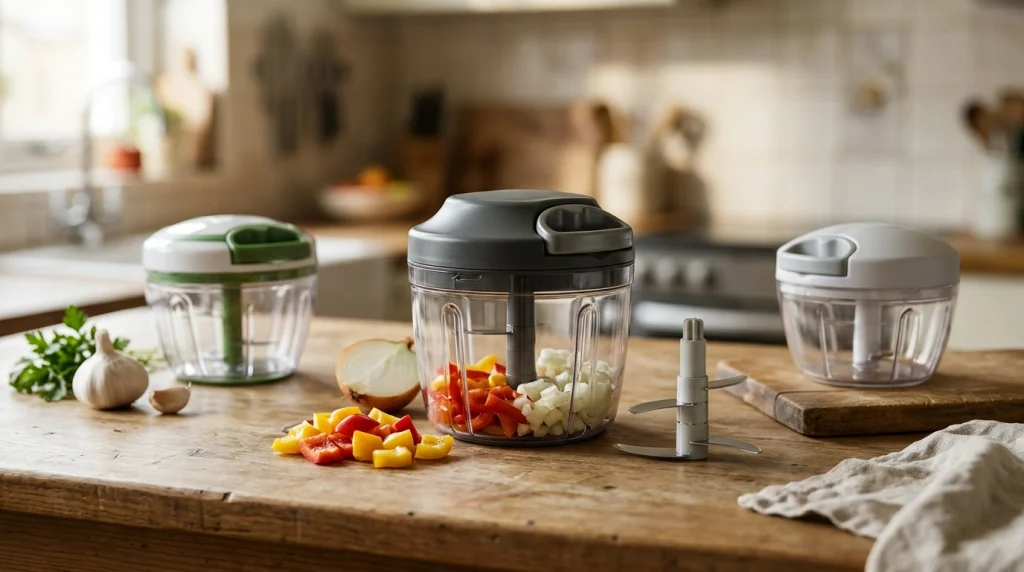
The right choice depends on how often you cook, how much food you prepare, and which ingredients you chop most often. Compare current capacity, blade arrangement, cleaning instructions, and replacement-part availability before buying.
The following options provide a starting point for comparing manual choppers. Product specifications, availability, and customer ratings can change, so verify the current listing before purchasing.
🏆 COMPACT MANUAL OPTION
Kuhn Rikon Pull Chop
A manual pull-operated chopper worth considering for everyday ingredient preparation. Check the current model’s capacity, blade configuration, and cleaning instructions to see whether it suits your portions.
Rating: Verify the current listing.
🥗 FOR ROUTINE FOOD PREP
Manual Pull Cord Food Chopper
Compare models with approximately 500–900 ml bowls for routine vegetable preparation. Look for a secure lid, stable base, and clear instructions for cleaning every component.
Rating: Depends on the selected model.
💰 BUDGET-FRIENDLY OPTION
Compact String Vegetable Chopper
A basic string-operated chopper may suit occasional meal prep and smaller kitchens. Compare construction, cord operation, bowl capacity, and warranty before choosing a budget model.
Rating: Verify the individual listing.
Start with the quantity of vegetables you normally prepare, then choose a model that handles that workload comfortably. A larger bowl isn’t automatically better if you mainly chop garlic, herbs, or one onion at a time.
Frequently Asked Questions
1. Is a Pull Cord Chopper Good for Weekly Meal Prep?
Yes, a pull cord chopper can help with weekly meal prep when you regularly chop modest quantities of vegetables, herbs, and aromatics. It’s useful for preparing ingredients for several dishes. For large batches, a food processor or chef’s knife may be more practical.
2. How Many Pulls Does It Take to Chop Vegetables Finely?
There is no universal number because blade designs, ingredient firmness, and portion sizes vary. Start with a few controlled pulls, check the texture, and continue gradually until the pieces suit your recipe. Avoid excessive chopping, which can turn soft vegetables into a wet mixture.
3. Can a Pull Cord Chopper Replace a Food Processor?
A pull cord chopper can replace some basic food-preparation tasks, but it doesn’t offer every food processor function. Its bowl generally handles smaller quantities, and it may struggle with certain dense or fibrous ingredients. A food processor suits larger batches and more varied processing tasks.
4. Are Pull Cord Vegetable Choppers Easy to Clean?
Most models have a removable bowl and blade assembly, which can make cleanup straightforward. However, some lids contain cord mechanisms that shouldn’t be immersed in water or placed in a dishwasher. Follow the manufacturer’s cleaning instructions and dry removable parts thoroughly before storage.
5. Can I Store Chopped Vegetables for Several Days?
Many chopped vegetables can be refrigerated in clean, covered containers, but storage life depends on the ingredient and handling conditions. Refrigerate perishable produce promptly, keep it separate from raw meat, and consult FDA food safety guidance for safe handling practices.
Final Takeaway: Make Meal Prep Simpler
A pull cord chopper for meal prep can be a practical addition to a kitchen where vegetables, herbs, and aromatics appear in everyday meals. It offers manual operation, compact storage, and adjustable chopping without requiring an electrical outlet.
Before buying, focus on bowl capacity, blade quality, a comfortable pull mechanism, a stable base, and easy cleaning. These practical details matter more than extra features you may never use.
If you prepare small batches regularly, a manual chopper may simplify your cooking routine. Choose a model that matches your needs, follow the manufacturer’s instructions, and handle the blades safely.