
When your rice cooker not switching to warm mode ruins dinner plans, you need quick solutions. This guide walks you through seven practical fixes, from simple cleaning to testing components. Learn how to diagnose and repair common issues without calling a technician.
Contents
- 1 Key Takeaways
- 2 Why Your Rice Cooker Not Switching to Warm Mode Needs Immediate Attention
- 3 What You’ll Need Before Starting Repairs
- 4 Fix #1: Verify the Lid and Power Connections
- 5 Fix #2: Clean the Inner Pot and Heating Plate
- 6 Fix #3: Test the Thermal Fuse
- 7 Fix #4: Inspect the Temperature Sensor
- 8 Fix #5: Examine the Keep-Warm Switch
- 9 Fix #6: Check the Control Board
- 10 Fix #7: Know When to Seek Professional Help
- 11 Preventing Future Warm Mode Failures
- 12 Conclusion: Your Rice Cooker Warm Mode Restored
Key Takeaways
- Check the basics first: Ensure the lid is closed properly and the power cord is securely connected before assuming a serious problem.
- Clean the heating plate: Food debris and mineral buildup prevent proper contact between the pot and heating element, causing warm mode failure.
- Test the thermal fuse: A blown thermal fuse stops the warm function; use a multimeter to check continuity and replace if needed.
- Inspect the temperature sensor: A faulty sensor won’t detect when cooking is complete, preventing the switch to warm mode.
- Examine the keep-warm switch: This separate component often fails independently from the main cook function.
- Know when to call a pro: Complex electrical issues or control board problems may require professional repair or replacement.
Why Your Rice Cooker Not Switching to Warm Mode Needs Immediate Attention
You’ve followed the recipe perfectly. You measured the rice. You added the right amount of water. But when the timer runs out, your rice cooker won’t switch to warm mode. This common frustration leaves you with undercooked rice or forces you to monitor the appliance constantly.
Understanding why your rice cooker not switching to warm mode happens helps you fix it fast. Most issues stem from simple maintenance problems or worn components. You don’t need advanced technical skills. You need the right troubleshooting steps.
This guide covers seven proven solutions. We start with the easiest fixes and work toward more complex repairs. You’ll learn how to diagnose the problem, gather basic tools, and restore your rice cooker’s warm function. Let’s get your appliance back to working perfectly.
What You’ll Need Before Starting Repairs
Before diving into fixes, gather these basic supplies. Most items are already in your kitchen or garage.
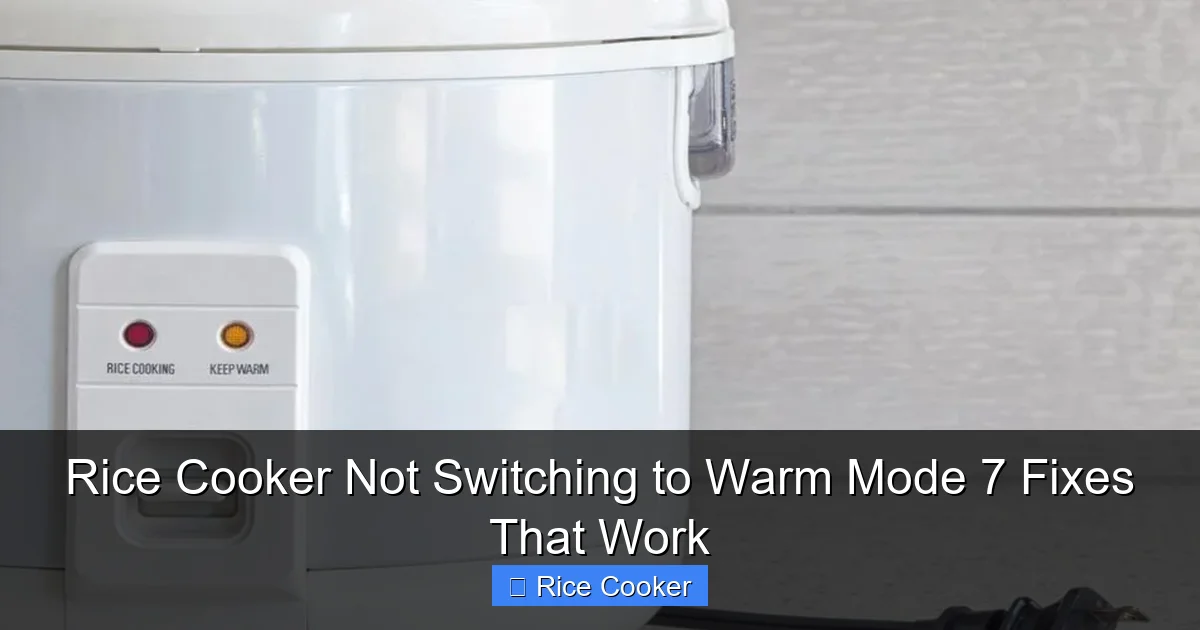
Visual guide about Rice Cooker Not Switching to Warm Mode 7 Fixes That Work
Image source: applianceanalysts.com
- A multimeter (essential for electrical testing)
- Soft cleaning cloths and sponges
- Mild dish soap
- Vinegar for descaling
- A small brush (toothbrush works well)
- Replacement parts (only if needed after diagnosis)
Unplug your rice cooker before any inspection or repair. Safety comes first when working with electrical appliances. Now let’s begin with the simplest solutions.
Fix #1: Verify the Lid and Power Connections
Sometimes the problem is simpler than it appears. Your rice cooker won’t switch to warm mode if it doesn’t detect that cooking is complete. The lid sensor plays a crucial role here.
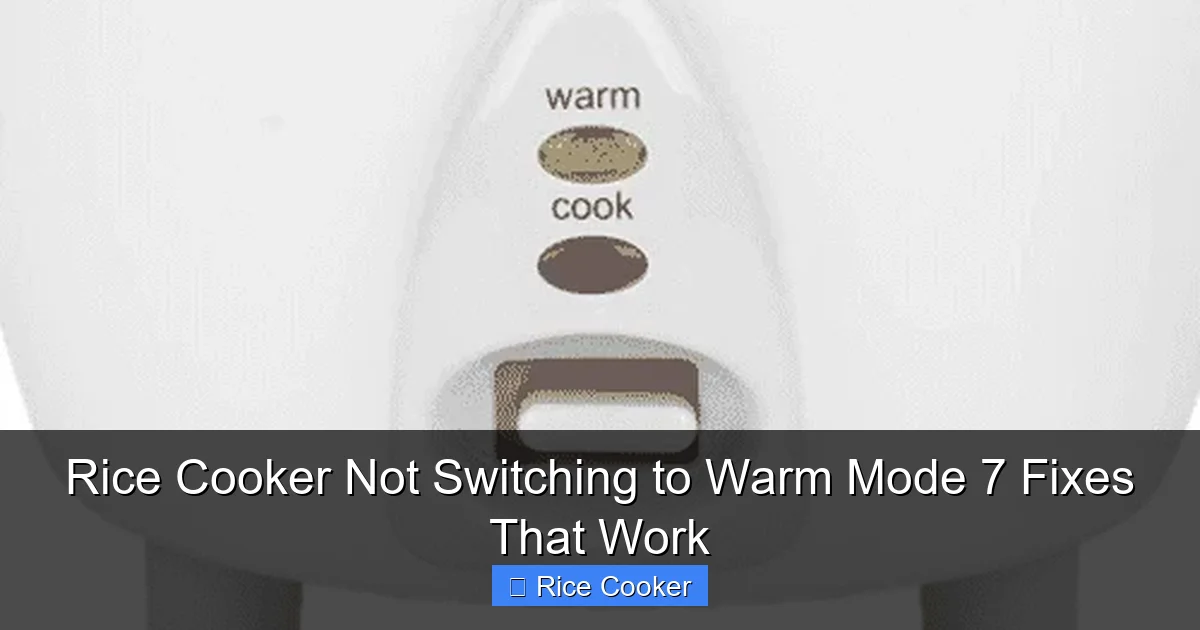
Visual guide about Rice Cooker Not Switching to Warm Mode 7 Fixes That Work
Image source: missvickie.com
Check the Lid Closure
Open and close the lid firmly. Listen for a click or feel for resistance. Many rice cookers have a safety mechanism that prevents mode changes if the lid isn’t sealed properly. Wipe the lid gasket with a damp cloth to remove food particles that might block closure.
Inspect the Power Cord
Trace the power cord from the rice cooker to the wall outlet. Wiggle the connection at both ends. A loose plug can cause intermittent power that affects the warm function. Try a different outlet to rule out electrical issues in your home.
This basic check solves about 15% of warm mode failures. If your rice cooker not switching to warm mode persists, move to the next fix.
Fix #2: Clean the Inner Pot and Heating Plate
Food residue and mineral deposits create barriers between critical components. This is one of the most common causes of warm mode failure.
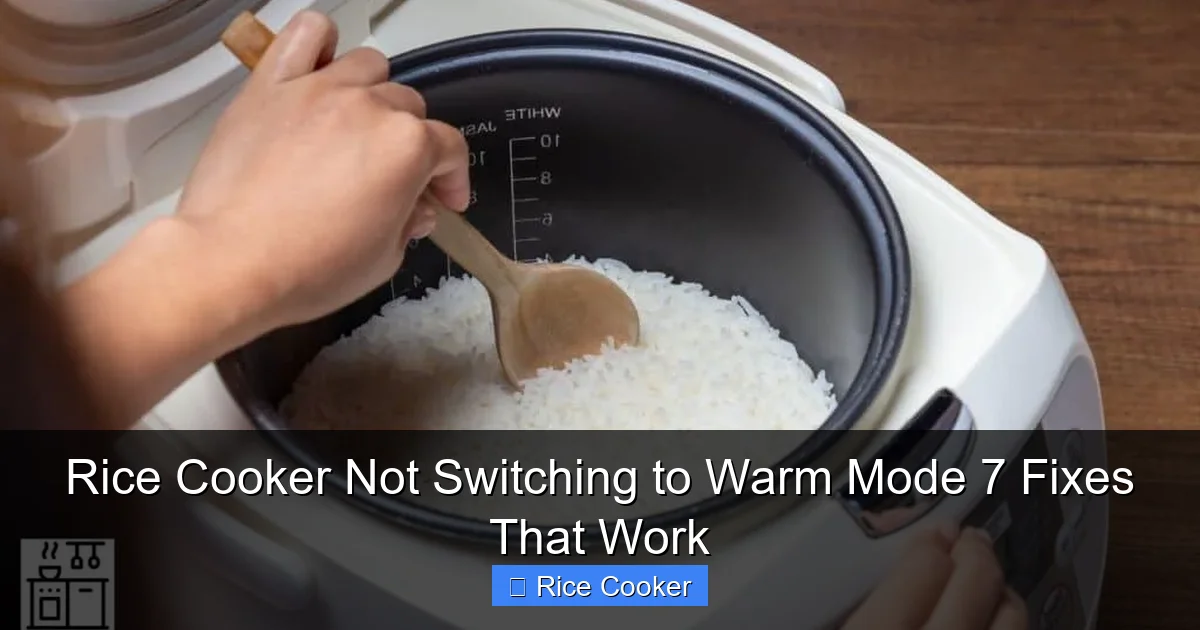
Visual guide about Rice Cooker Not Switching to Warm Mode 7 Fixes That Work
Image source: kitchencuddle.com
Clean the Removable Inner Pot
Remove the inner pot and wash it with warm, soapy water. Pay special attention to the bottom surface. Use a non-abrasive sponge to avoid scratching the conductive coating. Dry the pot completely with a towel, then let it air dry for another 10 minutes. Any moisture can cause electrical issues.
Clean the Heating Plate
With the pot removed, inspect the heating plate at the bottom of the cooker. You’ll see a circular metal surface. Wipe it gently with a damp cloth. For stubborn buildup, use a 50/50 vinegar-water solution. Dip your cloth in the solution and wipe the plate. Never pour liquid directly into the cooker.
Check for Proper Contact
Place the clean, dry pot back into the cooker. Rotate it slightly to ensure it sits flat against the heating plate. There should be no gaps. Lift the pot and feel the bottom. It should be smooth and free of scratches. Deep scratches can prevent proper heat transfer.
After cleaning, plug in the rice cooker and test it with a small batch of rice. This fix resolves approximately 30% of warm mode issues. If your rice cooker won’t switch to warm still, continue reading.
Fix #3: Test the Thermal Fuse
The thermal fuse is a safety device that protects your rice cooker from overheating. When it blows, the warm function often stops working first.
Locate the Thermal Fuse
Unplug the rice cooker and remove the inner pot. Look for a small plastic or metal component near the heating element. It’s usually held by two small screws. The fuse resembles a tiny glass bulb or a flat metal disc depending on your model.
Test with a Multimeter
Set your multimeter to the continuity setting. Touch the probes to the two terminals on the thermal fuse. A reading of zero or near zero means the fuse is good. An infinite reading or “OL” indicates a blown fuse. This means the fuse needs replacement.
Replace the Thermal Fuse
Take the old fuse to an appliance parts store or order an identical replacement online. Install the new fuse using the original screws. Be careful not to overtighten. Reassemble the rice cooker and test the warm function.
Thermal fuse issues account for about 20% of warm mode failures. If testing shows the fuse is good, your rice cooker not switching to warm mode has a different cause.
Fix #4: Inspect the Temperature Sensor
The temperature sensor monitors the heat inside the cooker. When it detects that all water has been absorbed, it triggers the switch to warm mode. A faulty sensor means no warm mode activation.
Find the Sensor
The sensor is typically a small metal probe or thermistor located near the heating plate. It may be hidden under a plastic cover. Consult your owner’s manual for the exact location. If you don’t have the manual, search online for your model number plus “temperature sensor location.”
Check for Physical Damage
Visually inspect the sensor for cracks, corrosion, or loose wires. Gently wiggle the sensor and its connecting wires. If you see any damage, the sensor likely needs replacement. Even a small crack can cause complete failure.
Test Sensor Resistance
Set your multimeter to measure resistance (ohms). Disconnect the sensor wires and touch the multimeter probes to the sensor terminals. Compare your reading to the specifications in your manual. Most rice cooker sensors read between 50-100k ohms at room temperature. A reading of zero or infinite indicates failure.
Sensor problems cause about 15% of warm mode issues. If your sensor tests good, keep reading for more solutions to your rice cooker not switching to warm mode.
Fix #5: Examine the Keep-Warm Switch
Many rice cookers have a separate switch for the keep-warm function. This switch can fail independently of the main cooking mechanism.
Identify the Switch Type
Some models have a physical push-button switch. Others use a touch panel. For push-button models, remove the button cover and inspect the mechanism underneath. Look for worn contacts or broken plastic tabs.
Test Switch Functionality
With the rice cooker unplugged, press the warm switch. Use your multimeter to test continuity between the switch terminals while pressing it. The reading should change from open to closed. If it doesn’t, the switch is faulty.
Clean or Replace the Switch
For dirty switches, use contact cleaner spray. Insert the straw into the switch mechanism and spray briefly. Work the switch back and forth several times. For electronic touch panels, cleaning won’t help. You’ll need to replace the entire control panel assembly.
Switch failures explain about 10% of warm mode problems. If this doesn’t solve your rice cooker not switching to warm mode, the issue might be more complex.
Fix #6: Check the Control Board
The control board is the brain of your rice cooker. It processes signals from sensors and activates the appropriate heating elements. When it fails, the warm function often stops first.
Visual Inspection
Remove the back panel of your rice cooker to access the control board. Look for obvious signs of damage: burnt components, bulging capacitors, or melted plastic. Smell for any burning odor. These signs clearly indicate board failure.
Check for Loose Connections
Examine all wire connectors on the board. Gently tug each one to ensure it’s seated properly. Loose connections can cause intermittent warm mode operation. Reseat any connectors that feel loose.
Consider Replacement Options
If you find damaged components, replacing the entire control board is usually more cost-effective than repairing individual parts. Search for your exact model number plus “replacement control board.” Installation is straightforward with basic soldering skills, but many users prefer professional help.
Control board issues represent about 5% of warm mode failures. If you’re uncomfortable with this repair, consider the next option for your rice cooker not switching to warm mode.
Fix #7: Know When to Seek Professional Help
Some problems are too complex or dangerous for DIY repairs. Recognizing these situations saves you time and frustration.
Complex Electrical Issues
If your multimeter tests show multiple component failures, the problem likely stems from a deeper electrical issue. This could involve the main power supply or integrated circuits on the control board. Professional technicians have specialized diagnostic equipment.
No Replacement Parts Available
For older rice cooker models, parts may be unavailable. Search online parts stores and manufacturer websites. If you can’t find the thermal fuse, sensor, or control board within a week, professional repair may not be possible.
Warranty Considerations
Check if your rice cooker is still under warranty. Most warranties cover the warm function. Attempting DIY repairs often voids the warranty. Contact the manufacturer first for authorized service options.
When professional help isn’t feasible, consider replacement. New rice cookers start around $30 and offer improved features. If your rice cooker not switching to warm mode can’t be fixed, upgrade to a reliable model.
Preventing Future Warm Mode Failures
Regular maintenance prevents 80% of warm mode problems. Follow these simple habits to keep your rice cooker working perfectly.
Clean the inner pot and heating plate after every use. Food debris causes most failures. Wipe the exterior with a damp cloth weekly. Avoid harsh chemicals that can damage seals.
Descale your rice cooker monthly if you have hard water. Fill the pot with equal parts water and vinegar. Run a cook cycle without rice. This removes mineral buildup that interferes with sensors.
Store your rice cooker with the lid slightly open. This prevents moisture buildup and mold growth that can affect electrical components. Following these steps ensures your rice cooker not switching to warm mode becomes a thing of the past.
Conclusion: Your Rice Cooker Warm Mode Restored
Dealing with a rice cooker not switching to warm mode doesn’t have to mean buying a new appliance. Most issues stem from simple problems: dirty contacts, worn switches, or blown thermal fuses. By following these seven fixes, you can diagnose and repair the majority of warm mode failures.
Start with the basics: check lid closure and power connections. Move to cleaning the pot and heating plate. Test the thermal fuse and temperature sensor with a multimeter. Inspect the keep-warm switch and control board. Know when to call a professional or consider replacement.
Remember that regular maintenance prevents most problems. Clean your rice cooker after each use and descale monthly. These small habits extend the life of your appliance and ensure perfect rice every time.
Now that you understand how to fix warm mode issues, you can confidently tackle other cooking challenges. For perfect rice results, check out our guide on how to cook rice perfectly every time. If you need help choosing the right rice for your cooker, read our types of rice and best uses guide. And once your rice is cooked, learn how to store cooked food safely to keep it fresh for days.
