
Why Did My Cast Iron Skillet Rust? Causes and How to Fix It

Your cast iron skillet rusted because water reached bare iron. The usual causes are letting it air dry or soak, putting it in the dishwasher, seasoning that has worn thin (often after acidic foods or hard scrubbing), or storing it somewhere damp. Light orange rust is cosmetic and easy to fix: scrub it off, wash, dry the pan on the stove, rub in a very thin layer of oil and bake it upside down at about 450 to 500°F (230 to 260°C) for an hour.
Rust Causes and Quick Fixes
| What happened | Why it rusts | How to prevent it |
|---|---|---|
| Left to air dry or soak in the sink | Water sits on the iron for hours | Towel dry, then heat on the stove for a few minutes |
| Put in the dishwasher | Long hot water and detergent strip seasoning | Always wash by hand |
| Cooked tomato sauce, wine or vinegar for a long time | Acid wears away thin seasoning | Clean promptly and re-oil; keep long acidic simmers for enamel pans |
| New or rarely used pan | Seasoning is still thin | Cook fatty foods often and oil after each use |
| Stored in a humid cupboard, garage or with a lid on | Moisture condenses on the metal | Store dry, lid off, with a paper towel inside |
| Rust on the bottom or handle only | These areas get less oil and dry last | Oil and dry every surface, not just the cooking side |
Why Cast Iron Rusts in the First Place
Cast iron is iron with a few percent carbon, and unlike stainless steel it has no chromium to protect it. Its only protection is seasoning: thin layers of oil that have been heated until they polymerize into a hard, slick coating bonded to the metal. Where that coating is thin, scratched or missing, oxygen and water react with the iron and form rust (iron oxide). That is why a pan can be perfectly fine one week and spotted with orange the next, especially after a long soak or a run through the dishwasher.
Is a Rusty Cast Iron Skillet Ruined?
Almost never. Light surface rust comes off in minutes. Even heavy, flaky rust can usually be removed and the pan re-seasoned. A pan is only a lost cause if it is cracked, warped so it rocks on the burner, or so deeply pitted that the cooking surface is badly damaged.
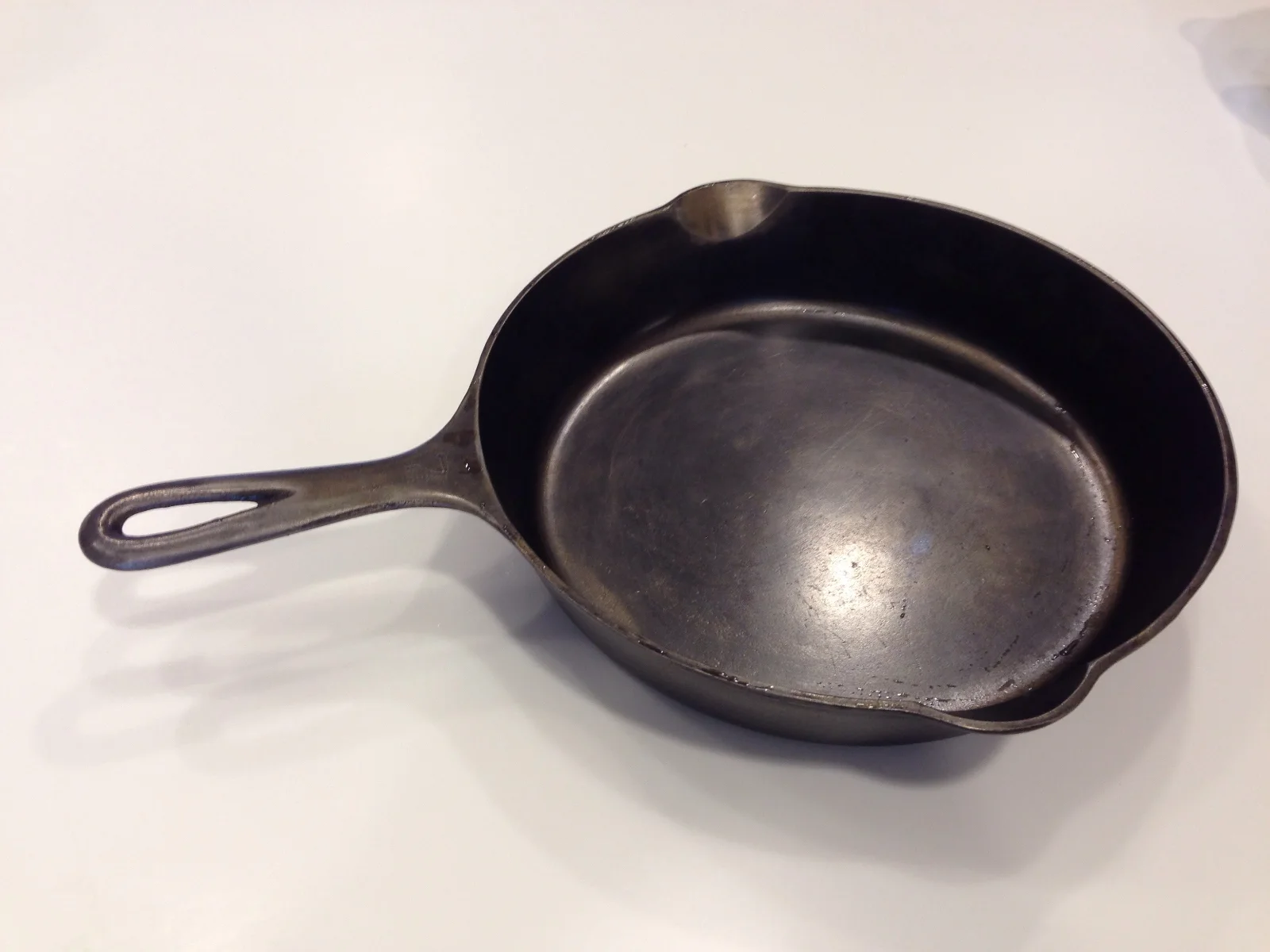
How to Remove Rust From a Cast Iron Skillet
Light rust (thin orange film or spots)
- Scrub the rusty areas with fine steel wool, a stainless steel scrubber or a stiff brush until you see grey or black metal again.
- Wash the pan with warm water and a little dish soap to remove the loose rust.
- Towel dry, then set it on a burner over medium heat for 3 to 5 minutes until every trace of moisture is gone.
- While it is warm, rub a few drops of neutral oil over the whole pan, inside and out, then wipe off as much as you can. It should look almost dry, not shiny.
- Bake it upside down at 450 to 500°F (230 to 260°C) for 1 hour, with foil or a sheet pan on the rack below. Let it cool in the oven.
Heavy rust (flaky, covering large areas)
- Soak only as long as needed: mix equal parts white vinegar and water and soak the pan for 30 minutes to 1 hour, checking often. Vinegar dissolves rust but will start to etch the iron if left too long.
- Scrub with steel wool until the rust is gone, then rinse well.
- Dry on the stove immediately. Bare iron can flash rust within minutes.
- Season in the oven as above, and repeat the oil-and-bake step 2 or 3 times to rebuild a solid layer.
For a full walkthrough, see our guide on how to season a cast iron skillet.
The Best Oils for Re-Seasoning
Use a neutral oil you have on hand: vegetable oil, canola, sunflower, shortening or a commercial cast iron seasoning. The type matters far less than the amount. Thick coats of oil turn sticky and blotchy, while very thin coats bake into a hard, even finish. Flaxseed oil can give a glossy look but is more prone to flaking, so it is not necessary.
How to Stop Rust Coming Back
- Wash soon after cooking. Hot water and a brush or scraper are usually enough. A little mild dish soap is fine and will not remove good seasoning.
- Never soak it and never put it in the dishwasher.
- Dry it with heat. Towel dry, then warm it on the burner for a couple of minutes.
- Oil it lightly while it is warm, then wipe almost all of it off.
- Use it often. Cooking with fat, like frying eggs, searing meat or roasting vegetables, builds seasoning naturally.
- Store it dry. Keep the lid off, put a paper towel in the pan to absorb moisture, and avoid cupboards over the kettle or dishwasher.
- Stuck food? Scrub with coarse salt and a little oil, then rinse and dry. Salt is a gentle abrasive that does not hurt sound seasoning.
Acidic Foods and Cast Iron
A well-seasoned skillet can handle quick acidic dishes like a pan sauce with a splash of wine or lemon. Long simmers of tomato sauce or chili can wear seasoning, give food a metallic taste and leave dull spots that rust more easily. If you cook these often, use an enameled cast iron pot instead. After cooking anything acidic in bare cast iron, wash, dry and oil it right away.
Frequently Asked Questions
Is it safe to cook in a cast iron skillet with a little rust?
A small amount of rust is not considered harmful, but it makes food stick and taste metallic. Remove it and re-season before cooking.
Why does rust keep coming back in the same spot?
That spot is not getting dry or oiled, or it has a rough or pitted area holding moisture. Scrub it well, season it a few extra times and make sure you dry and oil it every time.
Can I use soap on cast iron?
Yes. Modern dish soap is mild and will not strip polymerized seasoning. The real danger is soaking and leaving it wet.
Why is my cast iron rusting after seasoning?
Usually because the layer is still very thin, the pan was not fully dry before oiling, or it was stored somewhere humid. Add more thin coats and store it dry.
Does enameled cast iron rust?
The enamel itself does not rust, but exposed iron on the rim or chips in the enamel can. Dry these edges and rub them with a little oil.
Final Thoughts
Rust on cast iron is a sign of moisture, not a ruined pan. Scrub it off, dry the pan with heat, season it in thin layers, and build the habit of drying and oiling after every use. Your skillet will come back darker and smoother than before. If your pan is smoking when you heat it, see our guide on why a cast iron skillet smokes.