
Can a Bullet Go Through a Frying Pan

Can a bullet go through a frying pan? The answer depends on the frying pan’s material, thickness, and the type of bullet fired. While some bullets can penetrate certain frying pans, many factors influence the outcome, including bullet speed and pan construction. In this article, we explore how frying pans respond to bullets, offering insights into the physics and safety concerns involved.
Key Takeaways
- Material Matters: The type of frying pan—cast iron, aluminum, or non-stick—affects whether a bullet can penetrate it.
- Bullet Type and Speed: High-velocity bullets are more likely to go through a frying pan than slower ones.
- Thickness Plays a Role: Thicker pans offer more resistance and can sometimes stop a bullet.
- Energy Dissipation: Frying pans can absorb and dissipate bullet energy, which influences penetration.
- Safety Concerns: Shooting at frying pans is dangerous and not recommended outside controlled environments.
- Practical Examples: Testing and experiments have shown varied results based on pan material and bullet caliber.
- Not Designed for Ballistics: Frying pans are kitchen tools, not protective gear or ballistic shields.
📑 Table of Contents
Introduction
Have you ever wondered, can a bullet go through a frying pan? It sounds like a question out of a movie scene or a quirky experiment. But surprisingly, people have actually tested this idea to see what happens when a bullet meets a frying pan. In the kitchen, frying pans are everyday tools used for cooking. But when bullets come into play, things get interesting.
In this article, we’ll dive into the science behind bullets and frying pans. We’ll look at the types of frying pans, the kind of bullets, and how these factors influence whether a bullet can pierce through. Whether you’re curious about ballistics or just want to know what happens when metal meets metal at high speed, keep reading!
Understanding Frying Pan Materials
Types of Frying Pans
Frying pans come in various materials, each with different properties. The most common types include cast iron, aluminum, stainless steel, and non-stick pans. Each material offers a unique resistance level when struck by a bullet.
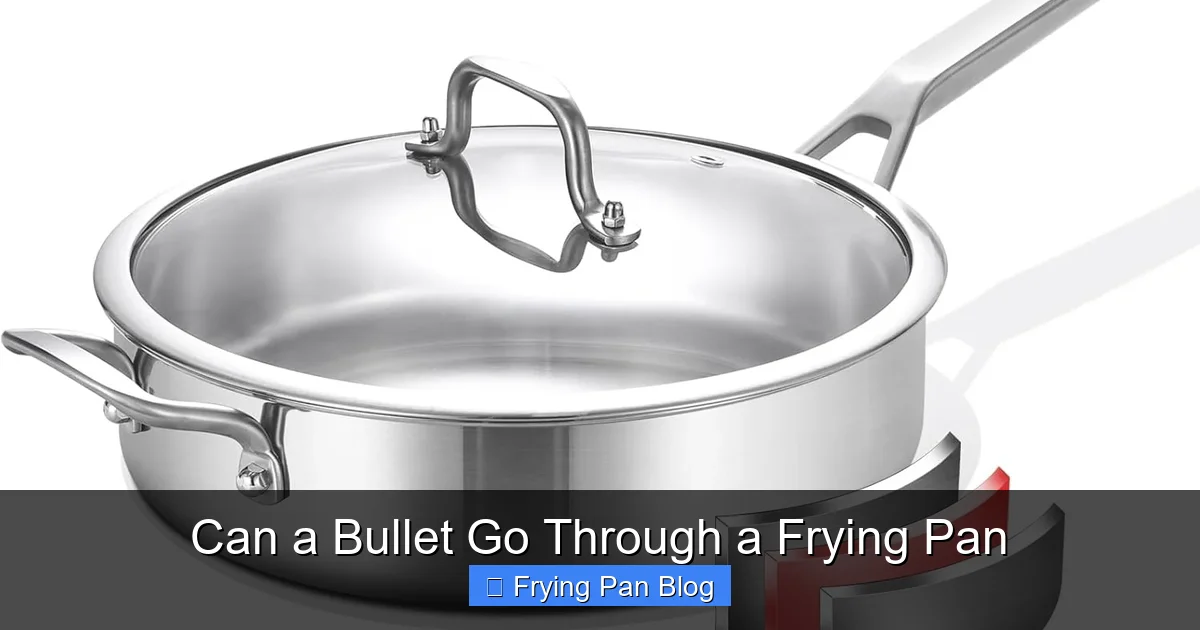
Visual guide about Can a Bullet Go Through a Frying Pan
Image source: m.media-amazon.com
- Cast Iron: Heavy and thick, cast iron pans are known for durability and heat retention. Their density can potentially stop slower bullets.
- Aluminum: Lightweight and thinner, aluminum pans are less dense and easier to penetrate.
- Stainless Steel: Moderate in weight and thickness, these pans offer decent resistance but vary widely.
- Non-Stick Coated Pans: Usually aluminum or steel underneath, the coating itself doesn’t affect bullet penetration much.
Thickness and Density
Thickness is critical. A frying pan’s thickness can range from about 2 mm to over 10 mm for heavy cast iron skillets. Thicker pans naturally provide more material for a bullet to pierce, increasing the chance the bullet will slow down or stop.
Bullet Types and Their Impact
Bullet Caliber and Velocity
Bullets come in many sizes and speeds. A small caliber, low-velocity bullet may not have enough force to penetrate a thick frying pan. On the other hand, high-velocity rifle rounds like 5.56mm or 7.62mm tend to have much greater penetrating power.
- Pistol Bullets: Typically slower and less powerful, these may not go through thick pans.
- Rifle Bullets: Faster and more powerful, rifle bullets can often pierce through thinner pans easily.
- Shotgun Pellets: Spread out and less focused, they may dent but not necessarily penetrate a pan.
Bullet Construction
The bullet’s design also plays a role. Full metal jacket rounds are designed to penetrate better than hollow points or soft tips, which tend to expand and lose energy faster upon impact.
What Happens When a Bullet Hits a Frying Pan?
Energy Transfer and Penetration
When a bullet strikes a frying pan, it transfers kinetic energy to the metal. Depending on the pan’s material and thickness, the energy can cause deformation, penetration, or even ricochet.
- Deformation: The pan may bend or dent without being pierced.
- Penetration: The bullet passes through, often leaving a hole and possible fragments.
- Ricochet: The bullet may bounce off if the angle and material resist penetration.
Examples of Real-World Tests
Various firearm enthusiasts and scientists have tested bullets on frying pans. For example, a 9mm pistol round often dents aluminum pans but may not go through a thick cast iron skillet. Conversely, rifle rounds have been known to punch clean holes through thinner pans.
Practical Considerations and Safety
Why People Test Bullets on Frying Pans
Some people test this out of curiosity or for fun science experiments. Others want to demonstrate bullet impact and material resistance. However, frying pans are not designed to be bulletproof, so results vary widely.
Safety Warnings
Shooting at frying pans is dangerous and should only be done in controlled environments with proper safety gear. Bullets can ricochet unpredictably, posing serious risks. Never attempt to shoot at kitchenware without professional supervision.
Can a Frying Pan Stop a Bullet?
Factors That Influence Stopping Power
Whether a frying pan can stop a bullet depends on:
- Material density and thickness
- Type and velocity of the bullet
- Angle of impact
- Distance from shooter to pan
Heavy cast iron pans may stop pistol rounds at close range but are unlikely to stop high-powered rifle bullets. Aluminum and thinner pans generally won’t stop most bullets.
Using Frying Pans as Improvised Shields?
There are stories of people using metal objects like frying pans for protection in emergencies. While a thick cast iron pan might offer some resistance against low-velocity threats, it is not a reliable or recommended ballistic shield.
Conclusion
So, can a bullet go through a frying pan? The answer is—it depends. Material, thickness, bullet type, and speed all play important roles. While some bullets can easily pierce through thinner aluminum or steel pans, thicker cast iron pans may resist or stop certain rounds.
Ultimately, frying pans are kitchen tools, not armor. If you’re curious about ballistics or metal resistance, experimenting safely under professional guidance is key. But remember, safety comes first—never shoot at objects without proper precautions.
Next time you look at your frying pan, you might think twice about what it can—and can’t—handle when faced with a bullet!
Frequently Asked Questions
Can a bullet penetrate all types of frying pans?
No, penetration depends on the pan’s material and thickness. Thin aluminum pans are more likely to be pierced than thick cast iron skillets.
Which bullet types are more likely to go through a frying pan?
High-velocity rifle bullets have a greater chance of penetrating frying pans compared to slower pistol bullets or shotgun pellets.
Is it safe to shoot at a frying pan?
Shooting at frying pans can be dangerous due to ricochets and unpredictable bullet behavior. Only do so in controlled environments with proper safety measures.
Can a frying pan be used as a makeshift bulletproof shield?
While a thick cast iron pan might stop some low-velocity bullets, frying pans are not designed for ballistic protection and should not be relied on as shields.
What happens to a frying pan after being shot?
The pan may dent, deform, or develop holes depending on the bullet’s energy and impact location.
Does bullet caliber affect its ability to go through a frying pan?
Yes, larger caliber and higher velocity bullets are more capable of penetrating frying pans than smaller, slower rounds.
