
How to Get Uniform Cuts With a Push-Down Vegetable Chopper

Quick Answer
To get uniform cuts with a push-down vegetable chopper, choose the right blade grid, prepare vegetables into manageable pieces, and position each piece flat and centrally. Press the lid straight down with steady pressure, and never force oversized or excessively hard vegetables through the blades.
Five ways to get consistent cuts
- Choose the right grid: Match the blade size to the dice your recipe requires.
- Prepare vegetables: Cut large ingredients into pieces that fit comfortably inside the grid.
- Position food correctly: Keep each piece flat, centered, and stable.
- Press straight down: Use firm, controlled pressure without twisting the lid.
- Keep blades clear: Stop and safely remove trapped food before continuing.
Quick tip: If your vegetables come out uneven, check their size, placement, and the blade grid before applying additional pressure.
A push-down vegetable chopper can make everyday food preparation easier, especially when you need evenly diced onions, potatoes, carrots, or peppers. However, getting consistent results depends on more than simply pushing the lid down.
This guide explains how to prepare vegetables, avoid common cutting problems, choose the right blade grid, and select a chopper that fits your cooking routine.
What Is a Push-Down Vegetable Chopper?
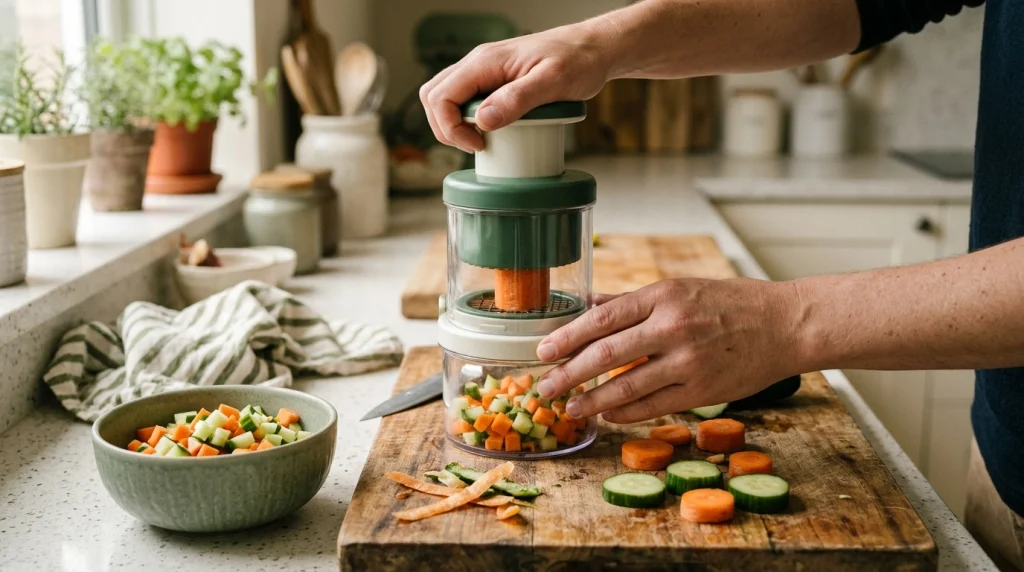
A push-down vegetable chopper is a manual kitchen tool that uses intersecting blades arranged in a grid to cut vegetables into similarly sized pieces. When you press the lid or pusher downward, the blades cut the prepared ingredient into a predetermined shape.
Unlike a rotating food processor, a grid-style chopper relies on a fixed cutting pattern. This makes it useful for preparing ingredients for salads, soups, salsa, casseroles, and everyday meals.
Depending on the model, a vegetable chopper may include the following components:
- Blade grid: Determines the approximate size and shape of the cut pieces.
- Pressing lid: Pushes the vegetable through the cutting grid.
- Collection container: Collects the chopped ingredients and helps reduce countertop mess.
- Interchangeable inserts: Provide additional cutting sizes on compatible models.
- Cleaning accessory: Helps remove food residue from difficult-to-reach areas when supplied.
Not every model includes all these features. Check the manufacturer’s specifications before purchasing a chopper for a particular cutting task.
Why Are Uniform Vegetable Cuts Important?
Uniform vegetable cuts improve the appearance of a dish and help similarly sized pieces cook at more predictable rates. Consistent pieces also make ingredients easier to mix, portion, and serve.
For example, evenly diced potatoes are easier to manage in soup than a mixture of tiny fragments and oversized chunks. Smaller pieces may soften sooner, while larger pieces can remain firm for longer.
Consistent cutting is particularly useful for:
- Soups and stews: Helps vegetables soften more evenly.
- Fresh salads: Creates a balanced texture and appearance.
- Salsa: Distributes diced ingredients more evenly throughout the mixture.
- Meal preparation: Makes it easier to divide ingredients into individual servings.
Uniform cuts cannot guarantee identical cooking times because vegetable freshness, moisture, variety, and cooking conditions also affect the result.
How Do You Get Uniform Cuts With a Push-Down Chopper?
The best approach is to prepare the vegetables properly before pressing the lid. Correct grid selection, stable food placement, and controlled pressure help produce more consistent results.
1. Select the Correct Blade Grid
Choose a blade grid based on the size of the pieces you want. Smaller grids generally produce finer dice, while larger grids create chunkier pieces.
For example, finely diced onions may suit salsa or sauces, while larger potato cubes may work better in a hearty vegetable soup.
Before using the chopper, check that the blade insert fits securely and aligns correctly with the lid. Never operate the tool with a loose or damaged cutting grid.
2. Prepare Vegetables Before Chopping
Large or awkwardly shaped vegetables can sit unevenly on the grid. Cutting them into manageable sections helps the blades make more consistent contact.
- Onions: Peel and halve or quarter them according to their size and the cutting grid.
- Carrots: Trim them into shorter sections and split thick pieces if necessary.
- Potatoes: Divide large potatoes into sections that fit comfortably inside the cutting area.
- Bell peppers: Remove the seeds and core, then flatten or divide the flesh.
- Cucumbers: Trim oversized sections so they sit securely on the grid.
These are general preparation suggestions, not universal dimensions. Follow your chopper’s instructions, especially when handling hard vegetables.
3. Position Each Vegetable Correctly
Place the vegetable flat and centrally over the blade grid. Avoid positioning ingredients so they extend beyond the cutting area or wobble during pressing.
Round vegetables may need a preliminary cut to create a stable surface. For example, placing an onion half with its flat side against the grid can help prevent movement.
Always keep your fingers away from the blades. Use the supplied pusher or lid to position and press the ingredients safely.
4. Apply Firm, Straight Pressure
Press the lid downward in a controlled motion instead of twisting, rocking, or pushing at an angle. Consistent movement helps the vegetable pass through the grid evenly.
If the lid stops moving, do not force it. Stop, follow the manufacturer’s instructions, and check whether the ingredient is too large, too hard, or incorrectly positioned.
Never use excessive force to push a resistant vegetable through the cutting grid. Doing so can damage the tool or cause it to slip.
5. Check the Results Between Batches
Inspect the chopped vegetables before processing another batch. If the pieces vary noticeably in size, review your preparation technique and check the grid for trapped food.
Empty the collection container when necessary. An overcrowded container can interfere with the cutting process and make food handling less convenient.
Which Vegetables Work Best in a Push-Down Chopper?
Firm vegetables that fit the cutting grid generally produce more predictable results. Very soft, stringy, oversized, or unusually hard ingredients may require a different preparation method.
| Vegetable | Preparation | Expected Result | Main Caution |
|---|---|---|---|
| Onion | Peel and halve or quarter | Relatively consistent dice | Keep the pieces stable |
| Carrot | Trim into shorter sections | Firm pieces with a suitable grid | Never force thick sections |
| Potato | Divide large potatoes | Even-looking cubes | Check grid capacity |
| Bell pepper | Remove seeds and flatten | Small, regular pieces | Avoid folded sections |
| Cucumber | Trim and divide as needed | Consistent dice with a suitable grid | Soft centers may compress |
| Ripe tomato | Use firm fruit and manageable pieces | Results may vary | Excess pressure can crush the flesh |
For delicate ingredients, a sharp kitchen knife may provide better control. A push-down chopper works best when the ingredient suits the grid and the intended cut.
Why Is Your Vegetable Chopper Making Uneven Cuts?
Uneven cuts usually result from incorrect food preparation, poor positioning, a blocked grid, or a problem with the cutting assembly. Check these common causes before trying to apply more pressure.
Vegetables Are Too Large
Oversized pieces may extend beyond the blade grid and prevent a clean cut. Trim them into smaller sections that fit entirely within the cutting area.
Never compensate for oversized vegetables by leaning harder on the lid. Excessive pressure can damage the chopper or cause it to slip.
The Food Is Positioned Incorrectly
A tilted or unstable vegetable may contact only part of the grid. Place it on a flat surface whenever possible and make sure it sits securely before pressing.
The Blade Grid Is Blocked
Vegetable skins, fibers, and small fragments can become trapped between the blades. These obstructions may prevent subsequent ingredients from passing through cleanly.
Stop using the chopper before clearing a blockage. Follow the manufacturer’s cleaning instructions and keep your fingers away from the cutting edges.
The Blade Insert Is Loose or Damaged
A loose insert may shift during use and interfere with cutting. Stop using the tool if the grid is bent, cracked, or unable to lock into place.
Check that the insert matches your model. Replace damaged parts according to the manufacturer’s recommendations rather than attempting an improvised repair.
The Vegetable Is Too Soft or Too Hard
Overripe vegetables may collapse instead of forming neat cubes, while very hard produce can resist the blades. Both situations can result in inconsistent pieces.
Choose suitable ingredients and follow the model’s instructions. If a vegetable remains difficult to cut, switch to a knife or another appropriate tool.
Push-Down Chopper vs. Knife vs. Electric Food Processor
Each tool has a different advantage. A push-down chopper uses a fixed grid, a knife offers flexible manual control, and an electric food processor handles a wider range of processing tasks.
| Feature | Push-Down Chopper | Kitchen Knife | Electric Processor |
|---|---|---|---|
| Cut consistency | Good with a suitable grid | Depends on knife skills | Depends on blade and technique |
| Size flexibility | Limited by grid options | High | Varies by attachment |
| Power source | Manual | Manual | Electric |
| Best use | Repeated, similarly sized dice | Precise or unusual cuts | Larger batches and varied processing |
| Main limitation | Food must suit the grid | Requires controlled technique | Can over-process ingredients |
A push-down chopper is a practical option for home cooks who regularly dice onions, potatoes, and peppers. However, a knife or a suitable processor attachment may work better for julienne strips, thin slices, and irregular shapes.
What Should You Look for in a Vegetable Chopper?
Choose a model based on your usual ingredients, preferred cutting sizes, and cleaning needs. A useful cutting grid matters more than a large collection of accessories you rarely use.
- Secure blade assembly: The grid should fit firmly and align with the pusher.
- Suitable cutting sizes: Look for grids that match your preferred dice.
- Stable base: A non-slip base or stable container helps keep the tool in place.
- Practical capacity: Choose a collection container that suits your typical batch size.
- Easy cleaning: Removable parts and a cleaning accessory can simplify maintenance.
- Clear instructions: Check the permitted ingredients, operating method, and cleaning requirements.
As of 2026, product listings and included accessories can change. Verify the current specifications and package contents before purchasing a particular model.
How Can You Maintain Consistent Results?
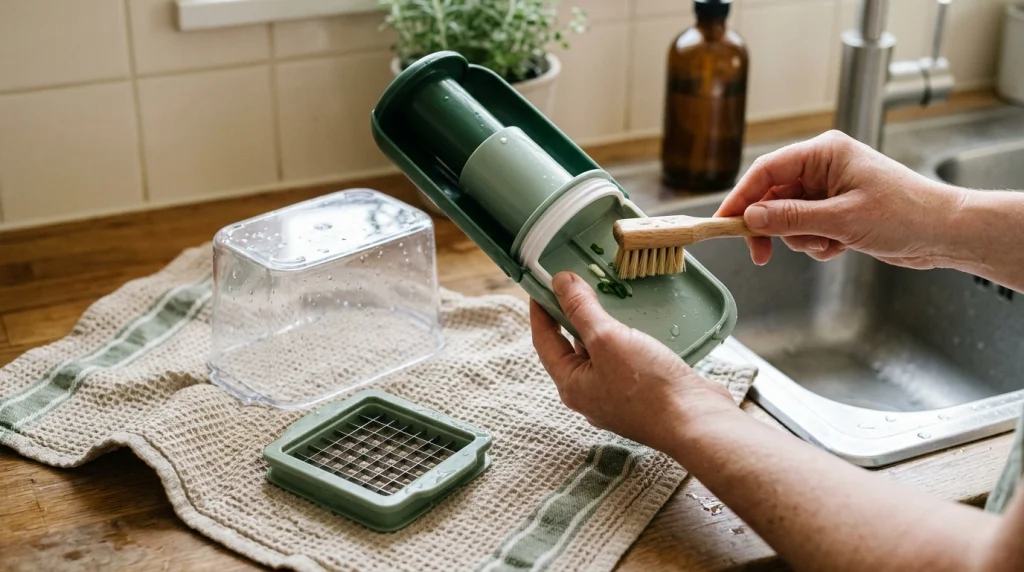
Good preparation habits and routine maintenance help keep a vegetable chopper working as intended. Inspect the tool before each session and clean it promptly after use.
- Wash the produce: Rinse vegetables under running water before cutting.
- Inspect the tool: Check the blade grid, pusher, container, and locking points.
- Prepare similar pieces: Trim ingredients so they fit the selected grid.
- Use a stable surface: Place the chopper on a flat countertop.
- Work in manageable batches: Avoid crowding the cutting area or overfilling the container.
- Clean after use: Remove residue according to the manufacturer’s instructions.
For additional guidance, consult the FDA’s advice on washing and preparing produce.
For safe kitchen-tool handling and cleaning practices, the USDA’s cutting board guidance provides useful background.
Never test blade sharpness with your fingers. Use the supplied cleaning accessory when available and follow the manufacturer’s safety instructions.
Recommended Vegetable Choppers to Compare
If you’re ready to choose a model, compare the cutting grid, included accessories, and cleaning requirements. The following options are worth researching, but their current specifications should be verified before purchase.
Note: These ratings are provisional editorial placeholders, not verified customer ratings or results from hands-on comparative testing. Confirm the products’ current specifications and reviews before publication.
Frequently Asked Questions
How do you get evenly diced vegetables with a push-down chopper?
Choose a suitable blade grid, cut large vegetables into manageable pieces, and position each piece flat and centrally. Press the lid straight down with controlled pressure. If the results remain uneven, check the food placement and grid for obstructions before starting another batch.
Why does my vegetable chopper leave some pieces partially cut?
Partially cut vegetables may result from oversized ingredients, incorrect positioning, a blocked grid, or a misaligned lid. Stop using the tool and inspect it safely. Clear obstructions according to the manufacturer’s instructions, and never push food through the blades with your fingers.
Can a push-down chopper cut carrots and potatoes evenly?
Many grid-style choppers can dice suitable carrots and potatoes when the ingredients fit the cutting area and the model supports them. Divide large vegetables into manageable sections first. If the chopper resists the cut, stop rather than forcing the lid downward.
Does a smaller blade grid produce more uniform cuts?
A smaller grid generally produces finer diced pieces, but it doesn’t automatically guarantee greater consistency. The result also depends on food preparation, ingredient placement, blade condition, and the direction of pressure. Choose a grid based on the size your recipe requires.
How do you clean a vegetable chopper without damaging the blades?
Disassemble the tool only as directed, remove food residue with the supplied cleaning accessory, and wash each component according to the manufacturer’s instructions. Keep your hands away from the sharp edges and check dishwasher compatibility before placing any part in a dishwasher.
Final Takeaway: Make Every Press Count
A push-down vegetable chopper can simplify food preparation and produce consistent diced vegetables when you use the correct grid and prepare ingredients properly. The most important habits are keeping food centered, pressing straight down, and avoiding excessive force.
Before purchasing a new model, consider your usual ingredients, preferred cutting sizes, and cleaning needs. A well-matched chopper can speed up routine preparation while leaving your kitchen knife available for more precise cuts.
Start with a firm onion or bell pepper, inspect the results, and adjust your technique before moving on to harder vegetables.
Affiliate disclosure: This article contains affiliate links. RecipesPalette may earn a commission if you purchase through these links, at no additional cost to you.