Push Down Chopper Troubleshooting: How to Fix Common Problems

Quick Answer
A push-down vegetable chopper usually struggles because food pieces are too large, the blade grid is clogged, the insert is misaligned, or the lid is not seated correctly. Stop pressing, keep your fingers away from the blades, and inspect the removable parts before trying again. For a jam, disconnect the lid and grid according to the manufacturer’s instructions, then clear the blockage with the supplied cleaning tool.
Common problems and quick fixes
- Hard to press: Cut oversized vegetables into smaller pieces and avoid forcing dense produce through the grid.
- Food gets stuck: Remove the obstruction with the designated cleaning tool after safely disassembling the chopper.
- Uneven cuts: Check that the insert sits securely and position food flat against the grid.
- Lid will not close: Look for trapped food, a crooked insert, or an incorrectly positioned hinge.
- Blade seems dull: Clean the grid and inspect for bent, chipped, or damaged cutting edges.
- Parts wobble: Check the container, locking tabs, and blade frame for incorrect assembly or damage.
Before testing again
- Reassemble the chopper according to its manual and test it with a suitable, manageable piece of produce.
- Replace damaged components or contact the manufacturer if the mechanism still binds or the frame no longer locks securely.
A push-down chopper should make vegetable preparation easier, not turn every onion or potato into a struggle. When the lid sticks or food refuses to pass through the grid, the cause often lies in preparation, alignment, or a blocked blade.
In this guide, I’ll explain how to identify the problem, troubleshoot it safely, and decide when cleaning or replacement makes more sense than another attempt. The advice applies primarily to manual, hinged vegetable dicers rather than electric food choppers.
What Is Push-Down Chopper Troubleshooting?
Push-down chopper troubleshooting is the process of identifying and correcting problems with a manual vegetable dicer’s lid, cutting grid, insert, container, or locking mechanism. The goal is to restore normal operation without forcing the tool or damaging its parts.
These choppers typically use a hinged lid or pusher that presses vegetables through a fixed grid of cutting edges. The chopped pieces fall into a container underneath.
Because the mechanism relies on direct pressure, the size and firmness of the food matter. A piece that is too large or too hard can resist the grid, while a poorly seated insert can make the lid bind.
Why Is My Push-Down Vegetable Chopper Not Working?
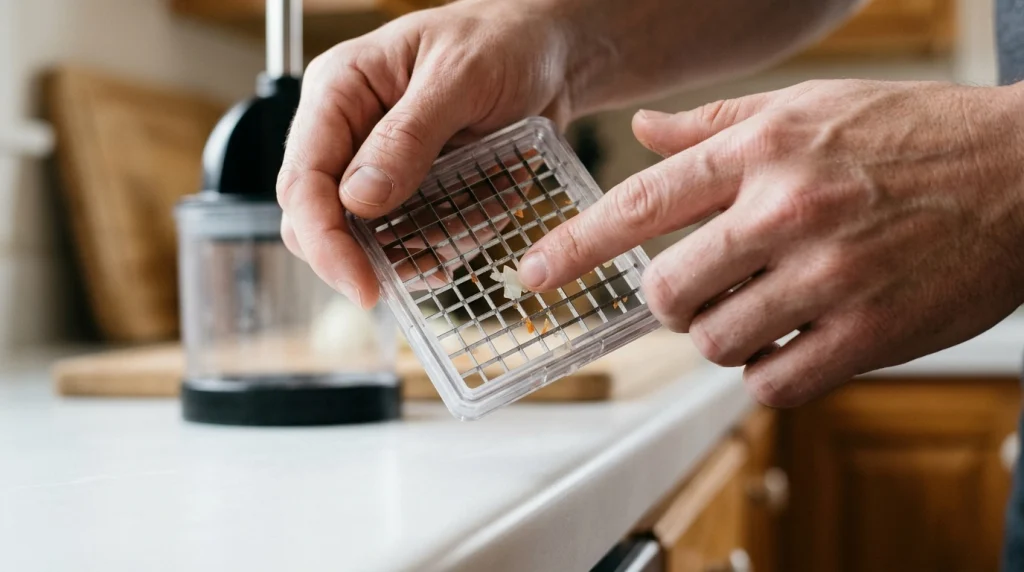
A push-down vegetable chopper may stop working properly because food blocks the grid, the cutting insert sits incorrectly, or the vegetables exceed the tool’s intended capacity. Start by inspecting the simplest causes before assuming a component has failed.
First, stop pressing the lid and move the chopper away from the edge of the counter. Keep your hands away from the cutting grid while you assess the problem.
Use this initial checklist to narrow down the cause.
- Check the food: Look for oversized chunks, thick skins, or unusually hard pieces.
- Inspect the grid: Check for seeds, vegetable fibers, peel, and other debris lodged between the blades.
- Check alignment: Confirm that the cutting insert and catch container sit in their intended positions.
- Examine the lid: Look for trapped food or a hinge that cannot move freely.
- Inspect for damage: Look for bent blades, cracked plastic, broken clips, or loose fittings.
Do not continue using the chopper if its blade frame moves unexpectedly or its locking parts appear damaged. A tool that cannot stay securely assembled needs repair or replacement before further use.
How Do You Fix a Push-Down Chopper That Is Hard to Press?
A push-down chopper that requires excessive force often contains vegetables that are too large, too dense, or poorly positioned. Reduce the size of the pieces and check the blade assembly before applying pressure again.
1. Cut vegetables to fit the grid
Large pieces can bridge several cutting edges instead of passing cleanly through them. Cut oversized vegetables into smaller sections that fit the opening and follow the manufacturer’s food-preparation instructions.
For example, divide a thick carrot into shorter sections and halve a large onion before placing it on the grid. Flat surfaces also help prevent round or slippery pieces from rolling during cutting.
2. Avoid forcing hard vegetables
Raw sweet potatoes, dense carrots, and firm squash can place considerable stress on a small manual chopper. If the lid stops moving, do not lean harder on it or strike it to force the cut.
Use a knife to reduce the vegetable to manageable pieces first. If the ingredient remains too hard for the particular model, prepare it with a suitable knife or another tool instead.
3. Check the insert and hinge
A crooked insert can cause the pusher to meet the cutting grid at the wrong angle. Remove the food, disassemble the tool as instructed, and reseat the insert and lid.
Move the empty mechanism gently to check whether it travels freely. Never force a test movement if the design requires the parts to remain locked together.
How Do You Unjam a Push-Down Vegetable Chopper Safely?
To unjam a push-down chopper, stop applying pressure, separate the removable components according to the manual, and clear the blocked grid with the supplied cleaning comb or another manufacturer-approved tool. Never pull stuck food out with bare fingers or drag a knife across the cutting edges.
- Stop immediately. Release the pressure and keep your hands away from the blade area.
- Remove the lid carefully. Follow the manufacturer’s release procedure rather than prying against a stuck hinge.
- Separate the blade frame if possible. Only remove parts that the manual identifies as removable.
- Clear the blockage. Use the designated cleaning comb to push trapped food out in the direction recommended by the manufacturer.
- Rinse and inspect. Check that no vegetable fibers or seeds remain between the cutting edges.
- Reassemble and test. Secure the parts correctly and try a suitable piece of produce without excessive force.
Some models have integrated blade assemblies or special locking systems, so their disassembly procedures may differ. Consult the product manual if the lid remains stuck or the blade frame will not release normally.
Safety note: Never use your fingertips, a metal skewer, or a screwdriver to pry food from the grid. If a component remains jammed after the approved procedure, contact the manufacturer rather than risking a cut or a broken locking tab.
Why Does My Vegetable Chopper Leave Food Half-Cut?
Half-cut vegetables usually indicate poor positioning, an obstructed grid, an unstable insert, or produce that does not suit the cutting mechanism. The fix is to correct the setup rather than repeatedly pressing the same piece.
Position the vegetable correctly
Place the vegetable on the grid in the orientation recommended for your model. A flat, stable surface generally helps the cutting edges engage more evenly than a rounded surface that rocks or slips.
Check for clogged cutting edges
Thin skins, seeds, and fibrous strands can obstruct parts of the grid. Remove any trapped material before attempting another cut, and clean the grid thoroughly after preparing sticky or fibrous produce.
Use an appropriate vegetable
Very soft or overripe vegetables may crush rather than form neat cubes. Choose firm produce when you want distinct pieces, and use a knife for ingredients that are too delicate for the grid.
For a practical example, a firm onion may pass through a suitable dicing grid cleanly, while an overripe tomato can collapse under the same pressure. The difference comes from the produce’s texture, not necessarily a defect in the chopper.
Why Won’t the Push-Down Chopper Lid Close?
A lid that will not close often indicates a misaligned blade insert, food trapped near the hinge, or a locking component that has not seated correctly. Remove the ingredients and inspect the assembly before trying to close it again.
- Check the grid: Make sure the insert sits flat in its designated position.
- Clear the hinge area: Remove visible food debris that obstructs movement.
- Inspect the container: Confirm that the catch bowl is correctly aligned with the lid and frame.
- Examine the locking tabs: Look for cracks, chips, or deformation that prevents a secure fit.
Do not press down on a lid that remains misaligned. Excessive force can damage plastic hinges or locking tabs, making the problem harder to fix.
If the lid still refuses to close after cleaning and correct reassembly, check the manual for model-specific instructions. Replace a damaged component if the manufacturer offers a compatible part, or replace the chopper if its structure is no longer safe.
Why Is My Push-Down Chopper Cutting Unevenly?
Uneven cuts usually result from inconsistent vegetable size, an incorrectly seated insert, a blocked grid, or produce that varies in firmness. Preparing ingredients consistently and keeping the cutting frame clean can improve the result.
Try these adjustments:
- Choose a grid size that matches the result you want.
- Trim vegetables so their dimensions suit the opening.
- Position each piece securely rather than balancing it at an angle.
- Check that the grid and pusher align correctly.
- Remove debris that prevents the food from contacting the cutting edges evenly.
Keep in mind that a grid chopper produces pieces based on its cutting pattern, not the exact shape of every vegetable. Natural differences in thickness, seeds, and firmness can still create some variation.
What Should You Do If the Chopper Blade Seems Dull?
A chopper that cuts poorly may have a dirty grid, damaged cutting edges, or a design that is unsuitable for the ingredient. Clean and inspect the blade assembly before deciding whether it needs replacement.
Look for these warning signs:
- Food crushes instead of cutting: Check whether the ingredient is too soft or the grid is clogged.
- Pieces repeatedly catch: Inspect for trapped fibers, bent edges, or a misaligned insert.
- Visible damage: Look for chipped, bent, or severely corroded cutting edges.
- The pusher no longer fits: Check for damage or wear to the matching components.
Do not try to sharpen an integrated grid with a household file or improvise a repair. That can alter the blade geometry and create sharp edges in unintended places.
If the grid is replaceable, use a compatible part approved by the manufacturer. If the cutting frame is permanently attached or the surrounding plastic has cracked, replacing the entire tool may be the safer option.
How Do You Clean a Push-Down Chopper to Prevent Future Problems?
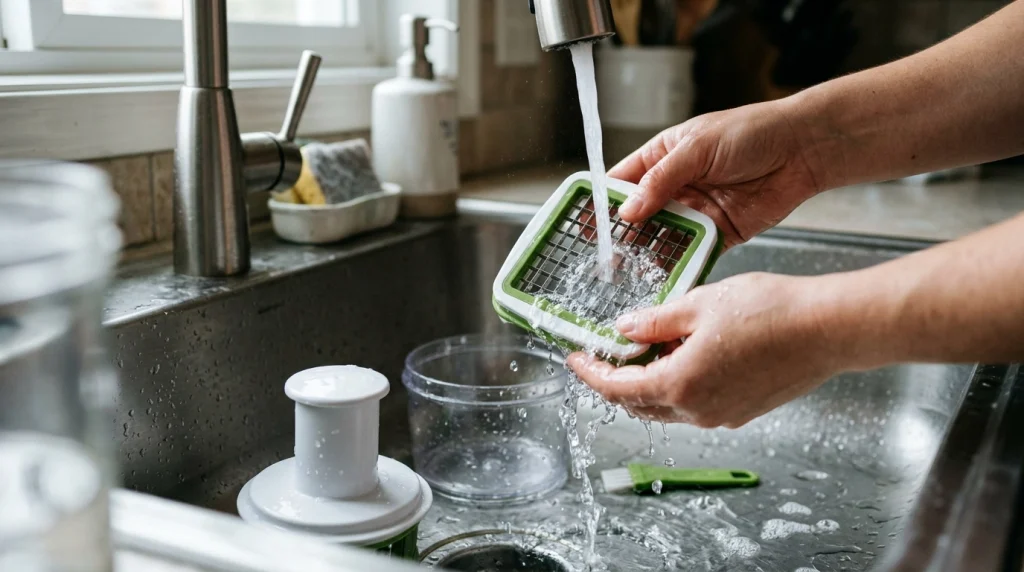
Regular cleaning prevents vegetable residue from drying inside the grid and interfering with the next use. Rinse the removable components promptly, then use the approved brush or cleaning comb to clear remaining debris.
- Empty the container. Remove the chopped vegetables and loose scraps.
- Disassemble the tool. Follow the manual and keep your hands clear of exposed blades.
- Rinse the grid. Direct water through the openings in the direction recommended for your model.
- Brush carefully. Use the supplied cleaning tool and avoid wiping across the blade edges with your fingers.
- Wash the other parts. Use suitable dish soap and follow the manufacturer’s cleaning instructions.
- Dry completely. Remove moisture before storing the parts in a clean, dry location.
Do not assume every chopper is dishwasher-safe. Check the manual for the blade frame, plastic lid, and container separately, since their cleaning requirements may differ.
For more general kitchen hygiene guidance, the FoodSafety.gov food safety resource offers practical advice on handling food safely. Clean equipment also makes it easier to spot damage before the next use.
Push-Down Chopper Troubleshooting: Quick Comparison Table
Match the symptom to the most likely cause before attempting a repair. These checks apply to common manual grid choppers; your model’s instructions take priority.
| Problem | Likely cause | First action |
|---|---|---|
| Lid is hard to press | Oversized or hard vegetables | Remove the food and cut it smaller |
| Grid is jammed | Trapped skins, seeds, or vegetable fibers | Clear it with the approved cleaning tool |
| Lid will not close | Misaligned insert or obstructed hinge | Clean and reseat the removable parts |
| Cuts are uneven | Poor positioning or a clogged grid | Clean the grid and position produce securely |
| Food is crushed | Produce is too soft or overripe | Use firmer produce or a knife |
| Frame wobbles | Incorrect assembly or damaged locking parts | Stop use and inspect the frame |
| Blade cuts poorly | Residue, wear, or blade damage | Clean and inspect; replace damaged parts |
When Should You Replace a Push-Down Chopper?
Replace a push-down chopper when the blade grid, hinge, frame, or locking mechanism is damaged beyond an approved repair. A simple blockage or alignment issue usually deserves troubleshooting first, but structural damage can make continued use unsafe.
Consider replacement if you find any of the following:
- Cracked plastic around the hinge or locking tabs.
- Bent or broken cutting edges that prevent proper alignment.
- A lid that repeatedly slips out of position.
- Loose parts that the manufacturer does not offer as replacements.
- Persistent binding after cleaning and correct reassembly.
Before buying another model, check whether the replacement offers a removable blade grid, a stable catch container, a secure locking mechanism, and an included cleaning tool. These features can make routine maintenance simpler, although the exact design and quality vary by product.
If the manufacturer provides spare parts or warranty support, compare those options with the cost of replacing the whole chopper. Do not continue using a damaged tool simply because replacement parts are difficult to find.
Recommended Tools for Easier Vegetable Preparation
If repeated jams make your current chopper frustrating, a better-fitting tool may help. These options serve different needs, so choose based on the vegetables you prepare, the cutting style you prefer, and how much cleanup you’re willing to do.
🏆 BEST FOR DICING
Fullstar Vegetable Chopper
A manual-style option to consider if you want a container-based design and interchangeable cutting accessories. Check the current listing for the exact included inserts, dimensions, and cleaning instructions before buying.
Editorial fit: 4.5/5 · Not a verified customer rating
💰 ALTERNATIVE OPTION
Mueller Vegetable Chopper
Worth comparing if you want a manual chopper with a collection container and cutting attachments. Confirm the exact model and included accessories, since configurations may vary between listings.
Editorial fit: 4/5 · Not a verified customer rating
🔪 BEST FOR FLEXIBILITY
OXO Good Grips Chef’s Knife
A chef’s knife is a useful alternative when a grid chopper struggles with dense or irregular vegetables. It takes more practice, but it lets you control piece size without forcing produce through a fixed grid.
Editorial fit: 4.5/5 · Not a verified customer rating
These are options to compare, not claims that a particular product has been hands-on tested. Review the current product specifications, care instructions, and replacement-part availability before making a decision.
Frequently Asked Questions
Why is my push-down chopper so hard to push?
A push-down chopper often feels hard to press when vegetables are too large or dense, food blocks the grid, or the insert is misaligned. Remove the food, inspect the mechanism, and cut ingredients into smaller pieces before trying again. Never force a jammed lid.
Can I use a push-down chopper for raw potatoes?
Some manual choppers can dice raw potatoes, but suitability depends on the grid design and the potato’s size and firmness. Cut large potatoes into manageable pieces and follow the model’s instructions. If the lid resists, stop and use a knife rather than applying extra force.
How do I remove food stuck between chopper blades?
Disassemble the chopper according to its manual and use the supplied cleaning comb or approved brush to remove trapped food. Keep your fingers away from the cutting edges, and never pry out a blockage with a metal knife. Rinse the grid and inspect it before reassembly.
Why does my vegetable chopper crush tomatoes instead of dicing them?
Tomatoes can crush because they are overripe, unusually soft, or poorly suited to the chopper’s grid. Choose firm tomatoes and position them as the manufacturer recommends. If the fruit collapses under pressure, use a sharp knife to achieve cleaner pieces.
When should I stop troubleshooting and replace my chopper?
Stop using the chopper if its blade grid is bent or broken, its plastic frame is cracked, or its lid cannot lock securely. Replace damaged components only when the manufacturer approves a compatible part. If the mechanism remains unsafe after basic troubleshooting, replace the tool.
Final Takeaway: Fix the Cause, Not the Symptom
Most push-down chopper problems start with food that does not fit the grid, residue trapped between cutting edges, or parts that are not aligned correctly. A careful inspection and a thorough cleaning can often identify the cause without damaging the tool.
Start with the simplest checks, prepare vegetables to suit the grid, and never force a lid that will not move. If you find structural damage or the chopper still binds after correct reassembly, stop using it and consider a compatible replacement.
For more kitchen-preparation advice, explore practical cooking hacks for easier meal preparation.
Affiliate disclosure: This article contains affiliate links. If you buy through qualifying links, RecipesPalette may earn a commission at no additional cost to you.